
Recordings › Dr. Shehzad Saleem | the Preservation of the Quran & the Problem of Qira'at | MindTrap with Mufti#26 · 19 Jun 2020 › Segment 10 of 25
What was the qira'a al-'amma, and why does Morocco recite a different reading?
fiqah jurisprudence fikh hadeeth ahadith ahaadeeth hadis ahaadith tafseer exegesis tafasir tafaseer commentary malik ibn anas malik bin anas imam maalik imam malik ibn anas imaam imams prayer leader faqih faqeeh fuqaha shafei shafiite shafi'i school muftis iman imaan eemaan eeman qiyama qiyamat yawm al-qiyamah yawm al-qiyama day of judgement resurrection jahannam jahanam jahannum koran quraan al-quran qira'ah qiraa'aat qira'aat recitations tilawah tilawat tilaawah sahabah sahabi sahabiyyah sahabiyat tabi'in tabieen tabi'i successors as-salaf salaf al-salih salaf us-salih al-salaf 'alim aalim ulama ulema ulamaa ummah umma ummatThe early generations' confidence, the qira'a al-'amma of the companions, and why Morocco reads Nafi'
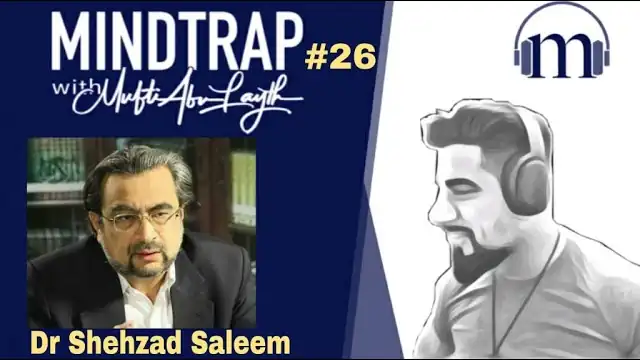 Play from 48:32
The video loads from YouTube only when you press play. Click a time in the transcript to seek.
Watch this part
Open on YouTube at 48:32The player starts at 48:32, the beginning of this part.
This segment47:15 to 52:29 · 5 min 14 sGeneral teaching
What this part covers
machinesummary, machine-writtenThe common reading of Abu Bakr, Umar, Uthman, Ali and the companions, al-qira'a al-'amma, is the mushaf we have, while the other readings stayed in scholars' books; Morocco reads Nafi' only because a third-century ruler imposed it on account of Imam Malik's preference. Mufti Abu Layth adds that the early generations were more secure in their faith than later, institutionalised Islam.
In more detail
Mufti Abu Layth says he feels the early generations, up to the age of Imam Malik, were more secure in their faith and not shaken by things like multiple readings, which were openly discussed in the sources, and that in his view insecurity about anything challenging the narrative came with the institutionalisation of Islam. The guest says the early Muslims were so confident that the common reading, al-qira'a al-'amma, was well established and would spread everywhere that they let the singular readings be transmitted on the margins; even today only the scholarly community knows of them, and people hearing his talks are often learning of other readings for the first time. Mufti asks whether al-qira'a al-'amma means a proto-reading that is the mushaf we have today, and the guest confirms that the tabi'un gave this name to the reading: Abu Abd al-Rahman al-Sulami [?], who lived in the first century, said that the reading of Abu Bakr, Umar, Uthman, Ali, the Muhajirun and the Ansar was one and was called al-qira'a al-'amma, so for the first hundred years there was no problem and the other readings were sidetracked. Because al-Shafi'i assigned ilm al-khassa to the scholars, the readings were preserved in tafsir, qira'at and hadith books but never among the masses, where only the common reading is found. The exception is eleven countries with four different readings: he went to Morocco and found that a third-century ruler had imposed the reading of Nafi' because Imam Malik, whose fiqh prevailed in North Africa, preferred it; so a different reading was imposed by state authority there and has continued since.
- Guest speech overlaps this segment
- Some terms in this segment are uncertain
Position stated
Waiting for the speaker checkA guest speaks in this segment and the captions do not say who said what. The view found here is held back until the speaker-separated transcript confirms the words are his, or the channel verifies it. The transcript and recording are published in full.
Kind: general teaching Speakers: host and guest; guest speech is labelled and excluded from positionsTranscript
machine47:15 to 52:29 · click a time to seek · dotted terms open the glossary
A guest speaks in this segment. Guest speech is labelled and is excluded from the positions layer.
Sahaba that did the sort they thought that because they've heard from the mouth of the Prophet and they have the stomach significance so they'll just not do away with it and they did not realize that this would become a huge problem later on because something which is of historical significance would be mingled up and would become part of the main discourse you know what I also feel doctor Saab is that I feel that the early generations like for especially what is called the seller usually up between the one to two almost 200 years of Muslims at least you know up until the esperaba in Imam Malik Sage that
kind of age I feel that they were also a lot more secure with their faith in certain things like these things didn't like it didn't kind of shake their faith as much like it I'm sure like it was a challenge but it isn't like I feel that with time as institutionalization came in to Islam and this is my thought I mean I'm just saying that I feel that people became very insecure about anything challenging and narrative but yeah I mean because I do find it really strange that all of these things which
are so challenging for people today they actually in our sources well discussed in the early to the extent that you know and people disagree like so people felt that you know know there were multiple readings there were different things and they weren't really shaken by this but I just find that very quite people a way that they were very they were so confident that they knew that the the mother reading in the masses is so well-established and even like today you find these this this karate Lama which the Quranic we read the Quran on actually was called the karate Lama by
our Salaf so they were so confident that this karate lama will be all pervasive and it will infiltrate far and wide that even if these singular readings are transmitted they will just be honest I on the margins and of course this was the case and this is the case even today so whenever I talk give a talk to people who are not aware they say that this is the first time that that has come to their knowledge that there are other readings as well and I said this design because the transmission of the Illman hasa which is of course this garage was confined to the scholars so even today only the scholarly community knows knows about it as far as the masses are concerned they don't have and just for
the for people to know that term this term I'll karate lama what you for what I've understood is what you're saying is that it's it's like a proto Kira it's it's pre these Kira art but it is the reading of the Quran is called the general in Arabic it just means the general reading or the common recitation Alcatel AMA this existed and this was the Quran and this is the most half we have today I've understood this correctly and this name was given by the table your own to this reading for
example a butcher - salami who lived in the first hundred years he was the person he said that this is how we were we were introduced to the Quran as the karate Lama and he said that the reading of Abu Bakr Omar Rahman Ali and the mahadji rule and the Ansar was one and it was dubbed as al qiyamah there was no difference and it was being read this way so you can see that in the first 100 years there was absolutely no problem and even the hog which were being transmitted were just marginalized they were the sidetracked Lodi de carajás later on actually these Korat surfaced because of the fact that this distinction between what was the canonized version and what was the
non-kill nice version this got somehow mixed up and as i said 'mom Shafi when he said that he'll milazzo belongs to the scholar the scholarly tradition made it upon themselves that it is incumbent upon them to preserve this this llll Milazzo so that preservation is what we find in our to see books and our kirat books in our Hadees books and in so many books but never in the masses in the masses the only car that we find his allah rasool allah except except there is an exception and those 11 countries which have a different Quran of course and they're these 11 countries have four different currents so I went there to Morocco and I found out that this this
was a this was actually the work of a ruler in the third century who was the posse of Kieran who said that at a certain point of time we will adopt this particular reading and the reason for that being that Imam Malik the faith of Imam Malik was in invoke in in the North African continent and Imam Malik preferred the reading of knafeh which is a different variation of the reading that we have is different on the carotid Amma and they said ok because we prefer Moloch to be artfully he is our jurist and Malik prefers no face who will adopt the reading of Norfolk so this is how the reading of Nava got imposed in the
African continent in about the 3rd century the later part of the 3rd century and ever since then it has been going on so the only exception are those 11 countries in which a different recitation of the Quran was imposed by the authority of the state masses don't have this ability to accept or reject so when you do it from the top it's like an interference in which people said ok this variation is something that we will accept ok so this is how so - so - kind of - kind of like compartmentalize that for for our viewers that what we what you're saying share is that we've we followed through
Paragraphs overlapping 47:15 to 52:29. Full text on the recording page.
Cite this segment
Stable id, transcript version and tier are part of the citation. Every change to a transcript is logged.Mufti Abu Layth Archive, segment 2020-06-19-S10, auto-transcribed, may contain errors. https://muftiabulayth.org/r/f2bcgwatu5g/s/10/ (accessed 1 November 2026)
- APA 7
Mufti Abu Layth. (2020, June 19). What was the qira'a al-'amma, and why does Morocco recite a different reading? [Video, segment 2020-06-19-S10, auto-transcribed, may contain errors]. Mufti Abu Layth Archive. Retrieved November 1, 2026, from https://muftiabulayth.org/r/f2bcgwatu5g/s/10/
- Chicago author-date
Mufti Abu Layth. 2020. "What was the qira'a al-'amma, and why does Morocco recite a different reading?" Video, segment 2020-06-19-S10, auto-transcribed, may contain errors. Mufti Abu Layth Archive. Recorded June 19, 2020. Accessed November 1, 2026. https://muftiabulayth.org/r/f2bcgwatu5g/s/10/
- BibTeX
@misc{abulayth-2020-06-19-S10,
  author = {Mufti Abu Layth},
  title = {{What was the qira'a al-'amma, and why does Morocco recite a different reading?}},
  year = {2020},
  month = {6},
  date = {2020-06-19},
  howpublished = {\url{https://muftiabulayth.org/r/f2bcgwatu5g/s/10/}},
  url = {https://muftiabulayth.org/r/f2bcgwatu5g/s/10/},
  organization = {Mufti Abu Layth Archive},
  urldate = {2026-11-01},
  note = {Segment 2020-06-19-S10, auto-transcribed, may contain errors}
}
Something wrong here?
Tell us what is wrong and it will be checked against the recording. Nothing changes until a person has reviewed it.
Sending a note needs JavaScript, which is off or unavailable in this browser. Nothing has been sent.
No name, email address or account is asked for or stored, and the inbox does not store your IP address. For rate limiting it keeps an unreadable fingerprint of your connection for 48 hours, and our database provider's own logs record connections as every website's do. Only your note, its kind, the page and the moment in the recording are kept, for review.