
Recordings › Dr. Shehzad Saleem | the Preservation of the Quran & the Problem of Qira'at | MindTrap with Mufti#26 · 19 Jun 2020 › Segment 11 of 25
How did the seven canonical readings of the Quran come about?
fiqah jurisprudence fikh imaam prayer leader shafi shafei shafiite shafi'i school muftis mutawaatir tawatur mass-transmitted koran quraan al-quran ayah aya ayat ayaat aayah aayat qira'ah qiraa'aat qira'aat tilawah tilawat tilaawah sahabah sahabiyyah sahabiyat tabi'in tabieen tabi'i successors 'alim aalim ulama ulema ulamaa jihad jihaadThe seven readers and the privilege of ikhtiyar: how the systematic qira'at were formed in the third century
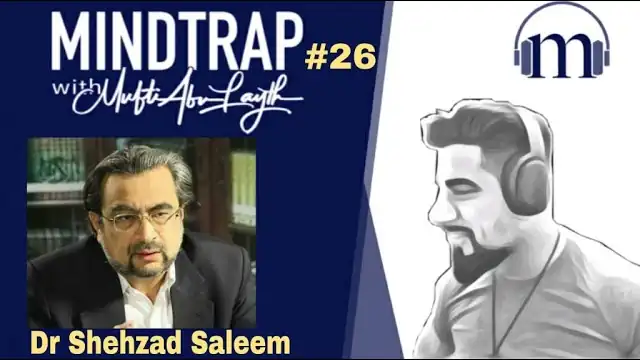 Play from 53:49
The video loads from YouTube only when you press play. Click a time in the transcript to seek.
Watch this part
Open on YouTube at 53:49The player starts at 53:49, the beginning of this part.
This segment52:29 to 57:45 · 5 min 16 sGeneral teaching
What this part covers
machinesummary, machine-writtenIn the second and third centuries leading reciters were given the privilege of ikhtiyar, choosing one of the inherited variants for each verse by their own criteria, and Ibn Mujahid later popularised seven of them. Mufti Abu Layth says he agrees these readings are not mutawatir and not on the level of the common reading.
In more detail
Mufti Abu Layth summarises for viewers: the variant readings are popularly known through seven readers, each with two transmitters, fourteen in all, with some counting twenty, thirty or even fifty; Abu Bakr ibn Mujahid popularised the seven; and these are not mutawatir and not on the level of the common reading, which he says he personally agrees with. The guest describes the history: just as fiqh produced the great imams Abu Hanifa, Ahmad, Malik and al-Shafi'i, so around the second or early third century great reciters were invested with the privilege of choosing between the various readings inherited from the companions and tabi'un, and were called sahib al-ikhtiyar. People had different readings coming from the same companion, so each of the seven set his own criteria and, for every verse that had several variations, preferred one, applying a single principle throughout and so producing a systematic Quran with seven variants. Mufti clarifies for less familiar viewers: Uthman's template was consonantal and without vowels, so like text-message abbreviations it could be read in more than one way by someone not already privy to the reading, and people inherited varied readings and chose this part from one reader and that from another, until the seven who became popular became the mouthpieces of a particular selection.
- Guest speech overlaps this segment
- Low audio confidence in the transcript
Position stated
Not yet double-checkedA summary of the view expressed is published here only after a second, independent review has found the sentence in the transcript where he says it. Until then, the transcript and the recording speak for themselves.
Kind: general teaching Speakers: host and guest; guest speech is labelled and excluded from positionsTranscript
machine52:29 to 57:45 · click a time to seek · dotted terms open the glossary
A guest speaks in this segment. Guest speech is labelled and is excluded from the positions layer.
African continent in about the 3rd century the later part of the 3rd century and ever since then it has been going on so the only exception are those 11 countries in which a different recitation of the Quran was imposed by the authority of the state masses don't have this ability to accept or reject so when you do it from the top it's like an interference in which people said ok this variation is something that we will accept ok so this is how so - so - kind of - kind of like compartmentalize that for for our viewers that what we what you're saying share is that we've we followed through
that look the Quran came through in this particular way they were it was called the Kira Atalanta it was it was one particular recitation these things by the way for those that know people that don't know these varied readings or these variants are called Kira are popularly known by the 7 you know 7 readers and then from them you've got two further people transmitting 14 in total and and some people have taken them up to in their 20s 30s and even up to 50 different recitations that existed but there was a scholar called abu bakr IBN majah heeds who kind of popularized
these seven now what you're saying is all of these seven first of all these are not motivated at something which personally I do agree with that as well that these are not a motor water they're not on the same level as the common Guerra are the second thing all of these variations what if I've understood you correctly doctor Saab you're saying that these are all in essence each the heart is that so what so so you see the in order to trace the history of the carafe that's slightly a ship to of what you are
talking about k1k and so the history of the carafe can be summed up by saying that for example just as in v we had these great scholars like anthony Farha humble and malik and sharpey the four major schools of thought and of course the Geoffrey's as well so in a very similar way there came this time in round the second century or the early third century when very great curries are the Karaka the the reciters they were invested with this with this privilege that they could choose between the various readings which they had inherited from the Sahaba and the table I own and they were called the Seibel yes they are which means that they could
choose before them people had people had different readings coming from the same Sahabi of the love nemesis is Allah saying something regarding one verse and another thing regarding another verse so what happened was in this third century when these famous seven recite is which as you said rightly chosen by abu bakr IBN majah they form a whole system of Quran in which what they did was that for example one person got knafeh he chose a single reading which amongst many other variations for example from Alif LAAM Meem to unmask each verse would be having different variations so he came forward and he set his own criteria and
he chose one or he preferred one variation as a holding preference to all the same for each worse in this manner we got a systematic seven seven variate a variation possessing Quran in which each of these Seibel if they are they chose on certain criteria that I will choose this reading if for example her verse had seven variations or six variations so typically an imam naf i would say okay i choose one of them and this is my reason of preference and for the next Worst if there are three variations okay this is my preference of course that preference was that singular thing the
single principle but he applied that principle to all those recitations and came up with a single version for each worse this reference so just to clarify to for some people who may be not so privileged to fully understand the discourse that in the time of Earthmen radi allahu on when he had laid out a kind of template for the quran it was a consonantal kind of template which because of not having vowels could be read if you try to read it let's say you could read it in a different way
like if i it's not a good example but like this approximates like let's say today text message language WT would be what but it could be wit it could be wet it could be now people would normally know if i said what you doing they you know they wouldn't think wit or what you doing but if somebody who wasn't may be privy they could start reading it differently is this and then people are sometimes inheriting these varied readings by people and certain people are choosing they kind of like saying well I'm adopting this part from
this person this part from this person and they then get quite popular with it so now if it as an example and ask him as an example a semi Robin a true then different people hamza and Kasuri these kind of these several but let's say seven who become really popular they choose they end up becoming the kind of the vocal piece for a particular select reading is this what we're this is what we're saying yeah doctor okay but you know here comes the question that okay so from these seven let's say and they may have been many more that we're doing it but these seven who get popular
Paragraphs overlapping 52:29 to 57:45. Full text on the recording page.
Cite this segment
Stable id, transcript version and tier are part of the citation. Every change to a transcript is logged.Mufti Abu Layth Archive, segment 2020-06-19-S11, auto-transcribed, may contain errors. https://muftiabulayth.org/r/f2bcgwatu5g/s/11/ (accessed 1 November 2026)
- APA 7
Mufti Abu Layth. (2020, June 19). How did the seven canonical readings of the Quran come about? [Video, segment 2020-06-19-S11, auto-transcribed, may contain errors]. Mufti Abu Layth Archive. Retrieved November 1, 2026, from https://muftiabulayth.org/r/f2bcgwatu5g/s/11/
- Chicago author-date
Mufti Abu Layth. 2020. "How did the seven canonical readings of the Quran come about?" Video, segment 2020-06-19-S11, auto-transcribed, may contain errors. Mufti Abu Layth Archive. Recorded June 19, 2020. Accessed November 1, 2026. https://muftiabulayth.org/r/f2bcgwatu5g/s/11/
- BibTeX
@misc{abulayth-2020-06-19-S11,
  author = {Mufti Abu Layth},
  title = {{How did the seven canonical readings of the Quran come about?}},
  year = {2020},
  month = {6},
  date = {2020-06-19},
  howpublished = {\url{https://muftiabulayth.org/r/f2bcgwatu5g/s/11/}},
  url = {https://muftiabulayth.org/r/f2bcgwatu5g/s/11/},
  organization = {Mufti Abu Layth Archive},
  urldate = {2026-11-01},
  note = {Segment 2020-06-19-S11, auto-transcribed, may contain errors}
}
Something wrong here?
Tell us what is wrong and it will be checked against the recording. Nothing changes until a person has reviewed it.
Sending a note needs JavaScript, which is off or unavailable in this browser. Nothing has been sent.
No name, email address or account is asked for or stored, and the inbox does not store your IP address. For rate limiting it keeps an unreadable fingerprint of your connection for 48 hours, and our database provider's own logs record connections as every website's do. Only your note, its kind, the page and the moment in the recording are kept, for review.