
Recordings › Dr. Shehzad Saleem | the Preservation of the Quran & the Problem of Qira'at | MindTrap with Mufti#26 · 19 Jun 2020 › Segment 12 of 25
Why did the reading of Hafs from Asim become the standard Quran?
hadeeth ahadith ahaadeeth hadis ahaadith muftis mubah mubaah koran quraan al-quran ayah aya ayat ayaat aayah aayat sahabah sahabi sahabiyyah sahabiyat jihad jihaadWhy Hafs from Asim became the common reading, the seven-ahruf hadith as the licence for ikhtiyar, and Ibn Mujahid's seven
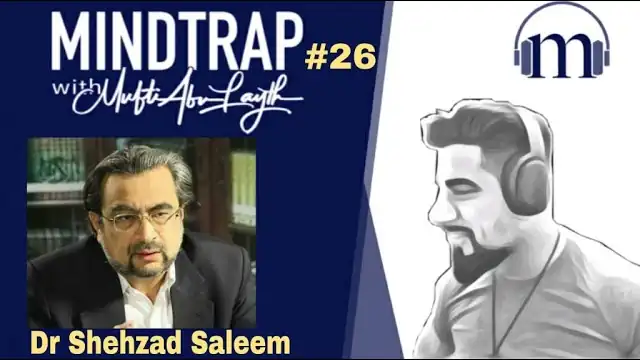 Play from 57:45
The video loads from YouTube only when you press play. Click a time in the transcript to seek.
Watch this part
Open on YouTube at 57:45The player starts at 57:45, the beginning of this part.
This segment57:45 to 1:02:58 · 5 min 13 sA view quoted in order to be discussed, not a position held
What this part covers
machinesummary, machine-writtenThe guest relays Ghamidi's thesis that Hafs alone transmitted the common reading without adding his own choices, so his reading coincides with the original. The seven-ahruf hadith was taken as licence for the reciters' choices, and Ibn Mujahid's seven prevailed through his standing and state position.
In more detail
Mufti Abu Layth asks the elephant-in-the-room question: of the fourteen transmitters, how did Hafs from Asim become the common reading while the other thirteen missed it. The guest says his teacher Ghamidi has tried to solve this riddle with the thesis that Hafs was the only one who read the qira'a al-'amma without adding his own ikhtiyar, while the rest chose from different readers and companions and made their own selections. The reciters, mostly non-Arabs from Iran and elsewhere, were adept and wanted to read in the dialect and accent of the Arabs, each with his distinctive pronunciation, and each also exercised ikhtiyar; Hafs alone, as history expressly states, simply presented the reading of Asim, which was inherited from the reading on which Uthman had gathered the Muslims. Mufti observes that by exercising this licence the reciters showed, without saying so, that they believed such choosing permissible; the guest agrees and says the hadith of the seven ahruf itself gave the readings their sanctity, since one of its interpretations is that there are seven types of variation, and its continuation, 'so read whichever is easy for you', was taken as permission, though granted only to people of insight. Before Ibn Mujahid selected seven, others had selected thirty or twenty-five; Ibn Mujahid's choice prevailed because he was popular in Baghdad and held a state position, so his selection was adopted as if by state authority, and the reciters took the hadith as licence to apply to the piecemeal verse data before them.
Position stated
This segment presents a view in order to discuss or respond to it. It is recorded as quoted, never as held, and no position is attributed from it.
Kind: a view quoted in order to be discussed, not a position held Speakers: host and guest; guest speech is labelled and excluded from positionsTranscript
machine57:45 to 1:02:58 · click a time to seek · dotted terms open the glossary
A guest speaks in this segment. Guest speech is labelled and is excluded from the positions layer.
This segment states a view in order to discuss it. It is recorded as a quoted view, not as a position held.
this person this part from this person and they then get quite popular with it so now if it as an example and ask him as an example a semi Robin a true then different people hamza and Kasuri these kind of these several but let's say seven who become really popular they choose they end up becoming the kind of the vocal piece for a particular select reading is this what we're this is what we're saying yeah doctor okay but you know here comes the question that okay so from these seven let's say and they may have been many more that we're doing it but these seven who get popular
you've got another like this kind of to reciters from them now there's Huff's who takes this person who kind of recites from from Assam and this is this is the main reading of the Quran today now awesome does have another student as well a bucket of Nadia yesh who would have some variations how does half son ask him from these fourteen become the correlate for what is the para at alarm on the other thirteen miss it how does that happen mark is the elephant in the room so my
teacher remedies have actually has tried to solve this riddle and his is I would say his thesis is that huffs was the only person who read the Parata Lama without adding his if they are without adding his his preference from the various choices that he had the rest they they added their if they are they chose from different readers from different Sahaba and they made up their own selection house was the only person so so before actually I collaborate on this let me also this okay that's very very very fascinating because I you know I do you have that answer before okay
these feeders were actually very adept they wanted to have the latter of the Arabs so all of them they copied the Arabs you'll see that most of them are non Arabs they are they're from different countries from Iran from from the across the nations so they wanted that they should the Quran should be read in the larger in that in the accent and the dialect of the Arabs so they would they would have this this pronunciation as close as they could and each of them had their distinction and what each of them did was that not only they had their own larger which they thought they were to be copying from the Arabs so each of them also exercises if they are which of course ever said was the choice that they had in selecting
from various feelings it appears that Huff's was the only person who did not and this is expressly stated in history as well that he just presented whatever was the reading of above the Romano tsunami of course was some some he inherited from in the time the postman the same reading on vicious man had gathered our people on the Muslim so he's the only person who maybe try the larger he try to teach people in the latter of the Arabs without adding any if they are without adding any profit you know here this a question that we've that would be faced with you know once if saying that and
that is that obviously these people they are exercising this license to kind of you know choose from here this still fit what you didn't fit they call self it like choosing like let's say I want I want to pray I'm gonna take this part I'm gonna put my hands here like the chef at ease but I'm gonna do this like the hanafis I'm gonna do now by them doing that demonstrates without stating it the fact that they believed that that was something permissible to do right absolutely so you see this is one of the reasons that these Korat were given sanctity or they were regarded to be a sacred was the Hadees itself and general
Quran Allah Sabbath or whatever because one of the interpretations of some other ahead of is that there are seven variations amongst the garage seven different types of variation for example in wide Jamaa for example in 1330 for example in the vowels coming at a certain place so one of the reasons which sanctioned this garage was this Hadees according to them they said that the Quran has been revealed in seven our roof and these are basically out of that we have and the next part of the Hadees is baccarat is aluminum which means that you can adopt anyone which is appropriate for you so this is the this is the choice which was given the only thing is that it was not given to
everyone only people of insight were given this and as you said that Abu Bakr image I only selected seven of them before them we have thumri actually selecting 30 readings we have above where passiveness alarm selecting 25 so there were different people who had had the only thing was that cause in Baghdad he what he became very popular table Mujahid and he was also state emissary or the state he had a state position as well so his his selection his choice was as if it was being adopted by state authorities so it it received a lot of impetus and hence you find it his choice prevailed
and because of the ünzile quran saba are these in cause the fact that they were receiving various narratives which had these ha ha this Quranic verses piecemeal so they said that okay on the one hand we have the permission from the Prophet which says read any of these 7ro and on the other hand we actually have those other of in data being before us so we're just applying the Hadees on that data and choosing a chromatic Esther I mean though the way we would like to you know put it there's still another interesting
Paragraphs overlapping 57:45 to 1:02:58. Full text on the recording page.
Cite this segment
Stable id, transcript version and tier are part of the citation. Every change to a transcript is logged.Mufti Abu Layth Archive, segment 2020-06-19-S12, auto-transcribed, may contain errors. https://muftiabulayth.org/r/f2bcgwatu5g/s/12/ (accessed 1 November 2026)
- APA 7
Mufti Abu Layth. (2020, June 19). Why did the reading of Hafs from Asim become the standard Quran? [Video, segment 2020-06-19-S12, auto-transcribed, may contain errors]. Mufti Abu Layth Archive. Retrieved November 1, 2026, from https://muftiabulayth.org/r/f2bcgwatu5g/s/12/
- Chicago author-date
Mufti Abu Layth. 2020. "Why did the reading of Hafs from Asim become the standard Quran?" Video, segment 2020-06-19-S12, auto-transcribed, may contain errors. Mufti Abu Layth Archive. Recorded June 19, 2020. Accessed November 1, 2026. https://muftiabulayth.org/r/f2bcgwatu5g/s/12/
- BibTeX
@misc{abulayth-2020-06-19-S12,
  author = {Mufti Abu Layth},
  title = {{Why did the reading of Hafs from Asim become the standard Quran?}},
  year = {2020},
  month = {6},
  date = {2020-06-19},
  howpublished = {\url{https://muftiabulayth.org/r/f2bcgwatu5g/s/12/}},
  url = {https://muftiabulayth.org/r/f2bcgwatu5g/s/12/},
  organization = {Mufti Abu Layth Archive},
  urldate = {2026-11-01},
  note = {Segment 2020-06-19-S12, auto-transcribed, may contain errors}
}
Something wrong here?
Tell us what is wrong and it will be checked against the recording. Nothing changes until a person has reviewed it.
Sending a note needs JavaScript, which is off or unavailable in this browser. Nothing has been sent.
No name, email address or account is asked for or stored, and the inbox does not store your IP address. For rate limiting it keeps an unreadable fingerprint of your connection for 48 hours, and our database provider's own logs record connections as every website's do. Only your note, its kind, the page and the moment in the recording are kept, for review.