
Recordings › Dr. Shehzad Saleem | the Preservation of the Quran & the Problem of Qira'at | MindTrap with Mufti#26 · 19 Jun 2020 › Segment 9 of 25
Why did Muslim scholars record disagreements about the Quran's text rather than hide them?
hadeeth ahadith ahaadeeth hadis hadees ahaadith malik ibn anas malik bin anas imam maalik imam malik ibn anas imaam imams prayer leader muftis sunnah sunna sunnat prophetic practice koran quraan al-quran qira'ah qiraa'aat qira'aat sahabah sahabi sahabiyyah sahabiyat salaf as-salaf salaf al-salih salaf us-salih al-salaf 'alim aalim ulama ulema ulamaaWhy did Muslims transmit reports of disagreement over the Quran instead of hiding them? Honesty, scribal errors and parallel transmission
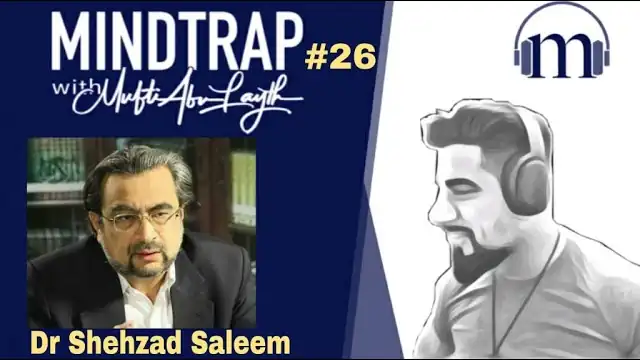 Play from 44:35
The video loads from YouTube only when you press play. Click a time in the transcript to seek.
Watch this part
Open on YouTube at 44:35The player starts at 44:35, the beginning of this part.
This segment41:59 to 47:15 · 5 min 16 sGeneral teaching
What this part covers
machinesummary, machine-writtenThe guest says the scholars transmitted the variant reports out of sheer honesty, just as they preserved and marked scribal errors in the mushaf, and that variation was inevitable once the revealed sequence was rearranged. Mufti Abu Layth notes in passing that he agrees with Ghamidi that there is no second coming of Jesus.
In more detail
Mufti Abu Layth says the guest does not try to dominate the narrative but leaves the ahruf discussion with the conclusion that it has little to stand on. He then asks why, given the many transmissions in hadith, sunan and history books about people reciting differently, Hisham ibn Hakim and Umar disagreeing, Ibn Mas'ud's codex and the rest, the Muslims transmitted all this from their own sources rather than covering it up, when scholars have buried other things: he notes that he personally agrees with Ghamidi that there is no second coming of Jesus, and that Ibn Hazm recorded disagreement on it among scholars, yet their names were buried and not transmitted. The guest answers that it was sheer honesty: whatever was the reality was brought forth, just as every scholar acknowledges scribal errors in the mushaf, extra alifs, vowels and letters, which were preserved in writing because orality was strong enough for people to recognise them, and marked with a circle. The companions transmitted the other readings because they believed them to have some historical connection with the Quran, and this purity of intent, which survives today, explains the phenomenon of parallel transmission. He adds that the variations were bound to exist because the Quran was revealed over twenty-two years and then rearranged; had it kept its revealed sequence there would have been none, but the remnants of the earlier order were so dear to the companions that they would not do away with them, not realising this would later become a problem.
- Guest speech overlaps this segment
Position stated
Waiting for the speaker checkA guest speaks in this segment and the captions do not say who said what. The view found here is held back until the speaker-separated transcript confirms the words are his, or the channel verifies it. The transcript and recording are published in full.
Kind: general teaching Speakers: host and guest; guest speech is labelled and excluded from positionsTranscript
machine41:59 to 47:15 · click a time to seek · dotted terms open the glossary
A guest speaks in this segment. Guest speech is labelled and is excluded from the positions layer.
what the Prophet actually said so I refrain from going to that ETA I just I just withheld myself and said that neither the text is worthy of any attention because it has so many contradictions and it's not at all jumbled up the famous relatives of the omer narrative of by Hakim in his arm they have it has a number of problems and the oh by even a cognitive or the number of problems so I I restrict it myself to point out the fact that such contradictions as you know cannot simply make a case for the are and as our scholars say is our honor that socketed so any benefit to things there they they
clash with each other and they cannot be reconciled so we just have to do tobacco and just we have to just drop them because I kind of like got to that part and I've been really going through this book believe it or not as much as I can every day and I was going through that part and I was thinking right I want to get to your take on it and it was I'll at the end you're right you actually don't really give a I mean you give I suppose they take but it's not like you're not trying to dominate a narrative you simply ended on what you're saying that look this doesn't really have much to stand on
like so there seems to be some discussion there seems to be these transmissions there's a lot of contradictions going on really there's not much we can take away with substance from this discourse you kind of just leave it with that really as you're saying and yeah and I thought well okay that's a very interesting I mean would you not argue then or could one not argue share that you see there is there are so many transmissions in let's say the books of hadith the books of son are the books of of history and different
things about varying recitations and people reading the Quran different like you said the incident of let's say after Lebanon Massoud and I know you have an amazing very detailed I was quite shocked how detailed it was with Abdullah Thomas Road and you know this whole thing about Muhammad attained and and some very amazing points you made on that as well about his students but with all these narratives exist without them I mean without going into their my new details but they want one kind of consistent fact is people are saying that people seem to be disagreeing on
the hundred percent entity of the Quran like they agree on the Quran but they seem to disagree on its certain things like some people think this ain't from me that ain't from it now wouldn't they just hide this fact like why even why would Muslims even you know transmit this because this is not coming to us from today Orientalist I mean they're bringing some factors but really the bulk of everything is coming from our own sources it's coming from our book saying by the way you know Hisham it Hakeem this is how he read Omar disagreed this was lute said this
is what he said obey said our books are saying this so why not just cover this up because they have Muslim scholars have at times you know not to digress the discourse but like let's say you mentioned about the Jesus thing and I personally agree I'm also of the view with like um D Saab is that there isn't a second coming and and you get scholars like let's say in the past ish even Haslam who says that they disagreed on this you know the masala for Walter you out publicly Amla but yet their name seem to have been buried like scholars just buried it they didn't transmit it
why did they not do the same here then I think it's that sheer honesty there didn't mince words I think that whatever was the truth whatever was the reality just was just brought forth this is very similar to the fact when you see that we have certain scribal errors in the Quran and is something which every single scholar acknowledges for example we have extra ellipse extra vowels extra arse and they were so confident that even if they preserve those errors in writing because the orality is so strong that people will recognize them that these are errors and hence they are marked by a circle so that people know that these
have been erroneously written but because they have been written by the Sahaba you say okay we just preserve it in writing and we know that they are wrong so I think it's sheer honesty that they transmitted the rest of the qira'at as well and they didn't hide it because ultimately the thesis that they that they I would say work that was that they also somehow our part of the Quran and they form some historical connection with the Quran that we have so I think it was their own purity of intent which even today exists and which is of course a matter of a very singular amazement that why is it that we have this this
phenomena of a parallel transmission but this goes to speak volumes in favour of the fact that analyze that twenty year period or 22 year period in which the Quran was revealed and then rearranged so these variations were bound to exist I mean had the Quran been given the same sequence as it was revealed that was the final sequence perhaps you would not have had any variation because if you have could have been preserved as as was revealed but because it was re recompile it was given a new order a new sequence and some changes there had to be these left out things of these remnants which were there and they were so dear to the
Sahaba that did the sort they thought that because they've heard from the mouth of the Prophet and they have the stomach significance so they'll just not do away with it and they did not realize that this would become a huge problem later on because something which is of historical significance would be mingled up and would become part of the main discourse you know what I also feel doctor Saab is that I feel that the early generations like for especially what is called the seller usually up between the one to two almost 200 years of Muslims at least you know up until the esperaba in Imam Malik Sage that
Paragraphs overlapping 41:59 to 47:15. Full text on the recording page.
Cite this segment
Stable id, transcript version and tier are part of the citation. Every change to a transcript is logged.Mufti Abu Layth Archive, segment 2020-06-19-S09, auto-transcribed, may contain errors. https://muftiabulayth.org/r/f2bcgwatu5g/s/9/ (accessed 1 November 2026)
- APA 7
Mufti Abu Layth. (2020, June 19). Why did Muslim scholars record disagreements about the Quran's text rather than hide them? [Video, segment 2020-06-19-S09, auto-transcribed, may contain errors]. Mufti Abu Layth Archive. Retrieved November 1, 2026, from https://muftiabulayth.org/r/f2bcgwatu5g/s/9/
- Chicago author-date
Mufti Abu Layth. 2020. "Why did Muslim scholars record disagreements about the Quran's text rather than hide them?" Video, segment 2020-06-19-S09, auto-transcribed, may contain errors. Mufti Abu Layth Archive. Recorded June 19, 2020. Accessed November 1, 2026. https://muftiabulayth.org/r/f2bcgwatu5g/s/9/
- BibTeX
@misc{abulayth-2020-06-19-S09,
  author = {Mufti Abu Layth},
  title = {{Why did Muslim scholars record disagreements about the Quran's text rather than hide them?}},
  year = {2020},
  month = {6},
  date = {2020-06-19},
  howpublished = {\url{https://muftiabulayth.org/r/f2bcgwatu5g/s/9/}},
  url = {https://muftiabulayth.org/r/f2bcgwatu5g/s/9/},
  organization = {Mufti Abu Layth Archive},
  urldate = {2026-11-01},
  note = {Segment 2020-06-19-S09, auto-transcribed, may contain errors}
}
Something wrong here?
Tell us what is wrong and it will be checked against the recording. Nothing changes until a person has reviewed it.
Sending a note needs JavaScript, which is off or unavailable in this browser. Nothing has been sent.
No name, email address or account is asked for or stored, and the inbox does not store your IP address. For rate limiting it keeps an unreadable fingerprint of your connection for 48 hours, and our database provider's own logs record connections as every website's do. Only your note, its kind, the page and the moment in the recording are kept, for review.