
Recordings › Shaykh Atabek Shukurov | Mortgages, Madhabs & Molvi-ism | MindTrap 48 | Mufti Abu Layth · 29 Jan 2021 › Segment 5 of 22
Is growing a beard obligatory in the Hanafi school?
hadeeth ahadith ahaadeeth hadis hadees ahaadith maaliki malikite malikiyyah hanafite hanafiyyah muftis haraam forbidden mubaah permissible waajib wajibat sunna sunnat sunan prophetic practice ulama ulema ulamaaPrinciples as a constitution before which all are equal: the beard as mubah
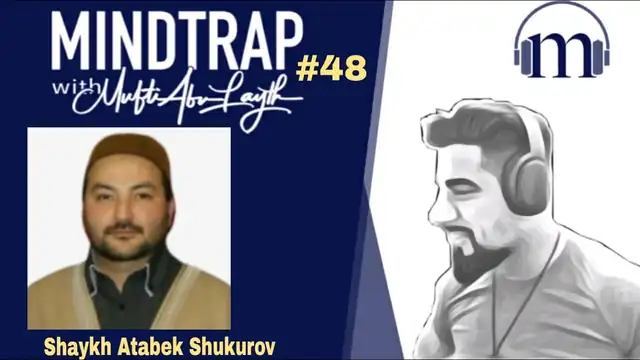 Play from 18:37
The video loads from YouTube only when you press play. Click a time in the transcript to seek.
Watch this part
Open on YouTube at 18:37The player starts at 18:37, the beginning of this part.
This segment17:37 to 23:22 · 5 min 45 sA view quoted in order to be discussed, not a position held
What this part covers
machinesummary, machine-writtenThe guest says Hanafi principles act as a constitution before which everyone is equal, and that by them keeping the beard is mubah, not wajib as subcontinent scholars concluded.
In more detail
Mufti Abu Layth says that when he challenges people he calls them to the Maliki school, so he looks different to them, whereas the guest calls himself a Hanafi and still reaches conclusions that differ from theirs, such as trimming the beard, which he expects riles people more. The guest says there should be a law or constitution, the principles of Abu Hanifa, before which everyone, including Abu Hanifa himself, is equal, and that some who apply them miss details and reach wrong conclusions. On the beard he says the Hanafi principles make keeping it mubah, but scholars of the subcontinent mixed the principles with texts and concluded it is wajib, which he said publicly some years ago was incorrect. Asked about Ibn Abidin, he distinguishes keeping the beard from shaving it: later texts call keeping it sunnah and shaving it haram as imitation of women, a motive different from the hadith advising to keep it, and he says he has explained elsewhere why that reasoning is baseless. He closes that whoever applies the principles incorrectly should be corrected, since everyone is equal before them.
Position stated
This segment presents a view in order to discuss or respond to it. It is recorded as quoted, never as held, and no position is attributed from it.
Kind: a view quoted in order to be discussed, not a position held Speakers: host and guest; guest speech is labelled and excluded from positionsTranscript
machine17:37 to 23:22 · click a time to seek · dotted terms open the glossary
A guest speaks in this segment. Guest speech is labelled and is excluded from the positions layer.
This segment states a view in order to discuss it. It is recorded as a quoted view, not as a position held.
so I know how difficult how painful okay but yet we do have um quite uh quite a lot of open-minded people who are willing who are willing to look and test and accept if is true you know if what you're presenting is true so those people those people are making me to continue to you know they are the ones who are motivating I see but but the thing is because people might still see you as like like when you're preaching to people you're not sorry they might see you they see that you're obviously from an entirely different culture which we don't even people don't know too much about the Usbekcki kind of people and
their cultures and and you're teaching them uh you see because the reason I'm saying this let me just clarify the the let me add a caveat people that is that look you see to me I challenge people but one okay they're going to think well okay he's this but I look weird to them whatever but then I say oh but maliki you see so to them I'm calling to something not what they're calling to because I'm saying look oh leave all that Here's the Malik.
See, you are saying, "No, no, we're still going to talk and all the Haya and all the Hannfi books, but the end result looks very different." You know, I don't have to have a long beard. You haven't got Exactly. You know, you trim your beard. This now would you see it's going to rile them up even more because it's going to make them think cuz I'm saying to them, look, yes, I know Abidin says you have to grow a big beard, but I'm not a Hannfi.
I don't care about, you know, but you're saying, "No, I am a Hannfi and Hannfi fig doesn't even have to say that." So, it's it's like so h how's that been because that because because uh I'm uh I'm uh my main thing is this there should be some something which is low constitution. Yeah. And everyone is equal including Abu Hanifh himself. Okay. And going through the history all of these scholars and coming to everyone you know.
So um so we are all hanafist we try to implement or apply the law or constitution which is the principles principles of our imbuif you know so some of us while applying they miss out some certain details so they come to wrong conclusion understand so for example because you are mentioning the issue of the beard okay of course so our principles necessitate that it is mubah our principles Okay.
Understand the principles. Yes. Yeah. Okay. Sure. Both principles necessitate that it is. Okay. However, according to the it is okay. But uh uh but then um for example the scholars of subcontinent okay they had mixed principles with hadith you can say texts and then they came to conclusion that it is waj okay so I think it was about five six years ago I said it is incorrect conclusion and um and and then I did demonstrate okay so
obviously I didn't go far um with demonstrating how uh keeping b is muba because that then I I would have to discuss about the principles because when I when I say that it is people already panicked enough you know I said I'm just leaving to them at this point and I'm not going further for thei principles you know because based on the principles it is just mubah okay but you see but they're going to say so here's the typical hafi thing they're going to say well you know these people He never said it is waj.
It's only the scholars of subcontinent. They are the ones who said it is waj. But sheh come on in mad he does say that you know that whatever is beneath to trim that doesn't he say it's haram to cut. No no no no. Yeah. So they take it from from this point and the actual text is coming from. Okay. So what does he say? But in terms of shaving the beard as Okay.
So uh um he mentioned quite strange words something like uh mahan you know. Yeah. Yeah. He says and he says and don't look at these kind of Moroccan scholars who shave it. Yeah. Like women. Yeah. Yeah. So so [laughter] look look right now we have two things. We have and we have understand and each of these are motivated by totally different things. So, so for example, you cannot say because shaving is uh haram.
So, you cannot say because of that keeping is w you understand because not taken from the um uh do you know keep do you know the hadith which advises of you know to keep the bid but is taken because of which is totally different motive you know. Okay. Interesting. Yes. So means keeping is sunnah but shaving is haram.
Why? Because it is imitating the women. Understand? But then uh in the past I did explain how that conclusion is incorrect also. Okay. I think it was five six years ago. Yeah. Yeah. Yeah. Several years ago. So I have I have spoken about this. Why is it sunnah? I gave all of the quotations from um okay by so and also in terms of um the reasoning okay so the reasoning was baseless also when they say it is imitating the women okay so but anyway it was while back so anyway what what I'm trying to say is they have to be low
and low everyone should be equal in front of the low okay and if someone for example extracts or applies the um principles incorrectly. So we have to apply it correctly and highlight where he got it wrong. Do you understand? So everyone in my understanding everyone are equal in front of these principles. Sure. Principles.
Paragraphs overlapping 17:37 to 23:22. Full text on the recording page.
Cite this segment
Stable id, transcript version and tier are part of the citation. Every change to a transcript is logged.Mufti Abu Layth Archive, segment 2021-01-29-S05, auto-transcribed, may contain errors. https://muftiabulayth.org/r/rtwywca2-pq/s/5/ (accessed 1 November 2026)
- APA 7
Mufti Abu Layth. (2021, January 29). Is growing a beard obligatory in the Hanafi school? [Video, segment 2021-01-29-S05, auto-transcribed, may contain errors]. Mufti Abu Layth Archive. Retrieved November 1, 2026, from https://muftiabulayth.org/r/rtwywca2-pq/s/5/
- Chicago author-date
Mufti Abu Layth. 2021. "Is growing a beard obligatory in the Hanafi school?" Video, segment 2021-01-29-S05, auto-transcribed, may contain errors. Mufti Abu Layth Archive. Recorded January 29, 2021. Accessed November 1, 2026. https://muftiabulayth.org/r/rtwywca2-pq/s/5/
- BibTeX
@misc{abulayth-2021-01-29-S05,
  author = {Mufti Abu Layth},
  title = {{Is growing a beard obligatory in the Hanafi school?}},
  year = {2021},
  month = {1},
  date = {2021-01-29},
  howpublished = {\url{https://muftiabulayth.org/r/rtwywca2-pq/s/5/}},
  url = {https://muftiabulayth.org/r/rtwywca2-pq/s/5/},
  organization = {Mufti Abu Layth Archive},
  urldate = {2026-11-01},
  note = {Segment 2021-01-29-S05, auto-transcribed, may contain errors}
}
Something wrong here?
Tell us what is wrong and it will be checked against the recording. Nothing changes until a person has reviewed it.
Sending a note needs JavaScript, which is off or unavailable in this browser. Nothing has been sent.
No name, email address or account is asked for or stored, and the inbox does not store your IP address. For rate limiting it keeps an unreadable fingerprint of your connection for 48 hours, and our database provider's own logs record connections as every website's do. Only your note, its kind, the page and the moment in the recording are kept, for review.