
Recordings › Cutting-edge Perspective: Trimming the beard in Islam (pt 2)- Mufti Abu Layth · 12 Apr 2014 › Segment 1 of 1
Is it haram to trim my beard shorter than a fist's length?
sawm roza siyam rozah saum hadeeth ahadith ahaadeeth hadis hadees ahaadith sahih saheeh sahih hadith saheeh hadith sound hadith malik ibn anas malik bin anas imam maalik imam malik ibn anas imaam imams prayer leader suhoor sehri sahari sehar sahur pre-dawn meal maaliki malikite malikiyyah maliki school muftis haraam forbidden mubah mubaah mandub mandoob mustahabb mustahab wajib waajib wajibat fard farz faraid fard ayn fard kifayah fardh sunna sunnat sunan prophetic practice dalil daleel adillah adilla proof iman imaan eemaan eeman andalusia moorish spain 'alim aalim ulama ulema ulamaa adab aadaab adaab manners fitrat natural dispositionTrimming the beard below a fist's length: the evidence and the scholars
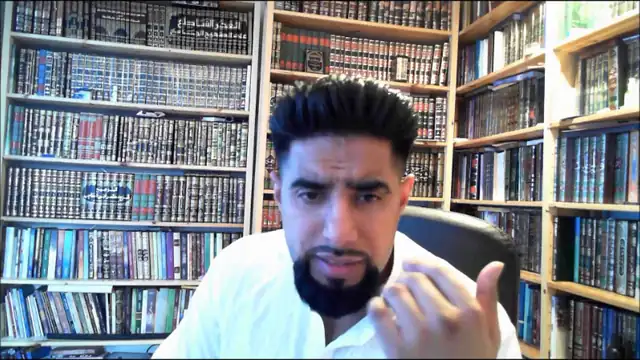 Play from 0:04
The video loads from YouTube only when you press play. Click a time in the transcript to seek.
Watch this part
Open on YouTube at 0:04The player starts at 0:04, the beginning of this part.
This segment0:04 to 12:52 · 12 min 48 sGeneral teaching
What this part covers
machinesummary, machine-writtenTrimming the beard below a fist is not haram according to many great scholars, a well-founded view in the tradition, though others may follow stricter opinions.
In more detail
Mufti Abu Layth says the beard hadith combine the moustache and the beard with a command to be different from Jews, Christians or Magians, which many take as mandatory. He compares hadith with the same wording, to dye the hair, to pray in shoes and to eat suhur in order to differ from the People of the Book, and says the scholars generally agree those commands are not mandatory but permissible or recommended, so he asks why the beard alone should be obligatory. He adds that the reports of ten acts of fitrah include the beard, though some chains have problems, while trimming the moustache is established as fitrah and not obligatory. He cites a Maliki scholar of al-Andalus nearly a thousand years ago, Abu al-Walid al-Baji [?], who read the command as possibly meaning to shorten the beard relative to the Jews and Christians, and says the view that a fistful beard is not obligatory runs to contemporary scholars such as Mustafa al-Zarqa [?]. He says people may follow other opinions but cannot deny this one, cites Imam Malik that one should inform and not argue about the Sunnah, and says the matter is not a tenet of faith.
- Some terms in this segment are uncertain
- Low audio confidence in the transcript
Position stated
Mufti Abu Layth says the opinion that trimming the beard below a fist's length is not haram is well founded in the tradition.
“this is something that is well found and established in our books and we have to recognize that the is well founded it is in our tradition it is unden denable”
Category: ruling
Kind: general teachingTranscript
machine0:04 to 12:52 · click a time to seek · dotted terms open the glossary
[Music] so first of all we've got two things here one that there is a combination between the the mustach between the Tash and the beard okay so the and the in all three of these secondly we have a a type of
stipulation saying be different to the Jews and the Christians or the ma or the mush now many people have interpreted this to mean that it is an obligatory command a mandatory command but we see quite differently from other so let me take you to a few other Hadith that share or that bear a resemblance to this from the differing
perspective so there is a Hadith of Abu which is in um the mus of Ahmed and Abu da and in it is transmitted also by bukari that the the prophet Sall alaihi wasallam said that the Y that they do not die their hair they do not color their hair so the prophet Sall alaih wasallam said so be different to them and you color your hair color whether that is of the head or of the beard color
it there is another Hadith transmitting by transmitted in the book of and in the that the prophet Sall alaihi wasallam said is transmitted by sh that the prophet Sall alaihi wasallam said that that be different to the they do not pray in their shoes wearing their shoes so be different to with them and this is a
command now there is another Hadith which is transmitted once again uh in Muslim in and in the ofed that the prophet Sall alaihi wasallam on the authority of stated that the difference between us and the people of the book and that how we should be different to them with regard in regard to our fasting is that we should wake up
for is the wording of the Hadith is the difference between us and the people of the book and there are a few other examples as well but I'll just keep these three um which will really suffice to show what I'm trying to prove here and that is that first of all the generally across the board have agreed that in all three of these in the one of Abu and the one of sh in the one of in these type of where the Prophet
has instructed people that be different color your hair color your beards that be different to the Y pray in your shoes that be different eat that in these typ and other that resemble this that the command and instruction here is not mandatory rather some have said it is simply permissible others have said that it is upon recommendation and that seems to be the popular view amongst the majority of the okay so if
here this is taken as a recommendation then why is it when it is mentioned with the beard that it must be an obligation that's a question another uh point of contention is that we see that there are several in which the prophet s Alam has taught us some have been transmitted for example on the authority of that 10 actions are from the and they mention all these different actions like
and so on and rinsing the mouth and amongst them is that allowing the beer to grow and the f is understood to mean the Sunnah and there are several variations there is some transmission from that which is in in the book of H that there are 10 acts of f including that of the beard and then there are other transmissions and I will accept that whilst investigating thesei many of the have found that there have been some
problems with the chains but what they have found is what is definitely it through various Nar narrations whether it's been through the book of through aladi through ABD through uh through Teri through various narrations that from the actions of f is to trim the mustach okay trimming the Tash is from the is from the actions of so now this brings
us back to the Hadith the three all of which contained both actions the the mustach and the beard and the fact that we should be different so you can see that if when it comes to trimming the mustache that has been clearly proven to have been from the act from the Sun or the F of this de and not from the obligatory actions of this thing okay so these were some of the evidences that those and there were many
whom I've mentioned have used as a basis historically for centuries up until this very day and age to say that growing A Fistful beard is not obligatory uh Abu W Ali one of the Legends almost a thousand years old said that the prophet Sall alaihi wasallam used the word that grow the beard which also means to trim and he said because some of theab had great beards and the prophet Sall alaihi wasallam it's possible he said it's very possible in fact he
says he said that the prophet Sall Al wasallam was saying shorten the beard in a way that it's less although it's still a beard but it's less than what the Jews and Christians have he said that that is possible and he says that this wording what is also possible from it is that grow it in relation to the [Music] mustach that is an interpretation from a scholar that is almost a thousand years old from alelos Ab so we see these classical narrations coming through this is not a phenomenon
of postmodernity this is something that is well found and established in our books and we have to recognize that the is well founded it is in our tradition it is unden denable I am not stating by any means that there is no other opinion there are opinions that people have said look you must have a fistful length beard some have said you must just let it grow all together and people are entitled to follow that if they please but what they cannot do is deny that these opinions
have existed as authentic opinions of some of the greatest of this theme till our very day and age and what is interesting and worth mentioning that Imam Malik was asked that when somebody informs another of the Sunnah should he start arguing and debating and getting into such a discourse and uh such like a heated discussion with people regarding the Sunnah and IM Malik said
he said that's all he said you simply State and inform and you leave it at that that is how this theme has been transmitted with etiquette and we see people today will often do things as judge people we are so uh uh so Swift to judge one another we must remember that it is not these outwardly things that reflect the true state of a person let alone that these states which we are objecting to have actually been
substantiated by many of this tradition that said people I have clarified uh quite clearly and substantiated that this opinion does exist it is not Haram according to many of the Great man of quoted people like people like IM many others up until this very day and age right up until contemporary Scholars like Mustafa Zar or Al many others who
have clearly stated that it is not Haram to trim your beard likewise many have said it is not Haram to have an or what is interpreted as a beard it is not uh Haram to be kind of trimming below a fistful in length that said this is not a matter of the dean which we should treat as a tenant of Faith the way some people have kind of given this such they
have prioritized it in a way that it almost Allah like perhaps comes after or one of the the greatest tenants of this thing that is not the state status or the mam of this Mas that said people I leave you with a [Music] poem that I mean whoever wishes that he can take heed or guidance from what has been said or displayed that we have
really just poured out everything we possibly could we ask Allah subhah wa ta'ala to teach us from his knowledge to give us the to to reconnect with this amazing Legacy that we have to have the ability to convey the true understanding of This Dean to those who come after [Music]
[Music] us with that folks for listening
Paragraphs overlapping 0:04 to 12:52. Full text on the recording page.
Cite this segment
Stable id, transcript version and tier are part of the citation. Every change to a transcript is logged.Mufti Abu Layth Archive, segment 2014-04-12b-S01, auto-transcribed, may contain errors. https://muftiabulayth.org/r/kkjqsrxj3km/s/1/ (accessed 1 November 2026)
- APA 7
Mufti Abu Layth. (2014, April 12). Is it haram to trim my beard shorter than a fist's length? [Video, segment 2014-04-12b-S01, auto-transcribed, may contain errors]. Mufti Abu Layth Archive. Retrieved November 1, 2026, from https://muftiabulayth.org/r/kkjqsrxj3km/s/1/
- Chicago author-date
Mufti Abu Layth. 2014. "Is it haram to trim my beard shorter than a fist's length?" Video, segment 2014-04-12b-S01, auto-transcribed, may contain errors. Mufti Abu Layth Archive. Recorded April 12, 2014. Accessed November 1, 2026. https://muftiabulayth.org/r/kkjqsrxj3km/s/1/
- BibTeX
@misc{abulayth-2014-04-12b-S01,
  author = {Mufti Abu Layth},
  title = {{Is it haram to trim my beard shorter than a fist's length?}},
  year = {2014},
  month = {4},
  date = {2014-04-12},
  howpublished = {\url{https://muftiabulayth.org/r/kkjqsrxj3km/s/1/}},
  url = {https://muftiabulayth.org/r/kkjqsrxj3km/s/1/},
  organization = {Mufti Abu Layth Archive},
  urldate = {2026-11-01},
  note = {Segment 2014-04-12b-S01, auto-transcribed, may contain errors}
}
Something wrong here?
Tell us what is wrong and it will be checked against the recording. Nothing changes until a person has reviewed it.
Sending a note needs JavaScript, which is off or unavailable in this browser. Nothing has been sent.
No name, email address or account is asked for or stored, and the inbox does not store your IP address. For rate limiting it keeps an unreadable fingerprint of your connection for 48 hours, and our database provider's own logs record connections as every website's do. Only your note, its kind, the page and the moment in the recording are kept, for review.