
Recordings › Insights to a personal journey: An interview with Mufti Abu Layth · 2 Jul 2014 › Segment 7 of 8
Does Islam require a particular dress or beard style for scholars?
maaliki malikite malikiyyah maliki school hanafite hanafiyyah hanafi school muftis mubah mubaah ulama ulema ulamaa al-din ad-deen ad-din religionA message to those who attack him: respect the difference
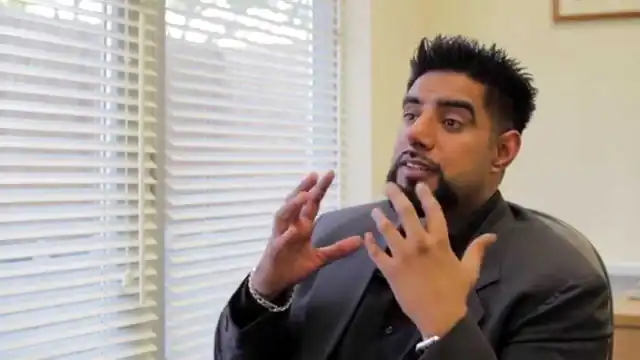 Play from 22:13
The video loads from YouTube only when you press play. Click a time in the transcript to seek.
Watch the answer
Open on YouTube at 22:13The player starts at 22:13, where the answer begins.
This segment22:13 to 24:49 · 2 min 36 sGeneral teaching
The answer in brief
machinesummary, machine-writtenNo: respect the difference of opinion. Many esteemed Maliki scholars were clean-shaven or wore suits, and the din mandates no uniform.
In more detail
Mufti Abu Layth asks critics to accept that his dress and appearance are based on reason and on aspects of the din, which he believes permissible, and to respect a difference of opinion, reminding them that Muslims agree on much more. He points to esteemed non-Hanafi scholars of the last century, especially Maliki scholars of North Africa and of the Zaytuna in Tunis, many of whom were clean-shaven or wore small or trimmed beards and suits, including a grand mufti whose name the captions garble. He says people who have only seen the dress of Saudi Arabia, the Gulf or Pakistan assume it is mandatory, but the din does not mandate a particular uniform.
Question as read aloud · questioner not identifiedWhat is your message to those who attack you?
- The question was reconstructed from Mufti Abu Layth's restatement; the questioner's own words are not in the recording
Position stated
Mufti Abu Layth says the din does not mandate a particular type of uniform.
“there's many people who have you know exercised that the dean has not actually um you know it does not mandate a particular type of”
Category: teaching
Kind: general teachingTranscript
machine22:13 to 24:49 · click a time to seek · dotted terms open the glossary
it the message to those who attack me H I'd like to say just hate is going to hate no I mean I think on a on a realistic note I I would say look we have a difference um you don't like the way I dress you don't like the way I that's fine I'm not telling you to embrace it I don't have a problem with the way you dress I don't have a problem with the way you decide to do your hair or to shape your beard if we can just accept that what I'm doing is based on reason it is based on aspects of the Deen I do believe it
to be permissible to be valid and we may have a difference of opinion here you may disagree with me but but I would just appreciate if you respect the difference that's all look and I'd like to remind us that we agree on so much more so to disagree on just you know you look at my appearance and you think I would also like to bring you know these people's attention to many of the worldwide and especially within let's say since we have things like photographs and stuff like that if we just take a look at this last century and we take a look at a lot of the the
esteemed from um especially that are non let's say Hani so if you're going to look at the from the Maliki and from let's say Northwest North Africa in general you will see many that would have had things like kept a go beard or many of them some of them let's say the of the grand Muhammad Hussein I mean if you look at him he was clean shaven Maliki in I mean if you look at a lot of the the the leading of of the Zuna Tunis you will see many of them were either clean shaven or next to clean shaven or small stubble like beard
or some of them are very trimmed beard many of the they they wear suits so just because people haven't actually been um exposed to this does not mean and now maybe they're seeing me they're thinking everybody is like I don't know like let's say dressed the way people do in Saudi Arabia or in the Gulf or in Pakistan and they're going to assume that well just because everybody either dresses like that or there's you it's not quite like that I mean there's many people who have you know exercised that the dean has not actually um you know it does not mandate a particular type of
Paragraphs overlapping 22:13 to 24:49. Full text on the recording page.
Cite this segment
Stable id, transcript version and tier are part of the citation. Every change to a transcript is logged.Mufti Abu Layth Archive, segment 2014-07-02-S07, auto-transcribed, may contain errors. https://muftiabulayth.org/r/7uxklqh8-ig/s/7/ (accessed 1 November 2026)
- APA 7
Mufti Abu Layth. (2014, July 2). Does Islam require a particular dress or beard style for scholars? [Video, segment 2014-07-02-S07, auto-transcribed, may contain errors]. Mufti Abu Layth Archive. Retrieved November 1, 2026, from https://muftiabulayth.org/r/7uxklqh8-ig/s/7/
- Chicago author-date
Mufti Abu Layth. 2014. "Does Islam require a particular dress or beard style for scholars?" Video, segment 2014-07-02-S07, auto-transcribed, may contain errors. Mufti Abu Layth Archive. Recorded July 2, 2014. Accessed November 1, 2026. https://muftiabulayth.org/r/7uxklqh8-ig/s/7/
- BibTeX
@misc{abulayth-2014-07-02-S07,
  author = {Mufti Abu Layth},
  title = {{Does Islam require a particular dress or beard style for scholars?}},
  year = {2014},
  month = {7},
  date = {2014-07-02},
  howpublished = {\url{https://muftiabulayth.org/r/7uxklqh8-ig/s/7/}},
  url = {https://muftiabulayth.org/r/7uxklqh8-ig/s/7/},
  organization = {Mufti Abu Layth Archive},
  urldate = {2026-11-01},
  note = {Segment 2014-07-02-S07, auto-transcribed, may contain errors}
}
Something wrong here?
Tell us what is wrong and it will be checked against the recording. Nothing changes until a person has reviewed it.
Sending a note needs JavaScript, which is off or unavailable in this browser. Nothing has been sent.
No name, email address or account is asked for or stored, and the inbox does not store your IP address. For rate limiting it keeps an unreadable fingerprint of your connection for 48 hours, and our database provider's own logs record connections as every website's do. Only your note, its kind, the page and the moment in the recording are kept, for review.