
Recordings › Dr. Shehzad Saleem | the Preservation of the Quran & the Problem of Qira'at | MindTrap with Mufti#26 · 19 Jun 2020 › Segment 15 of 25
Isn't it too convenient that the one preserved reading is exactly the Hafs Quran we have?
hadeeth ahadith ahaadeeth hadis ahaadith malik ibn anas malik bin anas imam maalik imam malik ibn anas imaam imams prayer leader shafi shafei shafiite shafi'i school muftis dalil daleel adillah adilla proof mutawaatir tawatur mass-transmitted qiyama qiyamat yawm al-qiyamah yawm al-qiyama day of judgement resurrection koran quraan al-quran sura soorah suwar soora chapter ayah aya ayat ayaat aayah aayat qira'ah qiraa'aat qira'aat recitations sahabah sahaba sahabi sahabiyyah sahabiyat 'alim aalim umma ummat community sabr patienceMufti Abu Layth's own view of a dynamic Quran, and whether one true reading coinciding with Hafs is too convenient
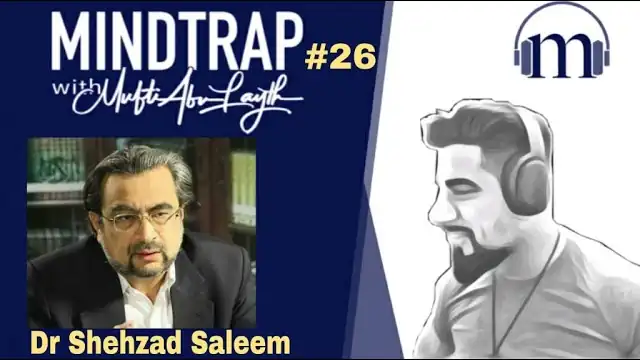 Play from 1:18:35
The video loads from YouTube only when you press play. Click a time in the transcript to seek.
Watch this part
Open on YouTube at 1:18:35The player starts at 1:18:35, the beginning of this part.
This segment1:15:59 to 1:21:11 · 5 min 12 sGeneral teaching
What this part covers
machinesummary, machine-writtenMufti Abu Layth states his own view that the Quran was always dynamic and allowed some flexibility of wording, as Imam Malik and al-Shafi'i held companions could substitute words. The guest answers the convenience objection by saying the reasoning, not the result, should be judged, and that later scholars missed the verses of al-Qiyamah because of a flawed report from Ibn Abbas and a hadith-centric mindset.
In more detail
Mufti Abu Layth says his own position differs slightly: while he agrees with Ghamidi on many things and that the qira'at are not mutawatir, his view has been that the Quran was always dynamic and meant to be, with a flexibility that disturbs some people today; he notes the guest's book records that Imam Malik, al-Shafi'i and, he thinks, Imam Ahmad [?] held that some companions could substitute an easier word, one interpretation of the ahruf, and that for him ahruf simply means multiplicity. He says he puts this on record because he has expressed it on his Monday night shows, but is here to present and understand the guest's and Ghamidi's view. He then asks the question non-Muslims, orientalists and critics will put: is it not too convenient to say that there was always one static Quran, that it happens to coincide with Hafs from Asim, and that all the other manuscripts were people's best attempts? The guest answers that the conclusion matters less than the reasoning that led to it, which will have its flaws and should be analysed rather than reverse-engineered from a convenient result; truths are often simple and right under one's nose. The reasoning here is that the verses of al-Qiyamah had a meaning that eluded later generations because they stuck to an interpretation resting on a report from Ibn Abbas which he has shown is not soundly attributed and is flawed in content, and because the ummah became so hadith-centric that it could not read the Quran without a hadith; a scholar then came along and said the point had simply been missed. He does not expect people to accept this at once against fourteen centuries, but asks for academic critique rather than dismissal, calling the work a combined quest and a humble presentation by Farahi and his students.
- Guest speech overlaps this segment
- Some terms in this segment are uncertain
Position stated
Waiting for the speaker checkA guest speaks in this segment and the captions do not say who said what. The view found here is held back until the speaker-separated transcript confirms the words are his, or the channel verifies it. The transcript and recording are published in full.
Kind: general teaching Speakers: host and guest; guest speech is labelled and excluded from positionsTranscript
machine1:15:59 to 1:21:11 · click a time to seek · dotted terms open the glossary
A guest speaks in this segment. Guest speech is labelled and is excluded from the positions layer.
evidence and stuff but yeah I just want to mention at that point that these people had been very critical of these flora so okay I mean you know I want to ask I'd like as well if we can and take a few questions from people that are asking I'll read them up but before we come to that if that's okay tops um I want to ask you look you know this by the way for I have said to people obviously we I'm not sure if you're aware I wouldn't think you are away my own position on this has been slightly different i although have agreed and do agree in in view with Randy Saab on many things and agree with
him that the Kyra at or not motivator in that sense my view has been that the Quran was always dynamic and it was meant to be dynamic and that meant in some ways there was a there was flexibility with it and this does disturb some people today but it's like how Imam Malik and you mentioned in your book as well that you know in my Malik Imam Shafi'i and I think you even put I think even at a me as well was of the view that certain there was flexibility to the extent that that some companions could substitute words they could say well you
know they could there was a word that was easier for them they used to substitute it and that was one of the interpretation of our oath and sabar obviously in my understanding just means multi it's like there's a dynamism to it and it's multiple you know it's not restricted but yeah but this wasn't you know I'm more interested right now in having in presenting this understanding of yours and presenting what Hamid eSAB has to say because I find it very interesting as well and I wanted to really truly understand it but I just put that out there just for people that you know because I have on Monday nights been expressing my view in case they
think iced tea sob confusing us he's saying one thing being here but there's a question here I want to ask you dr. Salvin that is that well you know with this view that the poor are the Quran was just one it was static always it was absolutely the way we have the must have today the Quran it was the Kira at allama and it just happened to coincide with half son as him and all the other manuscripts were people's best attempts getting it right but they didn't really do you expect you know like as for non-muslims orientalists Islam even
Islam critics who may not be against Islam do you you know their question will be that do you really expect us to by that I mean is that not way too convenient of a response well you see I think that the the conclusion is not as important as the reasoning which a conclusion offers I think regardless of what the conclusion is we should analyze the reasoning of what led us to form this opinion it would have its own flaws no one is perfect and I'm sure there must be a lot of flaws so I think instead of approaching through the result the approach must be through the
reasoning which led us to this result it's not like a reverse engineering in which you see that because the result is very convenient and hence you think that it was something maybe already engineered so I think in in the first place truths are very simple and often they are right below your nose and you tend to overlook them because you think that something more complicated should have been there and to start generally very simple and the second thing as I said is that it's basically the process of reasoning which has led us by by for example presenting the fact that these Sudama verses they had a specific meaning which eluded a lot of our Taba
and our Saha in our later generations because they stuck to a particular interpretation of those surat yama verses which was in the light of an author attributed to even a boss which itself I have shown is not very soundly attributed to him it has a lot of flaws in it not only it it's not but the content as well but because of the fact that our Muslim Ummah has been more Hadees centric and they think that they cannot understand the Quran unless a Hadees is presented and they cannot go against it so that particular surah Yama verse remained in Oblivion for a long time until a scholar came along and said well it's so simple that you just missed
the point you've missed the bus and you've taken the wrong bus so it's like like a person coming along and telling you that hey look open up your eyes that some new reality before you and of course if we don't expect people to immediately fall for that because as I said it's centuries and the 14th century the overview which we are pitted against so therefore if someone has a different view we should analyze it we are not very it's not an ambition that people should accept it the only thing is that if the thing is not cogent then we would expect a academic answer and academic critique that would be most important
than the most welcoming thing which will help us also build upon our flaws and it's like a combined quest it's not my quest it's like mullah Baba and many other people fooling in and presenting their view analyzing it and creating some part of it telling us that for example this this this argument is flawed or this argument is correct and it's like it's like a combined effort that we should put forth without claiming ourselves that we are the ones who have discovered something it's just a humble presentation done by for I serve as a student of the Quran and if you think it is incorrect it would be of the fitting and very very welcoming if
Paragraphs overlapping 1:15:59 to 1:21:11. Full text on the recording page.
Cite this segment
Stable id, transcript version and tier are part of the citation. Every change to a transcript is logged.Mufti Abu Layth Archive, segment 2020-06-19-S15, auto-transcribed, may contain errors. https://muftiabulayth.org/r/f2bcgwatu5g/s/15/ (accessed 1 November 2026)
- APA 7
Mufti Abu Layth. (2020, June 19). Isn't it too convenient that the one preserved reading is exactly the Hafs Quran we have? [Video, segment 2020-06-19-S15, auto-transcribed, may contain errors]. Mufti Abu Layth Archive. Retrieved November 1, 2026, from https://muftiabulayth.org/r/f2bcgwatu5g/s/15/
- Chicago author-date
Mufti Abu Layth. 2020. "Isn't it too convenient that the one preserved reading is exactly the Hafs Quran we have?" Video, segment 2020-06-19-S15, auto-transcribed, may contain errors. Mufti Abu Layth Archive. Recorded June 19, 2020. Accessed November 1, 2026. https://muftiabulayth.org/r/f2bcgwatu5g/s/15/
- BibTeX
@misc{abulayth-2020-06-19-S15,
  author = {Mufti Abu Layth},
  title = {{Isn't it too convenient that the one preserved reading is exactly the Hafs Quran we have?}},
  year = {2020},
  month = {6},
  date = {2020-06-19},
  howpublished = {\url{https://muftiabulayth.org/r/f2bcgwatu5g/s/15/}},
  url = {https://muftiabulayth.org/r/f2bcgwatu5g/s/15/},
  organization = {Mufti Abu Layth Archive},
  urldate = {2026-11-01},
  note = {Segment 2020-06-19-S15, auto-transcribed, may contain errors}
}
Something wrong here?
Tell us what is wrong and it will be checked against the recording. Nothing changes until a person has reviewed it.
Sending a note needs JavaScript, which is off or unavailable in this browser. Nothing has been sent.
No name, email address or account is asked for or stored, and the inbox does not store your IP address. For rate limiting it keeps an unreadable fingerprint of your connection for 48 hours, and our database provider's own logs record connections as every website's do. Only your note, its kind, the page and the moment in the recording are kept, for review.