
Recordings › Dr. Shehzad Saleem | the Preservation of the Quran & the Problem of Qira'at | MindTrap with Mufti#26 · 19 Jun 2020 › Segment 14 of 25
Do the early manuscripts with different words undermine the preservation of the Quran?
maaliki malikite malikiyyah maliki school ijtihaad ijtehad independent reasoning qiyas qiyaas muftis dalil daleel adillah adilla proof isnad sanad isnaad asanid koran quraan al-quran ayah aya ayat ayaat aayah aayat tilawah tilawat tilaawah ulama ulema ulamaa deen ad-deen ad-din religionEarly manuscripts with different words, the criteria of a valid reading, and the Basran grammarians who mocked the reciters
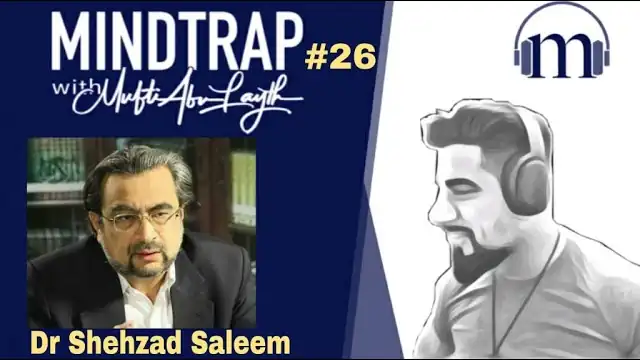 Play from 1:10:45
The video loads from YouTube only when you press play. Click a time in the transcript to seek.
Watch this part
Open on YouTube at 1:10:45The player starts at 1:10:45, the beginning of this part.
This segment1:09:29 to 1:15:59 · 6 min 30 sGeneral teaching
What this part covers
machinesummary, machine-writtenThe guest says such manuscripts were bound to exist once people wrote down the readings, and that a reading needs correct Arabic and a chain to the Prophet, with ijtihad only in preference. Mufti Abu Layth adds that the harshest critics of the readings were Muslim grammarians of Basra such as al-Mazini, until later grammarians like Ibn Malik embraced them.
In more detail
Mufti Abu Layth asks about the manuscripts: the extra pronouns, replaced words and genuinely different words such as maliki and malik in yawm al-din that critics now cite, one claiming thirty-seven variant masahif; is the guest saying these are people's best attempts rather than the actual recitation, and that the one real reading is the Hafs we have? The guest repeats that the word must not change while pronunciation may vary, and says such manuscripts were bound to exist, because once people read on these variations it was natural to write them down, so manuscripts with the readings of Nafi', Asim, Hamza or al-Kisa'i are to be expected; they were not pure ijtihad, since the criteria of a reading are correct Arabic and a sound chain back to the Prophet, so one cannot invent a reading the Prophet never read, and ijtihad enters only in preferring one transmitted reading of a verse over another. Mufti notes that in this field the harshest critics of the readings were Muslims: the Basran grammarians mocked some of the reciters, al-Mazini saying Nafi' was not a true Arab and did not know Arabic properly, and others accusing Hamza of a grammatical mistake for splitting a construction in a verse, and standard Arabic today rests largely on Basran grammar; only later grammarians such as Ibn Malik embraced the readings as evidence. He then says he wants to ask something before taking viewers' questions.
- Guest speech overlaps this segment
Position stated
Waiting for the speaker checkA guest speaks in this segment and the captions do not say who said what. The view found here is held back until the speaker-separated transcript confirms the words are his, or the channel verifies it. The transcript and recording are published in full.
Kind: general teaching Speakers: host and guest; guest speech is labelled and excluded from positionsTranscript
machine1:09:29 to 1:15:59 · click a time to seek · dotted terms open the glossary
A guest speaks in this segment. Guest speech is labelled and is excluded from the positions layer.
kind of approximation analogy that there was this standardized Arabic which did have the Hamza even though presumably Quraish may not have you know used arms are much but when the Prophet spoke for people in general or the Quran being very formal it came in the standardized Arabic I don't that was something that I kind of eventually settled with that understanding after reading so many different things yeah but okay so if we're taking this this approach let's say this you know all these manuscripts
today I know there is a whole you you've got a whole section on manuscripts in here as well all of these differences all of these things to do with the extra pronouns the replacement of words you know like things like let's say the linemen mom do the tell him mom dude or whether it's through to whether it's born on its whether it's you know these kind of Zakir l say how these kind of words that there are completely different words they're not even even though there's similarity meanings like Malachy ami Dean maliki yawmi T in that kind of stuff what this is all a it's
it's in essence like the person's best attempt that's what you're saying it's not the actual recitation right so you see as I said this this is the the important thing regarding recitation is that the word can should not change the way you pronounce that word is something of a variation which is which is allowed which is something which is I would say a very natural thing because you're not always reading as if you will read Inglot like like the King's English or the Queen's English you would have that variation a Pakistani or a silicon or an Indian would have its own accent so act I would say the word accent is a better
representative of this whole thing the accents are something which are always something which is a leverage which is given to us the important thing is that the word must don't change and in the Corrado armor you'll find that the word has not changed sure in but in all these manuscripts where they have got word differences like based on this Kyra art and other geta art as well that people are bringing today like I know and it's not like some let's say Islam critics today on YouTube they will say look we've now got 30 I think 37 they're saying we've got moths and
look they've got variations and this is this this in essence your response to this is that you're going with the approach that well these were all if they had the real absolute one is just one which is half which is what we have in in main what is prevalent have some awesome if I if I can cool it have some awesome so that's what you're saying so what I'm what we are saying is basically that these manuscripts were bound to exist because when people started reading on these variations it was but natural to have them written
down yeah so people start discovering these manuscripts which have for example the eating of knafeh or the art of reading of awesome or hums or Kasai or a plumber it's but natural because they just did not preserve this crowd mainly through their oral tradition they wrote those muscles down there these Messiah existed the only thing is that when they wrote those Messiah it was not just purely Ishta hard which played its role because you see there is one group of scholars would say that we cannot do is the hard on these things and the sanction of the Prophet must be there so you see the criteria of the terawatt if you if you just delineate those three criteria one of them is that the Arabic should be correct the second
is that sahasrara do that it must have a chain of narration which goes back to the Prophet which in other words mean that you just cannot do it so hard I mean it's the hard part is that in which you prefer one reading of it over the other but you just cannot have a reading which is it is like saying that okay it's my own reading and if even if the Prophet never read it or this how I did not read it I can do which the heart because people have been doing this as well yeah so mr.
Hollis is only on that part in you have a reading who's son and it goes back to the Prophet and you have more than one reading of the same verse so you're doing this too hard by preferring or the reason you have for that preference that is yeah and and just so people know that you know in this topic in this whole and this is a as you know many scholars is baffled so many scholars but this whole arena to do with godard variations the Quran the language the kora the art of the harshest people against or that have been the harshest I don't know if that's
the right word but that have been very I mean they obviously it doesn't mean the anti Islam but harshest critics have been Muslims in the past you'll find a lot of the grammarians from Basra were very kind of in fact they even mocked some of the hora so about this man al Mazen II for example he mocks the huge grammarian huge you know like coming just off this Seba way and people like that he in the generations just after him he mocks people like Natha says now if it was not even a true Arab didn't know Arabic properly they mock Hamza as a young I think they say he made a grammatical mistake in the novel of
because he separated the mobile family feel a import the role in between so they say you know I think the utter la ilaha him Sherlock at home kind of splits this verse by saying putting cut Allah Allah that whom should occur him and they said what on earth is this this guy doesn't even know arabic and they were really think you know the boss at which today actually standard arabic is is probably like 90% based on Basara grammar but they were actually so harsh in criticizing and it was much later grammarians like Abner Malik who were very embracive and you know they they were embracing the Sun as well as
evidence and stuff but yeah I just want to mention at that point that these people had been very critical of these flora so okay I mean you know I want to ask I'd like as well if we can and take a few questions from people that are asking I'll read them up but before we come to that if that's okay tops um I want to ask you look you know this by the way for I have said to people obviously we I'm not sure if you're aware I wouldn't think you are away my own position on this has been slightly different i although have agreed and do agree in in view with Randy Saab on many things and agree with
Paragraphs overlapping 1:09:29 to 1:15:59. Full text on the recording page.
Cite this segment
Stable id, transcript version and tier are part of the citation. Every change to a transcript is logged.Mufti Abu Layth Archive, segment 2020-06-19-S14, auto-transcribed, may contain errors. https://muftiabulayth.org/r/f2bcgwatu5g/s/14/ (accessed 1 November 2026)
- APA 7
Mufti Abu Layth. (2020, June 19). Do the early manuscripts with different words undermine the preservation of the Quran? [Video, segment 2020-06-19-S14, auto-transcribed, may contain errors]. Mufti Abu Layth Archive. Retrieved November 1, 2026, from https://muftiabulayth.org/r/f2bcgwatu5g/s/14/
- Chicago author-date
Mufti Abu Layth. 2020. "Do the early manuscripts with different words undermine the preservation of the Quran?" Video, segment 2020-06-19-S14, auto-transcribed, may contain errors. Mufti Abu Layth Archive. Recorded June 19, 2020. Accessed November 1, 2026. https://muftiabulayth.org/r/f2bcgwatu5g/s/14/
- BibTeX
@misc{abulayth-2020-06-19-S14,
  author = {Mufti Abu Layth},
  title = {{Do the early manuscripts with different words undermine the preservation of the Quran?}},
  year = {2020},
  month = {6},
  date = {2020-06-19},
  howpublished = {\url{https://muftiabulayth.org/r/f2bcgwatu5g/s/14/}},
  url = {https://muftiabulayth.org/r/f2bcgwatu5g/s/14/},
  organization = {Mufti Abu Layth Archive},
  urldate = {2026-11-01},
  note = {Segment 2020-06-19-S14, auto-transcribed, may contain errors}
}
Something wrong here?
Tell us what is wrong and it will be checked against the recording. Nothing changes until a person has reviewed it.
Sending a note needs JavaScript, which is off or unavailable in this browser. Nothing has been sent.
No name, email address or account is asked for or stored, and the inbox does not store your IP address. For rate limiting it keeps an unreadable fingerprint of your connection for 48 hours, and our database provider's own logs record connections as every website's do. Only your note, its kind, the page and the moment in the recording are kept, for review.