
Recordings › Age of Aisha (ra)- Mufti Abu Layth · 11 Jan 2017 › Segment 4 of 18
Premise two: hadith absolutism versus hadith relativism
wudhu wudoo wuzu al-wudu wudhoo salah salat salaah namaz salaat namaaz as-salah al-salah salawat haj hadj hadeeth ahadith ahaadeeth hadis hadees ahaadith saheeh sahih hadith saheeh hadith sound hadith malik ibn anas malik bin anas imam maalik imam malik ibn anas imam bukhari sahih bukhari saheeh al-bukhari saheeh bukhari imam al-bukhari imaam imams prayer leader muftis hukm ahkam hukum hukam ahkaam fard farz faraid fard ayn fard kifayah fardh sunna sunnat sunan prophetic practice koran quraan al-quran sahabah sahaba sahabi sahabiyyah sahabiyat al-madinah madeenah yathrib 'alim aalim ulama ulema ulamaa ummah umma ummat fitnah fitna fitan strife ibadah ibada ibaadah ibadat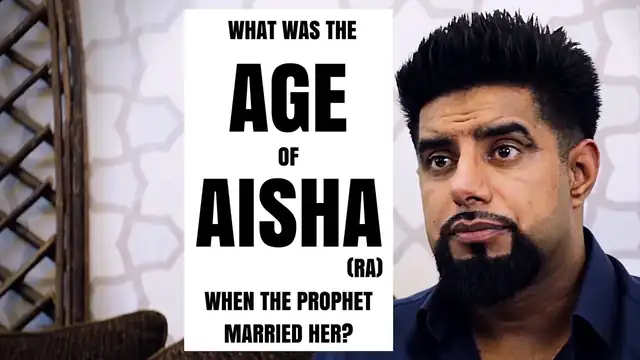 Play from 16:58
The video loads from YouTube only when you press play. Click a time in the transcript to seek.
Watch this part
Open on YouTube at 16:58The player starts at 16:58, the beginning of this part.
This segment16:58 to 30:00 · 13 min 02 sGeneral teaching
What this part covers
machinesummary, machine-writtenScholars were divided from the start between treating every authenticated hadith as binding and reading it against Islam's wider principles. Imam Malik and the school of Madinah left many sound-chained reports they did not hold to be the sunnah.
In more detail
The segment opens with the end of the first premise, the disputed year of the siege of Madinah, and then turns to the second: how a report in Sahih al-Bukhari, regarded as the most authentic book after the Quran, could be inaccurate. Mufti Abu Layth says Muslim scholars were divided from the outset between hadith absolutism, which takes any authenticated report as binding, and hadith relativism, which reads a report against the wider principles of Islam, the approach he attributes to the school of Madinah under Imam Malik and to the school of Kufa. He gives examples: Aisha rebuking the report that a dog, a donkey or a woman passing invalidates the prayer; Ibn Abbas reasoning against Abu Hurayrah's report requiring wudu from anything touched by fire, and Abu Hurayrah's angry reply; Imam Malik declining to take as sunnah the reports on washing a bowl seven times after a dog licks it, on wiping leather socks for three days, on the buyer's right to cancel a sale, on performing hajj on behalf of an aged father, and on Allah creating Adam in His image, which he says Imam Malik rejected as anthropomorphic, citing Ibn Abd al-Barr [?]. He adds that Imam Malik said he did not transmit many reports he learned from Ibn Shihab al-Zuhri because there was no practice on them, and cites a companion's saying that teaching people a report their intellects cannot grasp becomes a trial for some of them. He concludes that these scholars distinguished hadith from sunnah and would leave a report with a sound chain when they did not hold it to be the sunnah.
- Some terms in this segment are uncertain
Position stated
Mufti Abu Layth says that from the earliest period many scholars, Imam Malik and the school of Madinah among them, treated hadith as relative to the wider principles of Islam and left reports with sound chains that they did not hold to be the sunnah.
“that was opposed heavily by countless Scholars who believe that the Hadith was always relative to the greater context to the greater picture and principles of Islam and that included the school of Medina namely Imam Malik”
Category: method
Kind: general teachingTranscript
machine16:58 to 30:00 · click a time to seek · dotted terms open the glossary
Away these armies and these forces it was because of uh just the natural kind of sandstorms and things that took place they had to dissipate but this was such a tragic and traumatizing event for all Muslims that were present and yet they differ on when it occurred when they came to report it some people said it happened in the fourth year some people say in the fifth year so this is to give you an indication of when we're talking about date logs or years or events there was never this meticulous
Precision in their reportings amongst the early community and they did not even have a calendar prior to Islam the calendar I don't mean the months of the year but an annual calendar they didn't even have an annual they never used to even refer to any number of years that had passed so keeping that in mind that is the first premise the second premise for us to understand is this is to do with Hadith okay a Hadith that is in sari and several questions questions will be asked here that look this is considered
the most authentic book after the Quran and Muslims you know they consider this book to be meticulous and so this is transmitted in bukari how can this be inaccurate and we will deal with a lot of this later on but as a premise in understanding Hadith we have to understand that the Muslim approach the attitudes of Muslim Scholars towards Hadith has been divided from the very onset so you've had Hadith absolutism versus Hadith relativism so although there have been some people who and they and and I suppose that mentality that kind of
attitude still continues there have been people that have felt if a Hadith comes it is absolute we are not concerned about anything we must take it as an authority but that was opposed heavily by countless Scholars who believe that the Hadith was always relative to the greater context to the greater picture and principles of Islam and that included the school of Medina namely Imam Malik and it does include other schools as well School of kufa and and other Scholars but namely we're speaking about Imam Malik and we
have to understand who was Imam Malik he wasn't just he was a scholar that that was Undisputed regarding his Mastery of Hadith and he is an absolute legend in the Islamic tradition he's somebody that we have a proverb today it's proverbial to
say it's become a proverb that nobody can speak or give a ruling if Malik is in Madina so it's important to understand these things now this tradition it's Imam Malik and other people they inherited it from this from the companions of the Prophet sallallahu alaihi wasallam so let's see as an example we see a Hadith that is that uh that is transmitted that any if if a person was in prayer and a dog or a donkey or a woman walks in front of
them it invalidates their prayer what did AA say the wife of the Prophet when she heard somebody transmitting this she was heavily offended and rebuked them said what is wrong with you you know like you you know you you make us equal to a dog and a and a donkey she said this is nonsense and she refused that and she did not accept it and neither do any of the major schools of law accept that so Imam Malik IM Abu these people did not accept that by just simply a uh a dog
walking in front of somebody praying that their prayers invalidated although the Hadith was there right you have Abbas a major companion of the Prophet a cousin to the prophet a person who the prophet said this is this is the translator of the Quran he is the he is the hab of this umah he is The Scholar of this
um when he's being told by Abu that there is a Hadith that the messenger of Allah said that you must do W you must a an ablution a ritual ablution washing from anything that has touched fire anything that has been heated in other words he says to him he says so what would you say about water that we heat up in order to wash ourselves do we have to wash ourselves from that washing and and this then
annoys Abu hura who who storms off he gets upset he says to him that if I said to you that the messenger of Allah said something don't you dare try to reason about it so you can see this Abu hura having this understanding of Hadith is absolute and categorical but and I know other Scholars have said this Hadith was abrogated but the pro but the thing here is how does Abbas reason with it he actually teaches us to reason he says well look well that doesn't actually make sense so I don't accept it because
well if you if anything made contact with fire well what about water which we heat up to wash then we would have so this is nonsensical and redundant so this is where this understanding was coming from you see on countless occasions the scholars of this tradition that saw Hadith as Hadith relativism they made a distinction between Hadith and Sunnah they said that we are about preserving the Sunnah and that is the way of the messenger of Allah sallu alaihi wasallam quite often that is caught and captured within Hadith Transmissions but not
always Imam Malik when he was told a certain Hadith he said when he was told about thean a certain Hadith about thean he said he says I don't know maybe that is a chain a valley chain about an incident that happened as a oneoff he says but I don't accept it to be the Sunnah there's a popular Hadith about the uh if a a dog licks the bowl a kind of a bowl with water in it that you have to wash it seven times and do so so on and so forth in order to because it's impure Imam Malik when he was uh told
about this he actually responds he says he says we know this Hadith has come he says we have no idea what it's on about what what does it mean what we cannot accept it he says because we are taught by the Quran the general narrative teaches us that you can that all life is pure and that you can use hunting dog and things like this so the point is he found this problematic but on its content alone looking at the content of a Hadith he knew this was problematic and there's several examples uh uh you
will see IM there is a once again uh it's in sah Muslim about if a person is traveling and uh he can wipe over leather socks as part of the ritual ablution and he can do this for 3 Days Imam Malik clearly responds in in in relationship to that he says that as to us he says in our town in Madina we have seen there are no limitations applied to this even if the Hadith is there he says we do not act according to that IM Malik in his M which is one of the most authentic books considered by many people to be more authentic than bukari
bring several Hadith himself and then says we don't act according to them it's a very popular Hadith known as that when people two when when a consumer and a seller are in a transaction it it refuses to allow closure for the consumer it says as long as they stay within the context they can always he can recall that sale this contradicted with the general understanding that once you buy something you've bought it Imam Malik refus he says we do not act according to this that is a Hadith in his own book he
was asked you know uh sham transmits IM Malik was asked that why did you bring this Hadith if you weren't going to act according to it and so what does he say he says he says and in some Transmissions somebody like you or an ignorant person like you so he can know that that we left it because we're Don not quite but we left it upon knowledge knowing that this we don't it does not make
sense there is aith in sah Muslim one a the that's Inari that's a very absolutely I believe it's in bukari and Muslim days but that's in sah Muslim that that one's in sah Muslim now the thing is there there's a Hadith another Hadith in sah Muslim and I'm trying to show sah examples of sah Hadith this culture of Hadith relativism there's a Hadith where a woman asks the prophet sallallahu alaihi wasallam about her father who is of old age and he can't he can't ride a camel well or a horse well
and so he can't seem to go to do the Hajj the pilgrimage so she asks the messenger of Allah can I perform the Hajj on his behalf and the prophet says yes Imam Malik in relation to that said no he said that this makes no sense because it is not an obligation and one person cannot perform an act of worship on behalf of another now somebody may say okay these are to do with actions what about to do with something to do with like I don't know meaning or uh well there's a clear Hadith in sahkari where the the prophet sallallahu alaihi wasallam has said that God created Adam In His
Image that's in sahkari and Imam Malik ref he not only refused to transmit this Hadith but he rejected this Hadith and ABD in the highlights that IM Malik rejected this because he saw this as being anthropomorphic like trying to say well God has an image like humans and so just based on the content he rejects this Imam Malik's own teacher I shab who is an absolute reliable Authority within Hadith he's he's from the transmitters of uh of
of of Rel of Muslim and so on very absolute reliable scholar I mean he has his criticisms but he's a reliable transmitter Imam Malik himself says I have transmitted many Hadith I have I've learned many Hadith from shab he says and I will he says I do not transmit them because because there is no action upon them we do not act according to them also reminds us of the saying of who says that you are not going to teach a people a certain
Hadith right that they cannot understand with their intellect except it will turn out to become a huge a huge problem and Calamity for some of them at the very least so I think that that kind of shows and highlights that yes there has been a tradition and there continues to be within Islam of Hadith absolutism of people who do see Hadith as it doesn't matter if a Hadith comes it's an authority and so on yet it has
been contrasted and opposed by huge Traditions within Orthodox Islam like the school of Madina Imam Malik who on many occasions countless occasions would they would reject Hadith because they did not believe it to be the Sunnah even if the chain was another key point just before we uh move away from this topic is to understand that it is undeniable that the books like sahkari and sah Muslim it is undeniable that they have unacceptable Hadith in them this is very important to understand as
Paragraphs overlapping 16:58 to 30:00. Full text on the recording page.
Cite this segment
Stable id, transcript version and tier are part of the citation. Every change to a transcript is logged.Mufti Abu Layth Archive, segment 2017-01-11-S04, auto-transcribed, may contain errors. https://muftiabulayth.org/r/0ovisexs4ca/s/4/ (accessed 1 November 2026)
- APA 7
Mufti Abu Layth. (2017, January 11). Premise two: hadith absolutism versus hadith relativism [Video, segment 2017-01-11-S04, auto-transcribed, may contain errors]. Mufti Abu Layth Archive. Retrieved November 1, 2026, from https://muftiabulayth.org/r/0ovisexs4ca/s/4/
- Chicago author-date
Mufti Abu Layth. 2017. "Premise two: hadith absolutism versus hadith relativism." Video, segment 2017-01-11-S04, auto-transcribed, may contain errors. Mufti Abu Layth Archive. Recorded January 11, 2017. Accessed November 1, 2026. https://muftiabulayth.org/r/0ovisexs4ca/s/4/
- BibTeX
@misc{abulayth-2017-01-11-S04,
  author = {Mufti Abu Layth},
  title = {{Premise two: hadith absolutism versus hadith relativism}},
  year = {2017},
  month = {1},
  date = {2017-01-11},
  howpublished = {\url{https://muftiabulayth.org/r/0ovisexs4ca/s/4/}},
  url = {https://muftiabulayth.org/r/0ovisexs4ca/s/4/},
  organization = {Mufti Abu Layth Archive},
  urldate = {2026-11-01},
  note = {Segment 2017-01-11-S04, auto-transcribed, may contain errors}
}
Something wrong here?
Tell us what is wrong and it will be checked against the recording. Nothing changes until a person has reviewed it.
Sending a note needs JavaScript, which is off or unavailable in this browser. Nothing has been sent.
No name, email address or account is asked for or stored, and the inbox does not store your IP address. For rate limiting it keeps an unreadable fingerprint of your connection for 48 hours, and our database provider's own logs record connections as every website's do. Only your note, its kind, the page and the moment in the recording are kept, for review.