
Recordings › Prof. Edip Yuksel | Rejecting Hadith, Rashad Khalifa & Realizing '19' | MindTrap with Mufti #27 · 26 Jun 2020 › Segment 6 of 36
Were the Prophet's judgements meant to bind Muslims after his death?
al-bukhari imam bukhari sahih al-bukhari sahih bukhari saheeh al-bukhari saheeh bukhari imam al-bukhari muftis koran quraan al-quran surah sura soorah surat suwar soora aya ayat ayaat aayah aayat madina al-madinah madeenah yathrib ahl al-sunnah ahl as-sunnah ahlus sunnah ahl al-sunna sunnis shiah shiite shi'i twelver ithna ashariThe Prophet's roles ended with his life: judge, leader, the two-way bay'ah and women voting
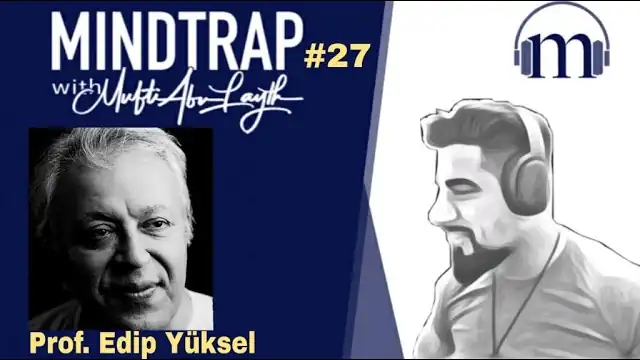 Play from 31:53
The video loads from YouTube only when you press play. Click a time in the transcript to seek.
Watch this part
Open on YouTube at 31:53The player starts at 31:53, the beginning of this part.
This segment31:53 to 38:24 · 6 min 31 sA view quoted in order to be discussed, not a position held
What this part covers
machinesummary, machine-writtenThe guest says the Prophet's authority as judge and leader was for his lifetime only, that his bay'ah was a reciprocal social contract in which women voted, and that his messengership ended once the Quran was delivered, so obeying the messenger cannot mean obeying Bukhari.
In more detail
The guest says the Quran gives Muhammad several roles: as a living prophet and leader he judged disputes and people had to accept his judgement, but those verses concern a live prophet listening to live people, and after his death a dead person cannot hear cases, just as today live judges and elected people decide live events, which keeps the system dynamic as conditions change. Mufti Abu Layth presses that the Prophet's judgements on daily affairs would surely have been conveyed; the guest answers that they were place and person specific, and that keeping Muhammad alive as one who knows the future and knows our troubles is to perceive him as God, a betrayal of the truth. He says the Quran mentions the Prophet's private life as an example of how leaders and people should treat one another, and reads the mubaya'a with women as the first recorded women's vote: unlike the Sunni and Shia one-way pledge of obedience to rulers, it was two-way, the Prophet promising justice and honesty and the people promising the same, and the verse that women would not disobey him in what is right implies they could disobey what was not. He says Muhammad was elected, consulted, not a tyrant, and accepted as leader and judge even by Jews, Christians and pagans in Madinah who rejected his prophethood, but that this leadership ended with his death; his messengership was fulfilled when the Quran was delivered, as 6:19 says, so obeying God and the messenger does not mean obeying Bukhari.
Position stated
This segment presents a view in order to discuss or respond to it. It is recorded as quoted, never as held, and no position is attributed from it.
Kind: a view quoted in order to be discussed, not a position held Speakers: host and guest; guest speech is labelled and excluded from positionsTranscript
machine31:53 to 38:24 · click a time to seek · dotted terms open the glossary
A guest speaks in this segment. Guest speech is labelled and is excluded from the positions layer.
This segment states a view in order to discuss it. It is recorded as a quoted view, not as a position held.
no because I was gonna say that yes many academics today Fred Donna amongst them who has a book as well saying this very same thing that seems that in the lifetime of the Prophet Muhammad Sal Allahu Allahu Allah he had a movement which is like he's saying that yes it's you know Islam is it but Islam is slightly an institutionalization version of it that if anything you'd call that early movement the believers movement and he caught me and his book Mohammed amongst the the believers now he this is what he's arguing that he's found they found
certain documents which will have things like la ilaha illallah but they won't mess they won't mention the prophets name with it like that obviously they do except the Prophet but it's more a it seems that this is more just in line with the early Abrahamic traditions just coming along and some early Christians I believe John of Damascus also described in Krish Muslims as a fringe Christian faction he says that you know these seem to be a strange type of Christians so there is some of this kind of work which resonates with what you're saying
yeah can you look at involved on this subject is very important 18 according to the Quran Muhammad has several roles he was also a leader a prophet you know a living prophet leader of believers therefore when they had a major issues they came to him he would be the judge among them they had to accept his judgment yeah and therefore the verses is about a live Prophet Muhammad of listening live to the people of God and making judgment you will not suppose
after his death you cannot have Muhammad listening to your sides therefore it's absolutely that was limited with his lifetime as leader but he was also as a husband but I do not feel that as he was the Prophet was living amongst the believers tending to their daily affairs tending to things dear is it not very reasonable and rational that he was passing judgments on things people were asking him can you can you judge between us on this matter can you decide this of course of course so would like the brass would these rods not be conveyed nope the dis Murray is
there comes space place specific it is geography person specific right now we are live we don't consult a dead person to listen to us and to listen to detailed and issues between people therefore absolutely it is wrong when now we have people elected people or judges will listen to us we should have them and then we listen we'll follow their judgment we should have people live people to listen to live events by this way we are basically we're dynamics we are living the time changes the
conditions changes by making Prophet Muhammad as God because we say we cannot be dying which keep him alive as if he knows the future he knows everything he knows us he knows our troubles he knows our issues no it is big it is really betrayal of the truth it is perceiving Mohammed as God no the Quran says when the Khmer you turn away now militant you will die and they will be dying too and therefore Muhammad's role several old he was husband but why we save Quran talks but Muhammad's a little bit private life because give us an example
there will be leaders after Mohammed about public personalities we need to be respectful about their privacy's but it gives us example about how we should treat our leaders and how should they treat us and these are the things for example the Quran says Muhammad had move ayah with women very interesting mabye it is first time woman voting in fact as far as I know muhammad woman voted muhammad it's not bad but soon is a shia-sunni tube AI one
way the below people giving promised to follow the orders of the rulers no no no it is not that it is mobile i will find it is too way to direction muhammad they promised to be just to be just to be truthful not to steal from public things he gave promised to them and they gave promise to muhammad so just who is to be a slave for people the distinction you're drawing between i think it's it's a very interesting point drawing a distinction between mobile and they are as it came to be understood in the
institutionalized version where certain people they pledged an allegiance to an authority here the prophet it is a sense of recipe a reciprocal action that the prophets give-and-take that's what you're saying absolutely here is one important verse well a I see make a female roof in it is about leader Mohammed whether you see naked they should not rebel against you female roofing in the things that is known that you're right yet his now roof means the things that is known by this condition
leave open means they could rebell againist you if you have something not malroux not acceptable therefore it is very obvious Muhammad was not a tyrant he had to consult the Quran says we share will kill angry you know Muhammad was elected by people and there was to weigh it is a social contract between people including woman voted for Muhammad and then in that social country there were Jewish people did not accept Rama's prophethood in Medina and the Christians they did not accept him to be prophet the the mushriks there the
pagans there did not accept him to be prophet of God but the exciting me is a leader George Lee the vase they expect them to be judge leader that's it but that leadership left with the Prophet Muhammad's death he is no more our leader he's dead put in your mind he's not God and Muhammad messengership is finished and says fully for a Alea healthy taboo Vera become women Bela chapter 6 verse 19 say this book is given to me to deliver to you and those who will be receiving that is and now
when we receive the Quran he's done his messengership therefore obeying God and messenger doesn't mean obeying God and Buhari obeying God his Abu this evening no I see like I agree with you on the idealization of bihari and making Islam Bihari centric and in fact I have an a whole thing dedicated called Bihari gate and the whole thing of the problems with Sal Bihari but on this note are you just to be clear are you stating that we have the Quran we have hispanica table but we can still do HD hard with it with day to
Paragraphs overlapping 31:53 to 38:24. Full text on the recording page.
Cite this segment
Stable id, transcript version and tier are part of the citation. Every change to a transcript is logged.Mufti Abu Layth Archive, segment 2020-06-26-S06, auto-transcribed, may contain errors. https://muftiabulayth.org/r/zmirskjob4o/s/6/ (accessed 1 November 2026)
- APA 7
Mufti Abu Layth. (2020, June 26). Were the Prophet's judgements meant to bind Muslims after his death? [Video, segment 2020-06-26-S06, auto-transcribed, may contain errors]. Mufti Abu Layth Archive. Retrieved November 1, 2026, from https://muftiabulayth.org/r/zmirskjob4o/s/6/
- Chicago author-date
Mufti Abu Layth. 2020. "Were the Prophet's judgements meant to bind Muslims after his death?" Video, segment 2020-06-26-S06, auto-transcribed, may contain errors. Mufti Abu Layth Archive. Recorded June 26, 2020. Accessed November 1, 2026. https://muftiabulayth.org/r/zmirskjob4o/s/6/
- BibTeX
@misc{abulayth-2020-06-26-S06,
  author = {Mufti Abu Layth},
  title = {{Were the Prophet's judgements meant to bind Muslims after his death?}},
  year = {2020},
  month = {6},
  date = {2020-06-26},
  howpublished = {\url{https://muftiabulayth.org/r/zmirskjob4o/s/6/}},
  url = {https://muftiabulayth.org/r/zmirskjob4o/s/6/},
  organization = {Mufti Abu Layth Archive},
  urldate = {2026-11-01},
  note = {Segment 2020-06-26-S06, auto-transcribed, may contain errors}
}
Something wrong here?
Tell us what is wrong and it will be checked against the recording. Nothing changes until a person has reviewed it.
Sending a note needs JavaScript, which is off or unavailable in this browser. Nothing has been sent.
No name, email address or account is asked for or stored, and the inbox does not store your IP address. For rate limiting it keeps an unreadable fingerprint of your connection for 48 hours, and our database provider's own logs record connections as every website's do. Only your note, its kind, the page and the moment in the recording are kept, for review.