
Recordings › Homosexuality and Islam -Mufti Abu Layth · 20 Dec 2018 › Segment 3 of 3
Is homosexuality haram in Islam, and why were the people of Lut destroyed?
malik ibn anas malik bin anas imam maalik imam malik ibn anas imaam imams prayer leader muftis haraam forbidden madinah madina al-madinah madeenah yathrib 'alim aalim ulama ulema ulamaa zinaa zinah fornication adultery al-din ad-deen ad-din religionWhy he recounts this: Malik's tolerance, punishments that changed, and the crime of Lut's people
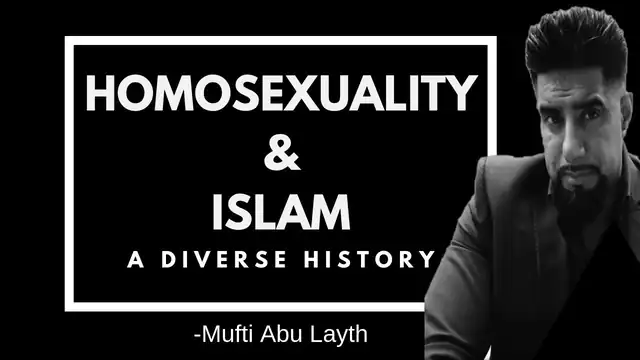 Play from 18:27
The video loads from YouTube only when you press play. Click a time in the transcript to seek.
Watch this part
Open on YouTube at 18:27The player starts at 18:27, the beginning of this part.
This segment18:27 to 23:17 · 4 min 50 sGeneral teaching
What this part covers
machinesummary, machine-writtenMufti Abu Layth accepts the majority view that homosexual acts are haram, but says the punishments scholars assigned were variable public-order measures that changed over time, that the people of Lut were destroyed primarily for rejecting their prophet, and that the ruling does not require hatred of homosexual people.
In more detail
Mufti Abu Layth says his purpose in recounting these figures, and Ibn Hazm's Tawq al-Hamama which he says is full of such material, is to burst a bubble rather than upset people: nobody is telling anyone to become gay, and Muslims need not be insecure about their sexuality. He recalls quoting Imam Malik in the Mudawwana, asked whether Muslims should intervene against a people who married their own mothers, sisters and daughters, answering that if that is their deen, their way of life, it should be left alone, since Allah teaches tolerance even of those who reject Him. He says that saying homosexuals should be thrown off cliffs is stupid and lies about the Prophet and Allah: in the past certain scholars classed the act as zina or as public obscenity, the punishments varied between places and changed over time, some equating it with zina and Abu Hanifa holding it less than zina, and he cites a scholar he names as al-Burzuli [?] six centuries ago saying the hudud change to reflect their age, referring to his own video on that subject. To the question why Allah punished the people of Lut so severely, he answers that although the verses speak of homosexual acts and arguably of rape, their primary crime was rejecting and tormenting their prophet and trying to break in and rape his guests, just as the people of Madyan were destroyed for rejecting Shu'ayb rather than for cheating customers; attributing the destruction to one act alone is an inference, not something Allah says. He closes by saying that the overwhelming majority of scholars held the act to be haram and that he accepts it is haram, while some scholars disagreed, and that this does not require hatred or statements of that kind.
- Some terms in this segment are uncertain
Position stated
Mufti Abu Layth says the overwhelming majority of scholars held homosexual acts to be haram and he accepts that they are haram, while saying that the punishments scholars assigned varied between places and changed over time, that the people of Lut were destroyed primarily for rejecting their prophet, and that the ruling does not require hatred.
“most outright majority did say it's haram some did disagree so just being honest and being objective and transparent majority accepted it haram and we accept it's haram”
Category: ruling
Kind: general teachingTranscript
machine18:27 to 23:17 · click a time to seek · dotted terms open the glossary
that there were many ways to destroy and destroy me for us that there were many ways if you thought about it [Laughter] [Music] i wonder why they only thought of love [Laughter] so this thing you see the reason i've said this is to not to kind of
burst not to kind of upset people but to burst the bubble and even after uh by the way even after ibn dawood who was madly in love with this person ibn hasan's book tokul hamama is full of this kind of stuff my reason for saying this is look just chill out you don't need to become gay nobody's telling you and you won't become gay don't you don't need to be so insecure about your sexuality and i quoted the other day about uh i quoted imam malik when he was asked in the
madovana and i had it here when he's asked in the mudovana about incestual relationships which were a greater taboo are that people that are marrying their own mothers and they're marrying their own sisters and daughters and that's the what they do should we in where possible should we stop and intervene them and imam malik said no he said if that's their deen and deen means way of life let it be he says allah teaches you to be tolerant even of those who reject him so what about his laws so this was the
legend of medina people so what i'm trying to say is that these things you do by saying stuff like throw people off cliffs what a stupid thing to say what a stupid thing to say yes in the past certain scholars classed that as zena the way they saw punishment for and zina fell under public office obscenity that people that were causing public obscenities and different places have punishments for these would change over time that they had a punishment for that for some it was equal to zina
for some they said like abu hanifah they said it was less than zina now others and ibrahimo and so on now and then scholars along the centuries came like imam al-budzuli who said that in his day and age 600 years ago the hadood all these punishments would change and reflect their age and people continue to and i've got a video on that on youtube so when you say these things you make the damage you do to islam apart from just lying you and just attributing things to the prophet and allah that they have not said and people say yeah but why did allah
punish the people of luth so much you see what was the what was the crime of the people of ruth yes first of all the verses speak of homosexuality arguably about rape they could do speak about that there is that angle but what was their biggest crime their rejection of the prophet the torturing of the prophet them wanting to break into his house and kidnap and rape the guests that he had this the fact that they rejected the message of god in front of them this was their primary crime
not the fact that's like saying oh the people of madiyan were also destroyed you know they also got punished yeah but what did they used to do that when they were buying and selling they used to tip the scales yeah but people are tipping the scales all the time do you hate them as well so much do you say when oh when you sold that you put the price of oh the people of madiyan what did they do with shuaib shaib ah they got what did they do with tribe but their primary crime the main crime was how they rejected the prophet of god that was the main crime not the other thing was also a crime the fact that you
tipped the scales and you con the customers was also a crime but was the destruction because of this now where do you get that from and that's just an opinion then that's your inference allah didn't say that specifically that's you inferring so yes look because certain things are haram first of all not all scholars in islam unanimously agreed that that was haram most outright majority did say it's haram some did disagree so just being honest and being objective and transparent majority accepted it haram and we accept it's haram
but you don't need to have that level of this hatred and saying things like this
Paragraphs overlapping 18:27 to 23:17. Full text on the recording page.
Cite this segment
Stable id, transcript version and tier are part of the citation. Every change to a transcript is logged.Mufti Abu Layth Archive, segment 2018-12-20-S03, auto-transcribed, may contain errors. https://muftiabulayth.org/r/yfej-qks-km/s/3/ (accessed 1 November 2026)
- APA 7
Mufti Abu Layth. (2018, December 20). Is homosexuality haram in Islam, and why were the people of Lut destroyed? [Video, segment 2018-12-20-S03, auto-transcribed, may contain errors]. Mufti Abu Layth Archive. Retrieved November 1, 2026, from https://muftiabulayth.org/r/yfej-qks-km/s/3/
- Chicago author-date
Mufti Abu Layth. 2018. "Is homosexuality haram in Islam, and why were the people of Lut destroyed?" Video, segment 2018-12-20-S03, auto-transcribed, may contain errors. Mufti Abu Layth Archive. Recorded December 20, 2018. Accessed November 1, 2026. https://muftiabulayth.org/r/yfej-qks-km/s/3/
- BibTeX
@misc{abulayth-2018-12-20-S03,
  author = {Mufti Abu Layth},
  title = {{Is homosexuality haram in Islam, and why were the people of Lut destroyed?}},
  year = {2018},
  month = {12},
  date = {2018-12-20},
  howpublished = {\url{https://muftiabulayth.org/r/yfej-qks-km/s/3/}},
  url = {https://muftiabulayth.org/r/yfej-qks-km/s/3/},
  organization = {Mufti Abu Layth Archive},
  urldate = {2026-11-01},
  note = {Segment 2018-12-20-S03, auto-transcribed, may contain errors}
}
Something wrong here?
Tell us what is wrong and it will be checked against the recording. Nothing changes until a person has reviewed it.
Sending a note needs JavaScript, which is off or unavailable in this browser. Nothing has been sent.
No name, email address or account is asked for or stored, and the inbox does not store your IP address. For rate limiting it keeps an unreadable fingerprint of your connection for 48 hours, and our database provider's own logs record connections as every website's do. Only your note, its kind, the page and the moment in the recording are kept, for review.