
Recordings › Monday Nights with Mufti #199 | Q&A Unscripted & Unrestricted! 😉 | Mufti Abu Layth · 26 Jan 2021 › Segment 25 of 36
If a hadith is also in other books besides Bukhari, does that confirm it?
wudhu wudoo wuzu ablution al-wudu wudhoo hadeeth ahadith ahaadeeth hadis hadees ahaadith malik ibn anas malik bin anas imam maalik imam malik ibn anas sahih al-bukhari sahih bukhari saheeh al-bukhari saheeh bukhari imam al-bukhari imaam prayer leader maaliki malikite malikiyyah maliki school muftis daleel adillah adilla evidence proof hasan hadith hasan li-ghayrihi hasan li-dhatihi hasan sahih 'alim aalim ulama ulema ulamaa shaykh shaikh sheik shuyukh shaykhs niyyah niyah niyat niyya niyyatThe hadith ripple or boomerang effect, and Ahmad Shakir's edit in al-Muhalla
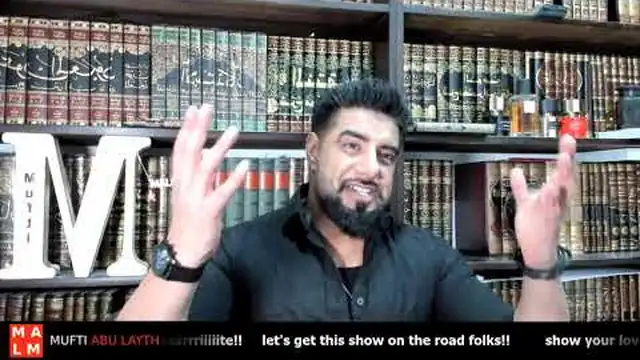 Play from 1:56:22
The video loads from YouTube only when you press play. Click a time in the transcript to seek.
Watch this part
Open on YouTube at 1:56:22The player starts at 1:56:22, the beginning of this part.
This segment1:56:22 to 2:04:13 · 7 min 51 sGeneral teaching
What this part covers
machinesummary, machine-writtenNot necessarily: he says transmitters and editors, often with good intentions, aligned names and texts with versions they knew, as Ahmad Shakir did in al-Muhalla, so parallel versions may not be independent.
In more detail
Mufti Abu Layth explains what he calls the bounce, ripple or boomerang effect, in reply to the objection that sidelining Bukhari changes nothing because the same hadith are in other books: because al-Bukhari was so respected, a transmitter who heard his version might, consciously or not, alter his own to match it, as people do with shared memories when someone they look up to tells an event differently. To show this is not a long shot, he presents Ahmad Shakir's edition of Ibn Hazm's al-Muhalla, where a statement of Imam Malik allowing wudu from a pool that animals drink from and relieve themselves in, if the water appears fine, is transmitted from Ibn Ghanim [?]. He shows that Shakir, finding that name in the Egyptian and Yemeni manuscripts, assumed it must be Ibn al-Qasim, who usually transmits from Malik, and changed it, then noted he could not find the statement in Ibn al-Qasim's Mudawwana, although Ibn Ghanim was a real and highly esteemed student of Malik from North Africa who later became a judge. He says Shakir did this with good intentions, but asks how many times such corrections happened in history without anyone catching them.
- Some terms in this segment are uncertain
Position stated
Mufti Abu Layth says that later transmitters and editors, even with good intentions, may have altered reports and names to match versions they knew, so that the same hadith appearing in other books need not be independent of al-Bukhari.
“my question to that is how do you know this is not a bounce effect or a ripple and boomerang effect that basically because imam buhari was a uh you know he was a great person”
Category: method
Kind: general teachingTranscript
machine1:56:22 to 2:04:13 · click a time to seek · dotted terms open the glossary
you can't stop something if it's you know mazara it's fun so right let's move on people let's move on what were some of the other topics right okay hadith people had check this out now i had discussed something about called the um the kind of bounce and ripple effect or the boomerang and ripple effect that basically a hadith when it's being said by let's say imam bukhari it could influence subconsciously other people and their hadiths in their books
so this is a response to the question that comes that what if you sideline bukhari today doesn't matter because these hadith are still equally found in some of these other books but my question to that is how do you know this is not a bounce effect or a ripple and boomerang effect that basically because imam buhari was a uh you know he was a great person and even though these people don't transmit from him directly but they acknowledged him so if somebody said or if he said or somebody from them said that look imam bukhari said this narration
it may be that the listener he may do it subconsciously he may do it consciously may alter his version to standardize it with what he just heard and people do this all the time in shared memories so people will sometimes your friend might narrate an event to you and their version of it may be slightly different to what you remember but if it's if that person is somebody for example one you look up to and two if it's maybe a more appealing memory you might alter your memory to match this
this kind of mirroring and it may be the people who took the books from these other imams altered it you don't know and so this is not something i'm just saying like people could say well you know mufti is a bit of a a long shot but here let me give you an example people you thought i speak without dalil did you not know did you think i was in what's the word epic
what's the word epic epic durian what was the i forgotten the word i'm gonna have to biggie d i'm gonna have to go back to big d right so people take a look at this now this is uh an example this is a great scholar uh sheikh ahmed shakir who's working on the mahala of uh ibn hasan that you can see there i mean that's just the reference to the page now this is in the mahala this is an example yeah um
and you have to understand is a huge you know he's a huge figure of the uh he lives into the early 1900s now sorry let me just see what's going on here right excellent so now ahmad shakir as you can see there this is a text where he's quoting from the mahala of ibn hassam a statement of imam malik
and he says look at malik that this has been transmitted from malik and he says that he asked malik about this water that animals come to and they you know basically they drink it but they also kind of relieve themselves in it and it's it's like a little it's like a pond not a little but it's like some kind of or maybe a pool a drinking pool where animals come to so he's asking could somebody do wudu from there and imam malik basically says if the water appears fine then fine you can do it but the interesting thing as i've underlined the he quotes ahmed sharkin who's a great scholar a
don scholar he quotes ibn qasim now so what's the problem well you see the problem is that ibn qasim isn't the person who transmits this now let's go to ahmad shaka's footnotes he quotes this and this is him working on the mahala and a classical text of ibn hasam and he is editing and he's editing this book and he brings it into print it's with his editing i mean in fact that's the the one i have as well right so you can see here he mentions in the footnotes he says
um that he says look wassawa he says it mentions in such and such manuscript the misery and the yemenia in both of those it mentions see the name is this must be a mistake because it's whenever he transmits maliki from of
imam malik he transmits it via ibn qasim then notice he says which is underlined in red i really tried to find this allah in the mud of ibn qasim but he says i didn't manage to find it now right so okay so you say well okay what's so you know interesting about that you see the interesting thing is ibn ranim does exist not only does he exist you see here is a quote imam malik used to praise think
exalt him think of him so highly that if when he would attend his class he would make him sit on one side to him on his side and he would ask him often what's going on ibn khanim was from north africa he was from uh modern day tunis as well which is also where sahnun is from and imam malik would often ask him and he went on later on to become a judge in africa and he was deemed one of the most knowledgeable people uh regarding the statements of regarding the statements of uh of imam malik
now right okay i'm just trying to okay that's good so so what's happened here this is one example what's happened is ahmad shakir is editing he comes across a name that looks similar in its spelling to ibn qasim it says now he he thinks ibnaranim from sahnun is saying from ibn ranim that doesn't sound right because and he's not a maliki but he's heard of these scholars he says usually transmits from ibn qasim so he changes it to ibn qasim
see he's not doing this out of some evil intention but he is trying to rectify because it makes sense to him yet ibn al-qasim does not transmit this it is actually ibn radhim so here you have a kind of working editing taking place and i'm showing you an example of something which is obviously you say yeah but so what you know this is happened now and we've picked up this mistake yes that's because it's happened now but what about all the hundreds of times that this has happened in history
and people that come after would just quote him do you understand and this is part of that kind of ripple effect that is created and let me show you another example you see in the same book the muhammad there is a hadith right now the hadith itself is a standard hadith to do with the menstrual cycle but the interesting thing i want to speak about show you how hadith that the chains get influenced now this hadith is transmitted from four people are transmitting it yeah so you can see here
Paragraphs overlapping 1:56:22 to 2:04:13. Full text on the recording page.
Cite this segment
Stable id, transcript version and tier are part of the citation. Every change to a transcript is logged.Mufti Abu Layth Archive, segment 2021-01-26b-S25, auto-transcribed, may contain errors. https://muftiabulayth.org/r/eokcnwggiba/s/25/ (accessed 1 November 2026)
- APA 7
Mufti Abu Layth. (2021, January 26). If a hadith is also in other books besides Bukhari, does that confirm it? [Video, segment 2021-01-26b-S25, auto-transcribed, may contain errors]. Mufti Abu Layth Archive. Retrieved November 1, 2026, from https://muftiabulayth.org/r/eokcnwggiba/s/25/
- Chicago author-date
Mufti Abu Layth. 2021. "If a hadith is also in other books besides Bukhari, does that confirm it?" Video, segment 2021-01-26b-S25, auto-transcribed, may contain errors. Mufti Abu Layth Archive. Recorded January 26, 2021. Accessed November 1, 2026. https://muftiabulayth.org/r/eokcnwggiba/s/25/
- BibTeX
@misc{abulayth-2021-01-26b-S25,
  author = {Mufti Abu Layth},
  title = {{If a hadith is also in other books besides Bukhari, does that confirm it?}},
  year = {2021},
  month = {1},
  date = {2021-01-26},
  howpublished = {\url{https://muftiabulayth.org/r/eokcnwggiba/s/25/}},
  url = {https://muftiabulayth.org/r/eokcnwggiba/s/25/},
  organization = {Mufti Abu Layth Archive},
  urldate = {2026-11-01},
  note = {Segment 2021-01-26b-S25, auto-transcribed, may contain errors}
}
Something wrong here?
Tell us what is wrong and it will be checked against the recording. Nothing changes until a person has reviewed it.
Sending a note needs JavaScript, which is off or unavailable in this browser. Nothing has been sent.
No name, email address or account is asked for or stored, and the inbox does not store your IP address. For rate limiting it keeps an unreadable fingerprint of your connection for 48 hours, and our database provider's own logs record connections as every website's do. Only your note, its kind, the page and the moment in the recording are kept, for review.