
Recordings › Insights to a personal journey: An interview with Mufti Abu Layth · 2 Jul 2014 › Segment 2 of 8
Why did Mufti Abu Layth choose the Maliki madhhab?
salat salaah namaz prayer salaat namaaz as-salah al-salah salawat fiqah jurisprudence fikh madhab mazhab school of law madhahib mazahib madhaahib malik ibn anas malik bin anas imam maalik imam malik ibn anas imaam imams prayer leader maaliki malikite malikiyyah hanafite hanafiyyah hanafi school muftis riba ribaa sood usury koran quraan al-quran madina al-madinah madeenah yathrib duaa duas duaas supplicationWhy he chose the Maliki madhhab: a school that keeps things natural
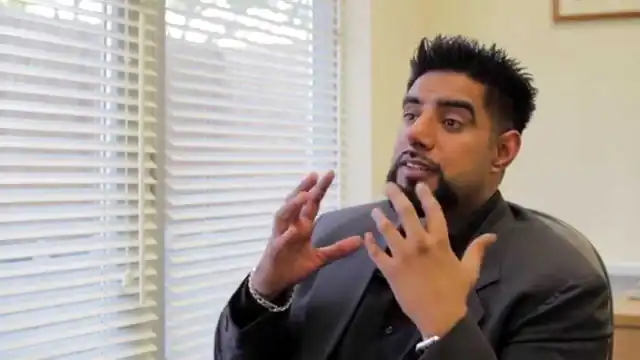 Play from 6:27
The video loads from YouTube only when you press play. Click a time in the transcript to seek.
Watch the answer
Open on YouTube at 6:27The player starts at 6:27, where the answer begins.
This segment6:27 to 10:20 · 3 min 53 sGeneral teaching
The answer in brief
machinesummary, machine-writtenIts personality matched his own: the Maliki school keeps things natural, for example in how one stands, holds the hands and makes du'a in salah.
In more detail
Mufti Abu Layth says he came from a Hanafi background and first studied Hanafi fiqh, but believes madhhabs have personalities that align with people's own. An initial spark came from hearing of the practice of the people of Madinah and of Imam Malik, and two of his teachers were Maliki; as he studied more, the school's personality proved congruent with his own. He gives the example that the Maliki school emphasises keeping things natural: standing naturally in salah, holding the hands or letting them hang however comes naturally, and being able to make any du'a, in any language, in salah, as opposed to fixed prescriptions.
Question as read aloud · questioner not identifiedWhy the Maliki madhhab?
- The question was reconstructed from Mufti Abu Layth's restatement; the questioner's own words are not in the recording
Position stated
Mufti Abu Layth says the Maliki madhhab emphasises keeping things natural, as a theme running throughout the school.
“the Maliki m is really big on keeping things natural and you'll see this as a as almost like an U an underpinning theme that goes right throughout the”
Category: teaching
Kind: general teachingTranscript
machine6:27 to 10:20 · click a time to seek · dotted terms open the glossary
in Syria there was no M or facilities that allowed full-time memorization of the Quran and I just began on my own I would just and I did a few Jews like that every day I would just do a certain amount but I started started to then realize that as a proper commitment to memorizing the Quran it just won't be feasible so that's when I thought okay maybe go to a different part of the world and I went to Pakistan and and likewise from one thing from hi I thought you know what maybe I can get some books and learn some books and learn some and some and get onto the course and I thought you know what maybe I can become an and from theim thing I thought you know what maybe I could just
do this muy thing and I have to say wall that it has been the most incredible achievement that personally I've ever you know and with from Allah ever managed to to kind of obtain and Achieve you see why the Maliki maab is a very interesting question I think I mean I wasn't from that background from a more more of a hanfi background and hanfi F was what I was initially learning I have to say that I
seriously feel that mhbs have a personality and we as people we sometimes may find our personalities kind of align themselves almost gel with the personality of a particular maab and I genuinely initially it began with just that spark like an interest in the in the M I heard about it from different places I'd heard of Concepts like the practice of the people of Medina I'd heard that the maab you know that this amazing personality IM Malik one two of my teachers were Maliki so
that initial spark the more I started to kind of learn about it I I began to realize that the the the type of nature of the M was one that I really felt I don't know I just felt at the time so drawn to it that it um just seemed like things which I would be very comfortable with I know that sounds maybe a bit strange what's even stranger is that as I began to learn the methab more and develop F further in into the me it it really the personality of it
was evidently so congruent with my own personality it's I mean that is something I could not have known initially but it really was and this and I'd like to just draw just maybe just give an example um the Maliki m is really big on keeping things natural and you'll see this as a as almost like an U an underpinning theme that goes right throughout the so you'll see things like whether it's a in Salah or it's a m in or something else or whether it's in the chapters of nah or other things you will
see that the always seems to emphasize that look just keep it natural you know like Salah is a good thing that everybody can relate to so here's a question how do I stand in Salah where should my feet look just stand naturally the the Maliki has the position also of holding the hands for example or you can let them hang but how should I hold my hand just however it comes together naturally okay how should I how many T should I say say look whatever comes naturally to you this is the type of theme that you see repeating itself right throughout the maab and I found that really
resonating with me as opposed to having finite things you know like no no you must do things in a specific way no your fingers must be like this and no you must say this only three times or no you can so I found this very natural type of connection within theab once again these type of little these type of small things like when you're in Salah you can you can make any Dua you like you can talk about anything you can even say in any language these things to me brought about a greater reality of what I would have perceived the F to be anyway so this is
what I'm saying it really kind of touched home with me my favorite Islamic science that's a good question I do feel that I'm I have actually been drawn to many Islamic sciences and I've um quite fond of many of them but if I had to choose I would say F reason being that I think as a person maybe my personality it's really uh somebody that's always been fascinated
Paragraphs overlapping 6:27 to 10:20. Full text on the recording page.
Cite this segment
Stable id, transcript version and tier are part of the citation. Every change to a transcript is logged.Mufti Abu Layth Archive, segment 2014-07-02-S02, auto-transcribed, may contain errors. https://muftiabulayth.org/r/7uxklqh8-ig/s/2/ (accessed 1 November 2026)
- APA 7
Mufti Abu Layth. (2014, July 2). Why did Mufti Abu Layth choose the Maliki madhhab? [Video, segment 2014-07-02-S02, auto-transcribed, may contain errors]. Mufti Abu Layth Archive. Retrieved November 1, 2026, from https://muftiabulayth.org/r/7uxklqh8-ig/s/2/
- Chicago author-date
Mufti Abu Layth. 2014. "Why did Mufti Abu Layth choose the Maliki madhhab?" Video, segment 2014-07-02-S02, auto-transcribed, may contain errors. Mufti Abu Layth Archive. Recorded July 2, 2014. Accessed November 1, 2026. https://muftiabulayth.org/r/7uxklqh8-ig/s/2/
- BibTeX
@misc{abulayth-2014-07-02-S02,
  author = {Mufti Abu Layth},
  title = {{Why did Mufti Abu Layth choose the Maliki madhhab?}},
  year = {2014},
  month = {7},
  date = {2014-07-02},
  howpublished = {\url{https://muftiabulayth.org/r/7uxklqh8-ig/s/2/}},
  url = {https://muftiabulayth.org/r/7uxklqh8-ig/s/2/},
  organization = {Mufti Abu Layth Archive},
  urldate = {2026-11-01},
  note = {Segment 2014-07-02-S02, auto-transcribed, may contain errors}
}
Something wrong here?
Tell us what is wrong and it will be checked against the recording. Nothing changes until a person has reviewed it.
Sending a note needs JavaScript, which is off or unavailable in this browser. Nothing has been sent.
No name, email address or account is asked for or stored, and the inbox does not store your IP address. For rate limiting it keeps an unreadable fingerprint of your connection for 48 hours, and our database provider's own logs record connections as every website's do. Only your note, its kind, the page and the moment in the recording are kept, for review.