
Recordings › Insights to a personal journey: An interview with Mufti Abu Layth · 2 Jul 2014 › Segment 1 of 8
How did Mufti Abu Layth become a mufti?
maaliki malikite malikiyyah maliki school muftis koran quraan al-quranHow he came to study Islam and become a mufti
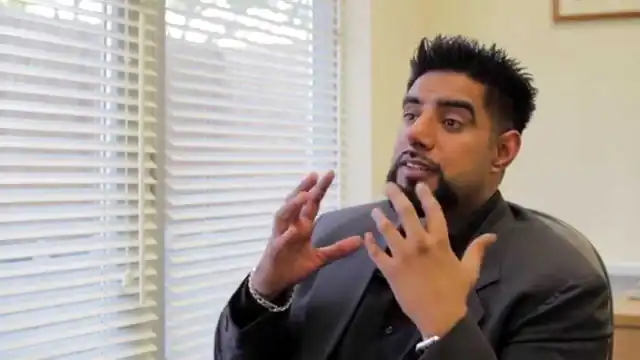 Play from 0:11
The video loads from YouTube only when you press play. Click a time in the transcript to seek.
Watch the answer
Open on YouTube at 0:11The player starts at 0:11, where the answer begins.
This segment0:11 to 6:27 · 6 min 16 sGeneral teaching
The answer in brief
machinesummary, machine-writtenIt was not planned: an interest in Arabic and the Quran grew step by step, taking him from self-study to Syria and then Pakistan, where he trained as a mufti.
In more detail
Mufti Abu Layth says his path into religious study was not planned but something he believes Allah inspired, beginning with wanting to understand Arabic and the Quran, which became, as he puts it, addictive. He says he was not raised in a very religious family, was not interested in education at school, and would have found the idea of becoming a mufti humorous. He describes learning basic Arabic alone from a book until a teacher suggested he study in Syria when he was about seventeen, and how a feeling that it might be possible led him there; he encourages people to follow such intuitions. Unable to memorise the Quran full-time in Syria, he went to Pakistan, where one step led to another until he trained as a mufti, which he calls the most incredible achievement of his life.
Question as read aloud · questioner not identifiedWho are you? Why did you choose to study? When did you decide you wanted to become a mufti?
- The question was reconstructed from Mufti Abu Layth's restatement; the questioner's own words are not in the recording
Position stated
Not yet double-checkedA summary of the view expressed is published here only after a second, independent review has found the sentence in the transcript where he says it. Until then, the transcript and the recording speak for themselves.
Kind: general teachingTranscript
machine0:11 to 6:27 · click a time to seek · dotted terms open the glossary
AB known as Mu AB Al Maliki I think when it comes to matters of the dean that this is really something that Allah subhana ta'ala inspired people to take this path I mean it wasn't when it when it happened it wasn't something like a plan that I'd had from ages before it was just that I just really got so interested in the dean and I wanted to just learn more it began with small
things um just wanting to have some understanding of the Arabic language and then it just got deeper and deeper I want to have a a deeper understanding and maybe understand some of the Quran to understanding the entire Quran to aith and it just it's actually quite addictive so that that's how it is
really initially myself I'm you see I wasn't necessarily born and I mean I wasn't raised in a very religious family or anything like this my background uh just normal I suppose had the cultural understanding of Islam I would have had no I wasn't actually into education either as somebody when I went to school and stuff like that I wasn't at all into studying I wasn't interested in in that at all so I wouldn't have had any if you told me back then let's say when I was at school or even when I was at college or just
going to college at that if you told me oh that you know would you like to become a Muti I mean I I don't think I would have actually known back then what a Muti was or even perhaps may have heard of the word Muti but if you told me would you be interested in studying Islam to this extent and would you or you would end up doing this I would have actually I mean it would just if anything just been humorous I would never have believed that oh yeah I would go off and end up becoming a Muti and studying like this because I had I was not my life wasn't really aimed in that direction so I didn't know and even when I began my studies I didn't have this
understanding that it would lead to this um you know training to be a Muti it was like I said it was very incremental and I think it is seriously it's something which um Allah subhana ta'ala inspires individuals and you sometimes get a almost like a a belief that you can do something that you can can learn and I think that experience that you know sometimes people call it like or something in Arabic that the chest almost expands to it it warms to this feeling that actually I can do this so it was like the first time somebody said
to me one of my teachers said to me I was just learning Arabic at a very basic level and I was just coming to terms with the fundamental structures of the Arabic language and I was actually doing this on my own I actually when I studied initially I just ended up because I couldn't find teachers and things like this so I did have teachers and they were had commitments I just ended up buying a book and just going through that book on my own every day I would just go through it for you know whether it's 20 30 minutes and I would just cover that and that's how I would learn and I remember when somebody first told me one of my teachers told me that why why don't you travel abroad why don't you go to
Syria and you're talking to me who at the time I would have probably just been 17 from a very almost like a sheltered perspective hadn't really probably you know leisurely traveled almost outside of the city almost like a you know just like a from a very I I did feel that my perspectives were very sheltered at the time for me that was impossible I I felt that to to go to another country just set up just get up go to another country and study
and that that was inconceivable the amazing thing was that I actually remember at the time and I actually remember it vividly that I set off from the teachers home and and I went to I was going to the local Masid and at the time I remember just a feeling thinking that you know what maybe it's actually possible and that feeling I would seriously say that whenever I've had that feeling in life and and I encourage people to kind of to kind of follow on with these intuitions
so that type of intuitive feeling whenever I've had that I've pursued it and it's always kind of planned out so it was this type of feeling that maybe I can go to Syria may you know what maybe this isn't impossible and I started speaking to one person you started speaking to another I started and before you you before I knew it I was going to Syria so and it just you know one thing led to another and even there I wasn't thinking oh this is going to end up it was just I was there for a little while then I got interested in doing h of the Quran I thought that you know I really want to memorize the Quran and it was unfortunate that at the time
in Syria there was no M or facilities that allowed full-time memorization of the Quran and I just began on my own I would just and I did a few Jews like that every day I would just do a certain amount but I started started to then realize that as a proper commitment to memorizing the Quran it just won't be feasible so that's when I thought okay maybe go to a different part of the world and I went to Pakistan and and likewise from one thing from hi I thought you know what maybe I can get some books and learn some books and learn some and some and get onto the course and I thought you know what maybe I can become an and from theim thing I thought you know what maybe I could just
do this muy thing and I have to say wall that it has been the most incredible achievement that personally I've ever you know and with from Allah ever managed to to kind of obtain and Achieve you see why the Maliki maab is a very interesting question I think I mean I wasn't from that background from a more more of a hanfi background and hanfi F was what I was initially learning I have to say that I
Paragraphs overlapping 0:11 to 6:27. Full text on the recording page.
Cite this segment
Stable id, transcript version and tier are part of the citation. Every change to a transcript is logged.Mufti Abu Layth Archive, segment 2014-07-02-S01, auto-transcribed, may contain errors. https://muftiabulayth.org/r/7uxklqh8-ig/s/1/ (accessed 1 November 2026)
- APA 7
Mufti Abu Layth. (2014, July 2). How did Mufti Abu Layth become a mufti? [Video, segment 2014-07-02-S01, auto-transcribed, may contain errors]. Mufti Abu Layth Archive. Retrieved November 1, 2026, from https://muftiabulayth.org/r/7uxklqh8-ig/s/1/
- Chicago author-date
Mufti Abu Layth. 2014. "How did Mufti Abu Layth become a mufti?" Video, segment 2014-07-02-S01, auto-transcribed, may contain errors. Mufti Abu Layth Archive. Recorded July 2, 2014. Accessed November 1, 2026. https://muftiabulayth.org/r/7uxklqh8-ig/s/1/
- BibTeX
@misc{abulayth-2014-07-02-S01,
  author = {Mufti Abu Layth},
  title = {{How did Mufti Abu Layth become a mufti?}},
  year = {2014},
  month = {7},
  date = {2014-07-02},
  howpublished = {\url{https://muftiabulayth.org/r/7uxklqh8-ig/s/1/}},
  url = {https://muftiabulayth.org/r/7uxklqh8-ig/s/1/},
  organization = {Mufti Abu Layth Archive},
  urldate = {2026-11-01},
  note = {Segment 2014-07-02-S01, auto-transcribed, may contain errors}
}
Something wrong here?
Tell us what is wrong and it will be checked against the recording. Nothing changes until a person has reviewed it.
Sending a note needs JavaScript, which is off or unavailable in this browser. Nothing has been sent.
No name, email address or account is asked for or stored, and the inbox does not store your IP address. For rate limiting it keeps an unreadable fingerprint of your connection for 48 hours, and our database provider's own logs record connections as every website's do. Only your note, its kind, the page and the moment in the recording are kept, for review.