
Recordings › Age of Aisha (ra)- Mufti Abu Layth · 11 Jan 2017 › Segment 16 of 18
Is judging hadith by their content a modern invention of jurists rather than hadith scholars?
wudhu wudoo wuzu ablution al-wudu wudhoo haj pilgrimage hadj hadeeth ahadith ahaadeeth hadis hadees ahaadith sahih saheeh sahih hadith saheeh hadith sound hadith malik ibn anas malik bin anas imam maalik imam malik ibn anas imaam imams prayer leader muftis sunna sunnat sunan prophetic practice koran quraan al-quran sahabah sahaba sahabi sahabiyyah sahabiyat al-madinah madeenah yathrib ahl al-sunnah ahl as-sunnah ahlus sunnah ahl al-sunna sunnis 'alim aalim ulama ulema ulamaa umma ummat community deen al-din ad-deen ad-dinIs judging hadith by content a late approach of jurists rather than hadith scholars
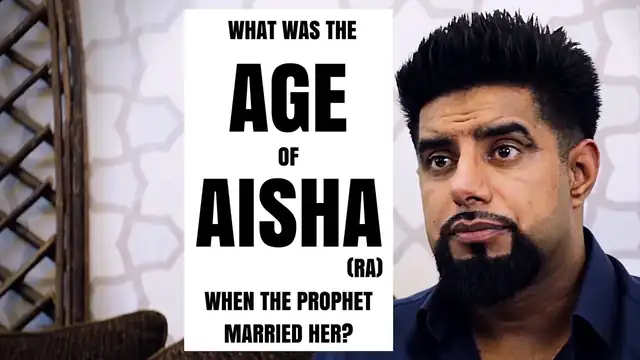 Play from 1:49:58
The video loads from YouTube only when you press play. Click a time in the transcript to seek.
Watch the answer
Open on YouTube at 1:49:58The player starts at 1:49:58, where the answer begins.
This segment1:49:58 to 1:55:11 · 5 min 13 sGeneral teaching
The answer in brief
machinesummary, machine-writtenJudging a report by its content is not modern; it goes back to Ibn Abbas and Imam Malik, who left authentic reports they did not hold to be the sunnah. Hadith absolutism displaced it only at times.
In more detail
The segment opens with the close of the previous answer. Mufti Abu Layth then says that if the objection means content criticism is a late or modern approach, it is not: it goes back to the companions, citing Ibn Abbas, called the interpreter of the Quran and the scholar of this ummah, reasoning against Abu Hurayrah's report on wudu from what fire has touched by reason alone, and Imam Malik, whom most scholars took to be the 'scholar of Madinah' of the Prophet's prophecy, declining the reports on the dog licking the bowl, hajj on another's behalf and the buyer's right to cancel a sale, saying they were authentic but not acted upon. He says hadith absolutists may have displaced this approach at times, perhaps because it served to safeguard Islam in a certain era, but that it has been part of the tradition from the beginning and lies at the core of the religion.
Question as read aloud · questioner not identifiedSome say that this approach of reasoning with the content of hadith is not the approach of the hadith scholars but of some later jurists; is it a modern approach?
Position stated
Mufti Abu Layth holds that reasoning with the content of hadith is not a modern approach but one practised by the companions and Imam Malik from the beginning.
“well I would like to say well this is not modern this is part of this”
Category: method
Kind: general teachingTranscript
machine1:49:58 to 1:55:11 · click a time to seek · dotted terms open the glossary
to accept that as an as a sah as an acceptable Hadith but the normal ones yes uh at many times the prophet may have been speaking through metaphors he may it may have been allegorical speech it may have been abrogated it may have been specific for a particular people when the prophet or a particular person sometimes the prophet sallallahu alaihi wasallam he uh he spoke to somebody specifically this was for you as in you go and do this okay so so I think that um answers uh that it is it is important to refer but at the same time Universal narratives of ISL of Islam are accepted
but to take a sledgehammer to the books of Hadith and say well let me just my job is to go through Hadith one by one and if it doesn't make any sense to me I'll throw it away that's not the duty uh of Muslims and they should not be doing that okay because they're not skilled in Hadith in general I've heard some people raise that question in saying well this was a latterday uh late Sunni kind of juristic tradition tradtion that people are
superimposing uh I'm if they mean by that that this is a modern approach like of late modernity that Muslims seem to be reasoning away things reasoning away the rulings and and rejecting Hadith just based on reason well I would like to say well this is not modern this is part of this actual tradition dating right back to the companions who have taught it to their students the people who learned it from the prophet people like who is who is who is termed the the
translator of the Quran by the prophet sallallah alaihi wasallam who is referred to as the scholar of this umah the grand scholar of this umah by the prophet sallallah alaihi wasallam he himself uh when engaging with Abu hura on the Hadith which I've discussed of that you must do wo every time you've uh made contact every time you uh you uh from anything that has made contact with fire that's the wording of theith and he says really well what about what about hot water that you've used to uh to heat up for woodoo let's
say and you and it's made contact with water do you need to do woodoo from that water which has done woodoo uh which so this is nonsensical and his approach was of Reason his approach was not hey I know I heard another Hadith which contradicted this Hadith he relied solely upon reason then you have people like Imam Malik uh the grand uh scholar of Medina the person who the prophet sallallahu alaihi wasallam people have said the have said is that the prophet Sall alhi wasallam prophesies that when people start seeking knowledge and this becomes a mass tradition that they will
not find anybody more knowledgeable than the scholar of Madina and most Scholars understood that to refer to Imam Malik because in his time he was the Undisputed IM of Medina he himself is saying look here's a sah Hadith right here is this Hadith of if a dog licks the bowl of of of of any of you then you should wash it seven times he says what is that talking about he says we don't know what it's talking about he says we don't accept it because it clashes with our general understanding when Imam Malik was told about the Hadith of doing ha on behalf of somebody it clashed with the general
understanding we all conduct our own actions when he's told about the several Hadith like this the Hadith he transmits himself he says that that a transaction cannot be complete until he says we do not act on this sah it isah it is authentic but not valid we will not so the authenticity is there but it is not part of the Sunnah we will not act upon it so what I'm trying to say is this is an ongoing tradition yes at times this tradition there may have been certain kind of um
subversive some attempts to kind of displace this by Hadith absolutist kind of uh I don't know attitudes and that they may have had their reasons I mean one that they obviously disagree with this approach anyway but two it may have been at a certain era it helped Safeguard The Message of Islam better and so so these views may have been displaced for some for some time and then they reemerge and they they may have kind of there's been um a kind of fluctuation but this has been part of this tradition from the very beginning okay so I don't believe
this is a modern approach I believe this is at the very core of our de to to always view things in light of Reason firstly I do believe that the prophet sallallah alaihi wasallam is a a a great role model a perfect role model for all times I do believe for this for our day and age as well and I do not believe that that necessarily clashes if
Paragraphs overlapping 1:49:58 to 1:55:11. Full text on the recording page.
Cite this segment
Stable id, transcript version and tier are part of the citation. Every change to a transcript is logged.Mufti Abu Layth Archive, segment 2017-01-11-S16, auto-transcribed, may contain errors. https://muftiabulayth.org/r/0ovisexs4ca/s/16/ (accessed 1 November 2026)
- APA 7
Mufti Abu Layth. (2017, January 11). Is judging hadith by their content a modern invention of jurists rather than hadith scholars? [Video, segment 2017-01-11-S16, auto-transcribed, may contain errors]. Mufti Abu Layth Archive. Retrieved November 1, 2026, from https://muftiabulayth.org/r/0ovisexs4ca/s/16/
- Chicago author-date
Mufti Abu Layth. 2017. "Is judging hadith by their content a modern invention of jurists rather than hadith scholars?" Video, segment 2017-01-11-S16, auto-transcribed, may contain errors. Mufti Abu Layth Archive. Recorded January 11, 2017. Accessed November 1, 2026. https://muftiabulayth.org/r/0ovisexs4ca/s/16/
- BibTeX
@misc{abulayth-2017-01-11-S16,
  author = {Mufti Abu Layth},
  title = {{Is judging hadith by their content a modern invention of jurists rather than hadith scholars?}},
  year = {2017},
  month = {1},
  date = {2017-01-11},
  howpublished = {\url{https://muftiabulayth.org/r/0ovisexs4ca/s/16/}},
  url = {https://muftiabulayth.org/r/0ovisexs4ca/s/16/},
  organization = {Mufti Abu Layth Archive},
  urldate = {2026-11-01},
  note = {Segment 2017-01-11-S16, auto-transcribed, may contain errors}
}
Something wrong here?
Tell us what is wrong and it will be checked against the recording. Nothing changes until a person has reviewed it.
Sending a note needs JavaScript, which is off or unavailable in this browser. Nothing has been sent.
No name, email address or account is asked for or stored, and the inbox does not store your IP address. For rate limiting it keeps an unreadable fingerprint of your connection for 48 hours, and our database provider's own logs record connections as every website's do. Only your note, its kind, the page and the moment in the recording are kept, for review.