
Recordings › Age of Aisha (ra)- Mufti Abu Layth · 11 Jan 2017 › Segment 15 of 18
Can an ordinary Muslim reject a hadith that seems irrational?
wudu wudhu wudoo wuzu al-wudu wudhoo salat salaah namaz prayer salaat namaaz as-salah al-salah salawat hadeeth ahadith ahaadeeth hadis hadees ahaadith saheeh sahih hadith saheeh hadith sound hadith authentic imam bukhari sahih bukhari saheeh al-bukhari saheeh bukhari imam al-bukhari muftis hukm ahkam hukum hukam ahkaam sunna sunnat sunan prophetic practice saheeh muslim imam muslim muslim ibn al-hajjaj hasad hasd ulama ulema ulamaa as-salamu alaykum assalamu alaikum assalamualaikum salaam salaams salam alaykum wa alaykum as-salam peace greeting ajr sawab thawab thawaab sawaabCan an ordinary Muslim reject a hadith that seems irrational
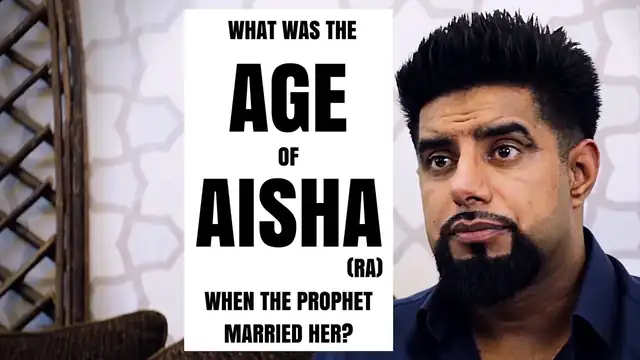 Play from 1:42:08
The video loads from YouTube only when you press play. Click a time in the transcript to seek.
Watch the answer
Open on YouTube at 1:42:08The player starts at 1:42:08, where the answer begins.
This segment1:42:08 to 1:49:58 · 7 min 50 sGeneral teaching
The answer in brief
machinesummary, machine-writtenAn ordinary Muslim should refer puzzling hadith to scholars rather than reject them, but may decline to act on a report that clearly clashes with Islam's universal teachings. Going through the hadith books one by one is not the duty of the unskilled.
In more detail
Mufti Abu Layth says a report is rejected in light of the wider narrative of Islam, which ordinary people may not know, and that many puzzling reports are already explained by other reports as abrogated, specified or tied to one incident, so people should refer to scholars. He says that, unlike the Quranists who throw out hadith altogether, the sunnah has reached us largely through hadith and it is not an ordinary Muslim's duty to take a sledgehammer to the hadith books. Where a report clashes with a universal teaching, however, he says a person may decline to act on it. He gives the example of the report in Sahih Muslim and Sahih al-Bukhari rewarding the killing of lizards, explained in some narrations by the lizard blowing on Ibrahim's fire, which he calls nonsensical because animals are not held to account and because it clashes with the report that there is a reward in caring for every living creature and with the Prophet's concern to minimise animal suffering; killing lizards as pests he finds intelligible, the reason given he does not. He adds that reports may be metaphorical, abrogated or addressed to one person, and repeats that going through the hadith books one by one is not the duty of unskilled Muslims.
Question as read aloud · questioner not identifiedCan a common person reject hadith that do not make sense or are irrational?
Position stated
Mufti Abu Layth holds that ordinary Muslims should refer puzzling reports to scholars but may decline to act on a report that plainly clashes with Islam's universal teachings.
“where something is so obvious and as broad as daylight and it clashes with our our general Universal kind of Islamic teaching then that they do not need to act according to”
Category: method
Kind: general teachingTranscript
machine1:42:08 to 1:49:58 · click a time to seek · dotted terms open the glossary
infantilize the person that is playing adults do you know they have hobbies where they play as well right I think that's definitely a good question that does this mean because from what I've demonstrated that there's this whole tradition of rejecting that allows to reject Hadith whilst upholding the Sunnah now do I believe common people can do that well first of all there is an understanding here that that is rejected in light of the greater narrative that
is provided by Islam now Common People General people may not have an understanding of the greater Narrative of Islam so there's some things to understand here and that is uh that you see many of times the these Hadith may be part of a greater Hadith that have already been answered so the example of something which um like something being abrogated within Islam or something being specified or it was only for a specific incident and these have already been
explained in other Hadith uh so it's important to always refer to Scholars it is always why and why I say this is because a great deal of this Dean has been transmitted through the uh through the Sunnah the way of the messenger of Allah so it has come to us which has been preserved through Hadith now I did say that not every Hadith reflects the Sunnah but a several Hadith do I mean now you could as the quranists would say well I find this Hadith problematic I know let's throw the whole thing out but with that you
are throwing away the tradition the Sunnah so what we would do is we would first of all oh it is important to refer this back to the people of knowledge so they could they would be more aware of the greater narrative that said if something was very clearly problematic against universals that are well understood so there could be a ruling for example on a brief matter which people are not aware of so it could be to do with the intricacies of do or the intricacies of buying and selling or I don't know there's an issue within Salah it says something like this
now normal people may not be aware of these issues so to them just saying oh just when they see a Hadith I reject this Hadith well you know you don't need to kind of take a sledgehammer and open up a book of Hadith that's not you know the common P it's not the duty of every common Muslim to do that that's not how Islam is learned or taught it's learned organically through people but if they came across a Hadith that went against a universal understanding that we have so as an example there's a Hadith in uh uh
which is which is found it's a found in sah Muslim found in sahkari uh about and in other books of Hadith about uh the lizard now that this lizard uh we should that the prophet is in instructing to kill a lizard and the explanation is given in the sahith as well that oh uh in one narration that if you kill it in the first strike you get a 100 rewards if you kill it in the second strike some say 70 Rewards or 50 rewards and if you kill it in the third and he mentions up to three strikes also in some narrations the
explanation of why because apparently when ibraim Alam was thrown the prophet ibraim was thrown into the fire uh the lizard was kind of encouraging the fire by TR trying to blow into the fire now this is uh this is this is absolutely nonsensical this approach because this would not make any sense first of all animals are not kind of M they are not taken to task you know they're not uh they're not reasoning beings or creatures of reason
uh to say well the the lizard did this because out of kind of Envy for the prophet Abraham secondly even if we're to accept such a redundant hypothesis let's for a moment suspend our reason and accept that that lizard somehow had cognitive faculties and managed to kind of breathe out of hatred for the prophet Abraham into this fire why would that involve now killing all lizards on the face of this globe that that wherever we see a lizard we should kill it and you get religious
rewards for killing lizards geckos uh this I mean I could understand that this Hadith of killing lizards in light of them being pests and harmful that it does make that can make sense and does make sense however to justify as it is in some of these s Hadith with uh it's because of the fire of Abraham now that that's absolutely nonsensical now and it clashes with other understandings we have in Islam where the Prophet said every living creature
in it is a reward if you take care of it all right Fe that in every living creature there is a reward that you take care of it so and the general understanding of creatures and life the sanctity of life in general the prophet he told people he told people off for trying to trying to harm animals and he said that even when hunting it must be done as perfect as possible to minimize the suffering so does this make any sense no it doesn't this is specific that that's how they answer it the the
lizard right if somebody was to say well this Hadith is specific to the the age of the Prophet sallallahu alaihi wasallam well the same applies that what would the lizards in the time of the Prophet have to do with the lizard in that specific this alleged lizard in the time of Abraham Salam it makes notes and it clashes with the greater Narrative of Islam so this Hadith is not is inaccurate now yes so if a normal person came across something with such a universal truth that they would know that for them them to problematize and refuse to act upon this Hadith is fine because it goes against the
universal teachings of Islam as to intricacies and finite detail of saying well this is how you do ablution or this is how this ritual is performed or or this is a buying and selling transaction or this is a Hadith from me these things most people probably wouldn't have a universal understanding of so if they find something strange uh I mean I think in all circumstances they should refer this back to Scholars anyway but where something is so obvious and as broad as daylight and it clashes with our our general Universal kind of Islamic teaching then that they do not need to act according to and they can uh refuse
to accept that as an as a sah as an acceptable Hadith but the normal ones yes uh at many times the prophet may have been speaking through metaphors he may it may have been allegorical speech it may have been abrogated it may have been specific for a particular people when the prophet or a particular person sometimes the prophet sallallahu alaihi wasallam he uh he spoke to somebody specifically this was for you as in you go and do this okay so so I think that um answers uh that it is it is important to refer but at the same time Universal narratives of ISL of Islam are accepted
Paragraphs overlapping 1:42:08 to 1:49:58. Full text on the recording page.
Cite this segment
Stable id, transcript version and tier are part of the citation. Every change to a transcript is logged.Mufti Abu Layth Archive, segment 2017-01-11-S15, auto-transcribed, may contain errors. https://muftiabulayth.org/r/0ovisexs4ca/s/15/ (accessed 1 November 2026)
- APA 7
Mufti Abu Layth. (2017, January 11). Can an ordinary Muslim reject a hadith that seems irrational? [Video, segment 2017-01-11-S15, auto-transcribed, may contain errors]. Mufti Abu Layth Archive. Retrieved November 1, 2026, from https://muftiabulayth.org/r/0ovisexs4ca/s/15/
- Chicago author-date
Mufti Abu Layth. 2017. "Can an ordinary Muslim reject a hadith that seems irrational?" Video, segment 2017-01-11-S15, auto-transcribed, may contain errors. Mufti Abu Layth Archive. Recorded January 11, 2017. Accessed November 1, 2026. https://muftiabulayth.org/r/0ovisexs4ca/s/15/
- BibTeX
@misc{abulayth-2017-01-11-S15,
  author = {Mufti Abu Layth},
  title = {{Can an ordinary Muslim reject a hadith that seems irrational?}},
  year = {2017},
  month = {1},
  date = {2017-01-11},
  howpublished = {\url{https://muftiabulayth.org/r/0ovisexs4ca/s/15/}},
  url = {https://muftiabulayth.org/r/0ovisexs4ca/s/15/},
  organization = {Mufti Abu Layth Archive},
  urldate = {2026-11-01},
  note = {Segment 2017-01-11-S15, auto-transcribed, may contain errors}
}
Something wrong here?
Tell us what is wrong and it will be checked against the recording. Nothing changes until a person has reviewed it.
Sending a note needs JavaScript, which is off or unavailable in this browser. Nothing has been sent.
No name, email address or account is asked for or stored, and the inbox does not store your IP address. For rate limiting it keeps an unreadable fingerprint of your connection for 48 hours, and our database provider's own logs record connections as every website's do. Only your note, its kind, the page and the moment in the recording are kept, for review.