
Recordings › Prof. Edip Yuksel | Rejecting Hadith, Rashad Khalifa & Realizing '19' | MindTrap with Mufti #27 · 26 Jun 2020 › Segment 13 of 36
If the Quran abolished slavery, why is there no explicit verse saying so?
hadith hadeeth ahadith ahaadeeth hadis ahaadith al-bukhari imam bukhari sahih al-bukhari sahih bukhari saheeh al-bukhari saheeh bukhari imam al-bukhari muftis shirq mushrik mushrikin polytheism koran quraan al-quran surah sura soorah surat suwar soora ayah aya ayat ayaat aayah aayat salam as-salamu alaykum assalamu alaikum assalamualaikum salaams salam alaykum wa alaykum as-salam peace greeting deen al-din ad-deen ad-din ibadah ibada ibaadah ibadat rahmah rahmat mercyWhy no explicit verse? The word rabb in Arabic, Yusuf's master, and abolition in the shahada
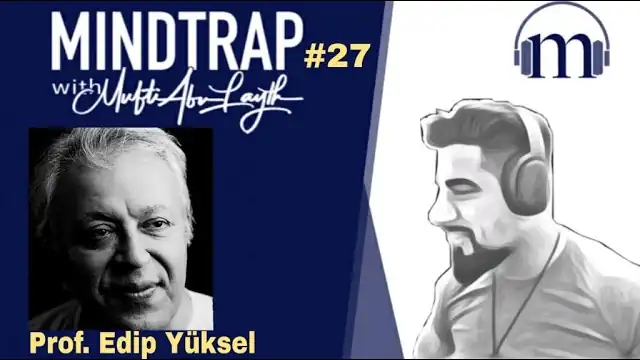 Play from 1:19:08
The video loads from YouTube only when you press play. Click a time in the transcript to seek.
Watch this part
Open on YouTube at 1:19:08The player starts at 1:19:08, the beginning of this part.
This segment1:19:08 to 1:26:59 · 7 min 51 sA view quoted in order to be discussed, not a position held
What this part covers
machinesummary, machine-writtenThe guest says rabb is used in the Quran only for God, so that owning a slave is shirk and la ilaha illa Allah is itself the abolition of slavery. Mufti Abu Layth notes that rabb has ordinary linguistic uses and that non-Muslims recorded Muslims as owning slaves.
In more detail
Mufti Abu Layth asks two questions: if Islam clearly outlawed slavery in the Prophet's lifetime, why is there no clear verse, and why did none of the Christians, Zoroastrians or Persians the Muslims met record that these strange people outlawed slavery, when they say instead that Muslims had slaves. The guest says Mufti is reading stories whose authors and dates are unknown, and that according to the Quran, as opposed to Bukhari, Muhammad was foremost against slavery because he accepted no rabb but God; claiming to be someone's rabb is shirk, the one unforgivable sin, far worse than drinking or killing. Mufti raises the linguistic use of rabb for humans, as in rabbat al-bayt or the word master in English, and Yusuf's words in 12:41 that one prisoner would pour wine for his rabb; the guest says rabb occurs some 950 times exclusively for God, that as a verb it may be used of people but not as a noun, as one may show rahma but not be called Rahman, and that Yusuf speaks to idol worshippers in their terms while the verse innahu rabbi refers to God, not the governor. Mufti says that when Allah speaks of arbaban min dun Allah it is clearly about shirk rather than tenancy and that even landlord contains lord, a word the guest says he avoids; they agree to skip the point. Asked once more why abolition is not stated in plain words, the guest says la ilaha illa Allah is the abolition, since whoever claims an abd claims to be God. Mufti says he takes the point and moves on.
Position stated
This segment presents a view in order to discuss or respond to it. It is recorded as quoted, never as held, and no position is attributed from it.
Kind: a view quoted in order to be discussed, not a position held Speakers: host and guest; guest speech is labelled and excluded from positionsTranscript
machine1:19:08 to 1:26:59 · click a time to seek · dotted terms open the glossary
A guest speaks in this segment. Guest speech is labelled and is excluded from the positions layer.
This segment states a view in order to discuss it. It is recorded as a quoted view, not as a position held.
app to anyone what if you say that to your children is that [ __ ] my document I'm just saying if you you know you created your children and you control their lives well state no no you cannot you cannot claim them you cannot claim for example I left my children to be questioning me from early age you never become like your father just because your father is like I do not want them to become a monitoring station monitor is because I am I said you will be kind of a monkey I don't want to be the father of monkeys think for yourself
that that's the way I see so ok so you feel that in the you know if let's say the Prophet and let's say Islam in the prophets lifetime clearly prohibited and clearly banned outlawed slavery what two questions one why is there no clear verse about it - why if this is such a global phenomenon why did all the people the Muslims encountered like Christians Zoroastrians Persians not document this in the history saying these are a strange people they outlaw slavery in
fact they say Muslims had slaves no my brother first of all you are reading stories where ever you are reading you are not hundred percent who wrote it when time was written it whether it is true or not but when you look at the Quran if the Quran is a source we look at it cool I look at the Quran I'm talking about the Quran I am NOT I am talking about Muhammad who is according to the Quran that Muhammad according to Bukhari o-5 according to this guy that guy now Muhammad according to Quran was number one again in slavery because he didn't accept anyone to be wrapped besides God
therefore only one rap if that is you say one rap only God if you claim to be rap besides God if you say you are my ad you are my slave means you call that person instead of Abdullah you say you are Abdul eggs and I am your read the Quran - Quran it is clearly you are being shipped and you are following Pharaoh isn't this enough you see it is not a prohibited this is more is not a simple sin this is the only unfair unforgivable sin Brizzy categorically
slavery is much bigger sin than drinking alcohol or killing a person this is categorically unforgivable sin I hope we say I would agree with you that slavery once it was a polished easter but you know this thing of rub is this I understand not calling somebody for example the saying look he's after lathe because he's my slave I understand that part I would agree with you but the term rub as a linguistic term like is that not common in Arabic like for a woman rebuttal bait or even in other languages like English master calling a girl as a
verb it is used rub and rub air come something because there are any severe oh yeah yeah yeah be honest anyway about the parents it's huge listen pay attention as a verb is you know but not as a noun because there are differences between for example you may do Rama your home run man but you cannot call yourself Ramon you cannot use the word drama for yourself all right but even Allah say about the Prophet as easy no no no filming in are all right
it is not a person it is a addition to the Mossad these are two Hadees edit to the manuscript you found it yourself very interesting yes I'm pleasantly fix now tea and other timely discuss yeah okay so we'll come back to that then some of the point okay yeah let's go back to that one and about for example you write someone writes letters so
write article but in order to be writer is little different when you say I am writer it is a professional stuff but because an elementary school kid can write cannot say I am right at all you cannot say he's right okay the same way it was about rap to be right according to the Quran is only for God it is very clearly religion if you look at the reputation of it look at it about 900 some kinds is mentioned in more than 950 times and all of them you will see exclusively it is used for God and the others for other
okay what about what about Yusuf Ali Salaam telling the person a Maha do kuma for yes clear Abajo hammerin that he will you know when he's interpreting the dream in the Quran he says one of you will give his master alcohol to drink the term robber who is used I mean is this not in our said very nice so is that so in Arabic the term when it's used I would understand that the context people can understand when you mean like a rub for a but when you mean like you know like like a like an English master
like in the past we don't use it today so much but in the past classical English when they used to say Oh master meaning like in Arabic today say it or in like in or do they use sometimes for somebody who owns a place Malik which also is one of the themes of like they use the same word for Allah saying Malik will take care of us but they might say is is the Malik at home meaning the one who owns the property so like from the Arabic word Malik so I'm thinking is this really such a big deal because when Allah saying our Bible my Allah it's clear this is about shirk
it's not talking about you know tenancy like landlords and even in English today the term landlord landlord yeah I don't use that word it is bad word we don't want to confuse God's attribute with humans the word Rabb is exclusively used for God and when more when Joseph says this Joseph he is talking to an idol worship curve because the same chapter both Joseph telling air valve Allah there is no rubs besides listen say chapter goodness sake how can you miss it how Joseph can't call others he's all
right he doesn't call his rap he says your rap you are worshipping that person because you accepted to be a nabbed of someone else you should not do but it is the reality allow cool hey for example of being left home while in my chopper doing I mean doing it yeah this is about when everyone talks about me I always say their idols yeah it doesn't mean that he accepted idols when Joseph talks about his wrath he talks about in a as I told you in the beginning one verse is mistranslated he's only one verse about
wealth in Nairobi Joseph says he is my lord it is translated as if Joseph is referring to the Aziz how do you say the governor no he's not he's talking about God he's on board Robby because in other words clearly says he only accepts God as his right not anyone else very clear okay let's skip this one and you had one question no I said one question that why not mention the abolition of slavery in
clear words in the Quran gosh that means all the words I'm telling you is no I mean no I accept that I accept all of these now I accept all of these but I'm just saying somebody would ask this question since it's such a big deal why not just say you know that's it do not obtain I'm saying if you read the Quran understand lay the lines abolishment of slavery finished la la la la because it is categorically if you are claiming that you have AB do you have slave you are claiming to be red rub to be God God says lay like
Paragraphs overlapping 1:19:08 to 1:26:59. Full text on the recording page.
Cite this segment
Stable id, transcript version and tier are part of the citation. Every change to a transcript is logged.Mufti Abu Layth Archive, segment 2020-06-26-S13, auto-transcribed, may contain errors. https://muftiabulayth.org/r/zmirskjob4o/s/13/ (accessed 1 November 2026)
- APA 7
Mufti Abu Layth. (2020, June 26). If the Quran abolished slavery, why is there no explicit verse saying so? [Video, segment 2020-06-26-S13, auto-transcribed, may contain errors]. Mufti Abu Layth Archive. Retrieved November 1, 2026, from https://muftiabulayth.org/r/zmirskjob4o/s/13/
- Chicago author-date
Mufti Abu Layth. 2020. "If the Quran abolished slavery, why is there no explicit verse saying so?" Video, segment 2020-06-26-S13, auto-transcribed, may contain errors. Mufti Abu Layth Archive. Recorded June 26, 2020. Accessed November 1, 2026. https://muftiabulayth.org/r/zmirskjob4o/s/13/
- BibTeX
@misc{abulayth-2020-06-26-S13,
  author = {Mufti Abu Layth},
  title = {{If the Quran abolished slavery, why is there no explicit verse saying so?}},
  year = {2020},
  month = {6},
  date = {2020-06-26},
  howpublished = {\url{https://muftiabulayth.org/r/zmirskjob4o/s/13/}},
  url = {https://muftiabulayth.org/r/zmirskjob4o/s/13/},
  organization = {Mufti Abu Layth Archive},
  urldate = {2026-11-01},
  note = {Segment 2020-06-26-S13, auto-transcribed, may contain errors}
}
Something wrong here?
Tell us what is wrong and it will be checked against the recording. Nothing changes until a person has reviewed it.
Sending a note needs JavaScript, which is off or unavailable in this browser. Nothing has been sent.
No name, email address or account is asked for or stored, and the inbox does not store your IP address. For rate limiting it keeps an unreadable fingerprint of your connection for 48 hours, and our database provider's own logs record connections as every website's do. Only your note, its kind, the page and the moment in the recording are kept, for review.