
Recordings › Innovation in Islam? | Mufti Abu Layth alMaliki · 3 Mar 2015 › Segment 2 of 6
What did Imam Malik say about bid'ah?
malik ibn anas malik bin anas imam maalik imam malik ibn anas imaam imams prayer leader shafei shafiite shafi'i school hambali hanbalite hanbali school muftis hukm ahkam hukum hukam ahkaam haraam forbidden makrooh makruh tahrimi makruh tanzihi disliked bida biddat bidaa janna jannat sahabah sahaba sahabi sahabiyyah sahabiyat as-salaf salaf al-salih salaf us-salih al-salaf early generations madinah madina al-madinah madeenah yathrib ulama ulema ulamaa al-din ad-deen ad-din religionImam Malik's harsh stance on bid'ah, with rulings of makruh
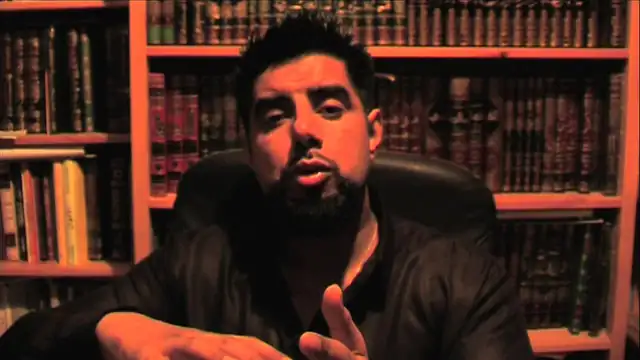 Play from 1:58
The video loads from YouTube only when you press play. Click a time in the transcript to seek.
Watch this part
Open on YouTube at 1:58The player starts at 1:58, the beginning of this part.
This segment1:58 to 6:26 · 4 min 28 sGeneral teaching
What this part covers
machinesummary, machine-writtenImam Malik rejected any 'good' bid'ah and called innovations misguidance, yet he often ruled a given innovation only discouraged (makruh), not haram.
In more detail
Mufti Abu Layth says that classically there was a divergence: Imam Malik, and subsequently the school of Ahmad ibn Hanbal, on one side, and the schools of Abu Hanifa and al-Shafi'i on the other. Imam Malik and many of the salaf did not accept any division of bid'ah, Malik arguing that a religious innovation implies the Prophet was either unaware of a path to Paradise or concealed it, and describing every innovation as misguidance. Mufti stresses that, despite this harsh wording, the ruling Imam Malik gives on a particular innovation is often only makruh, discouraged, not haram. He says many Hanbali scholars followed this stance of the school of Medina, and points to an early book by Ibn Waddah [?] transmitting Malik's rulings on innovations with chains, and to Malik's fatwas in al-Mudawwana.
- Some terms in this segment are uncertain
Position stated
Mufti Abu Layth says that although Imam Malik's wording against innovations is harsh at times, his ruling on a particular innovation is quite often just makruh, not haram.
“wording is harsh at times the ruling of that particular bidder or that innovation is quite often just seen as macro it is seen as discouraged it is not described as Haram”
Category: historical claim
Kind: general teachingTranscript
machine1:58 to 6:26 · click a time to seek · dotted terms open the glossary
considered somewhat controversial they have some controversy surrounding them and they are grouped and classified as a good bit ah so this is where just to give you some background where this is coming from for those of you for those of us who are completely unfamiliar with this topic a bit are linguistically is referring to an innovation an act of innovation within the Deen so we are talking about a religiously innovated matter not something which obviously is to do with the dunya talking about matters of the Deen and
what is the ruling on them now first of all just to clarify the ruling traditionally there has been and I mean by traditionally classically there has been a divergent a kind of split which I suppose has led further down the path increased to some extent and then maybe also reunited the there was classically ace this divergence between the methods the method of Imam Malik Rahim Allah in my
Malik himself is quite vocal on these matters and you have also subsequently perhaps the school of Ahmed Ibrahim but they may be grouped on one side if you like on the other side you will find the school of imam abu hanifa and and also subsequently the school of Imam Shafi now these two camps if you like these two groups the former Imam Malik predominantly especially from the Salaf and and this includes many other people
from the Salaf as well they did not accept a division of Badar so they did not see that they could be anything that the prophets of allah Salem or his companions did not teach us to do with Dean that could be good for us for something for us to come up with something could in no way according to Imam Malik his understanding have some goodness in religious goodness some religiosity about it because that would mean as Imam Malik explains but there
was a path to Jannah or something that would get you to Jinnah which the prophets of Allah solemn did not either he the assumption is either you say suggesting this is from Imam Malik thought and these are his actual words that either you're suggesting that the prophet Elijah was unaware of this path to Jannah or that he was away and they by concealed it from you either ways Imam Malik response is very harsh in a way almost against these enemy type of innovation he describes them all as cool Luba darting
Balala is a misguidance and something which should be refrained from a person however there is a difference I must which is incredibly important that we highlight it is that Imam Malik although he is very harsh against a lot of the bid art in some of his wordings in his Fatah which are documented throughout whether it's the throughout his is his teachings so especially in the mood of one arm in other places wherever his Fatah WA or transmitted the the question is that although his
wording is harsh at times the ruling of that particular bidder or that innovation is quite often just seen as macro it is seen as discouraged it is not described as Haram so they describe it as something it's better not to do as opposed to do but it's not Haram if it is done so this is the distinction now the many of the Hannah Beulah the humbly Illuma also seem to take that trend of the school of Medina in the Mallik
school which was took a very harsh stance if you like traditionally on dismissing any form of innovation and I'm like I mentioned I mean the you can find this for example a very early source will be in ignore Abbas book which he transmits with chains going back to Imam Malik all these rulings where he discusses many of these things about padilla about innovations he provides chains he himself was a maja did also bucket or two she provides references and chains going back you could actually look at the individual
Fatah WA of Imam Malik in the mood of wanna or in the other books like the noir there was yet that that have been transmitted you just have to look up the Messiah ill which are points of controversy these matters and you can see in my Malik's attitude towards them now in the other group you have the likes of imam abu hanifa Imam Shafi'i and their subsequent followers they their understanding what comes through although they don't speak it is allegedly Imam Shafi it does speak on the term be that defining it as
Paragraphs overlapping 1:58 to 6:26. Full text on the recording page.
Cite this segment
Stable id, transcript version and tier are part of the citation. Every change to a transcript is logged.Mufti Abu Layth Archive, segment 2015-03-03-S02, auto-transcribed, may contain errors. https://muftiabulayth.org/r/wirt3dxsvd8/s/2/ (accessed 1 November 2026)
- APA 7
Mufti Abu Layth. (2015, March 3). What did Imam Malik say about bid'ah? [Video, segment 2015-03-03-S02, auto-transcribed, may contain errors]. Mufti Abu Layth Archive. Retrieved November 1, 2026, from https://muftiabulayth.org/r/wirt3dxsvd8/s/2/
- Chicago author-date
Mufti Abu Layth. 2015. "What did Imam Malik say about bid'ah?" Video, segment 2015-03-03-S02, auto-transcribed, may contain errors. Mufti Abu Layth Archive. Recorded March 3, 2015. Accessed November 1, 2026. https://muftiabulayth.org/r/wirt3dxsvd8/s/2/
- BibTeX
@misc{abulayth-2015-03-03-S02,
  author = {Mufti Abu Layth},
  title = {{What did Imam Malik say about bid'ah?}},
  year = {2015},
  month = {3},
  date = {2015-03-03},
  howpublished = {\url{https://muftiabulayth.org/r/wirt3dxsvd8/s/2/}},
  url = {https://muftiabulayth.org/r/wirt3dxsvd8/s/2/},
  organization = {Mufti Abu Layth Archive},
  urldate = {2026-11-01},
  note = {Segment 2015-03-03-S02, auto-transcribed, may contain errors}
}
Something wrong here?
Tell us what is wrong and it will be checked against the recording. Nothing changes until a person has reviewed it.
Sending a note needs JavaScript, which is off or unavailable in this browser. Nothing has been sent.
No name, email address or account is asked for or stored, and the inbox does not store your IP address. For rate limiting it keeps an unreadable fingerprint of your connection for 48 hours, and our database provider's own logs record connections as every website's do. Only your note, its kind, the page and the moment in the recording are kept, for review.