
Recordings › Unanswered Questions- An interview with Mufti Abu Layth · 6 Apr 2015 › Segment 14 of 15
What is Mufti Abu Layth currently teaching?
fiqah jurisprudence fikh hadeeth ahadith ahaadeeth hadis hadees ahaadith saheeh sahih hadith saheeh hadith sound hadith authentic seerah sira seera seerat prophetic biography madhab mazhab school of law madhahib mazahib madhaahib ibn abi zaid al-risalah author ibn abi zaid al-qayrawani malik ibn anas malik bin anas imam maalik imam malik ibn anas qadi ayyad qadi iyaad al-qadi iyad imaam imams prayer leader muftis madina al-madinah madeenah yathrib andalusia moorish spain al-risalah risala ar-risalah risalah of ibn abi zayd ashmawiya ashmawiyya matn al-ashmawiya al-ashmawiya 'alim aalim ulama ulema ulamaa ummah umma ummat nikah nikkah nikaah nikah nama nikahnama talaq talaaq triple talaq talak in sha allah insha'allah in shaa allah insha allah inshaa allah al-din ad-deen ad-din religionCurrent projects: teaching fiqh, the Risalah, al-Ashmawiyyah, Qadi Iyad, sirah, hadith and an Andalusi poem
Most recent answer on The Risalah and the Ashmawiya1 earlier answer on this topic, oldest 2015 ↓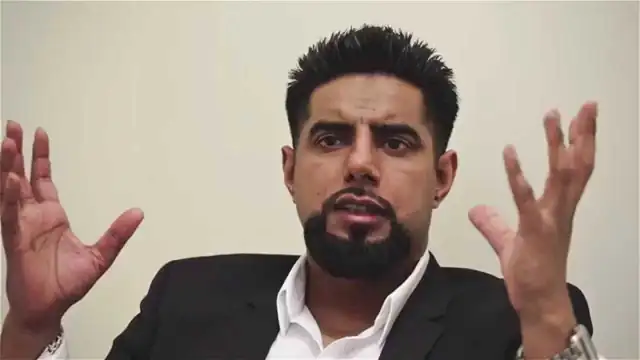 Play from 49:46
The video loads from YouTube only when you press play. Click a time in the transcript to seek.
Watch the answer
Open on YouTube at 49:46The player starts at 49:46, where the answer begins.
This segment49:46 to 55:04 · 5 min 18 sGeneral teaching
The answer in brief
machinesummary, machine-writtenAn online fiqh course on the Risalah of Ibn Abi Zayd, al-Ashmawiyyah, a completed reading of Qadi Iyad's Foundations of Islam and a sirah series, with hadith categorisation, an Andalusi poem in hadith terms and a Maliki retreat planned. He believes the school of Madinah would make the deen a way of life for Muslims in the West.
In more detail
Asked about his current projects, Mufti Abu Layth says he has been teaching fiqh for years, explaining fiqh as the whole of practised Islam from the five pillars through transactions, marriage, divorce and inheritance. His online course covers the Risalah, a classical text he calls one of the earliest summary texts of the school of Madinah, by Ibn Abi Zayd al-Qayrawani, known as the young Malik, from modern Tunisia; he has also taught shorter texts in Birmingham such as al-Ashmawiyyah, completed in about six lessons and available online. He has concluded The Foundations of Islam by Qadi Iyad, a classical scholar of Muslim Spain from some nine hundred years ago, on the five pillars, whose recordings are available; he says he has always pushed to connect with the scholars of al-Andalus, who followed the school of Madinah and whose civilisation flourished on European soil for seven to eight hundred years, coexisting and thriving with non-Muslims, so there is much to learn from them. A sirah project of ten or eleven lessons is also available, and the online fiqh course continues. He plans to teach basic guidelines on how the categorisation of hadith works, and a poem by an Andalusi scholar [?] that appears to be a love poem but uses the technical terms of hadith, beginning 'my love is sahih' [?]. He also mentions projects on the madhhab of Imam Malik and a planned weekend retreat on what the school of Madinah is about and why it is crucial in the West, because he believes its principles would make the deen a comfortable way of life flowing with people's daily lives, mainly for Muslims themselves.
Question as read aloud · questioner not identifiedWhat projects are you currently involved in?
- The question was reconstructed from Mufti Abu Layth's restatement; the questioner's own words are not in the recording
- Some terms in this segment are uncertain
Position stated
Mufti Abu Layth says he believes the principles of the school of Madinah would lend the deen an angle that makes it comfortable for people in the West to embrace it themselves.
“because I do believe it would lend a an angle it would let lend some type of light to the dean that would afford great com comfortability almost for people to embrace the Deen themselves”
Category: teaching
Kind: general teachingTranscript
machine49:46 to 55:04 · click a time to seek · dotted terms open the glossary
learning but unfortunately they don't express the right words so we also as a community need to work work on improving our communication as well that you will find that that articulation and just the form of expression is key in getting a message across so sometimes people are right but it's the way they're saying it that it's misinterpreted so that's um that would be Allah but that would be some some thoughts the projects I'm currently
involved in um I've been involved in teaching for quite a while teaching f um which is really just f is Islam it's understanding right from the very five pillars of Islam right through to how to practice Islam throughout your transactions whether it's buying selling trading loans whether it's going to be things like marriages divorces and all sorts so inheritance the whole thing is called f now I've been involved in teaching for sever for years now I mean I've uh my online courses I've been teaching things like the
of which is a classical text it is uh considered one of the earliest summary texts that appeared in the school of Medina by IBN AB Z who was called young Malik uh who was from modern day uh Tunis and it's so so that's something I've been involved in I've taught of the courses along the way I've taught some brief shorter texts here in Birmingham uh things like the ashma which are available online now I think that was just six lessons or something we completed that text in that's available I concluded um the foundations of Islam by K Yad once again a an amazing
classical scholar classical in that sense I mean from almost 900 years ago from Muslim Spain I've always I've had a push on TR you know I've always tried to keep this push on connecting with the of alalo part that they were all upon the school of Medina which is totally awesome but I mean beyond that that they were the first major they weren't just a foothold they were the Islamic civilization that flourished and prospered within or on European soil for you know for 7 to 800 years now that is a huge time so we can learn a lot from
them they coexisted more often than not with their non-muslim counterparts and not just coexisted they don't just survived they thrived when they had the opportunity so there's a lot to learn from them so K Yad is one of the legends from alandus uh he has a book known as the foundations of Islam where he speaks of the Five Pillars and how to get about and understand the Five Pillars I mean we um thoroughly went through that which is also available now the recordings the audio recordings for that concluded that course in addition to that we I was involved in a S type of project where we
taught s for a short span of time it covered I think something uh a good few months and um I think it was summed up in about 10 11 lessons and that's also available so these are some of the projects that have concluded the the online f is still going on um I am looking to begin teaching inshallah I was thinking um of going through some basic guidelines to understand how the categorization of Hadith works and then uh there's a very interesting fascinating poem uh which I I do like
it's known as and it was written byi an andeli scholar once again you see these people they they what I don't know they took Islam to to a height or a representation that was seldom met elsewhere that they were just amazing at what they did so what he has as well in is a short poem which is apparently a love poem it's a romantic poem but really all the words he's used are the words
of so to study that is something which inshallah I want to also in in the coming weeks inshallah get involved in that so he he begins it's known as so he says that my and it's become known as that my love is true but is a word for sah meaning aah so things like this to to so I want to set that up and there's a few other uh projects like that as well teaching things that I'm trying to get involved in some things to do with the m of IM Malik uh we did have
a retreat uh we were part of not so long ago earlier on this year and inshallah we're looking to set up a retreat of Our Own in I know a lot of the people were really keen and excited so maybe a few months down the road to have a retreat for a weekend where we could go over some of these things and you know what is the school of Medina all about and why is it crucial for within the west and why what would it lend because I do believe it would lend a an angle it would let lend some type of light to the dean that would afford great
com comfortability almost for people to embrace the Deen themselves and I'm talking about Muslims as well Muslims mainly that that they that they that the dean would become for them a way of life and I think for that like a something that would flow with their daily lives and for that to happen I think the the understanding or or the principles of the school of Medina have to be incorporated along the way but yeah so that's some of the the projects I've been involved in the next steps for myself are to remain involved in these type of projects that I've said to be uh teaching I am involved at times in
Paragraphs overlapping 49:46 to 55:04. Full text on the recording page.
Cite this segment
Stable id, transcript version and tier are part of the citation. Every change to a transcript is logged.Mufti Abu Layth Archive, segment 2015-04-06-S14, auto-transcribed, may contain errors. https://muftiabulayth.org/r/vzrrlx3livk/s/14/ (accessed 1 November 2026)
- APA 7
Mufti Abu Layth. (2015, April 6). What is Mufti Abu Layth currently teaching? [Video, segment 2015-04-06-S14, auto-transcribed, may contain errors]. Mufti Abu Layth Archive. Retrieved November 1, 2026, from https://muftiabulayth.org/r/vzrrlx3livk/s/14/
- Chicago author-date
Mufti Abu Layth. 2015. "What is Mufti Abu Layth currently teaching?" Video, segment 2015-04-06-S14, auto-transcribed, may contain errors. Mufti Abu Layth Archive. Recorded April 6, 2015. Accessed November 1, 2026. https://muftiabulayth.org/r/vzrrlx3livk/s/14/
- BibTeX
@misc{abulayth-2015-04-06-S14,
  author = {Mufti Abu Layth},
  title = {{What is Mufti Abu Layth currently teaching?}},
  year = {2015},
  month = {4},
  date = {2015-04-06},
  howpublished = {\url{https://muftiabulayth.org/r/vzrrlx3livk/s/14/}},
  url = {https://muftiabulayth.org/r/vzrrlx3livk/s/14/},
  organization = {Mufti Abu Layth Archive},
  urldate = {2026-11-01},
  note = {Segment 2015-04-06-S14, auto-transcribed, may contain errors}
}
Something wrong here?
Tell us what is wrong and it will be checked against the recording. Nothing changes until a person has reviewed it.
Sending a note needs JavaScript, which is off or unavailable in this browser. Nothing has been sent.
No name, email address or account is asked for or stored, and the inbox does not store your IP address. For rate limiting it keeps an unreadable fingerprint of your connection for 48 hours, and our database provider's own logs record connections as every website's do. Only your note, its kind, the page and the moment in the recording are kept, for review.