
Recordings › Unanswered Questions- An interview with Mufti Abu Layth · 6 Apr 2015 › Segment 11 of 15
Is Mufti Abu Layth a modernist?
hadeeth ahadith ahaadeeth hadis hadees ahaadith malik ibn anas malik bin anas imam maalik imam malik ibn anas imaam prayer leader 'urf muftis kufr kuffar kafir kaafir kaafirun disbelief koran quraan al-quran as-salaf salaf al-salih salaf us-salih al-salaf early generations al-madinah madeenah yathrib 'alim aalim al-din ad-deen ad-din religionBranded a modernist: the school of Madinah, chains of transmission and dress versus thought
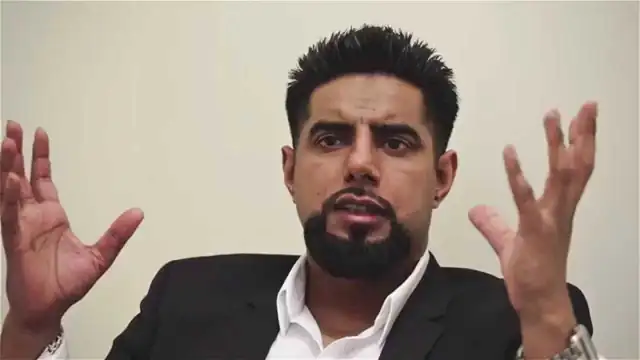 Play from 39:21
The video loads from YouTube only when you press play. Click a time in the transcript to seek.
Watch the answer
Open on YouTube at 39:21The player starts at 39:21, where the answer begins.
This segment39:21 to 44:32 · 5 min 11 sGeneral teaching
The answer in brief
machinesummary, machine-writtenNo: he follows the school of Madinah and Imam Malik, teaches thousand-year-old texts and holds chains back to the Prophet, and calls boycotting classical thought a heresy. Looking modern in dress, he says, is not modernism, and Abu Hanifa too was criticised for his dress.
In more detail
Asked how he responds to being branded a modernist, Mufti Abu Layth says he is not one, and distinguishes being of one's age in appearance and outlook from one's views. He says he has always called to the school of Madinah, the understanding present in Madinah in the time of the salaf, among them its scholar Imam Malik, whose views he passionately agrees with and tries to follow; the texts he has taught for years are traditional ones, usually over a thousand years old, including one of the oldest summary texts of the school of Madinah, which he has taught for two or three years [?]. He wholeheartedly disagrees with modernism as an academic approach, which he defines as calling to boycott classical thought or feeling unbound by it, saying one does not care what the imams said because they did not live in the twenty-first century; that attitude is wrong because the deen is a legacy conveyed generation to generation through chains, and he counts his chains in hadith and Quran, going back through his teachers to the Prophet, as an invaluable gift. He has never called to boycott classical thought and considers doing so a heresy, saying we need our legacy today more than ever. At the same time he says some misinterpret the legacy as requiring that one dress like the imams: Islam never sought to Arabise the world, and Abu Hanifa himself was criticised for adopting the new fashion of long sleeves. Appearing modern in dress or manner does not mean calling to boycott classical thought, and he believes the only true way forward is to reclaim traditional Islam.
Question as read aloud · questioner not identifiedSpeaking of traditional Islam, you have been branded a modernist by some. How do you respond to that?
- The question was reconstructed from Mufti Abu Layth's restatement; the questioner's own words are not in the recording
- Some terms in this segment are uncertain
Position stated
Not yet double-checkedA summary of the view expressed is published here only after a second, independent review has found the sentence in the transcript where he says it. Until then, the transcript and the recording speak for themselves.
Kind: general teachingTranscript
machine39:21 to 44:32 · click a time to seek · dotted terms open the glossary
get takies who turn against Muslims who call all Muslim excommunicate them call them kufar you'll get all sorts and so from a perspective I could agree that okay you know if you're seeing it from that lens you may see that there has been a rise in uh you know an extremist type of uh radicalization but on from the other hand know that I feel that many many many more Muslims the majority of Muslims have kind of awoken to a true spirit and a traditional Spirit of Islam okay the question on speaking of traditional Islam that I've been branded
a modernist how would I respond to to that I don't it's a good question I have uh been asked this before as well that look I am not a I mean it doesn't I suppose people are going to say well I'll say that anyway that I'm not a modernist but I'm not in that sense no I think that we have to draw a distinction between um somebody being let's say of his age in his appearance in his Outlook i' I'd like to say stylish but don't know if people would agree with that but I mean if somebody being of his age
contemporaneous and that's in his Outlook does that necessarily reflect his views so you see I myself have always uh called to what is the school of Medina uh the understanding that was um that was found present in Medina during the time of the Sal and that is the the and the of which amongst two The Scholar of Medina IM Malik was he lived in Madina at that time I uh you know passionately agree with those views I
try to wholeheartedly follow them that is what we teach uh most of the texts I've always been involved in teaching and I'll and I'll speak about that maybe in a moment if I get a chance but um have been all traditional texts usually texts that have been written over a thousand years ago something I've been involved in teaching for almost over what 2 three years now I've been teaching the which is considered uh one of the oldest brief summary texts within the school of Medina I mean it's over a thousand years old so I wholeheartedly
disagree with modernism Mo in in as a um academic approach modernism is where a person calls to boycott or feels that they are not bound by classical thought that they feel they need to be like that their views do not have to be judged or gauged by classicism so they would say that I don't care what the imams had to say I don't care what the had to say I don't care about that they don't live in the 21st century that attitude is wrong because this de is a legacy it has been conveyed from
generation to generation and we trace it back with our chains uh one of the things I'm you know I consider a gift uh an invaluable gift of from Allah that um that he has blessed me with some chains that my chains of tradition in Hadith is something my chains of tradition in the Quran that that we have chains that when we've been authorized by our teachers to teach it wasn't just that I give you permission like it was it was with a chain my teacher's name his teacher's name his teacher's name going back to the messenger of Allah sallallahu alaihi wasallam himself
now so I don't believe in My Views or in my thinking that I am or I'm trying to be as accurate as possible that in my religious approach that I am a modernist at all I've never called to boycotting the classicist thought I in fact consider that to be a a heresy really to to kind of say that we don't need our Legacy we do we are more Ren need of our Legacy today than ever before but at the same time it's there are some things which I feel have been
misinterpretations of our Legacy that some people have felt oh to to make a true call to the to our Legacy means we have to like not only let's not only uh let's not only cry the maab of IM Abu IM Malik but let's also dress like them now I don't feel that they ever asked you to do that I don't feel that they would have ever asked you to just as when Islam was spreading then they weren't saying that oh right wherever Islam goes we must take the Arab let's say custom of our age and arabasz or arabize the whole world so if we if
Islam reaches Eskimos they have to walk around in thobes and sandals I don't think that was ever the the purpose and they never ever made such claims in fact Imam Abu hanifah himself was critiqued for for the type of dress that he was introducing getting involved in there was this new trend at the time of long sleeves and so on and and he was becoming a part of that but the point being that you C just because you appear modern in your dress sense or the way you might do certain things does not mean that conceptually you are calling to boycotting classical thought which is
Paragraphs overlapping 39:21 to 44:32. Full text on the recording page.
Cite this segment
Stable id, transcript version and tier are part of the citation. Every change to a transcript is logged.Mufti Abu Layth Archive, segment 2015-04-06-S11, auto-transcribed, may contain errors. https://muftiabulayth.org/r/vzrrlx3livk/s/11/ (accessed 1 November 2026)
- APA 7
Mufti Abu Layth. (2015, April 6). Is Mufti Abu Layth a modernist? [Video, segment 2015-04-06-S11, auto-transcribed, may contain errors]. Mufti Abu Layth Archive. Retrieved November 1, 2026, from https://muftiabulayth.org/r/vzrrlx3livk/s/11/
- Chicago author-date
Mufti Abu Layth. 2015. "Is Mufti Abu Layth a modernist?" Video, segment 2015-04-06-S11, auto-transcribed, may contain errors. Mufti Abu Layth Archive. Recorded April 6, 2015. Accessed November 1, 2026. https://muftiabulayth.org/r/vzrrlx3livk/s/11/
- BibTeX
@misc{abulayth-2015-04-06-S11,
  author = {Mufti Abu Layth},
  title = {{Is Mufti Abu Layth a modernist?}},
  year = {2015},
  month = {4},
  date = {2015-04-06},
  howpublished = {\url{https://muftiabulayth.org/r/vzrrlx3livk/s/11/}},
  url = {https://muftiabulayth.org/r/vzrrlx3livk/s/11/},
  organization = {Mufti Abu Layth Archive},
  urldate = {2026-11-01},
  note = {Segment 2015-04-06-S11, auto-transcribed, may contain errors}
}
Something wrong here?
Tell us what is wrong and it will be checked against the recording. Nothing changes until a person has reviewed it.
Sending a note needs JavaScript, which is off or unavailable in this browser. Nothing has been sent.
No name, email address or account is asked for or stored, and the inbox does not store your IP address. For rate limiting it keeps an unreadable fingerprint of your connection for 48 hours, and our database provider's own logs record connections as every website's do. Only your note, its kind, the page and the moment in the recording are kept, for review.