
Recordings › Are Mortgages & Bank Loans Haram? - Mufti Abu Layth · 19 Oct 2017 › Segment 5 of 13
Does the Quran forbid every kind of excess when it forbids riba?
hadeeth ahadith ahaadeeth hadis hadees ahaadith saheeh sahih hadith saheeh hadith sound hadith authentic muftis halaal lawful haraam forbidden dalil daleel adillah adilla proof ribaa sood interest usury saheeh muslim imam muslim muslim ibn al-hajjaj koran quraan al-quran ayah aya ayat ayaat aayah aayat ulama ulema ulamaaWhat 'the riba' in the Quran refers to: the definite article, estimated dates, Umar and Ibn Abbas
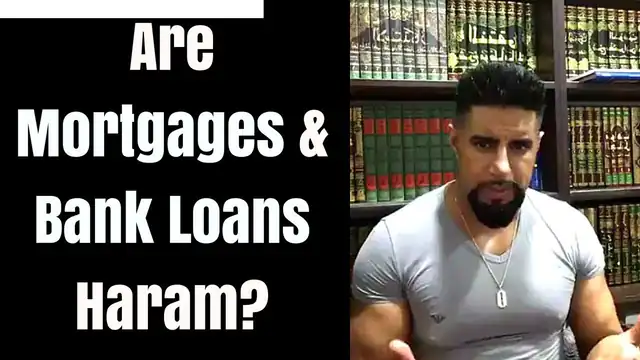 Play from 14:16
The video loads from YouTube only when you press play. Click a time in the transcript to seek.
Watch this part
Open on YouTube at 14:16The player starts at 14:16, the beginning of this part.
This segment14:16 to 17:12 · 2 min 56 sGeneral teaching
What this part covers
machinesummary, machine-writtenThe definite article in 'Allah forbade riba' points to a specific known kind of riba, not every excess, since most excesses are not haram. Umar wished the Prophet had explained riba, and Ibn Abbas held there was no riba except in delay.
In more detail
Mufti Abu Layth analyses the verse that Allah permitted sale and forbade riba: the definite article on sale is either generic or exhaustive, making all sale or the category of sale halal, but the definite article on riba cannot mean every riba, because riba simply means an excess and everyone agrees most excesses are not haram, so it refers to a particular riba known to the listener, what grammarians call al-'ahd al-dhihni. As evidence he cites the practice in the Prophet's time of buying the dates still on a tree for dates in hand, with experts estimating the quantity and a margin of error of up to a third allowed by the scholars, which guaranteed an excess in the transaction. He says there has never been agreement on what riba is even about: Umar ibn al-Khattab famously wished the Prophet had explained riba before he passed away, and Ibn Abbas, as recorded in Sahih Muslim, denied any riba except in delayed transactions, so that hand-to-hand trading at any ratio was fine, which rules out an entire category of riba.
- Some terms in this segment are uncertain
Position stated
Mufti Abu Layth says the definite article in the Quran's prohibition of riba refers to a particular kind of riba already known to its hearers, not to every excess, since riba simply means excess and most excesses are agreed not to be haram.
“Because riba simply means an excess. And everybody agrees that not all excesses are haram in fact most excesses are not haram.”
Category: teaching
Kind: general teachingTranscript
machine14:16 to 17:12 · click a time to seek · dotted terms open the glossary
When Allah says in the Quran that Allah be haram riba that Allah be Allah this Allah has made transactions halal all transactions halal this alif lam is either lil jins or lil istigraq it means either kullul bay is halal or jinsul bay the category of transactions are halal.
What haram riba and made riba haram at this alif lam in riba is not kullul riba. Because riba simply means an excess. And everybody agrees that not all excesses are haram in fact most excesses are not haram. So alif lam in riba is referring to a type of riba or a riba that I've got in my mind and what we call al ahdul dhini.
How do we know this? So for example, let's look at all the Hadith. So for example the Hadith of the haras so you could in the time of the prophet this was a common practice. They would go to dates on the trees the dates whilst they're still ripe but they hadn't been plucked and kind of taken off and they would say, "Okay, I'll buy all of those from you for these grapes I've got here." and they would just guess them estimate them.
And they had experts to do this and they were called harasun. And these people the haras were like experts so they would say and they would allow them a margin of error up to a third. So for example, I'd look at that tree and I'd say, "Right, for that tree I estimate there's 10 kilos of dates on there. So I've got 10 kilos of dates here you can take them and I'll own that." So that's and this was common and it was guaranteed excess in this transaction.
There's no way you got it down to the exact date never. But it was okay the scholars say that the excess could be up to a third of the entire quantity. The other thing is none of the scholars agreed on uh none of the there has been no agreement on riba to start off with what riba is actually even about.
Okay, they I'm just giving us an understanding. The so Omar ibn al-Khattab famously said that I wish the prophet passed away and I wish one of the things he explained was riba. Ibn Abbas radiyallahu anhu in Sahih Muslim clearly denied any riba in delayed transactions. No, sorry sorry.
Sorry, he denied let let me correct myself. He denied any riba except in delayed transactions. Right, he denied any riba except in delayed transactions. So as long as we're trading hand in hand you can do whatever you want. I can take double less whatever I want. He didn't this was Ibn Abbas this is in Sahih Muslim.
So half a whole entire category of riba Ibn Abbas completely denied. The other thing is why on earth is when the categories are different are we not allowed to delay the payment? Why are we not allowed to delay the payment? Now so sorry why are we like we're bartering if I'm taking wheat from you for dates why am I not allowed to say collect dates from me tomorrow?
Paragraphs overlapping 14:16 to 17:12. Full text on the recording page.
Cite this segment
Stable id, transcript version and tier are part of the citation. Every change to a transcript is logged.Mufti Abu Layth Archive, segment 2017-10-19-S05, auto-transcribed, may contain errors. https://muftiabulayth.org/r/ucdrblygy70/s/5/ (accessed 1 November 2026)
- APA 7
Mufti Abu Layth. (2017, October 19). Does the Quran forbid every kind of excess when it forbids riba? [Video, segment 2017-10-19-S05, auto-transcribed, may contain errors]. Mufti Abu Layth Archive. Retrieved November 1, 2026, from https://muftiabulayth.org/r/ucdrblygy70/s/5/
- Chicago author-date
Mufti Abu Layth. 2017. "Does the Quran forbid every kind of excess when it forbids riba?" Video, segment 2017-10-19-S05, auto-transcribed, may contain errors. Mufti Abu Layth Archive. Recorded October 19, 2017. Accessed November 1, 2026. https://muftiabulayth.org/r/ucdrblygy70/s/5/
- BibTeX
@misc{abulayth-2017-10-19-S05,
  author = {Mufti Abu Layth},
  title = {{Does the Quran forbid every kind of excess when it forbids riba?}},
  year = {2017},
  month = {10},
  date = {2017-10-19},
  howpublished = {\url{https://muftiabulayth.org/r/ucdrblygy70/s/5/}},
  url = {https://muftiabulayth.org/r/ucdrblygy70/s/5/},
  organization = {Mufti Abu Layth Archive},
  urldate = {2026-11-01},
  note = {Segment 2017-10-19-S05, auto-transcribed, may contain errors}
}
Something wrong here?
Tell us what is wrong and it will be checked against the recording. Nothing changes until a person has reviewed it.
Sending a note needs JavaScript, which is off or unavailable in this browser. Nothing has been sent.
No name, email address or account is asked for or stored, and the inbox does not store your IP address. For rate limiting it keeps an unreadable fingerprint of your connection for 48 hours, and our database provider's own logs record connections as every website's do. Only your note, its kind, the page and the moment in the recording are kept, for review.