
Are Mortgages & Bank Loans Haram? - Mufti Abu Layth
hadeeth ahadith ahaadeeth hadis hadees ahaadith saheeh saheeh hadith sound hadith authentic al-bukhari imam bukhari sahih al-bukhari saheeh al-bukhari saheeh bukhari imam al-bukhari imaam imams prayer leader sadaqah sadaqa sadqa sadqah voluntary charity maaliki malikite malikiyyah hanafite hanafiyyah hanafi school shafi'i shafei shafiite shafi'i school hambali hanbalite ijmaa muftis halaal permitted lawful haraam fard farz faraid fard ayn fard kifayah fardh ribaa sood saheeh muslim imam muslim muslim ibn al-hajjaj jahannam jahanam jahannum koran quraan al-quran ayah aya ayat ayaat aayah aayat 'alim aalim ulama ulema ulamaa shaykh shaikh sheik shuyukh shaykhs ummah umma ummat madrasa madrassa madaris madrassah religious school hijaab hejab hijabi in sha allah insha'allah in shaa allah insha allah inshaa allah barakah barakat barkat baraqah blessing duaa duas duaas supplication deen al-din ad-deen ad-dinvideo · 1:00:05 · 54,000 views · 19 Oct 2017 · 13 segments · Open on YouTube
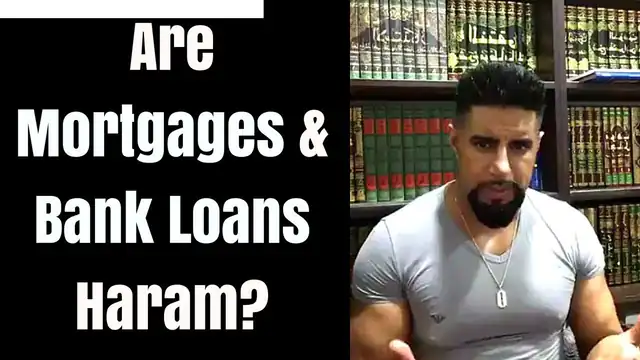 Press play to load from YouTube. Nothing loads until you do.
13 segments
machine13Each block is a segment in time order. Click to open it.All segments · in time order
Transcript
machineauto-transcribed, may contain errors · source: youtube auto · click a time to seek · dotted terms open the glossaryAll right, coming to this issue of riba. Right, so I'm going to need some of you. Uh It's done, people. It's done. Don't worry about it. Is that the devil's sign or is that the devil's I don't know whichever one. I'm trying to provoke people anyways. You know when people you know when people get agitated I just love pushing their buttons even further. It's like sometimes people will make annoying comments and I'll delete them and they'll say Oh.
Mufti Abu Layth, why did you delete my comment? And delete it again. And I'll say because I can. Why did you do it? Because I can. Right, so All right, now coming to Okay, this is going to need a bit of focus.
Riba. All right, okay. Now Riba is an incredibly in my understanding an incredibly complex yet it's an over-claimed subject. Like people feel too many people feel that they actually understand riba.
And two and it's become symbolic. This is the problem. That riba has the concept of riba has become symbolic. With uh within Islam. Right, ahlan wa sahlan those people just tuning in. Ahlan wa sahlan if you'd like the actual Sorry, I get distracted.
Some people are trying to correct my drinking. If you click like and share the link uh share the live feed get it out this is an interesting and important point on riba. I'd like many people to benefit. What's life if not lived and absolutely what's life if not lived on the edge. That is something I say. Right now I I need us to understand something here.
This is um slightly complex. I'm going to need you to bear with me. Okay. You can all be my murids. Ahlan wa sahlan. Yeah. Right now, an absolute love coming right back at you Murad Ahmed. Shukran shukran. Right now, the thing is look, listen. I need you to uh to to kind of focus on this. Riba
has become symbolic. Now we need to take a step back. Religion to many people is just symbolism. Okay, religion is symbols. This is why to many people and and this this is a fascinating point and I was just having this discussion last week with a sheikh from Birmingham, Sheikh Sajad. I don't know those of you that know him, an amazing person spelled S J double A D.
And and we were just discussing this point that religion is symbolic to many people. Okay. It's only about symbols. That's how they identify with religion. Hence me I'm not considered religious to many people. I mean, I'm not saying I am by their definition of religious.
Uh but because I don't carry any of the symbols that they would identify religion to be. So to them religion is symbolism. It's iconic. It's through icons and symbols. Now, and that will be partly through things like dress, through attire, affirmations, through rituals, through I suppose what rituals you can't always see like praying I suppose, but you can't always see people praying.
But you could see the way they dressed. You could see the way they have a beard or wear hijab or do certain things. And this is what it's all about to people, symbols. Now, from these symbols like domes, minarets I mean, taking into consideration that none of these things existed like that like domes or minarets in the time of the prophet, but these symbols have today come to represent Islam in the in the minds of many.
So riba has become one of those things that is symbolic. That it is seen to many people to be an important aspect of Islam. They may not fully understand what riba is. But they understand this to be an important aspect. So I don't know what it is.
But they think whatever it is it's incredibly important. The other thing is that they think riba I mean, they understand that riba is something Allah has declared war on. Fa'azanu biharbim minallah. That Allah says in the Quran that he has declared war. Yamhaqullahur riba wa yurbis sadaqat.
It's been highlighted something distinct to sadaqat and Allah destroys riba as in destroys as in you know, it has no baraka and Allah kind of detests it. This is the the understanding that God detests usury. Now ahallallahu al bay'a wa harrama riba, the verse in the Quran that Allah made transactions he legislated and authorized transactions, but he prohibited riba.
So what is this riba? Riba in the Quran uh is mentioned as three things. Okay. Sorry, not in the Quran, in Islam it's mentioned as three things. In the Quran riba is just generally used as riba and it is usually referring to just one thing.
But people will say all three. Okay, fine. These three things are ribal you've got ribal jahiliyyah, what is called ribal jahili, the riba of jahiliyyah. You have ribal fadl and riban nasa. These are three categories of riba.
Ribal jahiliyyah is the riba that it's a kind of inc- a tyrant like a very uh draconian highly oppressive loan shark kind of riba. Where that's the best way I can describe it. It's what the pre-Islam the kind of riba that was going on.
So people would uh they would they would require wealth. So I require certain amount of gold. Somebody gives me. Now obviously I struggle to pay it back. There will be compound kind of demands made. So you will give me this much this much this much on top. And each time I can't do that that continues to be compounded. And then it's usually followed by I could be killed in return or worse.
Sometimes being killed I mean, being killed is an utter tragedy obviously. Obviously, it's an utter tragedy and What's that? What's that poem? Where he says He says uh He says what in tabqa tufja bifana'il ahibbati is that No, something like uh Ah, it's a famous poem, man.
He says wa fana'u nafsika afja'u. That if you do survive you will come to see like witnessing the death of many loved people will be shocking to you. Be And he says wa fana'u nafsika la abalaka afja'u.
But surely you you dying is indeed a greater tragedy. So I'm not kind of denying that it's not a great tragedy. Uh Doctor uh ahlan wa sahlan and ahlan wa sahlan to all those uh just coming on late. Do click like and share the live feed. I'm trying to um discuss the topic of riba here. So people sometimes obviously they would kill you, but they would sometimes torture you, enslave your children, drag your children away from you.
Uh torture them, your wife or wives back then or whatever it is and you know, it was the whole highly oppressive kind of context to this usury that what that which contained this concept of riba. This kind of loan shark culture but to the power of 10.
Now, then you have the second category of riba which is ribal fadl. Ribal fadl is where we are tran- transacting with each other but we are taking more than what we're giving. Okay, now this is done between categories. Now this is strange because the hadith mentions this sahih hadith which is in Sahih Bukhari, it's in Sahih Muslim and many of the other books that the prophet sallallahu alayhi wasallam said in the hadith that azzahabu bizahabi wal fiddatu bilfiddah, that gold by gold and silver by silver what
tamar with tamar that and dates by dates that uh and what shair with shair with milk with milk and and wheat by wheat and barley by barley and salt by salt These six things are mentioned almost did seven then. That's like in the thick books when they say, "Okay, these five things but they only mention four." I'd say three but mention five.
Right, so these six things in the Hadith are mentioned these categories. Now the prophet said that if you're trading in these Now it's strange that you see what the Hadith says is that you can they must be of equal proportionality.
The question here is why would you even trade in equal proportionality? Like why would I give you 1 kilo of wheat for 1 kilo of wheat? You wouldn't. So and then the interesting thing is it mentions ribbon nasa hand to hand exactly I'm coming to that.
But if you are to delay one of the payments bar that with the exception of gold and silver. So with the exception of currency if you are bartering and you are to delay one of the the goods so you're taking it now and you're collecting the other thing from so I'm taking something from you and you can so I say, you know, I'll give me that 1 kilo of dates you can take 2 kilos of wheat but you can collect that from me tomorrow.
So it's not instant it's not hand to hand. This is declared is he it's declared riba. Now this is the shocking thing. It doesn't actually make much sense. That why okay, if it's the same category maybe it's just a statement. Maybe the prophet is saying, you know, it should be like 1 kilo of wheat for 1 kilo of wheat to kind of this is an emphasis to draw away kind of uh any oppression.
But then the prophet says in the Hadith for the Hadith of the Hadith of the Hadith But if you're trading between categories like dates for wheat for be okay for shiktum sell as you want, you know, you don't have to be 1 kilo for 1 kilo. My cannot as long as it is yet and be yet as long as it is still hand in hand.
The moment you delay one of them it becomes riba. This is called riba fuddle. Now the Hadith actually includes gold and silver too. Which would mean it's impossible impossible to buy anything on credit anything. But what the scholars did is they all said didn't ijma whatever that means but some kind of a consensus that the scholars
came to an understanding that gold and silver is exempt from this Hadith even though the Hadith mentions gold and silver in the beginning. So they said we're going to exempt currency but the remaining four will stay. Now the question was what is this riba even about? So there was never any agreement on what riba was actually speaking about.
When Allah says in the Quran that Allah be haram riba that Allah be Allah this Allah has made transactions halal all transactions halal this alif lam is either lil jins or lil istigraq it means either kullul bay is halal or jinsul bay the category of transactions are halal.
What haram riba and made riba haram at this alif lam in riba is not kullul riba. Because riba simply means an excess. And everybody agrees that not all excesses are haram in fact most excesses are not haram. So alif lam in riba is referring to a type of riba or a riba that I've got in my mind and what we call al ahdul dhini.
How do we know this? So for example, let's look at all the Hadith. So for example the Hadith of the haras so you could in the time of the prophet this was a common practice. They would go to dates on the trees the dates whilst they're still ripe but they hadn't been plucked and kind of taken off and they would say, "Okay, I'll buy all of those from you for these grapes I've got here." and they would just guess them estimate them.
And they had experts to do this and they were called harasun. And these people the haras were like experts so they would say and they would allow them a margin of error up to a third. So for example, I'd look at that tree and I'd say, "Right, for that tree I estimate there's 10 kilos of dates on there. So I've got 10 kilos of dates here you can take them and I'll own that." So that's and this was common and it was guaranteed excess in this transaction.
There's no way you got it down to the exact date never. But it was okay the scholars say that the excess could be up to a third of the entire quantity. The other thing is none of the scholars agreed on uh none of the there has been no agreement on riba to start off with what riba is actually even about.
Okay, they I'm just giving us an understanding. The so Omar ibn al-Khattab famously said that I wish the prophet passed away and I wish one of the things he explained was riba. Ibn Abbas radiyallahu anhu in Sahih Muslim clearly denied any riba in delayed transactions. No, sorry sorry.
Sorry, he denied let let me correct myself. He denied any riba except in delayed transactions. Right, he denied any riba except in delayed transactions. So as long as we're trading hand in hand you can do whatever you want. I can take double less whatever I want. He didn't this was Ibn Abbas this is in Sahih Muslim.
So half a whole entire category of riba Ibn Abbas completely denied. The other thing is why on earth is when the categories are different are we not allowed to delay the payment? Why are we not allowed to delay the payment? Now so sorry why are we like we're bartering if I'm taking wheat from you for dates why am I not allowed to say collect dates from me tomorrow?
Why does it have to be hand in hand? How does that become riba? I mean I can understand if I was exchanging gold for gold that maybe tomorrow the value of gold would change. If it was fluctuating that suddenly but why with bartering if the categories are different? So Ibn Ulayyah and some scholars are the only scholars who said that that's okay like it this doesn't make any sense.
Now I'm coming to this about the riba from a bank. Now this is setting out the premise. This is important to understand. Right now I have asked I asked every or almost every senior scholar I could imagine in this day and age to explain this to me. And wallahi not a single I mean they could explain it and they could give an understanding which I could arrive at anyway and which is you know, it's it's not even I mean that okay, that maybe some exploitation could come about but nobody can has
explained I've never come across a kind of thirst-quenching explanation on why uh bartering the delaying of one of the kind of product is riba. It doesn't make any like it doesn't make much rational sense okay to start off with. Now then the thing is okay, these four categories are mentioned in the Hadith what about other things?
What about so for example, what about mobile phones? Nobody believes there's riba in mobile phones nobody. I could give you this is a Samsung. I could give you one Samsung for three Samsungs. Nobody will call that riba. I could swap your house for another house for two houses. Nobody will call that riba.
I could swap your car. They dis Now when it came to what will what does riba operate in? The scholars massively disagreed. There's never been any agreement to start off with. So the Hanafi method looked at this Hadith and said, well, riba based on wheat, barley, dates, and salt, this is to do with scalable and wayable products.
So, riba is in wayable and scalable products only. The Maliki method looked at this and said, no, this is to do with food. And the Shafi said, this is to do with food. The Maliki said, no, but this is a particular type of food that is that that is storable. So, these are products which you can store for almost a year.
So, they're not perishable or easily perishable items. Hence, there is no such riba according to the Maliki method in things like fruits. I could trade apples with you. And I could take more or less. The Maliki method says that's not riba. Because there's no riba in fruits. But, according to the Hanafis, that's riba.
Why? Because you scale them when you sell them. So, there was never a clear understanding on what riba actually is. Everybody agreeing that on several things, huge things, there is no riba. Like even though linguistically does exist. So, like the mobile phone example is a good example.
Like swords in the past, I'll give you one sword for two swords. I'll give you this shield for this many shields. Right. Why am I Why am I explaining this? I'm going to come to I'm going to make it relevant for us in a moment, but I need to explain this to show that there was never from the offset any clarity in what riba was actually speaking about.
It's important to understand that. Right now, okay, moving on from all of this. Right. What about in our the We need to come to what bothers people because people today don't barter, generally. They're not going to swap apples and oranges and do things like this. But, they want to buy a house on mortgage.
They want to take out a loan. Are these things riba? These things are not riba in the Quranic sense, in my understanding. Yes, they may have some similarities in the sense that there is some excess of repayment. So, you're seeing a similarity like that element and you're assuming, oh, because of that similarity, this is the Quranic riba.
It's not. Why is this not the Quranic riba? Because everything is different. Now, first of all, when a when you go to a bank to take a loan and they give you this sorry, they give your mortgage, they you know, they buy the house for you and you repay this house over, you know, almost lifetime.
And obviously, they've tied in inflation and stuff like this. This concept as a concept did not even exist back then. This thought of first of all, of banks doing this, corporations corporations did not exist, banks did not exist. This thing of I'm giving you a money, I'm buying the house for you, you are buying it back or you are paying me did not even exist as a concept.
Okay, to start off with. Whether whether we want to say that they are buying the house or they're giving you the money, I mean, they're doing it all, but okay, technically, the money is on your name. It did not even exist as a concept. So, back then in the prophet's time, this was never happening. Nobody was going to one of the Quraysh and people were saying, hey, right, people were saying, hey, uh will you buy me this house, pay me this much, and I'll pay you back over this portion.
Never happened. This concept did not even exist. Okay. So, let's take that as one element. The other element is we have to understand that why riba was made haram was because of the excessive extortion loan shark loan shark culture that was diabolical.
Because of that, riba was made haram. This today does not fit that. Right now, this today, right, you are not like nothing like that happens. You are operating within a greater framework. Okay, when you take out a mortgage, right, you are operating within greater legal parameters of commerce and of the banking structure.
So, for example, people say, yeah, but you pay back more. Of course, first of all, first of all, another point to throw in here, you are not the person taking the money, you are the person giving the money. Okay, no person in their right mind would ever want to give back more than they took. But, it's only because of a necessity that, you know, you you don't have the money to start off with, so you're taking the money.
Otherwise, nobody's going to say, yeah, you know what, I'll happily give you back more money than I took in the first place. Nobody happily does those things. So, let's get that straight to start off with. You are not the person taking. This isn't greed. You are the person giving. Okay, that's an important element, too. The other thing, like I said, is you are operating within a safe structure.
This doesn't work like this isn't a loan shark culture. Like if you cannot pay back your mortgage tomorrow, the bank will actually cooperate with you to pay it back because it's in the bank's interest not to seize the property. It wants you to maintain a long commitment to paying back. Right? So, and people say, yeah, but the banks are I'm not trying to justify banks and banking culture, but what I'm telling you is let's juxtapose that with renting.
You would have if you rented a property and you couldn't pay, you would be evicted much easier. You'd be evicted after 2 months. Whereas with a bank, you would easily obtain up to 6 months to a year to repay that. It would it would cooperate with you, whereas a private tenant wouldn't. Sorry, a private landlord would not cooperate like that.
The other thing is that even if you cannot pay back the money, let's say you cannot pay back your mortgage, right? If you can't pay back your mortgage, you can go on to a management program, a debt management program. You can go on to an IVA. You can declare yourself bankrupt.
Bankruptcy only lasts for 12 months. And they don't even seize your essential assets. I'm just saying, like you would So, for example, a car, you would still keep your car. You'd still keep all kinds of So, you are actually very protected. You are operating within these greater frameworks. So, whether you whether the bank is telling you these things, by the way, you can declare bankruptcy or not, it won't tell you that.
But, you are operating within that framework. The banks have a legal obligation to cooperate. They have a legal obligation They can't do anything to you should you declare So, what I'm this This program is sponsored by Why am by Bach But, why am I saying this? Because the in the Quran, when Allah declared war, that's not what was happening.
That was tyranny. Why was it declared so harshly? Why was it rebuked? Because of the tyranny that was unleashed on the back of this. Now, there's another point I'm about to say. Now, this is an important point. I need you to focus. Tawajjo farmao.
Tawajjo Tawajjo farmao. That is, people, this is now the icing. So, that's some of the things I I wanted to highlight. That first of all, look, riba, it's never been clear what riba actually meant to start off with. Secondly, there's been confusion all along in what kinds of riba are haram and ain't.
There's never been an agreement. Thirdly, the banking today and loans and mortgages do not operate like that diabolical kind of uh that barbaric loan shark culture. They don't operate like that at all. They do take back more from you. They have their versions of they're trying to tie this into uh inflation with some profit.
Yes, they do that. But, you have a greater safety net at all times. Now, the other key thing that I'm about to go into and this is incredibly important. That is people, we have to understand that just that the concept of commerce and economics has entirely changed.
Entirely changed since the 18th century. The whole world the world we live in today and the way economics is perceived the way finance is perceived has entirely changed and do not I need you to focus with me on this. Right, because some of you might just take this for granted and they not appreciate what I'm saying here.
Everything has changed people. Everything. Industrialization and the rise of the the kind of economic culture with it absolutely changed. Let's backtrack. The greatest and most successful story the greatest I'm calling it a story the narrative and discourse that human beings ever invented ever the most successful story that
human beings have ever created right out of the imagination is money. It is our greatest invention till date. Followed by gods and kingship.
Okay. These three things are the greatest human stories that we have ever had. Okay, ever. Right, so now let let's human beings by arbitrarily placing value on arbitrarily placing value on some objects they managed to create a system an imaginative system by which they could trade.
Trading is just a figment of our imagination. Ownership is just a story. You don't really I mean do we even own any? This is everything like this is discourse analysis people. When you start to study discourses. Now, money when we created money as in gold pieces this this has certain values now.
What human beings did a few hundred years ago they did the second greatest they got that story and they gave it the greatest makeover. So, it became money 2.0. They dematerialized money. Okay, demineralized so it no longer the element elementized it okay.
So, now it became paper. But it wasn't just this amazing ability to turn that into paper. But the whole story that they spun around this. Look stay with me stay with me. When the Quran was revealed in 7th century Arabia money was finite.
It was a fixed aspect. So, for example if let's say in Birmingham there were 5 million gold pieces in Birmingham. That meant Birmingham that's the city where I live by the way the heart of the UK. Right, now Birmingham let's say it had 5 million gold pieces.
It would only have 5 million gold pieces. These gold pieces couldn't just double or triple. I mean there could be some fluctuation tiny negligible fluctuation. So, some other person leaves the town some person comes some person goes but this is negligible. It generally has 5 million gold pieces. That's it.
When I lend you when you borrow from me 1,000 gold pieces you're not going to pull 1,000 gold pieces out of thin air next month. They have to come from somewhere. Wealth is static.
The only way Birmingham we can increase in wealth is if we raid another kingdom. So, let's raid Manchester as an example. So, Birmingham raids Manchester Manchester has 5 million gold pieces it drags that as part of their gold pieces now they have 10 million gold pieces.
This is how kingdoms worked in the past. Money wasn't just pulled out of thin air. You had to gold was finite. So, when Allah says in the Quran that that let not the wealth be do let them be among men come let it not just go round and round amongst the rich from amongst you. That's because that's all it was.
Right, got nothing against Manchester I love Manchester but I'm just saying. So I'm giving an example. Right, so now this poor person who's borrowed a thousand or five thousand gold pieces he can't just pull them out of thin air. He has to go to another person to get them. If you are trading it is the same thing.
Money is static. Now, what the greatest trick the next greatest trick that humanity did Allah was it de-elementized it removed the element from money. It freed it. All of a sudden money became paper.
Now you could you could give out money that you don't actually have. So with this you see as people started to get more money than was actually there they could do more things with that money.
You see now tie this in. Now, hold that hold that peg that thought right there. Hold that and come back to another thought. With this you had the rise of people like Adam Smith and his understanding of economics. His understanding of commerce. Now, in his books amongst them the wealth of nations.
He speaks about and you see now Adam Smith highly promoted things like obviously free trade free markets. But with there was a very important concept that he started to promote. And that was the pursuit of self-interest. You see prior to Adam Smith people were seeing this as just greed.
That greed was a bad thing. So, when the Quran was condemning riba in the time of the Arabs of 7th century Arabia greed was just seen as an evil thing. But everything changes in the 18th century. You see all of a sudden you see like let me ask you if you were to open a shop and I asked you or you were to do business why is this just being greedy?
Is your business just about you and being greedy? You will say and it may be about being greedy. But you will say no. Look, by me opening a shop I'm I'm I'm creating jobs. I'm what is it disseminating wealth within the community. I'm giving back to the community. I'm allowing trade within a community.
I'm adding to the flourishing nature of a community. Now, believe it or not nobody nobody would have thought like that 500 years ago. Nobody. Now, it seems so common sense today. But it was impossible 500 years ago to even think like that.
Nobody thought like that. You see Adam Smith starts to write about the pursuit of self-interest. He says that look even if people are doing this for greed but greed in in the case of business is a good thing. Because what it does is you still feed back where you live.
You create jobs. You are still disseminating wealth in that community. So, what happens in the decades and the centuries that follow is there is a shift in mindset. Imam ahlan wa sahlan, tusharrafna, people. Imam Mark, Manly is in the house. Allah, Allah.
Right, a legend. Rising star, absolute star from the US. So, people, if you're not in touch, reach out to him and shoot away with your questions to him as well whenever you get a chance. Right, now this we're just discussing the concept of riba. Now I Imam Mark, I know your your views absolutely on the right supporting the right to bear arms.
Right, so but coming back to this so the mind shift started to change. Another thing started to change. Right, with with this kind of thought of the pursuit of self-interest with economist Adam Smith is a revolutionary kind of a person who wrote on economics and stuff like that for whoever's asking the Another thing that started to change was the promise of tomorrow being better than yesterday.
Now, in the past that was never the case. Now, this is another important ingredient. It was never the case. People in the past always felt that tomorrow would be worse than today and yesterday. So, they didn't want to give you money. When you came to ask somebody to loan you money, they would not give you money.
Because they felt why should we? The chances are tomorrow is going to be miserable. It's going to be abysmal. There's going to be There's going to be just raids and war and battles and diseases and the the promise of tomorrow was never optimistic. Now, with industrialization that changed. So, all of a sudden we've got now hold on to these elements that I'm giving you these ingredients.
So, the pursuit of self-interest the de-elementizing of money. Right, the promise of a better tomorrow and this promise of a better tomorrow catches on with the collective consciousness. So, people start to buy into this Once again, it's a shared imaginative reality. I'm not saying it's true. We It's just a shared reality.
No, I'm not on stats. Right, so this shared reality that people started to think, "Well, tomorrow is going to be better." Now, another element the fact that banks were authorized to give out much more money than they actually had. Now, people might see this as a bad thing.
But, it allowed the community and societies to flourish. Now, let me let me just illustrate that for you. Look. Here is a bank. I go to this bank and I put Let's say I wish I wish make dua, inshallah I become a millionaire.
So, I put 1 million in the bank. Pursuit of self-interest. Right, so I put 1 million in the bank. Now here is another person. He decides to This person needs a loan from the bank. So, let's just say we're going to take Shall I take some figures? I'll tell you what, I'll use some of you guys right here that are just logging in as some live examples.
So we've got Hamad. How you doing? I'm going to use you as an example. So, Hamad says, "All right, I'm going to I need a loan. I want to set up a business." So Right, what I'm going to do is I need a million pounds from the bank. So, the bank borrows a lends, sorry. Hamad borrows 1 million from the bank. Okay, so he's got that.
So, Shakeel has just joined and said 100 trillion. So, okay. Shakeel, I'll use as the next example. Hamad to set up his business needs to hire out a contractor. So, the contractor is a A contractor says that fine to do this job I need a million which Hamad has taken. So, Shakeel now takes that million from Hamad, puts it back in the bank.
Whilst working away at his bank Sorry, whilst working away on this project Shakeel realizes that wait a minute this is going to cost This project is going to cost double what I thought. He goes back to Hamad and says, "Well, sorry Hamad this ain't going to happen. You need to double your investment." Hamad goes back to the bank.
In this Feroza bint al-Farsi has said, "I'm supposed to be poor." Okay, Feroza, you get to play the bank. So Feroza, who's the bank, right? Hamad goes back to the bank and says, "Look, I need another million." The bank being generous and capitalistic says no no hay problema. Don't worry about it.
Right, so he the bank gives another million. All right, so Feroza, you decide to give another million to Hamad. Hamad pays that million to Shakeel, who being a typical let's just say Pakistani contractor was going to double the price anyway. He goes and puts that million in the bank.
Right. Now you see we've got I go and and then obviously Hamad now let's say owes 2 million to the bank. He pays back 2 million to the bank later on in time to come. But, he sets up a a glamorous business. And that starts to flourish. He has jobs.
He creates jobs in the environment. The contractor brings his own crew. They have jobs. They work. They spend their money. This million that they've taken off Let's say Hamad, they're spending some of it. They're putting some in the bank. They're taking it out. They're spending. Me I'm I just originally just put 1 million in the bank. I'm taking out mine whatever I want whenever I want.
But, how much money did the bank originally have? Even if we say I actually had any original money, it was only the bank only had 1 million. Yet, it lent out three, four million. Certain laws allow banks to lend out up to maybe even 10 times what they actually have.
The question here is and I'm not saying sometimes they can't do irresponsible things. They can and we all know what with the kind of bust and everything what happened. But, my point is you see what this allows is for communities to flourish. So, we are no long like You see wealth and today I spoke about another point.
Today we spoke I said that we had money 2.0 where it was de-elementized into paper. Now money 3.0 it was digitalized. All right. Money now created out of thin air.
Just add and look at the beauty by adding zero which means nothing. By adding nothing you create money. But, what do you create? You create riches. You enrich a community. You enrich because whoever has money, even if I'm as greedy as greedy can be I'm still spending my money where people are using it and those people are spending it.
Like, it doesn't matter whether I'm as greedy as I want to be. If I start spending money people somewhere are benefiting. But, you see unlike 7th century or 500 years ago or whenever back then in time money was static. If we had 5 million gold pieces in Birmingham, that's all we had.
But, now but now money has no limits. Human beings for once can actually eradicate and they have to great not globally, but to great capacities. They have eradicated poverty to great capacities, to great limits.
They have afforded your common human being with immense luxuries. How did they do this? How did How did this even happen? How could this happen? Without these elements, these ingredients without the ability of a a a better future, this hope this shared narrative without these structures, without this imaginative kind of money without this kind of So, what I'm trying to say is the culture in which Quranic riba came.
This kind of loan shark, immense, despotic, tyrannic kind of immensely oppressive culture, loan shark culture, where money was finite and fixed and gold pieces and if you didn't produce them, you were butchered or you were enslaved or your family, your children were dragged away and kidnapped and sold off and your wife and whatever your your relatives could have been, your father, your brothers, other people bear the pressure of what you did.
All of this was happening. And that's why Allah declares war on it. Because of the tyranny that was happening. That is nothing like banks saying, "Well, okay, you've got this house. We've sorted out the money for you. You take 25 years to pay us back. And should you not be able to pay this back, you have so many structures.
You can go on debt management programs. You can You can declare bankruptcy, which only lasts for 12 months and then you're free. It doesn't really I mean, it affects your credit scoring, but you're not nothing nothing like that happens. The only similarity here is the fact that okay, yes, they are asked that the amount of money repaid is more than the amount taken, but they are arguing that look, obviously to do that one, we've taken inflation into consideration.
Two, what they're saying is we wouldn't Look, they need obviously this whole culture, this imaginative reality works on motivation, which works on self-interest. So, coming back to Adam Smith, they need that pursuit of some self-interest to be motivated to generate this greater dream of a more prosperous tomorrow.
So, what I'm trying to say and then on top of that, you are not the person taking. You are not the person of greed saying, "Ha, I want to consume people's money." You are giving. So, when you do all of these things, I mean, sorry, when you take into consideration all of these elements, I do not feel that the mortgages or loans that are taken from banks today are what the Quran is speaking about.
Now, you can disagree with me. By all means. But in my understanding, this is categorically a different narrative. This is an extremely immensely oppressive loan shark kind of culture that it's addressing. And it's addressing where it's not just even I know loan sharks do exist even in this part of the world, but they're an extreme rarity, but with un- like unlimited consequences.
So, that is what the Quran was condemning with so much kind of um with so much passion, if you like, when it declared war on riba. So, I hope that's of some help in explaining why riba, in my understanding, does not does not kind of include these things.
To me, a conventional mortgage and Islamic mortgage or whatever mortgage are all the same in my understanding. Right? I I wouldn't uh I mean, I wouldn't necessarily view Obviously, if people want to go with the uh you know, they want to go with what they call Islamic mortgages. To me, Islamic mortgages are exactly They're just mortgages. Like what It's just a play on words.
And I don't like that. The Maliki method has never liked that kind of attitude of trying to create loopholes and trying to kind of trick God. I I don't like I mean, I've got nothing against them, but I see as just that. Like, oh, they're saying a mortgage, you're doing this. Oh, you know, you're buying it for me, you're renting it to me, I'm buying shares. Look, come on.
Everybody knows. You know, just call a spade a spade. Like, you see, all I'm doing is I'm just saying, "Look, a spade is a spade. This is the banking system. Call it whatever you want. You know, it's like Sayyidna Umar radiyallahu anhu in his time, he had an issue with one of the the kind of neighboring dynasties.
They weren't Muslim. And uh they were Roman. And there was one of the provinces refused to pay his taxes to him. And what happened is Sayyidna Umar said to him that we have this agreement. And by breaking this covenant between us, it's seen as a declaration of war. Would you want to do that? Why why would you want to do And that person said, "Look, I have no harm. I have no issue in paying you." He said that what it is is calling this jizya, calling this an Islamic kind of taxation, I find it denigrating.
My people insult me. So, how about you can take this same money from me. It will come at the same time of the year. It will come in the same quantity. But we will not call it jizya. We will call it hadiya. That this is a hadiya. This is a gift. Okay. So, this is what he said to Sayyidna Umar.
Sayyidna Umar just wrote back to him, "Look." He said to him, "Send it on time." I said, "Done. I said, "Done." He said to him, "Send it on time." He said, "Hiyal jizya." Sammuha ma shi'ta. He said, "It is the jizya. It is the tax. Call it whatever the hell you want.
I don't give a damn." Like he said, "Just make sure it's on time." I like it. That's the a style. That's the style, the swagger in the conduct. Now, you see, look, I'm saying, "Look, let's just be real. The whole system has changed. Now, you can call this Islamic mortgages or you can call it this.
That's one way of trying to bend and do gymnastics. I'm just saying, "Look, the whole day and age has changed. Where we live, the whole banking system has I mean, there there was no such thing as a banking system. The whole thing has been created. That there's a promise of tomorrow, there's this, there's that, there's safety structures. It's not loan shark kind of culture. So, I don't feel it to be the same.
So, that's in my understanding, these things are not haram. I'm not saying people have to take them. I'd like to add another little icing on the cake. This is just my uh point I'd just like to say that uh that I feel that as Muslims and as ethnic minorities Not every Muslim is an ethnic minority and I'm sure there's many uh perhaps indigenous Muslims that are watching this and you know, God bless you all and us all, right?
Uh but I'm just saying as people in this country or in the United States or in Europe, I feel that we should invest in property. That we should have kind of assets. That we should This is just my you know, it's not even my two cents or whatever it is. You can just throw discard it, you know, as as one of the sh- Sheikhs said, "Banatu afkari." Zuffat ilaykum.
You know, fa'imsakum bima'rufin aw tasrihum bi'ihsan. You know, that's as Allah says. You know, I reject it I mean, leave it you gracefully or accept it respectfully. I mean, whichever way you want, but th- this is just my thought that I think we should have some kind of status. We should have some capital.
And you know, if you want to rent, by all means. I'm not somebody that is against that. I'm not somebody that's against Islamic mortgages per se, although I do as the Maliki school and the Hanbali school are against like they don't like this concept of hiyal. They find it denigrating that you're kind of trying to trick God. But but if by all means, if you want to if it makes you you know, if if it makes you sleep better, then by all means.
I mean, do that. I mean, if But to me, these things are the same. Taking out student loans, taking out loans to fix up anything, taking out car finance, taking out a mortgage, all of these things fit the same category here. Okay? I do not believe them to be haram based on all of these elements. And riba from the very onset or the offset has never had an agreement over what it ever meant anyway to start off with.
As I explained and went through elaborate detail. And I know that was a bit confusing, but it was important to show that this was never a clear-cut matter. So, although the term pe- Muslims have symbolized the term, uh b- but they never kind of had a concept. The signified was always blurry.
Right. Woo. Mostly Uh shukran shukran abida shukran. Right, so I hope that's of Right, Sheikh Noman bear ahlan wa sahlan people. That's Sheikh Noman bear in the house from America, California people. Uh we were in the same although at different times we're in the same madrasah back in Karachi, Pakistan.
So, that's awesome. So, I hope that's been of some help. I'll tell you what, I'll take some rapid rap
Something wrong here?
Tell us what is wrong and it will be checked against the recording. Nothing changes until a person has reviewed it.
Sending a note needs JavaScript, which is off or unavailable in this browser. Nothing has been sent.
No name, email address or account is asked for or stored, and the inbox does not store your IP address. For rate limiting it keeps an unreadable fingerprint of your connection for 48 hours, and our database provider's own logs record connections as every website's do. Only your note, its kind, the page and the moment in the recording are kept, for review.
Cite this recording
Stable id, transcript version and tier are part of the citation. Every change to a transcript is logged.Mufti Abu Layth Archive, auto-transcribed, may contain errors. https://muftiabulayth.org/r/ucdrblygy70/ (accessed 1 November 2026)
- APA 7
Mufti Abu Layth. (2017, October 19). Are Mortgages & Bank Loans Haram? - Mufti Abu Layth [Video, auto-transcribed, may contain errors]. Mufti Abu Layth Archive. Retrieved November 1, 2026, from https://muftiabulayth.org/r/ucdrblygy70/
- Chicago author-date
Mufti Abu Layth. 2017. "Are Mortgages & Bank Loans Haram? - Mufti Abu Layth." Video, auto-transcribed, may contain errors. Mufti Abu Layth Archive. Recorded October 19, 2017. Accessed November 1, 2026. https://muftiabulayth.org/r/ucdrblygy70/
- BibTeX
@misc{abulayth-ucdrbLyGY70,
  author = {Mufti Abu Layth},
  title = {{Are Mortgages \& Bank Loans Haram? - Mufti Abu Layth}},
  year = {2017},
  month = {10},
  date = {2017-10-19},
  howpublished = {\url{https://muftiabulayth.org/r/ucdrblygy70/}},
  url = {https://muftiabulayth.org/r/ucdrblygy70/},
  organization = {Mufti Abu Layth Archive},
  urldate = {2026-11-01},
  note = {Auto-transcribed, may contain errors}
}