
Recordings › Monday Nights with Mufti #179 | Q&A Unscripted & Unrestricted! 😉 | Mufti Abu Layth · 24 Aug 2020 › Segment 9 of 40
Doesn't the practice of Medina show that music is haram?
hadeeth ahadith ahaadeeth hadis hadees ahaadith saheeh saheeh hadith sound hadith authentic malik ibn anas malik bin anas imam maalik imam malik ibn anas imaam imams prayer leader muftis halaal permitted lawful haraam forbidden riba ribaa sood usury madinah al-madinah madeenah yathribDoes Medina's living tradition prohibit music? Not necessarily
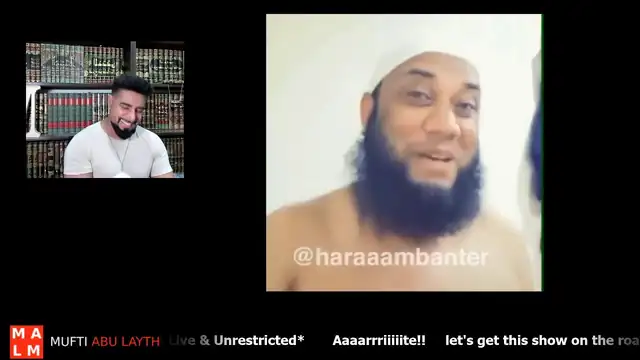 Play from 28:39
The video loads from YouTube only when you press play. Click a time in the transcript to seek.
Watch the answer
Open on YouTube at 28:39The player starts at 28:39, where the answer begins.
This segment28:39 to 29:57 · 1 min 18 sGeneral teaching
The answer in brief
machinesummary, machine-writtenNot necessarily: Malik disliked music by temperament, but Medina after the Prophet was known for its musical instruments.
In more detail
A question asks: if music is halal because no sahih hadith makes it haram, would the living tradition not indicate prohibition? Mufti Abu Layth says not necessarily. He accepts that Imam Malik did not like music, but says not liking something is a matter of temperament. He says Medina after the Prophet's lifetime was known for its interest in musical instruments, to the point that a proverb arose among those who disagreed: do not ask the people of Medina about music or about nabidh, because they will just say it is halal.
Question as read aloud · questioner not identifiedWhen you say music is halal because there is no sahih hadith to make it haram, what of the living tradition: would that not indicate prohibition?
Position stated
Mufti Abu Layth says the living tradition does not necessarily indicate that music is prohibited.
“no not necessarily in fact what's interesting you see what's interesting is even though imam malik i accept he didn't like music”
Category: ruling
Kind: general teachingTranscript
machine28:39 to 29:57 · click a time to seek · dotted terms open the glossary
twin flame right so mufti when you say music is halal because there is no sahih hadith to make it haram however what of the living tradition would that not indicate prohibition no not necessarily in fact what's interesting you see what's interesting is even though imam malik i accept he didn't like music but there's a difference you see people not liking something is based on their temperament but what is interesting is medina was known
for people having an inc a proclivity an interest in musical instruments in the city of medina after the prophet's life it was known for that in fact the saying was that it became proverbial that a proverb that do not ask that people that disagreed with it said do not ask madina on music because they will just say it's halal and do not ask about alcohol or the other the nabeed because they will just say it's hala this became a saying so it's interesting you mentioned the
living tradition thing chad man you're doing it you're doing it henna as always you're doing it all right ismael p are you doing huh drop in the p the super chat i have tried dmt and it was amazing welcome welcome to a different caravan
Paragraphs overlapping 28:39 to 29:57. Full text on the recording page.
Cite this segment
Stable id, transcript version and tier are part of the citation. Every change to a transcript is logged.Mufti Abu Layth Archive, segment 2020-08-24-S09, auto-transcribed, may contain errors. https://muftiabulayth.org/r/kwmtt2tqao0/s/9/ (accessed 1 November 2026)
- APA 7
Mufti Abu Layth. (2020, August 24). Doesn't the practice of Medina show that music is haram? [Video, segment 2020-08-24-S09, auto-transcribed, may contain errors]. Mufti Abu Layth Archive. Retrieved November 1, 2026, from https://muftiabulayth.org/r/kwmtt2tqao0/s/9/
- Chicago author-date
Mufti Abu Layth. 2020. "Doesn't the practice of Medina show that music is haram?" Video, segment 2020-08-24-S09, auto-transcribed, may contain errors. Mufti Abu Layth Archive. Recorded August 24, 2020. Accessed November 1, 2026. https://muftiabulayth.org/r/kwmtt2tqao0/s/9/
- BibTeX
@misc{abulayth-2020-08-24-S09,
  author = {Mufti Abu Layth},
  title = {{Doesn't the practice of Medina show that music is haram?}},
  year = {2020},
  month = {8},
  date = {2020-08-24},
  howpublished = {\url{https://muftiabulayth.org/r/kwmtt2tqao0/s/9/}},
  url = {https://muftiabulayth.org/r/kwmtt2tqao0/s/9/},
  organization = {Mufti Abu Layth Archive},
  urldate = {2026-11-01},
  note = {Segment 2020-08-24-S09, auto-transcribed, may contain errors}
}
Something wrong here?
Tell us what is wrong and it will be checked against the recording. Nothing changes until a person has reviewed it.
Sending a note needs JavaScript, which is off or unavailable in this browser. Nothing has been sent.
No name, email address or account is asked for or stored, and the inbox does not store your IP address. For rate limiting it keeps an unreadable fingerprint of your connection for 48 hours, and our database provider's own logs record connections as every website's do. Only your note, its kind, the page and the moment in the recording are kept, for review.