
Recordings › How to Pray Salah According to the Maliki Madhhab- Mufti Abu Layth · 2 Apr 2017 › Segment 5 of 13
Demonstration of sujud al-sahw before and after the salam, and cancellation
salat salaah namaz salaat namaaz as-salah al-salah salawat hadeeth ahadith ahaadeeth hadis hadees ahaadith malik ibn anas malik bin anas imam maalik imam malik ibn anas rakat raka'at rakaah prayer unit rukoo bowing sajdah sajda sujood tashahud tashahhudh imaam prayer leader maaliki malikite malikiyyah maliki school muftis hukm ahkam hukum hukam ahkaam wajib waajib wajibat sunna sunnat sunan prophetic practice jahannam jahanam jahannum sura soorah surat suwar soora chapter tilawah tilawat tilaawah madinah al-madinah madeenah yathrib subhanallah subhaanallah subhanallaah as-salamu alaykum assalamu alaikum assalamualaikum salaam salaams salam alaykum wa alaykum as-salam peace greeting duaa duaas supplication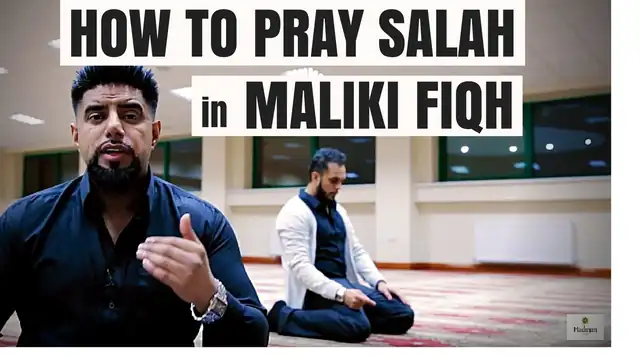 Play from 22:48
The video loads from YouTube only when you press play. Click a time in the transcript to seek.
Watch this part
Open on YouTube at 22:48The player starts at 22:48, the beginning of this part.
This segment22:48 to 34:34 · 11 min 46 sGeneral teaching
What this part covers
machinesummary, machine-writtenA missed major sunnah is repaired by two prostrations before the salam, an addition or doubt by two prostrations after it, and a forgotten obligation by cancelling the defective rak'ah and continuing. Behind an imam, follow the imam.
In more detail
With the demonstrator, Mufti Abu Layth lists the emphasised sunnahs whose omission requires the sujud al-sahw before the salam: the surah after al-Fatiha, the tashahhud, the words of praise on rising from ruku', audible recitation at night and silent by day, and two or more lesser sunnahs together. He shows the prostration done before the salam: after the tashahhud and before the salutation, two prostrations, then the tashahhud, salutation, dua and salam again. For an added action, or doubt about the number of rak'ahs where one builds on the lesser number, he shows the prostration after the salam: a salam to the right, two prostrations, then tashahhud, salutation, dua and the closing salam; he notes an addition that almost outweighs the prayer, such as four extra rak'ahs, would mean starting again. If one has both omitted and added, the prostration before the salam is done, which he likens to a minus times a plus being a minus. For a forgotten obligatory act, such as missing ruku' and realising it in the next rak'ah, he says Imam Malik addresses this in al-Mudawwana [?]: the defective rak'ah is cancelled mentally and the current one treated as the first, the prayer is completed, and since something has been added the prostration after the salam follows. He adds that behind an imam one simply follows the imam's practice, citing the report that the imam is placed to be followed, and that minor movements such as shifting a row or hand gestures neither invalidate the prayer nor require any prostration.
- Some terms in this segment are uncertain
Position stated
No position summary has been recorded for this segment.
Kind: general teachingTranscript
machine22:48 to 34:34 · click a time to seek · dotted terms open the glossary
summarize common mistakes that occur to each and all of us in our daily lives so let's just take a look now with a bit more detail at these right so now we're going to take a look at some examples and go through this in terms of the according to the school of Medina we've got our helpful participant back there as you can see he's going to be demonstrating for us so let's take a look at some of these mistakes that
occur we mentioned that if you miss a and emphasiz Sunnah within Salah now what do we mean by that these include a Surah reciting a Surah within Salah after Surah fat so if you missed that that it includes that it includes uh your your actual uh which is recited and the sitting when you sit down and recite that it includes saying as you rise from ru it
includes reciting aloud audibly in the in the nighttime prayers and silently during the daytime prayers and it also includes omitting a couple of lesser Sun so if a person was to miss out let's say more than two or more and that doesn't include not your opening which initiates Salah but if you missed out the others in between Salah it would take the same
ruling okay and this is fixed by a by okay so this is done before a so we're going to take a look now so let's just say uh somebody has I don't know they've forgotten to recite a Surah in Salah so now they're at the end of their Salah they're sitting in they've read their now before they begin their so before they've begun that without doing Salam they're just going
to go into suud and this is a regular s so you do the normal and you perform two SAS just like you would once you've finished that you sit back up you're in your T position again you would again recite followed by aatam followed by the Dua and then a Salam to conclude that's
your right so that's the what about the well that was the fourth if you remember the fourth category of of mistakes that do occur and that is an addition within Salah and this can be doing something uh as I mentioned earlier like adding an extra ra to Salah um adding an extra s adding an extra Ru it could be adding something extra but an action we are not restricting we are not speaking of a recitation or anything verbal that is a that we mentioned is negligible
does not impact the Salah okay and when we say adding something just to keep in mind what we don't mean is to add something which almost outweighs the entire Salah okay so it must be something still uh small compared to the entire Salah so let's say you were praying four and you added one or even two I suppose by mistake but you couldn't add an entire four ra extra that would be just too much and you'd have to stop that Salah and start again but that seldom happens ever I don't think it would ever happen but so coming to this point right so you've added something
extra so let's as you can see with our helpful participant that let's say he he prayed three does by accident um or and this does include as I mentioned before where a person is in doubt regarding his Salah or her Salah so if they thought have I prayed three or four ra so they build on the least number and because there was a chance that they may have added something to the Salah they would do a and what is that let's take a look so that is you've reached the end of your Salah now you're in you've read your
yet before you begin aatam you will make a Salam to the right as you can see following that you will go into suud you will do two sjas just like any other suud once again with regular sub Etc once you've finished and risen from that you'll be back in the position you will recite your followed by followed by your Dua and you'll conclude your prayer with Salam that was
a so you've got a for leaving out a short leaving out a Sunnah uh and you've got for adding something to the Salah now somebody may be thinking okay being preoccupied like we are what if I mistakenly did both like I added something and for forgot something so let's say you forgot to recite a Surah after fa but you also added by mistake an extra raaka you stood up for a fifth
raaka so you've got a minus and a plus what's the mathematical formula when you multiply a minus with a plus it's always a minus it's always a minus look at that so that's exactly what you do it's always a the one without the Salam if you've forgotten so if you've forgotten something and you've added something you always do the S which is without okay one of the most intriguing aspects
that I want to share with you and that comes back to our fifth type of mistake that could be made in Sal and this is forgetting or omitting leaving out an obligatory action within Salah you heard me an obligatory Action Now although many people in this situation don't provide a solution they say well you can just break your Salah and start again however the school of Medina provides a solution allahar why breaks something when you can repair it Imam Malik actually speaks
about this in the mud and he addresses it and it's called the concept of cancellation so let's take a look at this so we have our helpful participant right here he's had a busy day he's praying and he forgets to do Ru he's so overwhelmed with his thoughts he goes straight into suud he's doing SJ he had a busy day he's not even thinking he rises up from suud into his second ra at this point what it occurs to him
that Subhan Allah I actually forgot to do Ru in my first ra now at this stage instead of saying okay let me break the Sal and start again the school of Madina teaches that what he would do is cancel you heard me cancel out that first ra at a mental level cancel it out so although he is in his second ra but as far as he's concerned this is now his first so the F the one he's actually
read without the ru cancel that out mentally treat this like your first ra he will now imagine he was praying four raat or two or three whatever he was praying he will continue his Salah normally as though this was in this example his first raak he'll carry on complete that Salah he'll go through the normal actions nothing different the the the the he'll do everything complete all the necessary R eventually reaching T now at this stage let's say he that
occurred to him in which was a four now and he canceled out the first one and started it again from his second and read four now technically what has he done he's added something extra to his Salah so when you add something extra in Salah how do you make up for that you got it so he's going to read his before he gets onto before he gets onto that he's going to do a
Salam and then go into this is his he'll do two regular sjas with Once he's finished that he'll continue to recite once again his followed with a Dua and then conclude with a allahar and that is how you repair a Salah from many of the common mistakes or uh or areas of forgetfulness that we find ourselves
in it is important to highlight here though that if you were praying behind an Imam and the Imam is doing he's for or he has forgotten something then just follow the Imam as the Hadith States the IM has been placed that you may follow him so if the IM is somebody who only does the one with with a Salam so after the Salam just follow him okay do not try to do something different that's important to know what's also worthy of
consideration is that minor physical actions within the Salah do not re Quire a and they do not invalidate the Salah so if you were praying in J or on your own and you moved slightly like let's say you moved forward a row or you moved to the side slightly or you did something like this or you made hand gestures that does not break your Salah neither does it require a okay so these were some helpful notes and points on U on tackling the situation of what it
means and how it is performed both the and the within the school of Medina I hope that's been of some help remember us in your duas let's take a look at a few questions uh as follow-up questions that have been concerning some people within uh the Maliki maab and how they should be looked at is there a distinction between the Salah of men and women within the Maliki maab okay now that is a very good question because some
Paragraphs overlapping 22:48 to 34:34. Full text on the recording page.
Cite this segment
Stable id, transcript version and tier are part of the citation. Every change to a transcript is logged.Mufti Abu Layth Archive, segment 2017-04-02-S05, auto-transcribed, may contain errors. https://muftiabulayth.org/r/bin9uqpopma/s/5/ (accessed 1 November 2026)
- APA 7
Mufti Abu Layth. (2017, April 2). Demonstration of sujud al-sahw before and after the salam, and cancellation [Video, segment 2017-04-02-S05, auto-transcribed, may contain errors]. Mufti Abu Layth Archive. Retrieved November 1, 2026, from https://muftiabulayth.org/r/bin9uqpopma/s/5/
- Chicago author-date
Mufti Abu Layth. 2017. "Demonstration of sujud al-sahw before and after the salam, and cancellation." Video, segment 2017-04-02-S05, auto-transcribed, may contain errors. Mufti Abu Layth Archive. Recorded April 2, 2017. Accessed November 1, 2026. https://muftiabulayth.org/r/bin9uqpopma/s/5/
- BibTeX
@misc{abulayth-2017-04-02-S05,
  author = {Mufti Abu Layth},
  title = {{Demonstration of sujud al-sahw before and after the salam, and cancellation}},
  year = {2017},
  month = {4},
  date = {2017-04-02},
  howpublished = {\url{https://muftiabulayth.org/r/bin9uqpopma/s/5/}},
  url = {https://muftiabulayth.org/r/bin9uqpopma/s/5/},
  organization = {Mufti Abu Layth Archive},
  urldate = {2026-11-01},
  note = {Segment 2017-04-02-S05, auto-transcribed, may contain errors}
}
Something wrong here?
Tell us what is wrong and it will be checked against the recording. Nothing changes until a person has reviewed it.
Sending a note needs JavaScript, which is off or unavailable in this browser. Nothing has been sent.
No name, email address or account is asked for or stored, and the inbox does not store your IP address. For rate limiting it keeps an unreadable fingerprint of your connection for 48 hours, and our database provider's own logs record connections as every website's do. Only your note, its kind, the page and the moment in the recording are kept, for review.