
How to Pray Salah According to the Maliki Madhhab- Mufti Abu Layth
salat salaah namaz namaaz as-salah al-salah salawat hadeeth ahadith ahaadeeth hadis hadees ahaadith madhab mazhab school of law madhahib mazahib madhaahib malik ibn anas malik bin anas imam maalik imam malik ibn anas 'asr asar salat al-asr asr prayer sajdah sujood imaam prayer leader masjed masaajid masajid mosque maaliki malikite malikiyyah 'urf muftis hukm ahkam hukum hukam ahkaam haram haraam mubah mubaah wajib waajib wajibat fard farz faraid fard ayn fard kifayah fardh sunna sunnat sunan prophetic practice riba ribaa sood usury jinn djinn jinnat jinni jahannam jahanam jahannum koran quraan al-quran sura soorah surat suwar soora chapter ayah aya ayaat aayah aayat tilawah tilawat tilaawah sahaba sahabi sahabiyyah sahabiyat companions madinah al-madinah madeenah yathrib in sha allah insha'allah in shaa allah insha allah inshaa allah subhanallah subhaanallah subhanallaah bismillah ir-rahman ir-rahim bismillahir rahmanir rahim bismillahi bismillah al-rahman al-rahim as-salamu alaykum assalamu alaikum assalamualaikum salaam salaams salam alaykum wa alaykum as-salam peace greeting niyyah niyah niyat niyya niyyat dhikr zikr zikar dhikar zikir adhkar azkar duaa duaas supplicationvideo · 50:15 · 262,000 views · 2 Apr 2017 · 13 segments · Open on YouTube
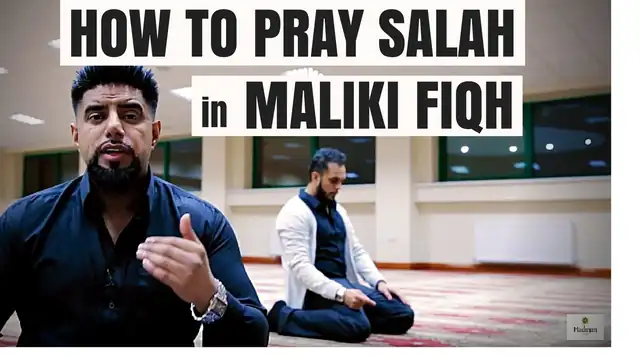 Press play to load from YouTube. Nothing loads until you do.
13 segments
machine13Each block is a segment in time order. Click to open it.All segments · in time order
Transcript
machineauto-transcribed, may contain errors · source: youtube auto · click a time to seek · dotted terms open the glossarywasan people I'd like to today inshallah share with you an instructional video on how to perform the Salah in accordance with the school of Medina okay now before we get into that I just want to highlight why are we doing this well quite a few people have expressed an interest in wanting to learn the Malik and one of the first things that comes to their mind is okay so you know I want to study this how do I pray and as they say in Arabic that rather than just speaking of
it let's exemplify show it by example before we get into the actual actions of Sal let's just get some basic points out the way the prayers the five daily prayers consist of okay the singular ra or a unit now in today's instructional video we'll only be going through uh the key actions just for your information and I'm sure many of you are already aware of this the units of prayer the ra as they consist in the salaat in the prayers are the the subah the morning prayer has two we
generally refer to it as subah I know uh many people do refer to it as f as well within the Maliki school they call it and they call theah before it the afternoon prayer has four ra uh these are the obligatory r of each prayer the late afternoon prayer has four three and has four now having covered that I'd like us to also understand that one of the key themes I would like you to keep in mind
right throughout this video and generally whilst you will be praying your Salah is that with the school of Medina are there is a huge emphasis on keeping a naturalness right throughout the prayer now you'll see what I mean as we go through this video but just keep that in mind okay a naturalness folks right so let's move on to the Salah in order to perform and enact for us yep that's not a Jin just in case you're wondering that's a Jin in the background it's not that shaan who's
kindly offered to perform this Salah for us so we can get a clear example allahar Okay so you're ready to pray you're going to face the once you're doing that you've got an intention now what does this mean all this is is having an awareness okay you want to know what it is that you're doing that's what this is about no need to verbalize anything no need to say anything once you're ready you're looking ahead you say the which is allahar that is necessary to begin the Salah
that's accompanied by raising the hands to the shoulders okay you let them drop and go back to their resting place which is by the side according to the school of Medina now no need to freak out this is called SLE this is which means a hanging this is from the Sunnah as explained by many like who said the this was also the position of many of the imams of this tradition including people
like IIM and others so it is a well-known position within sunah and within the Maliki School you also have the option of folding your arms which is referred to as this is equally applied and practiced by many Malik here as well okay so right so you've got that another question somebody may ask okay where should I be looking where should I be looking now you do have generally two options either to just look straight ahead as in the Quran we're we're reminded by the verse
that face the another option is to look at the place of suud if that helps with concentration ation once you've got that what do we do there is no Dua to begin there is no which means there isn't even which is once again this is from the Sunnah this was the practice of the people of Madina that Imam Malik found himself upon and this is what he taught so there's no need to freak out once again
you begin immediately with the recitation which is ald so that's how you begin straight after tbar you've gone into recitation which is read alhamd is generally said silently now at this stage you follow
this with either a short Surah of the Quran or a few verses of few ayat can be read also so and this is begun once again without the B so you just go straight into the Surah now you're ready to go into this is done by saying Allah and you go into R now generally this is done without but that is also an option
within the school of Medina practiced by many people to do ra before going into Ru and coming out of it when you're in Ru this is a place of T of glorifying Allah so a popular sub this is said without any set number you can do this there is no limit once you've done that you will rise from ru to okay now all these postures by the way you should ensure that they're done
correctly and outright whether it's r or standing now once you stand you will stand with the word and follow that with now you're ready to go into so what do you do this is a place of of and Dua so you're in you can recite subh once again without any set number it's not it's not determined once you've
once you're done you can also make Dua Dua can be any Dua according to the school of Medina anything bothering you this is the time to reach out to Allah the Hadith says the that the closest a person is to Allah is when he's in and in a in a Hadith that the prophet said make Dua when you in and that it is well it is more deserving to be accepted and you can do this and this
is the the awesome or very interesting part this can be done in any language according to the school of Medina once you've done that you rise from sujud with allahar hands just resting on the thighs and then you're ready to go back into sujud this is just done with another and the same thing again it is a place of sub without any set number and you can make Dua a personal Dua it can be about anything about passing exams about work it can be about any problems it can
be about anything Allah is listening and in any language once you're done you're ready to rise you do that by saying Tak once again as you're Rising your hands will be the last to leave the ground as you stand up now this will be your second ra which will be repeated in the same manner that we've done the first okay so you can see that you will stand for recitation you will go through the F the once you've done that you'll go into Ru similarly once again you do your T
you'll rise from r with and we've highlighted that before and then you'll be ready to go into sujud one thing to keep in mind as you go into sujud ensure that the hands do preed you into suud that is generally as is taught and understood by the school of Medina now once again two sujud once you rise from suud you are now in the position of T so what are the sitting positions now you're going to find more than one generally uh you have one called which involves
leaning in on the left hip lowering that to the ground and having the left foot come from beneath and under the right foot and leg as you can see if you find that uncomfortable or quite inconveniencing and difficult you can it is valid and permissible to sit in the position with which involves resting on the left foot okay so these are all transmissions which have come from different sahabah and the whole point of Salah is to connect you with Allah and
not to kind of bring about discomfort and pain in this position as you are about to begin the you will generally your hands will be resting on your thighs your right hand will we folded with the index finger pointing out as you can see you'll have your thumb resting on the middle finger as you can see and the index finger moving sideways now this continues to move right throughout the T position till the end of
Salah so let's get back to the T you will recite here now this there are multiple ways to read this multiple Transmissions from different sahab IM Malik chose the one by but they are all permissible and valid which is as follows
right now this is followed by which is read and once again there's there are varying narrations a popular one uh can be read muhamad
now at this stage you recite a Dua now there is no set Dua within the Maliki many people popularly read duas like The quranic Dua or
now once you've done that you're ready to finish the prayer to conclude and this is done with a single Salam now that's quite popular within the school of Imam Malik that it's just one Salam although there is the option for those who want to do two that that is an option as well and this is done simply with the wordsum no more than that and that is done by turning the head just slightly to the right as you say that and with that you've concluded your prayer some things to just keep in mind that during the Salah all of the postures all of the
positions ought to be done and they really must be done with a sense of Tranquility okay calmness to them in a correct manner there's no need to rush okay and this is what the refer to as within the Salah an an obligation within the Salah to perform it in a tranquil manner one more question that a lot of people do ask is that how is this any different if I was praying behind an Imam now it's not two different besides things that you'd already know one key difference is that according to the
school of Madina if the Imam is reciting in an audible in a loud prayer you do not recite behind the Imam as the Quran states that once the Quran is being recited be silent and listen to it so that is a key difference um and once the IM is rising from he says there's no need for you to say that you would rise with him following with the words these are really just some subtle key differences to keep in mind if you're praying behind the Imam other
than that the rest is generally pretty much the same across the board Bismillah folks I'd like to share something very important related to Salah something that touches at the heart of being human human all to human and that's forgetfulness in Arabic there's a saying that we get our name insan from actually being forgetful so what if we forget something in Salah that's where you have something
called the S of forgetfulness the prostration of forgetfulness and some of you may have already come across this you may have witnessed it in your local Masjid uh with the Imam or you may actually be aware of these rulings if you've seen it in a Masjid you may have seen that the Imam towards the end end of his Salah when he's in when he's in the seated position he's done his he does a Salam very quickly and goes into s and then he sits back up and and then carries on with his Salah that's what this is about the suud of forgetfulness that's what we're going to take a look
at the thing to keep in mind is that in the Malik there are two types of okay two different types you've got something called the s that is done before or without a Salam and we'll talk a bit about that shortly you'll see that but just keep that in mind the one done without aam or before aam and the the s that is done after aam or with aam he goes into suud after having done
a Salam and we're going to talk a bit more about that shortly so what could be some of these mistakes that commonly occur within Salah now we're not exhausting them but we're going to take a look at five types of mistakes that could occur the first an addition of something verbal so some kind of some kind of T out of its place or extra as an example you sit in the instead of reading you end up reciting
Surah or you're you're reciting and instead of standing up you continue and you read theat or for example you've stood up and you accidentally read something else instead of Surah fa so you've read something where it doesn't belong well the good news is there's nothing to do here okay you just carry on you ignore that any kind of additional verbal uh or or remembrance does not impact the Salah so that's the good news so the first one nothing to
do right now let's take a look at the second and that is what if you omit or forget something which is a lesser Sunnah a lesser Sunnah and these are things which you can refer back to in your course in books as well the Les as an example let's say the in or in forgot to say subh or you forgot to say subh or one of the which is within the Salah not the not the one which is used to initiate Salah that's an obligation of course but
these are the within Salah let's say you forgot one good news once again nothing to do okay you've forgotten it it's okay it's a not an emphasized Sunnah you just carry on with your Salah third type you omit you forget a major Sunnah of Salah a sunah of of amongst the okay so what are these as an example so things like reciting a Surah um you forget to recite a Surah what would you do or the and uh and
we'll go through some of these shortly in uh but you omit a major inah what do you do this is where the comes in the first type and we're going to talk about that in a moment but just keep that in mind this is where the the one that is done without a Salam comes in okay so you've forgotten or you've left out a major Sunnah Within the fourth type that you decide to or you accidentally sorry not decide to but you
accidentally add something to your Salah so it's your fourth ra you're in the place of the you ought to finish your Salah now but you accidentally get up to a fifth ra and you add an extra ra by mistake or instead of doing two suud you're not sure so you end up doing three sujud so this what do you do in this situation in this situation you amend you fix this with the which is done after a Salam and we're going to go into that uh with a
bit more detail just shortly before we do that I just want to uh include here this includes the situation where you are in doubt so if somebody was in doubt and they said well you're praying your Salah and you're not sure am I meant to am I in my second ra or am I in my third or am I in my third or am I in my fourth you're not sure you always build on certainty so if I think am I in my third or fourth well I'm definitely in my I've definitely done three so you build on that the and there's a possibility that you may have done something extra an
additional act so it's part of this fourth category it is amended with a and we're going to come to that shortly just remember that the fifth category is you forget to do an obligatory act now there is some good news the school of Medina folks offers a solution to fix this too okay and this is called the concept of cancellation within Salah and we're going to speak about the shortly so these five examples
summarize common mistakes that occur to each and all of us in our daily lives so let's just take a look now with a bit more detail at these right so now we're going to take a look at some examples and go through this in terms of the according to the school of Medina we've got our helpful participant back there as you can see he's going to be demonstrating for us so let's take a look at some of these mistakes that
occur we mentioned that if you miss a and emphasiz Sunnah within Salah now what do we mean by that these include a Surah reciting a Surah within Salah after Surah fat so if you missed that that it includes that it includes uh your your actual uh which is recited and the sitting when you sit down and recite that it includes saying as you rise from ru it
includes reciting aloud audibly in the in the nighttime prayers and silently during the daytime prayers and it also includes omitting a couple of lesser Sun so if a person was to miss out let's say more than two or more and that doesn't include not your opening which initiates Salah but if you missed out the others in between Salah it would take the same
ruling okay and this is fixed by a by okay so this is done before a so we're going to take a look now so let's just say uh somebody has I don't know they've forgotten to recite a Surah in Salah so now they're at the end of their Salah they're sitting in they've read their now before they begin their so before they've begun that without doing Salam they're just going
to go into suud and this is a regular s so you do the normal and you perform two SAS just like you would once you've finished that you sit back up you're in your T position again you would again recite followed by aatam followed by the Dua and then a Salam to conclude that's
your right so that's the what about the well that was the fourth if you remember the fourth category of of mistakes that do occur and that is an addition within Salah and this can be doing something uh as I mentioned earlier like adding an extra ra to Salah um adding an extra s adding an extra Ru it could be adding something extra but an action we are not restricting we are not speaking of a recitation or anything verbal that is a that we mentioned is negligible
does not impact the Salah okay and when we say adding something just to keep in mind what we don't mean is to add something which almost outweighs the entire Salah okay so it must be something still uh small compared to the entire Salah so let's say you were praying four and you added one or even two I suppose by mistake but you couldn't add an entire four ra extra that would be just too much and you'd have to stop that Salah and start again but that seldom happens ever I don't think it would ever happen but so coming to this point right so you've added something
extra so let's as you can see with our helpful participant that let's say he he prayed three does by accident um or and this does include as I mentioned before where a person is in doubt regarding his Salah or her Salah so if they thought have I prayed three or four ra so they build on the least number and because there was a chance that they may have added something to the Salah they would do a and what is that let's take a look so that is you've reached the end of your Salah now you're in you've read your
yet before you begin aatam you will make a Salam to the right as you can see following that you will go into suud you will do two sjas just like any other suud once again with regular sub Etc once you've finished and risen from that you'll be back in the position you will recite your followed by followed by your Dua and you'll conclude your prayer with Salam that was
a so you've got a for leaving out a short leaving out a Sunnah uh and you've got for adding something to the Salah now somebody may be thinking okay being preoccupied like we are what if I mistakenly did both like I added something and for forgot something so let's say you forgot to recite a Surah after fa but you also added by mistake an extra raaka you stood up for a fifth
raaka so you've got a minus and a plus what's the mathematical formula when you multiply a minus with a plus it's always a minus it's always a minus look at that so that's exactly what you do it's always a the one without the Salam if you've forgotten so if you've forgotten something and you've added something you always do the S which is without okay one of the most intriguing aspects
that I want to share with you and that comes back to our fifth type of mistake that could be made in Sal and this is forgetting or omitting leaving out an obligatory action within Salah you heard me an obligatory Action Now although many people in this situation don't provide a solution they say well you can just break your Salah and start again however the school of Medina provides a solution allahar why breaks something when you can repair it Imam Malik actually speaks
about this in the mud and he addresses it and it's called the concept of cancellation so let's take a look at this so we have our helpful participant right here he's had a busy day he's praying and he forgets to do Ru he's so overwhelmed with his thoughts he goes straight into suud he's doing SJ he had a busy day he's not even thinking he rises up from suud into his second ra at this point what it occurs to him
that Subhan Allah I actually forgot to do Ru in my first ra now at this stage instead of saying okay let me break the Sal and start again the school of Madina teaches that what he would do is cancel you heard me cancel out that first ra at a mental level cancel it out so although he is in his second ra but as far as he's concerned this is now his first so the F the one he's actually
read without the ru cancel that out mentally treat this like your first ra he will now imagine he was praying four raat or two or three whatever he was praying he will continue his Salah normally as though this was in this example his first raak he'll carry on complete that Salah he'll go through the normal actions nothing different the the the the he'll do everything complete all the necessary R eventually reaching T now at this stage let's say he that
occurred to him in which was a four now and he canceled out the first one and started it again from his second and read four now technically what has he done he's added something extra to his Salah so when you add something extra in Salah how do you make up for that you got it so he's going to read his before he gets onto before he gets onto that he's going to do a
Salam and then go into this is his he'll do two regular sjas with Once he's finished that he'll continue to recite once again his followed with a Dua and then conclude with a allahar and that is how you repair a Salah from many of the common mistakes or uh or areas of forgetfulness that we find ourselves
in it is important to highlight here though that if you were praying behind an Imam and the Imam is doing he's for or he has forgotten something then just follow the Imam as the Hadith States the IM has been placed that you may follow him so if the IM is somebody who only does the one with with a Salam so after the Salam just follow him okay do not try to do something different that's important to know what's also worthy of
consideration is that minor physical actions within the Salah do not re Quire a and they do not invalidate the Salah so if you were praying in J or on your own and you moved slightly like let's say you moved forward a row or you moved to the side slightly or you did something like this or you made hand gestures that does not break your Salah neither does it require a okay so these were some helpful notes and points on U on tackling the situation of what it
means and how it is performed both the and the within the school of Medina I hope that's been of some help remember us in your duas let's take a look at a few questions uh as follow-up questions that have been concerning some people within uh the Maliki maab and how they should be looked at is there a distinction between the Salah of men and women within the Maliki maab okay now that is a very good question because some
schools of law um draw out an absolute distinction from how the woman places her hands to how she sits to how she does to so there's in some Ms you see that and in some there's no zero distinction the the school of Medina the Maliki maab from a principal perspective it does not highlight any differences between men and women in Salah it doesn't say that women should stand differently or they should Place their hands differently or sit differently or it does not say that men and women from
a principal perspective are the same when it comes to Salah however there are some advisory guidelines highlighted by some uh many of the within the mhab that say that a woman could pay attention to some aspects of modesty and in light of that she can maybe uh just if a certain situation requires more modesty she can just adapt to that that's all that now they don't go into too much detail they just say if she was doing suud and if she was doing Ru she could just be more mindful of
that and her environment that's all but in essence there is no distinction between men and women within in the school of Medina another question when the Hadith mentions forbidden times of prayer what does that mean does that mean there's certain times in which we cannot pray our Salah absolutely not you can pray your Salah at any time that includes sunrise sunset what the Hadith is speaking about is na voluntary praise not your uh not
the not the obligatory prayers so if you decided to do some na you shouldn't do that if it's actual Sunrise if Sunrise is actually taking place wait till after sunrise and then you can perform that but not the actual subah not the obligatory prayers so if you're woken up late and sunrise is taking place you can still pray in fact you should pray the Hadith says let let him pray once he awakens or remembers okay so that is not a Prohibition to pray any obligatory prayer it's only referring to the na the voluntary kind
of prayers this is a good question when praying in congregation how do we stand well obviously you stand next to the person either side and just in a natural manner you will stand shoulder Tosh shoulder you will try and keep a nice straight line but you are not under any in fact you're not even advised really to to join the heels or you know to to touch feet or things like this that's not actually required it's not advised within the school of Medina you just stand naturally your feet however they would just be placed in a natural
stance as if you were just regularly standing that's all um the main thing is you join the shoulders with the people next to you in a way that's natural once again not to squeeze not to be not to leave gaps at the same time just be natural this theme you will find it recurring right throughout the mab of just being natural and that and the same thing occurs when you're praying at home by the way or if you're praying on your own this was this was highlighting if you're praying next to somebody but even on your own how far apart should your feet be the school of Medina does not pay any
attention to these kind of things it does not call you to pay attention to them I know some schools of law do but the school of Medina emphasizes that things should just be natural just stand that's all you do do not become obsessed about these tiny kind of details which almost make the whole thing too mechanical so the the whole point is to keep a spiritual and a natural connection within Salah this is an interesting question which follows follows up from our video and that is what if you forget to doah so not only have you forgotten
something in Salah then you forgotten to doah as we have highlighted in the video that there are two types of uh there the the one done before or without a Salam and the the one done with a Salam okay now what the what what the would say generally is that if you've missed a if you've missed these the that you should do it if you remember it more or less or the straight after so straight after once you've let's say a person's finished his prayer and he's about to
get up and then he realizes oh my God I forgot to do sud the sah just do it there and then followed by Salam even if a certain amount of time has lapsed but not an immense amount of time we're not talking like day or things like this so if you're still in the Masid let's say and you know you've been here for I don't know half an hour or something and you're about to and you realize oh I hadn't done you can do that okay uh obviously if a a considerable amount of time has lapsed then you would just let that be okay and that's that's fine you know
inshallah Allah subhana is it's not actually an issue some do speak about well the one after could be made up for even if it's after an excessive amount of time because technically it was after the Salam anyway and that's also something that um that can be done and you can look into that you can research these issues further as well um by resorting to either your local imams or just studying inshallah further on courses as well do not restrict your learning just to things like this but this is just to give you some insight this is an interesting question what do
I wear for Salah well well well well well you don't have to actually dress up so to speak for Salah in a in in a particular uniform or anything like that you would just be for men as and women as long as your AA is covered okay that is the requirement now the AA for men is different as as you're all aware uh for men generally it's just between the naval and knee at most really that and for women um everything with the exception of the hands and the face and with some uh disagreement defeat as well
so now the that is generally the a that has to be covered as long as that is covered you would pray your Salah um some people ask questions like what if I've got a picture like what if I'm wearing a t-shirt and it's got a picture on it of something does that violate my Salah uh no it does not the Salah is intact uh it is not violated in any way you can perform your Salah like that okay um some people have asked what if I've got a t-shirt on and short sleeves do I need to wear this is for let's say men I've got a t-shirt or a vest you know do I
need to wear a shirt do I need to wear a jumper or a jacket no you do not you can perform your Salah in that um as long as that's how you generally were what the tend to say is you know don't kind of dress down for Salah like if you normally if I was sitting here with a shirt and I think well I know it's Salah time so what I'm going to Inu I'm going take my shirt off and then pray no you shouldn't do that but if you were already in a t-shirt or you happen to be in a vest as it was and you were now praying that is fine the Salah is accepted uh inshallah it's not violated in any way okay so these are some another question people ask which
is I suppose not directly linked to the the clothes but it ties in with the question on pictures on the clothes what if there's pictures in the room that you're praying once again this does not impact your Salah okay this does not um violate your Salah in any way but um and you know and people will have and I've answered the question on whether pictures are allowed or not in in other questions and you can refer to that there something also Worthy to be considered at this stage is what if your trousers for men are below your ankles does that impact your
Salah it does not at all and I do not believe that to be forbidden as I've highlighted uh previously and neither do many of the the within the school of Madina ABD and many have said that that was a custom of the past that involved a a sense of arrogance which if it's not if it has not persisted then the ruling does not continue you either and I don't know really that in essence there is no distinction for that ruling in or outside of Salah but people tend to make an issue out of it before they getting into Salah and they seem to think well uh I should do this for Salah you don't actually need to do that for Salah
specifically so that's covered a lot of these uh one more question that comes to mind um first of all since we're speaking of trousers what if sometimes you get some men uh and they you know some guys will wear tight jeans sometimes and and this has been raised as an issue I've seen this being asked does that impact the Salah in any way with men it does not impact the Salah although they can be mindful to dress perhaps more appropriately but that does not impact the Salah in any way the Hadith that you find uh the sah Hadith which in which the prophet Sall
advises the women to delay uh in their sujud before they rise it explains that the men that they would uh the isar the kind of songs that they would wear they would be wrapped so tight it says that because they were so tightly wrapped that it would Define everything clearly when they were in sujud The Contours and everything and so and yet the prophet did not forbid that he did not say it violated their Salah in any way so just to keep that in mind okay so these are things to do with uh clothing within Salah another good question that comes to mind right here what about
covering the head for men is this something uh that we ought to do is it discouraged if we're not doing it the school of Medina does not recognize wearing a hat or covering your head as a Sunnah within Salah or Sunnah of Salah it is not virtuous per se in fact Imam in his when speaking of this puts it under the category of the this is to do with custom and Convention and he says that we see that certain people in the East tend to cover their heads men and that is seen as Noble amongst
them he said and in the west and he was from Muslim Spain Granada 700 years ago and he says in the west there is a tradition that the Muslim men generally do not cover their heads so this is seen as really in essence especially within the school of Medina as part of convention and Custom it is not seen as a Sunnah which people have to have to be doing so your Salah is absolutely fine it's not Mak it's not you know you haven't violated anything and it is correct inshallah okay something to just quickly add here by the way one is if what if I I mentioned just briefly about the a
before for men between the navel and knee so what if somebody was playing sports and they had these kind of long shorts on can they just come in and pray like that well if you're covering that AA of course you can okay just to clarify as I mentioned before the main thing is covering the AA if it's covered there isn't a problem another thing I'd like to highlight is uh and it's I suppose perhaps more so uh linked to the fashion of the age sometimes people wear certain types of jeans or trousers men especially that kind of hang loose or drop slightly uh from the the hip and
especi and and even if they're not sometimes you find people when they're going into sujud they may have regular trousers regular jeans on but when they're going into sujud as it kind of lowers itself revealing um uh revealing a bit bit of themselves whilst they're in sjda you could see so only for maybe a few seconds of people go into sjah and you know some people are struggling with a t-shirt or a shirt and and we've all probably seen this phenomenon what is the ruling of this well I mean needless to say that they should really take heed in dressing a bit more appropriately that goes
without say you know like maybe a jacket or I don't know or or wear a type of shirt or something that's more appropriate and modest rather than kind of exposing part of your backside so to speak when you're in sujud for other people in a Masjid this doesn't befit the environment of a Masjid but that said does that violate the actual Salah that kind of partial revealing um for that short dur duration within Salah within sujud let's say because mostly it would occur in sujud does not violate the Salah so one thing
to keep in mind is that the school of Medina when it comes to the a it divides them in two you have the and now although the entire must be covered but the is the core part of the and the is the extended part so the for men being the actual genitals and the rectum this must be covered I mean the whole thing must be covered but this cannot under any circumstances be exposed if the extended AA like the thigh or the upper part of the butters or things like this
were momentarily exposed for a a short span of time within the Salah for let's just say during a movement like this or in suud that does not compromise the entire Salah okay so that's something definitely worth uh remembering and understanding that there is a distinction in the a within the school of Medina
Something wrong here?
Tell us what is wrong and it will be checked against the recording. Nothing changes until a person has reviewed it.
Sending a note needs JavaScript, which is off or unavailable in this browser. Nothing has been sent.
No name, email address or account is asked for or stored, and the inbox does not store your IP address. For rate limiting it keeps an unreadable fingerprint of your connection for 48 hours, and our database provider's own logs record connections as every website's do. Only your note, its kind, the page and the moment in the recording are kept, for review.
Cite this recording
Stable id, transcript version and tier are part of the citation. Every change to a transcript is logged.Mufti Abu Layth Archive, auto-transcribed, may contain errors. https://muftiabulayth.org/r/bin9uqpopma/ (accessed 1 November 2026)
- APA 7
Mufti Abu Layth. (2017, April 2). How to Pray Salah According to the Maliki Madhhab- Mufti Abu Layth [Video, auto-transcribed, may contain errors]. Mufti Abu Layth Archive. Retrieved November 1, 2026, from https://muftiabulayth.org/r/bin9uqpopma/
- Chicago author-date
Mufti Abu Layth. 2017. "How to Pray Salah According to the Maliki Madhhab- Mufti Abu Layth." Video, auto-transcribed, may contain errors. Mufti Abu Layth Archive. Recorded April 2, 2017. Accessed November 1, 2026. https://muftiabulayth.org/r/bin9uqpopma/
- BibTeX
@misc{abulayth-BiN9UQPOpMA,
  author = {Mufti Abu Layth},
  title = {{How to Pray Salah According to the Maliki Madhhab- Mufti Abu Layth}},
  year = {2017},
  month = {4},
  date = {2017-04-02},
  howpublished = {\url{https://muftiabulayth.org/r/bin9uqpopma/}},
  url = {https://muftiabulayth.org/r/bin9uqpopma/},
  organization = {Mufti Abu Layth Archive},
  urldate = {2026-11-01},
  note = {Auto-transcribed, may contain errors}
}