
Recordings › In Depth: Is Music allowed in Islam? | Mufti Abu Layth · 18 Sep 2019 › Segment 12 of 12
What is Mufti Abu Layth's final verdict on whether music is haram?
hadeeth ahadith ahaadeeth hadis hadees ahaadith saheeh saheeh hadith sound hadith authentic al-bukhari imam bukhari sahih al-bukhari sahih bukhari saheeh al-bukhari saheeh bukhari imam al-bukhari muftis haraam forbidden mubah mubaah dalil daleel adillah adilla proofConclusion: music is not haram, the nourishment of the soul, vibration, and music therapy in Muslim hospitals
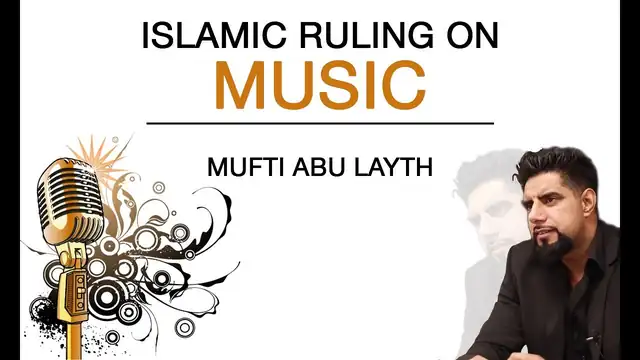 Play from 1:06:32
The video loads from YouTube only when you press play. Click a time in the transcript to seek.
Watch this part
Open on YouTube at 1:06:32The player starts at 1:06:32, the beginning of this part.
This segment1:06:32 to 1:11:14 · 4 min 42 sGeneral teaching
What this part covers
machinesummary, machine-writtenMusic is not haram: no clear sahih hadith prohibits it and the default law makes everything permissible unless proven otherwise. Mufti Abu Layth calls it the nourishment of the soul, notes that sound is only vibration interpreted by a listener, and cites music therapy in medieval Muslim hospitals.
In more detail
The segment opens with Mufti Abu Layth finishing his caveat that the Bukhari hadith speaks of entertainment, not music, and that the default law is that everything is permissible unless proven otherwise, which he jokes God concurs with. Learning that a student is reading psychology, he mentions that he did his own psychology degree with the Open University. He says people struggle to say music is not haram because of their backdrop, not because of the evidence, which only supplements their view as confirmation bias; in his understanding music is not haram because the evidence does not support the prohibition and the law of defaults makes everything permissible unless proven otherwise, and he is all about consistency. He calls music arguably the nourishment of the soul, remarks on what certain sound waves can do, and says that if string theory were true the essence of everything would be vibration. Sound, he repeats, has no physical reality of its own; it is the interaction between waves in the air and an organism that receives and interprets them, so a tree falling unobserved makes no sound. Music can heal, he adds: Muslims in the medieval period had music therapy in their hospitals, the bimaristans, and music helps people with neurodegenerative illnesses. He asks how this could be haram and says it makes no sense whatsoever.
Position stated
Mufti Abu Layth holds that music is not haram, since the evidence does not support a prohibition and the default law makes everything permissible unless proven otherwise, and he calls music arguably the nourishment of the soul, citing its healing use in medieval Muslim hospitals.
“in my understanding music is not there's not harm because the evidence doesn't support it and the default law of defaults states that everything is permissible unless proven otherwise”
Category: ruling
Kind: general teachingTranscript
machine1:06:32 to 1:11:14 · click a time to seek · dotted terms open the glossary
now you take something like music which actually doesn't have a single sahih hadith condemning sorry let me sorry sorry I have to add that caveat in the about sorry it has to be clear unequivocal so the hadith in Bihari that they present says entertainment now they interpret entertainment to me music my entertainment could mean my clubs could mean all kinds of places doesn't have to mean music but they interpret it as music Maha's if it uses the term as if but the point is that
clearly a hadith which says music there isn't even one that is there's many hadith which about music being Haram but the either weak or problematized or there isn't a single clear honey so in my understanding the default law is everything is permissible unless proven otherwise that's the law of defaults right law of defaults which which would you agree Allah what well God he concurs the share of you study in York why you study no
way that you do any psychology that's the thing to study right so anyway say that uh I'll be telling right now I actually did my psychology degree with the O you with the Open University right so the thing is now let's so let's take so now you get music but people will struggle to say music is not Haram because of that backdrop so it's not really because of the evidence the evidence is just supplement and confirmation bias for their view but in my understanding music is not there's
not harm because the evidence doesn't support it and the default law of defaults states that everything is permissible unless proven otherwise and I'm all about consistency yes there why not people why not music is not Haram music is arguably it is the nourishment of the soul okay and you can see the reality to that it's amazing what certain sound waves can do and I
feel in some ways that it's amazing that if if things like string theory be true if it hasn't been it's it's it can't be tested yet but if string theory be true then the essence of everything is simply vibrations it's amazing that these vibrations you see because sound doesn't actually exist people sound is an interaction there's
no such thing as sound it doesn't have a physical kind of reality to it sound is the interaction between waves a waves sound waves which are simply just waves in the air and an organism that interprets those waves so that that kind of also solves the age-old question that if a tree falls in the forest and nobody's there to observe it does it make a sound no it doesn't make a sound
because a sound doesn't actually have a reality to it there is no actual thing a sound in that sense it's a waves being measured by an organism being not just measured sorry interpreted and received by an organism so and and the fact that music can actually heal people and many Muslims during the medieval times they had in the hospitals marathons least coulomb they had music therapy as a healing kind of mechanism and people
that are sometimes you know suffering from certain neuronal degenerative illnesses you can find that music helps them it actually helps in the brain how could this be Haram how could that be at all it makes no sense whatsoever
Paragraphs overlapping 1:06:32 to 1:11:14. Full text on the recording page.
Cite this segment
Stable id, transcript version and tier are part of the citation. Every change to a transcript is logged.Mufti Abu Layth Archive, segment 2019-09-18-S12, auto-transcribed, may contain errors. https://muftiabulayth.org/r/axxub9lxfoc/s/12/ (accessed 1 November 2026)
- APA 7
Mufti Abu Layth. (2019, September 18). What is Mufti Abu Layth's final verdict on whether music is haram? [Video, segment 2019-09-18-S12, auto-transcribed, may contain errors]. Mufti Abu Layth Archive. Retrieved November 1, 2026, from https://muftiabulayth.org/r/axxub9lxfoc/s/12/
- Chicago author-date
Mufti Abu Layth. 2019. "What is Mufti Abu Layth's final verdict on whether music is haram?" Video, segment 2019-09-18-S12, auto-transcribed, may contain errors. Mufti Abu Layth Archive. Recorded September 18, 2019. Accessed November 1, 2026. https://muftiabulayth.org/r/axxub9lxfoc/s/12/
- BibTeX
@misc{abulayth-2019-09-18-S12,
  author = {Mufti Abu Layth},
  title = {{What is Mufti Abu Layth's final verdict on whether music is haram?}},
  year = {2019},
  month = {9},
  date = {2019-09-18},
  howpublished = {\url{https://muftiabulayth.org/r/axxub9lxfoc/s/12/}},
  url = {https://muftiabulayth.org/r/axxub9lxfoc/s/12/},
  organization = {Mufti Abu Layth Archive},
  urldate = {2026-11-01},
  note = {Segment 2019-09-18-S12, auto-transcribed, may contain errors}
}
Something wrong here?
Tell us what is wrong and it will be checked against the recording. Nothing changes until a person has reviewed it.
Sending a note needs JavaScript, which is off or unavailable in this browser. Nothing has been sent.
No name, email address or account is asked for or stored, and the inbox does not store your IP address. For rate limiting it keeps an unreadable fingerprint of your connection for 48 hours, and our database provider's own logs record connections as every website's do. Only your note, its kind, the page and the moment in the recording are kept, for review.