
Recordings › The Role Of Reason In Religion - Mufti Abu Layth · 9 Apr 2018 › Segment 5 of 19
Why are so many Muslims and scholars opposed to using reason in religion?
muftis iman imaan eemaan eeman jahannam jahanam jahannum 'alim aalim ulama ulema ulamaa deen al-din ad-deen ad-din ibadah ibada ibaadah ibadatWhy are Muslims against reason? Insecurity, an unreasonable God, and reason ceded to atheists
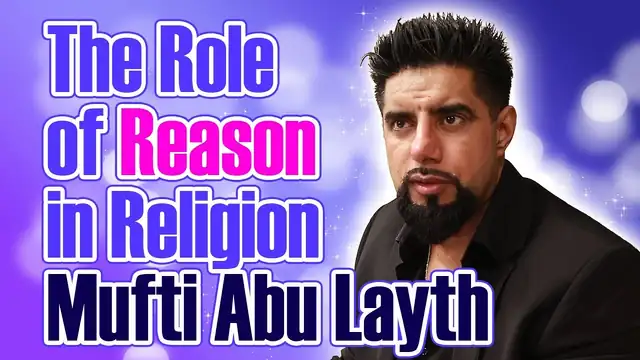 Play from 23:41
The video loads from YouTube only when you press play. Click a time in the transcript to seek.
Watch this part
Open on YouTube at 23:41The player starts at 23:41, the beginning of this part.
This segment23:41 to 28:45 · 5 min 04 sGeneral teaching
What this part covers
machinesummary, machine-writtenOpposition to reason comes from insecurity, Mufti Abu Layth says; God is not unreasonable and would not give people reason and then command what clashes with it, and Muslims have ceded reason, once called hikmah, to atheists and scientists.
In more detail
Having argued that we know Islam to be true through reason, Mufti Abu Layth asks why so many people, scholars included, are against something so obvious, and an audience member suggests insecurities. He adds a further point: if we worship a God, we do not believe God is unreasonable, and he promises to come to the things within Islam that people think clash with reason, which he attributes to portrayals and interpretations. He observes that Islam, and religion as a whole, is not seen as reasonable today, that reason seems to have been monopolised by atheists and scientists, although it belonged to nobody: the old Muslim scholars called it wisdom, hikmah, and those who studied nature, like Aristotle, were doing what is now called science, a systematic observation of the world. He says that while Muslims like to call Islam a religion of reason, many, including scholars, become opposed to the idea that things ought to go back to reason, and he argues it makes no sense that Allah would give us reason, tell us to use it to discover Him, and then command things that clash with it, which he calls a sick joke. He mentions that he recently got into a debate on this.
Position stated
Mufti Abu Layth says God is not unreasonable and would not give people reason to discover Him and then command what clashes with reason, and that reason, which Muslim scholars once called hikmah, has been ceded to atheists and scientists.
“it doesn't make sense that Allah would give us reason tell us to use it to discover him and then tell us to obey Him with things which clash with reason”
Category: teaching
Kind: general teachingTranscript
machine23:41 to 28:45 · click a time to seek · dotted terms open the glossary
facts and they could do that by like you said or somebody said that look that's create we made these tattoos if there was so many gods then why don't they clash and you know these kind of things people thought about them an experience as well so okay so I want to just kind of get that out there put that across now I want to come to this point that how do we know Islam to be true we use reason but then why is it see this is obvious so far what I'm saying is so obvious isn't it this is like I'm not
saying anything that's I don't know does this sound like whoa what the hell I'll never ever thought that this is a mother brothers laughing they're thinking of course it sounds sounds wacko I don't know what these look to the eyes on about does it sound a bit wacko Mayson no sure yeah Oh bit bit crazy no okay so make sense so tell me why but why us I don't know if the word is scholars or why are so many people against this this
makes so much sense but why are people against this it is insecurities and what we but okay we're gonna come to that like claims of unreasonable kind of stuff you see just to put a kind of huge point in here like a bullet point yes we've said all this is important because we need to know truth from falsehood but another very important
point if we're going to worship a God then do we do we believe that God is unreasonable this is the question that would God be unreasonable now we generally don't believe that God is unreasonable as Muslims we don't believe is unreasonable now this point is gonna follow on into well coming - did you say or somebody - said well are there things within Islam that you know clash with reason then and that and we're gonna look at that that's like portrayal of
Islam or misrepresentations or interpretations of certain things but okay let's pause that today the truth is do you think Islam is seen as a reasonable faith it isn't religion as a whole isn't seen as reasonable that reason seems to have become monopolized by the atheists they seem to have monopolized reason scientists why have Muslims shied away from reason reason didn't belong to anybody you know the the old scholars used to call reason wisdom they still I mean
there's to call this reason scientific way of looking at things what they previously today what we call science previously in the Muslim world and even like even in in in in Europe and with the Renaissance it wasn't termed science they they used to turn I mean scientists will refer to as natural ists and things like this and other people who studied nature and the laws of nature in the Muslim world hokum are people who looked at hikmah wisdom so if nourished when they referred back to people like Aristotle people what were they doing there were philosophers but
they were also observing your environment because science is an observation a systematic observation of the world around you so they were doing all of that you know looking at animals looking at these how does this work cause in effect what all these kind of things which today we call science but today Islam is definitely not seen one is okay it's not seen by the outside media media oh forget the media it's just a horror show then the Islam is just pure terrorism and brutality but Muslims ourselves do we portray like do we accept Islam to be a religion of reason I think on one hand we do like we
like to say yeah of course Islam is a religion of reason but then do we really accept it because a lot of Muslims including scholars become quite easily opposed to this idea like when you say everything more to go back to reason like they ought to not clash with reason like it doesn't make sense that Allah would give us reason tell us to use it to discover him and then tell us to obey Him with things which clash with reason that doesn't make any sense like that what kind of a sick joke is that what kind of a joke is that why would God be playing these games no that doesn't make
any sense so but people scholars get really wound up on what I got into a debate recently as a surprisingly I mean for somebody like me to get into debated discussions completely out of character right so got into this discussion with somebody is more discussion debate kind of thing there's no hard feelings obviously not on my end anyway I always it's always fun and games so this person says to me oh I don't like all of the scholar this scholar general don't like all this kind of talk that you're doing of things
Paragraphs overlapping 23:41 to 28:45. Full text on the recording page.
Cite this segment
Stable id, transcript version and tier are part of the citation. Every change to a transcript is logged.Mufti Abu Layth Archive, segment 2018-04-09-S05, auto-transcribed, may contain errors. https://muftiabulayth.org/r/uuldzklvxvo/s/5/ (accessed 1 November 2026)
- APA 7
Mufti Abu Layth. (2018, April 9). Why are so many Muslims and scholars opposed to using reason in religion? [Video, segment 2018-04-09-S05, auto-transcribed, may contain errors]. Mufti Abu Layth Archive. Retrieved November 1, 2026, from https://muftiabulayth.org/r/uuldzklvxvo/s/5/
- Chicago author-date
Mufti Abu Layth. 2018. "Why are so many Muslims and scholars opposed to using reason in religion?" Video, segment 2018-04-09-S05, auto-transcribed, may contain errors. Mufti Abu Layth Archive. Recorded April 9, 2018. Accessed November 1, 2026. https://muftiabulayth.org/r/uuldzklvxvo/s/5/
- BibTeX
@misc{abulayth-2018-04-09-S05,
  author = {Mufti Abu Layth},
  title = {{Why are so many Muslims and scholars opposed to using reason in religion?}},
  year = {2018},
  month = {4},
  date = {2018-04-09},
  howpublished = {\url{https://muftiabulayth.org/r/uuldzklvxvo/s/5/}},
  url = {https://muftiabulayth.org/r/uuldzklvxvo/s/5/},
  organization = {Mufti Abu Layth Archive},
  urldate = {2026-11-01},
  note = {Segment 2018-04-09-S05, auto-transcribed, may contain errors}
}
Something wrong here?
Tell us what is wrong and it will be checked against the recording. Nothing changes until a person has reviewed it.
Sending a note needs JavaScript, which is off or unavailable in this browser. Nothing has been sent.
No name, email address or account is asked for or stored, and the inbox does not store your IP address. For rate limiting it keeps an unreadable fingerprint of your connection for 48 hours, and our database provider's own logs record connections as every website's do. Only your note, its kind, the page and the moment in the recording are kept, for review.