
Recordings › Monday Nights with Mufti #198 | Q&A Unscripted & Unrestricted! 😉 | Mufti Abu Layth · 19 Jan 2021 › Segment 29 of 41
How did Ibn Rushd answer al-Ghazali's attack on the philosophers?
tafsir tafseer exegesis tafasir tafaseer imam ghazali imam al-ghazali averroes ibn rushd al-hafid muftis kufr kuffar kafir kaafir kaafirun disbelief akhirah akhira aakhirah akhirat hereafter qiyamah qiyama qiyamat yawm al-qiyamah yawm al-qiyama day of judgement jannah janna jannat alhamdulilah al-hamdu lillah alhumdulillah alhamdulillaah hamdulillahIbn Rushd, part 3: al-Ghazali, the two Incoherences and neoplatonism
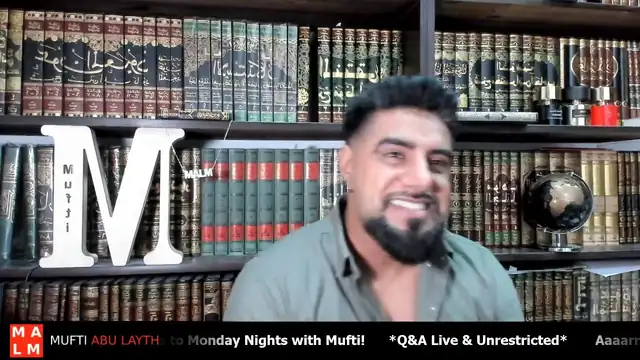 Play from 2:16:37
The video loads from YouTube only when you press play. Click a time in the transcript to seek.
Watch this part
Open on YouTube at 2:16:37The player starts at 2:16:37, the beginning of this part.
This segment2:16:37 to 2:20:29 · 3 min 52 sGeneral teaching
What this part covers
machinesummary, machine-writtenMufti Abu Layth explains that Ibn Rushd answered al-Ghazali by showing that what he refuted was mostly neoplatonism, not Aristotle.
In more detail
Mufti Abu Layth says al-Ghazali attacked the philosophers in The Incoherence of the Philosophers, declaring them disbelievers on three crucial points, and suggests this may reflect a period after his breakdown and withdrawal to the desert when he went 'a bit strange'. A century later Ibn Rushd answered with The Incoherence of the Incoherence, arguing that al-Ghazali had based his reading of the philosophers on Ibn Sina, al-Farabi and others who were ill-informed, which Mufti says was true, since early translations mixed up the views of Aristotle and Plato. He explains that what al-Ghazali refutes is largely neoplatonism, associated with Plotinus, with its emanation from God and a paradise attainable on earth without resurrection, and that Ibn Rushd agreed these points were wrong but said they should be aimed elsewhere [?] rather than at the philosophers. Mufti says he does not think Ibn Rushd hated al-Ghazali, noting that he wrote a summary of one of his books.
- Some terms in this segment are uncertain
Position stated
Mufti Abu Layth says it was true that al-Ghazali's sources on the philosophers had been ill-informed, because early translations mixed up Aristotle's and Plato's views.
“they've been ill informed and that was actually true because what happened in the early days when things were being translated”
Category: historical claim
Kind: general teachingTranscript
machine2:16:37 to 2:20:29 · click a time to seek · dotted terms open the glossary
Al so he basically said so he uh that's why he kind of suffered massively but the man Rush was a legend uh some of his books he responds to razali gazali did attack all the philosophers he had this book which I did take out called and what rush does is he refutes that and calls it the half which was incoherence of the philosophers and he basically takes out these points and says based on them on these three
crucial factors all philosophers are kufar having a having a senior moment Gali did have his uh bachara kind of you know I wouldn't be surprised if he because he had a mental breakdown um so because he kind of just went to the desert and abandoned everything and just kind of but then you know he he did emerge from it alhamdulillah safe and sound but he did I I think for maybe uh whether it was a few years or whatever arguably people would say but he definitely went a bit strange and so
he wrote this thing at dissing all philosophers and then a century later I Rush is the one who kind of counters it by calling it The incoherence of the incoherence and he refutes him and he actually explains that look gazali got it wrong because he bases a lot of his reading of philosophers um on people like IBN Sina and you know other farabi and these people and he says that these people have Miss they they have they've been ill informed and that was actually true because what happened in the early days when things were being translated it
wasn't clear what was Aristotle's views and what were Plato's views so they were kind of mixing them up a lot as well and then you had this school which emerges from Egypt and it was by people like platinus and it's called neop platonism which basically believes in things like everything ultimately comes from God and then it emanates and and they have some strange odd views about them this is what they what gazali is actually refuting so they believe that in neoplatonism uh you that you see ultimate Serenity like let's say
Paradise can be here on Earth it doesn't need to be in an afterlife therefore you don't need a resurrection or you don't need continuity but that's neoplatonism it's not Aristotle or not even arguably Socrates or Plato but the point is it's neoplatonism so gazali is refuting that and he's aiming it at Aristotle and these people so he so I Rush kind of agrees with him and says look yeah I agree these points are stupid but these points really you know you should be pointing at IA why you pointing it at me at the
philosophers so yeah so these were some interesting kind of things he he does uh he does State there was it is interesting people say he hated gazali I don't think he hated him he actually has a summary of his book called It's a summary of's um I did before finishing concluding on him I will summarize he does have you know in his commentary of um Plato's uh Republic so the popular Republic of the you know the philosopher king and how the ideal city should be he has a commentary on it and it is actually quite fascinating I
Paragraphs overlapping 2:16:37 to 2:20:29. Full text on the recording page.
Cite this segment
Stable id, transcript version and tier are part of the citation. Every change to a transcript is logged.Mufti Abu Layth Archive, segment 2021-01-19-S29, auto-transcribed, may contain errors. https://muftiabulayth.org/r/hv-blbvtr4m/s/29/ (accessed 1 November 2026)
- APA 7
Mufti Abu Layth. (2021, January 19). How did Ibn Rushd answer al-Ghazali's attack on the philosophers? [Video, segment 2021-01-19-S29, auto-transcribed, may contain errors]. Mufti Abu Layth Archive. Retrieved November 1, 2026, from https://muftiabulayth.org/r/hv-blbvtr4m/s/29/
- Chicago author-date
Mufti Abu Layth. 2021. "How did Ibn Rushd answer al-Ghazali's attack on the philosophers?" Video, segment 2021-01-19-S29, auto-transcribed, may contain errors. Mufti Abu Layth Archive. Recorded January 19, 2021. Accessed November 1, 2026. https://muftiabulayth.org/r/hv-blbvtr4m/s/29/
- BibTeX
@misc{abulayth-2021-01-19-S29,
  author = {Mufti Abu Layth},
  title = {{How did Ibn Rushd answer al-Ghazali's attack on the philosophers?}},
  year = {2021},
  month = {1},
  date = {2021-01-19},
  howpublished = {\url{https://muftiabulayth.org/r/hv-blbvtr4m/s/29/}},
  url = {https://muftiabulayth.org/r/hv-blbvtr4m/s/29/},
  organization = {Mufti Abu Layth Archive},
  urldate = {2026-11-01},
  note = {Segment 2021-01-19-S29, auto-transcribed, may contain errors}
}
Something wrong here?
Tell us what is wrong and it will be checked against the recording. Nothing changes until a person has reviewed it.
Sending a note needs JavaScript, which is off or unavailable in this browser. Nothing has been sent.
No name, email address or account is asked for or stored, and the inbox does not store your IP address. For rate limiting it keeps an unreadable fingerprint of your connection for 48 hours, and our database provider's own logs record connections as every website's do. Only your note, its kind, the page and the moment in the recording are kept, for review.