
Recordings › Monday Nights with Mufti #198 | Q&A Unscripted & Unrestricted! 😉 | Mufti Abu Layth · 19 Jan 2021 › Segment 30 of 41
What did Ibn Rushd say about women's abilities?
tafsir tafseer exegesis tafasir tafaseer averroes ibn rushd al-hafid maaliki malikite malikiyyah maliki school muftis riba ribaa sood usuryIbn Rushd, part 4: women's wasted talents, from his commentary on Plato's Republic
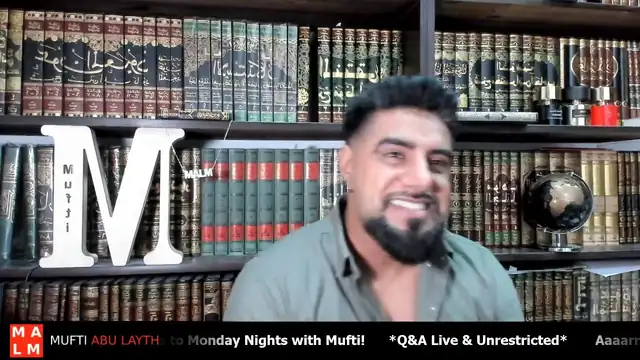 Play from 2:20:29
The video loads from YouTube only when you press play. Click a time in the transcript to seek.
Watch this part
Open on YouTube at 2:20:29The player starts at 2:20:29, the beginning of this part.
This segment2:20:29 to 2:27:24 · 6 min 55 sGeneral teaching
What this part covers
machinesummary, machine-writtenMufti Abu Layth highlights Ibn Rushd's argument, 900 years ago, that women equal men in ability and that confining them to the home impoverished his cities.
In more detail
Mufti Abu Layth shares passages from Ibn Rushd's commentary on Plato's Republic, where, he says, Ibn Rushd steps out of the commentary and gives a window into his own age. Ibn Rushd says men and women are equal in all things, acknowledging the household role his society gave men, that women can be warriors, philosophers and rulers, as the fighting women of the Sahara show, and cites the saying that music is best when the instruments are crafted by men and performed by women. Ibn Rushd complains that in his cities women serve only to bear and nurse children and serve their husbands, which keeps them from showing their talents, and that because women, whom he puts at about two-thirds of the population, depend on men for their livelihood, the cities are impoverished. Mufti marvels that this was written about 900 years ago, calls Ibn Rushd a legend who generally inspires him, and recommends a dramatised Arabic account of his life [?].
- Some terms in this segment are uncertain
Position stated
Not yet double-checkedA summary of the view expressed is published here only after a second, independent review has found the sentence in the transcript where he says it. Until then, the transcript and the recording speak for themselves.
Kind: general teachingTranscript
machine2:20:29 to 2:27:24 · click a time to seek · dotted terms open the glossary
philosophers so yeah so these were some interesting kind of things he he does uh he does State there was it is interesting people say he hated gazali I don't think he hated him he actually has a summary of his book called It's a summary of's um I did before finishing concluding on him I will summarize he does have you know in his commentary of um Plato's uh Republic so the popular Republic of the you know the philosopher king and how the ideal city should be he has a commentary on it and it is actually quite fascinating I
thought I'd uh share some of these points um especially on I Rush occasionally he kind of like he he kind of pens away his own thought whilst doing a commentary and and inadvertently gives us a window into his day and age and it's interesting on the gender issue so he does say that look cuz I Rush he complains that women it's unfair men's like the not men but the social attitude towards women because Plato is kind of
speaking about that anyway at a particular point I mean he's not speaking about the social inequality but he's just speaking about how women should be kept and so on in the ideal uh you know Republic but then he says you see he says but it's true that look men and and here he starts get getting like writing away himself saying that look men and women are really equal in all uh in all things and and then he mentions uh he says it's true that look you can fight and find women because he
he he's going to go on to complain that women in his day and age are wasted they are like they are a huge asset to society but nobody's he says the only thing people you the only function women have in his Society is giving birth and he really has a a dig at this and he says that this is another interesting thing in his day and age women double they outnumber the male population in his City by by you know by twice as in by twice the numbers so he and he he mentions that so he gives us a little insight and he says look you find
amongst them women who have the ability to be Warriors M philosophers uhat rulers um and he says look he does mention that look Islam says you know he is going to kind of acknowledge that thing that look okay men are the kind of they have that because that was the society back then that men were responsible for the household so they
had that kind of thing but generally putting that aside he says that they are equal and he goes on to say um that look they that he says that this is why he gives an example saying that look if man if if we use even in music he says that the common saying is he says that look musical instruments or music is only best directed if the instruments are created by the men as in the craftsmanship but
delivered as in the music by women and you see this is a point and he says look check this out he says uh that they in in their kind of um caliber he says that they uh equally participate with men like they've got the same caliber if you allow them to develop in his DNA and this is about 900 years ago um so he mentions
look he says look if you want warrior women he says just look at the the kind of women that live in in the Sahara and places like this that they are Fighters um and he says and he says and they are gifted with huge like women in general not the warrior women he's just saying gifted with you know huge intelligence uh and intellect and he's going on saying this because he says that look oh this is a point about um um he's he's refuting Plato saying
that you know in his Republic some women are like there are no relationships whatever but he says this look uh he says in our cities today he says we can't see the the talent and the capacity like what the capabilities of women he says he says that it's only for giving birth like this seems to be the only
function and they're just told to serve their husbands and they just have to give birth and nurse their children feed them take care of children and he says uh you know he's not kind of belittling the ACT but he's saying he says but this prevents them from showing their talents in other areas
what look at this this is 900 years ago almost he says the fact that we've made women become dependent on men to to provide uh livelihood he says we have impos poverished our cities we've rendered them poor cities because because in his day and age 2third of the population were women they're not working they're not contributing they're not adding to the the society and and he says they just so all we have are just poor cities and I think that's like it's it's
wow you know I mean seriously coming from you know he mentions uh quite a few things I thought I'd sh share that it was definitely very interesting and he was a legend and somebody I'm generally very inspired by um there are some books that have been written about him there's somebody uh I forgotten the name they've written it's called Ian or something but it's it's a dramatized uh story in Arabic about the life of I rush but Co that uh do um read up on that if you you know if you have more interest in him but
cool a legend of the Maliki M People AB Al all right people let's move on we're getting a bit late how does and compared to and yeah um you see all of these people to be fair that you've mentioned are critical minded the difference is that I Rush is incredibly philosophical much more philosophical than um than all the rest
Paragraphs overlapping 2:20:29 to 2:27:24. Full text on the recording page.
Cite this segment
Stable id, transcript version and tier are part of the citation. Every change to a transcript is logged.Mufti Abu Layth Archive, segment 2021-01-19-S30, auto-transcribed, may contain errors. https://muftiabulayth.org/r/hv-blbvtr4m/s/30/ (accessed 1 November 2026)
- APA 7
Mufti Abu Layth. (2021, January 19). What did Ibn Rushd say about women's abilities? [Video, segment 2021-01-19-S30, auto-transcribed, may contain errors]. Mufti Abu Layth Archive. Retrieved November 1, 2026, from https://muftiabulayth.org/r/hv-blbvtr4m/s/30/
- Chicago author-date
Mufti Abu Layth. 2021. "What did Ibn Rushd say about women's abilities?" Video, segment 2021-01-19-S30, auto-transcribed, may contain errors. Mufti Abu Layth Archive. Recorded January 19, 2021. Accessed November 1, 2026. https://muftiabulayth.org/r/hv-blbvtr4m/s/30/
- BibTeX
@misc{abulayth-2021-01-19-S30,
  author = {Mufti Abu Layth},
  title = {{What did Ibn Rushd say about women's abilities?}},
  year = {2021},
  month = {1},
  date = {2021-01-19},
  howpublished = {\url{https://muftiabulayth.org/r/hv-blbvtr4m/s/30/}},
  url = {https://muftiabulayth.org/r/hv-blbvtr4m/s/30/},
  organization = {Mufti Abu Layth Archive},
  urldate = {2026-11-01},
  note = {Segment 2021-01-19-S30, auto-transcribed, may contain errors}
}
Something wrong here?
Tell us what is wrong and it will be checked against the recording. Nothing changes until a person has reviewed it.
Sending a note needs JavaScript, which is off or unavailable in this browser. Nothing has been sent.
No name, email address or account is asked for or stored, and the inbox does not store your IP address. For rate limiting it keeps an unreadable fingerprint of your connection for 48 hours, and our database provider's own logs record connections as every website's do. Only your note, its kind, the page and the moment in the recording are kept, for review.