
Recordings › In Depth: Is Music allowed in Islam? | Mufti Abu Layth · 18 Sep 2019 › Segment 3 of 12
Is listening to music haram?
hadeeth ahadith ahaadeeth hadis hadees ahaadith saheeh sahih hadith saheeh hadith sound hadith al-bukhari imam bukhari sahih al-bukhari sahih bukhari saheeh al-bukhari saheeh bukhari imam al-bukhari udhiyah qurbani qurbaani udhiya udhiyya kurbani muftis haraam mubah mubaah dalil daleel adillah adilla proof jahannam jahanam jahannum sahabah sahaba sahabi sahabiyyah sahabiyat salafis salafism wahhabi wahabi wahhabism ulama ulema ulamaa deen al-din ad-deen ad-din ibadah ibada ibaadah ibadatIs music haram? No conclusive text, the 'entertainment' hadith, and the ontology of religion
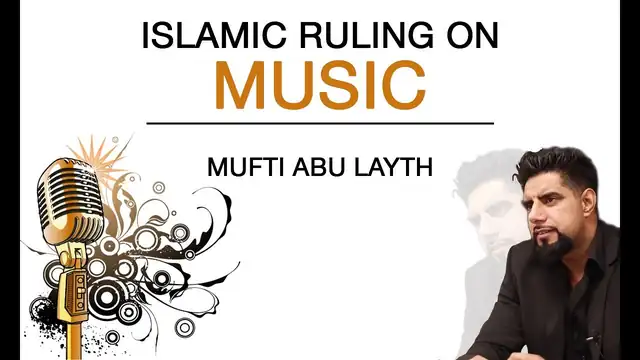 Play from 10:31
The video loads from YouTube only when you press play. Click a time in the transcript to seek.
Watch the answer
Open on YouTube at 10:31The player starts at 10:31, where the answer begins.
This segment10:31 to 15:47 · 5 min 16 sGeneral teaching
The answer in brief
machinesummary, machine-writtenIn Mufti Abu Layth's understanding music is not forbidden, because no text is at once conclusive, sahih and explicit: the Bukhari hadith speaks of entertainment, not music, and the texts naming music are not authentic. People find this hard to accept because they come to religion expecting it to oppose entertainment and desire.
In more detail
An audience member asks whether music is haram, and Mufti Abu Layth senses that the room already thinks it clearly is. He says he has answered this before at length and that there is a difference of opinion, but that in his understanding music is not forbidden: nothing in Islam is both conclusive, sahih and explicit in declaring it haram; the many hadith are either not sahih or not conclusive in wording, such as the one in Bukhari that towards the end of time people will consider certain things permissible, which is translated as music though the word means entertainment, a leap of interpretation, while the texts that actually say music are not authentic. The difficulty, he says, is that before approaching religion people already carry an understanding of what religion with a capital R will demand: worship, suffering, sacrifice, asceticism, hostility to desires and to entertainment. With that backdrop no text is needed to make music haram, and being shown that religion is not like that produces cognitive dissonance, which is why people so easily say music is haram even when given evidence. He adds that several scholars from the Prophet's time on allowed it: a hadith in al-Tirmidhi [?] has the Prophet hearing a flute, covering his ears and asking Ibn Umar to tell him when it stopped, which shows personal dislike rather than prohibition, since he would not have told someone to do something forbidden; companions like Abdullah ibn al-Zubayr are known for it; and al-Shawkani in Nayl al-Awtar gathered all the narrations and concluded, though he did not himself advise music, that honesty with the literature requires saying there is no clear text prohibiting it.
Question as read aloud · questioner not identifiedIs music haram?
- The question was reconstructed from Mufti Abu Layth's restatement; the questioner's own words are not in the recording
- Some terms in this segment are uncertain
Position stated
Mufti Abu Layth says that in his understanding music is not forbidden, since nothing in Islam is at once conclusive, sahih and explicit in prohibiting it, the Bukhari hadith speaks of entertainment rather than music, and the texts that name music are not authentic.
“the word doesn't actually say music it actually says entertainment but you seen that this the leave of interpretation going on and all the texts actually say music are not authentic”
Category: ruling
Kind: general teachingTranscript
machine10:31 to 15:47 · click a time to seek · dotted terms open the glossary
incredibly weak a Chinese look dire for me to correct the Salafi on on hadith not being sorry it doesn't not nice you know this one no nice that helps is music Haram no look at
that okay so what a question that must all right so it's music Haram okay what am i sensing already in this crowd clearly Haram yes take out the violin industry right so the thing is I've answered this previously and I gave a whole kind of a kind of Annex went into in see this is the issue when you go into something so then you think oh I
don't want to just bore the hell out of everyone and there is a difference of opinion on these things okay to start off with in my understanding I think music so miserable is not forbidden there's nothing in Islam that is both conclusive sahi and sorry which states music to be Haram there are plenty of a hadith but they are either not sorry they are not all sorry or they're not conclusive in their wording there's a there's a leap of interpretation in them like the one in Bihari which says towards the end of time people will you know consider these things permissible
but then they translate that as music but the word doesn't actually say music it actually says entertainment but you seen that this the leave of interpretation going on and all the texts actually say music are not authentic so I've explained that okay what is the problem with things like music the problem with things like music is it's an uphill battle right because people you see before you approach religion you have this ontology of religion you have this understanding of I I saw I learned I don't mean it's like an academic opinion or an understanding it's
something we all have you already have an understanding of what religion with the capital r is going to provide for you or provide for people so let's say today [ __ ] comes then he wants to learn about Islam doesn't know anything about Islam or somebody wants to come about and learn about Christianity or the one to learn about anything don't know anything about the religion but they will already have expectations so they would already think okay there's gonna be worship involved they can already have certain concepts they're carrying about the word religion one of those
will definitely be like so they'll amongst them will be things like they believe suffering a part of it people believe sacrifice will be a part of religion people believe that and this is interesting they believe being anti world like kind of ascetic not of the worldly stuff Israel will be one of the concepts of religion this is without even being taught this you would really think this so they would think desires or anti religion without even being
taught that and in desires they would think and this is another one that entertainment is anti religion without even being taught that so now you don't even need a single text in Islam to tell you that music is Haram the fact that you carry that ontology of religion you would easily be so susceptible to that view because you carry this perspective that religion ought to ban it or to sorry you ought to be anti entertainment anti desires anti gratification anti
world aunty so when somebody shows you well actually religion isn't like that this is a what we call cognitive dissonance takes place it's difficult to reconcile them because that's not your understanding of what religion ought to be so this is why people will so easily always say music is Haram and struggle or with even the even when they given evidences of why it's okay
several scholars have said this beginning with from the time of the prophet you've got a hadith in third movie for example the Prophet is walking and somebody's playing a flute and the Prophet says with if not Omar and he puts his you know the Prophet didn't like the music and so he he put his you know it kind of block this thing and it says to Eve not a model of listen tell me when we can't hear it so then if Norma says okay we can't hear it a certain point now this in itself okay some people say oh look what the Prophet didn't like music but that's his personal think you don't like why would he tell somebody to do something forbidden why would he say listen you
Paragraphs overlapping 10:31 to 15:47. Full text on the recording page.
Cite this segment
Stable id, transcript version and tier are part of the citation. Every change to a transcript is logged.Mufti Abu Layth Archive, segment 2019-09-18-S03, auto-transcribed, may contain errors. https://muftiabulayth.org/r/axxub9lxfoc/s/3/ (accessed 1 November 2026)
- APA 7
Mufti Abu Layth. (2019, September 18). Is listening to music haram? [Video, segment 2019-09-18-S03, auto-transcribed, may contain errors]. Mufti Abu Layth Archive. Retrieved November 1, 2026, from https://muftiabulayth.org/r/axxub9lxfoc/s/3/
- Chicago author-date
Mufti Abu Layth. 2019. "Is listening to music haram?" Video, segment 2019-09-18-S03, auto-transcribed, may contain errors. Mufti Abu Layth Archive. Recorded September 18, 2019. Accessed November 1, 2026. https://muftiabulayth.org/r/axxub9lxfoc/s/3/
- BibTeX
@misc{abulayth-2019-09-18-S03,
  author = {Mufti Abu Layth},
  title = {{Is listening to music haram?}},
  year = {2019},
  month = {9},
  date = {2019-09-18},
  howpublished = {\url{https://muftiabulayth.org/r/axxub9lxfoc/s/3/}},
  url = {https://muftiabulayth.org/r/axxub9lxfoc/s/3/},
  organization = {Mufti Abu Layth Archive},
  urldate = {2026-11-01},
  note = {Segment 2019-09-18-S03, auto-transcribed, may contain errors}
}
Something wrong here?
Tell us what is wrong and it will be checked against the recording. Nothing changes until a person has reviewed it.
Sending a note needs JavaScript, which is off or unavailable in this browser. Nothing has been sent.
No name, email address or account is asked for or stored, and the inbox does not store your IP address. For rate limiting it keeps an unreadable fingerprint of your connection for 48 hours, and our database provider's own logs record connections as every website's do. Only your note, its kind, the page and the moment in the recording are kept, for review.