
Recordings › Propaganda against Ustadh Nouman Ali Khan - Mufti Abu Layth · 29 Sep 2017 › Segment 5 of 13
Who has the right to tell other Muslims off for doing something haram?
malik ibn anas malik bin anas imam maalik imam malik ibn anas imaam imams prayer leader usul al-fiqh usool usool al-fiqh usul ul-fiqh usool ul-fiqh legal theory shariat sharee'ah muftis hukm hukum hukam ahkaam halaal lawful haraam forbidden madinah madina al-madinah madeenah yathrib 'alim aalim ulama ulema ulamaa deen al-din ad-deen ad-dinWho may forbid evil: hisbah belongs to legitimate authority and qualified scholars
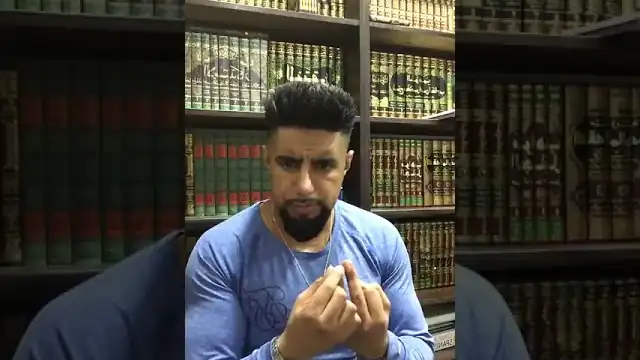 Play from 13:04
The video loads from YouTube only when you press play. Click a time in the transcript to seek.
Watch this part
Open on YouTube at 13:04The player starts at 13:04, the beginning of this part.
This segment13:04 to 15:41 · 2 min 37 sGeneral teaching
What this part covers
machinesummary, machine-writtenHisbah, commanding good and forbidding evil, is for legitimate authority and for qualified scholars, and only in matters that are clearly agreed upon. Imam Malik said one may advise but not argue or dispute.
In more detail
Mufti Abu Layth says that using the Prophet's words to justify the campaign is itself an abuse of religion, and that commanding good and forbidding evil falls under what the shari'ah calls the rulings of accountability, ahkam al-hisbah, which are for people in legitimate authority and not for anyone to take upon themselves. Secondly, he says scholars from the earliest generations held that hisbah may only be exercised by a scholar who knows what is haram and halal and the disagreements that go with it, since what one person condemns may be permitted according to many scholars, and only in matters that are clearly agreed upon, such as murder or the Rohingya genocide, not in disputed questions. He cites Imam Malik, who when asked whether one may tell someone off for something replied that one may advise him, that one may not argue to prove the point, and that one should state the ruling and move on without disputing. He concludes that most of those involved are not detailed scholars and are not versed in the disagreements or in usul.
Position stated
Mufti Abu Layth holds that commanding good and forbidding evil (hisbah) belongs to legitimate authority and to qualified scholars, only in matters that are clearly agreed upon, and not to individuals acting on their own.
“they are only four people in legit authority to take to task they are not for you and me to just go around and command the good and forbid the evil”
Category: ruling
Kind: general teachingTranscript
machine13:04 to 15:41 · click a time to seek · dotted terms open the glossary
they people have said we have the right to come on the good and forbid the evil first of all no you do not know you do not write anybody telling you that is misleading you and misusing the Sharia they are misusing the words of the messenger of allah muhammad sallallahu alayhi wa sallam that in itself is an abuse of religion this this ruling comes under in the Sharia they call a camel hiss per the rulings of accountability they are not for any and all they are not for anybody to just to take upon
themselves they are only four people in legit authority to take to task they are not for you and me to just go around and command the good and forbid the evil nobody has said that secondly the scholars right from the cellar have highlighted that you cannot do his BA this is called his MA you cannot do his bar unless you are actually a scholar of who is well aware of what is Haram what is halal and the IFTA laughs that goes with it because I might be condemning something which according to you is
haram and according to many Allah my Allah so I have to be familiar with the a camel mortal of fear and they say you can only command somebody tell somebody off when it is absolutely agreed upon a clear clear if somebody was committing murder that is clear that is not it's a genocide the Rohingya genocide going on these things are clear brutality disagreed and other kind of fear little eerie theory by codes will come to you
cannot tell somebody if somebody asked in my Malek can I tell somebody off for something he said you may advise him about something he said no but can I argue with him to prove it he said laughs no you cannot if my malik said you may simply if you knew something he can simply state that in Islam this is what it is and then he said you move on he said you don't even like Jarrell I know it doesn't even dispute over it this is Imam Malik the legend of Medina
okay to start off with so this I can tell people off because you know this is haram in Islam no no you cannot you're not even a skull most of these people are not even detailed scholars of Islam most of them are not even well-versed on the esta laughs the 54 or the Oh su Lee through I had people engaged with me saying to me online I've had and I'm not trying to judge here but I'm being very clear so there's women saying I'd a woman say online well I may not be
Paragraphs overlapping 13:04 to 15:41. Full text on the recording page.
Cite this segment
Stable id, transcript version and tier are part of the citation. Every change to a transcript is logged.Mufti Abu Layth Archive, segment 2017-09-29-S05, auto-transcribed, may contain errors. https://muftiabulayth.org/r/6_dmojl-_bi/s/5/ (accessed 1 November 2026)
- APA 7
Mufti Abu Layth. (2017, September 29). Who has the right to tell other Muslims off for doing something haram? [Video, segment 2017-09-29-S05, auto-transcribed, may contain errors]. Mufti Abu Layth Archive. Retrieved November 1, 2026, from https://muftiabulayth.org/r/6_dmojl-_bi/s/5/
- Chicago author-date
Mufti Abu Layth. 2017. "Who has the right to tell other Muslims off for doing something haram?" Video, segment 2017-09-29-S05, auto-transcribed, may contain errors. Mufti Abu Layth Archive. Recorded September 29, 2017. Accessed November 1, 2026. https://muftiabulayth.org/r/6_dmojl-_bi/s/5/
- BibTeX
@misc{abulayth-2017-09-29-S05,
  author = {Mufti Abu Layth},
  title = {{Who has the right to tell other Muslims off for doing something haram?}},
  year = {2017},
  month = {9},
  date = {2017-09-29},
  howpublished = {\url{https://muftiabulayth.org/r/6_dmojl-_bi/s/5/}},
  url = {https://muftiabulayth.org/r/6_dmojl-_bi/s/5/},
  organization = {Mufti Abu Layth Archive},
  urldate = {2026-11-01},
  note = {Segment 2017-09-29-S05, auto-transcribed, may contain errors}
}
Something wrong here?
Tell us what is wrong and it will be checked against the recording. Nothing changes until a person has reviewed it.
Sending a note needs JavaScript, which is off or unavailable in this browser. Nothing has been sent.
No name, email address or account is asked for or stored, and the inbox does not store your IP address. For rate limiting it keeps an unreadable fingerprint of your connection for 48 hours, and our database provider's own logs record connections as every website's do. Only your note, its kind, the page and the moment in the recording are kept, for review.