
Recordings › Apostasy has NO punishment in Islam: A Qur'an & Sunnah Analysis by Mufti Abu Layth · 10 May 2018 › Segment 5 of 13
Were apostates punished for disbelief or for fighting against Muslims?
hadeeth ahadith ahaadeeth hadis hadees ahaadith madhab mazhab school of law madhahib mazahib madhaahib imaam imams prayer leader shari'ah shariat sharee'ah hanafite hanafiyyah maqasid al-shariah maqasid al-sharia maqaasid maqasid ash-shariah aims of the law muftis hukm ahkam hukum hukam ahkaam ribaa sood interest usury aathaar athaar kufr kuffar kafir kaafir kufar kaafirun imaan eemaan eeman sura soorah surat suwar soora chapter aya ayat ayaat aayah aayat sahabah sahaba sahabi sahabiyyah sahabiyat 'alim aalim ulama ulema ulamaa tawbah tawba tauba taubah al-din ad-deen ad-din ajr sawab thawab thawaab sawaabClassical scholars: apostates punished for waging war, not for disbelief
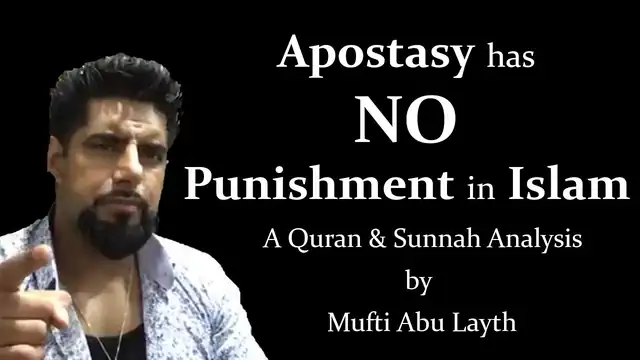 Play from 15:42
The video loads from YouTube only when you press play. Click a time in the transcript to seek.
Watch this part
Open on YouTube at 15:42The player starts at 15:42, the beginning of this part.
This segment15:42 to 23:28 · 7 min 46 sGeneral teaching
What this part covers
machinesummary, machine-writtenThe classical punishment targeted apostates who took up arms against the community, not disbelief itself: Umar preferred to restrain and persuade, al-Tahawi tied it to waging war, and the Hanafis exempted women because they were not combatants.
In more detail
Mufti Abu Layth asks why the narrations from Umar and others give an apostate a chance to return if killing were a hadd from Allah, and cites al-Shawkani in Nayl al-Awtar on the Jews who openly cursed and mocked the Prophet without his calling for their death, which al-Shawkani explains by the welfare of bringing people to the religion. He reports that when a companion told Umar he had dealt in this way with someone who left Islam after embracing it, Umar said he would never have done so but would have restrained him and tried to bring him back, and that the report of giving three days was declared weak; he says this was also the understanding of Ibrahim al-Nakha'i [?]. He then reads from the Hanafi scholar al-Tahawi in Mushkil al-Athar [?], who asks whether those punished were punished for disbelief or for their actions, cites 5:33 on those who wage war against Allah and His Messenger and spread corruption, and brings narrations from Aisha that the apostate liable to death was one who went out to wage physical war against Allah and His Messenger. Mufti says this is why the Hanafi school, including al-Sarakhsi in al-Mabsut, Ibn al-Humam [?], al-Kasani [?] and Ibn Abidin, did not apply the punishment to a female apostate, since women were not combatants, showing that the punishment was tied to insurgency against the state. He closes with Ibn Ashur's Maqasid on the freedom of belief Islam gives, arguing that this is why the repentance of an open rebel is accepted.
- Some terms in this segment are uncertain
Position stated
Mufti Abu Layth argues that the practice of giving an apostate the chance to return, and the Hanafi exemption of the female apostate, show that the classical punishment was aimed at armed rebellion against the community rather than at disbelief.
“because they saw them as part of this insurgency this part of this rebellion against the Muslim state of the past that's why they said the female apostate would not be harmed”
Category: historical claim
Kind: general teachingTranscript
machine15:42 to 23:28 · click a time to seek · dotted terms open the glossary
let him be if that was a hug that you had to establish how could the Prophet let him be right so this somebody saying what a mess in you in you in your narratives in dealing with mortar there is not no mess let's take a look at some of these adi and this is why by the way this is why the narrations that come from Amaro de la langue that come from these people say that a person that was a mortar you would give them the chance you would give them the chance to why would you give them a chance if this was had from
Allah why would you give them that chance look this for example you've got this is Iman show cami brings in his nail alot arm and he mentions after bringing several of these narrations and he mentions about the Jewish people that would openly attack that would say things against the Prophet like may death be upon you and Mock the Prophet and do this and do that yet the Prophet didn't call for their death he did not do that and he says what about people
who curse the Prophet does that not and he goes into this discussion and he says look what Livy he mentions that the other hub that this was Lee muscly hated to leave that islam teaches us for the welfare to bring people to this deen and then he says he goes on to favoring that interpretation and he has this whole discussion on the cotton mortar bringing all of these re wyatt and he brings her and he goes on to say by the way that
this many of the scholars and this is what omar abrakadabra the allahu an ruled he says there was a narration that he heard that one of the Companions said I did this with somebody who openly went against Islam and after having embraced it and Omar said I would never have done that I would have maybe held him restrained him from what he did and asked him and tried to bring him back and certainly Wyatt he says Abbadon and in some they tried to say the letter to a young for three days but that's declared week right and he brings and he quotes a
mailer all power that that was also the understanding of Ibrahim and acai but wait this is Abuja ferrata ha we a great scholar of the Hanafi method who brings in his muscular Arthur right in under the section two nine two he says that the problematic narrations about apostasy right he says watered or anil islam health canada Lika aku bottom in who l'homme Lee Mahara bottom be my hakuna or Coubertin lil Mahara bean literally
camera Dean Cano available today alerted a Dima had him a Latifah Aloha he says was that those people who were punished was it because of their disbelief or was it because of the actions they committed was it because of the actions and he brings the verses he says the images are on Lavina you hurry boon allaha wa rasuluh that the reward of reward all what are the punishment for those who openly had declared war against Allah and His Messenger and fought him well
yes una fil ardi for certain and they had spread tyranny through the earth was that they would have had that punishment and he goes on and he brings the different narrations and he brings several of these rewires verse time and time again and then he says lo Carla Abu Jafar Abu Jafar Oklahoma says for watch above Italica st malo mafia deal ayah allah a maniac unum in Mojave el Maharaja was Salma score feeha Allah yo milky Emma okay he says this we establish that this we will use these verses to show that this was actually to
do with them fighting against Islam and opposing Islam and then he brings transmissions from I shadowed allahu allah about those people who you can who they could have been punished in the past with capital punishment that he says Oh Raja Raja mihari but lillahi wa rasool e okay or anybody who went out declaring war physical war against the Messenger of God and then he brings another narration from Asia or Raja long Yahoo germinal Islam a person who'd abandoned the faith for you horrible la voix rasul allah
azza wajal and then he set out and Maharaja is physical it's physical warfare that he would have gone out and declared actual warfare and then he brings all of these narrations going on to declare and this is the Hanafi ruling by the way so the hanafis had clearly mentioned the hanafi madhhab said that a mortared even though in the past they gave a punishment for a mortal because they saw them as part of this insurgency this part of this rebellion against the Muslim state of the past that's why they
said the female apostate would not be harmed she would not have been she was not eligible to this for the same punishment why why not the female why not the female apostate then was she not an equal apostate but she was but they said because she the women were not part they were not maja riba and he mentioned be safe people who would raise this sword against Islam and this is what Imam Selassie writes in his mob suit this is what if nakum Kamala Deen
Ibrahim am right this work asani even even Abidine from the Hanafi method they make that distinction okay so this is just some of the things this is even a shewed in hizmet acid he writes and from the freedoms that Islam gives from the freedoms that Islam gives for holy actually attacker that and freedoms of belief SSL Islam be imparted etapa that molality Akana now this is he goes don't say Islam dislike certain things but it gives the freedoms for
people to believe them and he goes on to finish by saying were Lola and I mean a surah Sharia earlier today at the heart my kinda acabas in death Olivia several Co for well you Theron Amman Hiram bulletin feel Toma idler Allah who fee he says if Islam hadn't done that and why do we accept the Toba of a person who openly had declared Islam and apostate 800 it was a hidden cafe from within and later on rebelled openly he says why would you accept his Toba he would only accept it because Islam gives
these freedoms ok let's take a look at someone but people would say yes but there's a hadith you see those of you just tuning in if you can click like click Share now people will say ah but Mufti there's a hadith in body now let me tell you there are famously you're right there are famously some narrations okay mainly the narrations are three by extension form okay the narrations go
Paragraphs overlapping 15:42 to 23:28. Full text on the recording page.
Cite this segment
Stable id, transcript version and tier are part of the citation. Every change to a transcript is logged.Mufti Abu Layth Archive, segment 2018-05-10-S05, auto-transcribed, may contain errors. https://muftiabulayth.org/r/vyawdwthpa4/s/5/ (accessed 1 November 2026)
- APA 7
Mufti Abu Layth. (2018, May 10). Were apostates punished for disbelief or for fighting against Muslims? [Video, segment 2018-05-10-S05, auto-transcribed, may contain errors]. Mufti Abu Layth Archive. Retrieved November 1, 2026, from https://muftiabulayth.org/r/vyawdwthpa4/s/5/
- Chicago author-date
Mufti Abu Layth. 2018. "Were apostates punished for disbelief or for fighting against Muslims?" Video, segment 2018-05-10-S05, auto-transcribed, may contain errors. Mufti Abu Layth Archive. Recorded May 10, 2018. Accessed November 1, 2026. https://muftiabulayth.org/r/vyawdwthpa4/s/5/
- BibTeX
@misc{abulayth-2018-05-10-S05,
  author = {Mufti Abu Layth},
  title = {{Were apostates punished for disbelief or for fighting against Muslims?}},
  year = {2018},
  month = {5},
  date = {2018-05-10},
  howpublished = {\url{https://muftiabulayth.org/r/vyawdwthpa4/s/5/}},
  url = {https://muftiabulayth.org/r/vyawdwthpa4/s/5/},
  organization = {Mufti Abu Layth Archive},
  urldate = {2026-11-01},
  note = {Segment 2018-05-10-S05, auto-transcribed, may contain errors}
}
Something wrong here?
Tell us what is wrong and it will be checked against the recording. Nothing changes until a person has reviewed it.
Sending a note needs JavaScript, which is off or unavailable in this browser. Nothing has been sent.
No name, email address or account is asked for or stored, and the inbox does not store your IP address. For rate limiting it keeps an unreadable fingerprint of your connection for 48 hours, and our database provider's own logs record connections as every website's do. Only your note, its kind, the page and the moment in the recording are kept, for review.