
Karbala & it's precursors | Mufti Abu Layth
hadeeth ahadith ahaadeeth hadis hadees ahaadith saheeh sahih hadith saheeh hadith sound hadith malik ibn anas malik bin anas imam maalik imam malik ibn anas al-bukhari imam bukhari sahih al-bukhari saheeh al-bukhari saheeh bukhari imam al-bukhari imaam imams prayer leader ka'bah ka'ba kaabah muftis hukm ahkam hukum hukam ahkaam haraam forbidden mubah mubaah riba ribaa sood usury kufr kuffar kaafir kufar kaafirun disbelief iman imaan eemaan eeman jahannam jahanam jahannum wahy wahi wahee sahabah sahabiyyah sahabiyat hijra hijrat migration khalifah khalifa khulafa khilafah khilafat caliphate khilafa makkah makka mekka madinah madina al-madinah madeenah yathrib ahl al-sunnah ahl as-sunnah ahlus sunnah ahl al-sunna shiah shiite shi'i twelver ithna ashari ulema ulamaa umma ummat community salam as-salamu alaykum assalamu alaikum assalamualaikum salaam salaams salam alaykum wa alaykum as-salam greeting taqwa taqwaa muttaqi god-consciousness amanah amana amaanah amanat deen al-din ad-deen ad-dinvideo · 1:04:01 · 22,000 views · 16 Oct 2020 · 18 segments · Open on YouTube
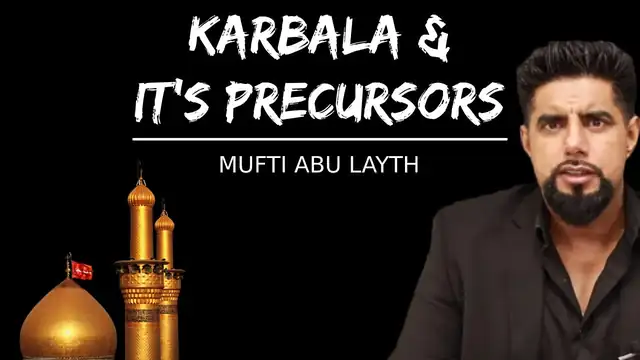 Press play to load from YouTube. Nothing loads until you do.
18 segments
machine18Each block is a segment in time order. Click to open it.Latest answers · the most recent segment on 1 topic
Earlier answers and other segments · in time order
Transcript
machineauto-transcribed, may contain errors · source: youtube auto · click a time to seek · dotted terms open the glossaryI've been asked by a few people to share my thoughts on the Waq'ah of Karbala, of what what is the Sunni perspective on Karbala. And there's just so much to say on this topic. Um Right, so I will I doubt I'll be able to do justice to anything, but let me try and focus some thoughts on this.
So, I won't be if you if you uh if there's any questions, I'll come back to them for So, for just a few moments, let me focus on this topic. Now, what we'll do is we'll look at Karbala, and then we're going to and some issues surrounding how it its commemoration today, and then going to the precursors, and then coming back to Karbala, okay?
So, Karbala is unquestionably a a great tragedy that befell the Ummah of Islam. Okay? I think that isn't hidden from anyone. I think all Muslims are in agreement that the martyrdom of Hussein radiyallahu anhu was a great tragedy.
I mean, that that's I don't think any Muslim, generally speaking, I'm going for the most part, uh would ever disagree on that. Okay? The events of Karbala are pretty much I mean, for for the most part, the in summation, like looking at the the kind of huge the major events of it are are known.
Okay? There are minor details that there is a a disagreement about. So, briefly, what is it that's happened for those people that don't know? Well, what happens, and I will go back to the pre- to the precursor, but let's look at this stage, Hussein radiyallahu anhu is traveling with maybe they say about 70 odd people with him who are men, and and then women separately and children.
They're traveling. He's on his way to Kufa. Why is he going there? He's going there because he uh has been invited by the Shi'a. Okay? Now, the Shi'a are You see, the Shi'a are of two types, by the way. Like, when I when I use the word Shi'a, Shi'a can mean two things. It's the sect today that you have, like the Shi'a as opposed to the Sunnis.
This is a theological Shi'a. This is somebody who has a particular sectarian belief. They believe certain things. They I I don't mean it necessarily like that. In early Islam, Shi'a was more a political thing. It wasn't a theological thing. There was slight There was a undertone theological undertone, but it was really political. So, it was about those people who favored Ali.
And this lies in with all the precursors that we'll briefly look at as well. That the build-up because Karbala is really a kind of a blowing point, an eruption of so many things that have so much pressure that has been building up. Okay?
So, in this in this event of Karbala And you know, it's interesting, the name Karb actually means like pain, like a suffering. And Bala, a test. Okay? So, even though the the name doesn't actually mean, but it that's what it is, Karbun wa Bala. It is just a tragedy of pain and suffering.
So, Hussein radiyallahu anhu took his family over there. What he was going there because the people of Iraq had invited him to come over so they can give him the Shi'a of of his time. Uh that means the political Shi'a of his time had invited him to Kufa, and they were going to give him a pledge of allegiance.
Right. And what happens is he is intercepted uh en route at the place of Karbala by an army. When I mean, to be Okay, in in in the generals When I say army, it wasn't like I know sometimes some Shi'a sources say they were a massive army as huge as the Roman army, and I don't I think these are just huge fabrications, but they I assume were a couple of hundred people.
So, it was like that kind of a a battalion that had been sent out to intercept them. And they did intercept them. It had uh it was led by Umar uh ibn Sa'd ibn Abi Waqqas. So, the son of the great Sahabi. The son of the great Sahabi. Now, he It was dispatched This is in the time of Yazid.
And we have to stop these events here. Right? Because what happens is at this place, Hussein is martyred. We've got to slightly go back in time to understand what is going on here. Why is Hussein going here? What is Yazid is in Damascus. He's the governor not the governor, he's the ruler, the caliph uh of of the Muslims at the time.
Uh you've got another governor uh who he has set called uh Ubayd in Kufa, who's dispatched this army. What is What is all of this about? So, we have to pause this and go back. People, there has been some nastiness in in Muslim politics, okay? But that's that's the norm in old politics.
This thing about Rajniti, about Siyasa, is it it's problematic massively. And the truth is that really, the roots of Karbala are way before Islam. They start with a kind of rivalry that begins with two clans of Quraysh.
You've got the the kind of Bani Umayya and the Bani Hashim, who are ultimately, as they go up, they're actually brothers at some point. And they kind of break off, and you've got, you know, and they become these kind of like clans. They're all related, they're all part of Quraysh. But the rivalry at that stage is kind of um benign. As in, it's not like they're not trying to kill each other.
But they are prepared to you know, put each other down, and who is more superior, and who is more um who gets to who is more prestigious when it comes to the Kaaba, who does this. So, Bani Hashim were in charge of feeding the pilgrims, giving them water, doing things like this. There is, by the way, I don't fully buy the um you know, the popular narrative that Quraysh were really popular in Arabia.
I don't believe they were. I don't believe they were that popular at all. Um and neither Mecca, in my understanding, was a very uh almost irrelevant town in Arabia. It wasn't how later Muslims thought it was. Because what happened is the the magnificence of Islam, the majesty of Islam, kind of eclipses pre-Islamic history.
So, people assume because Mecca is now significant, they assume Mecca was significant, and then they kind of amplify all these stories. It wasn't in it was it's not on any of the trade routes, it's not even on any of the maps. It's not uh there was no caravan that used to come to Mecca. There but the people of Mecca would meet the caravan at a certain point, at a certain kind of junction in its route.
So, it it I I'm not saying it was unknown, but it wasn't significant and important. Just to make that point there, because I disagree later on I mean, there there'll be a significant point to do with Quraysh, and I disagree with some of the Muslim interpretation. Okay, so you've got that. Now, fast forward. You've got Islam. When Islam comes, and the Prophet sallallahu alayhi wasallam returns to Fath of Mecca to liberate Mecca, Bani Umayya are really the the kind of like powerhouses of are the powerhouse
of Mecca. Now, Abu Sufyan does kind of he sees, and he does give in to Islam, as do other people, as does Muawiyah and all these other people, they become Muslim, radiyallahu anhum. Now, in many ways, it is true that look, they did see Why did they all of a sudden support uh the whole thing of One is embracing the faith, but one is really going out and supporting the Prophet, and supporting and they they shift the focus from Bani Umayya to Quraysh.
And that was because the Prophet was such an incredibly powerful figure as you can as which is understandable. And he brought Islam. Now because he is Qurayshi, he is of Quraysh and all of them are Quraysh, this gave Quraysh an unquash like an unfathomable kind of ranking.
All of a sudden like automatically they got a boost. So it was better for them to kind of just these little kind of quibbles that they've got just to quash them and to just go with being Qurayshi. We are just Quraysh is enough as opposed to these little infightings. So that's what happens.
Now after the prophet passes, this is where the the the kind of the turbulence begins. So initially with in the time of Abu Bakr who is to be the leader? Now this is something I don't want to go into in too much detail. I've spoken of it previously, but I you know some Muslim scholars I've heard for example I've heard many people speak.
There's a a popular understanding that the leaders will always be from Quraysh and somehow the companions all knew this. I don't buy any of that. I don't believe that was known and I don't believe that the Quraysh ever held such a position that the Arabs used to rate. You know there's this understanding that the Arabs somehow rated Quraysh. It's not true. Bani Tamim thought they were legends and they didn't really give a damn who Quraysh were and similarly the other tribes Himyar and these other people didn't really care about Quraysh.
So now in Abu Bakr time the Sahaba split. I mean just after the prophet's passed. Now Bani Hashim gather in the house of they they they they have in the house of Fatima I believe and they have their own assembly the assembly of the Hashimiyyin.
What should we do? Who should who should be elected? You have the events of of Bani Sa'idah the Saqifah the the events where the popular incident where Omar goes there and and the Ansar have got their own little gathering going on and they're saying that who should you know this should be the such and such should be the caliph or some people are saying I know there should be multiple caliphs multiple rulers sorry not caliphs.
They weren't using this word. This word is a post-Islamic occurrence. But they were saying there should be an Amir an Amir from you. In fact Bukhari they mentioned we should have different Amir. Omar kind of jumps the gun and he says look it is Abu Bakr. We're going with Abu Bakr.
This was a bit of a gamble but it worked. Right now Omar in Sahih Bukhari there's a very fascinating Hadith where Omar actually mentions this. You know it's really interesting because he says that you know what happened then don't ever do it again.
He says that really the Muslims are meant to have a Shura. They're meant to have this kind of group that we like a kind of a democratic solution. A democratic in terms of the it you know the you have an elect committee and then they democratically arrive at a decision a Shura.
So he says in Sahih Bukhari said no Omar that look what happened when the prophet passed passed away was it was a filter. Okay, it was something which basically could have caused chaos. And he says but Allah saved us from the calamity.
Do not fall into that ever again. Like you guys you know okay we got lucky. Make sure that you guys kind of plan it as a Shura. And then hence he leaves a kind of a committee after him. Now after him it is Uthman who becomes the caliph. Now things get interesting in the time of Uthman.
And why I'm saying that is because Uthman's personality I feel this is my personal assessment. I feel that the way Omar ruled his era his era became a kind of like an icon that everybody wished they had.
Because he kind of ruled unquestionably. Like people didn't really challenge him. They didn't and things were Islam had expanded into the Middle East you know the Persian Sassanid Empire part of the Byzantine Empire. These things had come under Islam. Jerusalem had come under Islam.
There was expansion into Egypt but that was it. And it was it was large. It was you know wealth had come but somehow it was very smooth for Omar. Now he did rule with an iron fist but it worked. And you see when Uthman comes in things double.
Now everything is so huge and he doesn't have that personality that Omar had to kind of rule with a like an iron fist. And things have expanded massively. They've gone you know it's like like put it like this look. Just think of everybody ruling of not ruling because that sounds too authoritative but running running your own household.
Just think about it. Those of you I mean unless you're up like just living on your own then it shouldn't be a problem but the amount of times that a person there is a conflict of interest. That's just your household. Now if you have siblings imagine you running you and siblings.
Imagine you were in charge to run of the households of your siblings and you and your immediate family. This is if you have a couple of siblings at least. Now imagine you have cousins and so on and uncles and nephews and nieces and whatever. Now you are also you as one individual are in charge of the running of all of these households.
As in you have to make the ultimate decisions. And the clashes that that would cause. Now what I'm talking about is on a micro this is an unnoticeable scale. You know when this goes huge. When you bring in people who are no longer even of your culture of your thing into this into this scope.
So imagine along with you running your household you have a few your whole street now. You run that. Now these people ain't related to you. They're not from the same background. They may not even speak the same languages as you. May not have the same religion as you. Things change. Okay.
Now in Uthman's time the people who come under the Islamic Empire are not even Arabs anymore. You know it goes across North Africa. You've got Berbers. You've got other expeditions going on. Because the Middle East you have to remember the Middle East was still Arab.
I mean you had some Persians and things like that but it was still heavily Arab. Like it had an Arab influence. Now you're going into territories that are not even Arab anymore. Everything changes. These things are a game changer. So Uthman what he did was he thought who can I rely on as my private jet.
Right. He thought who can I rely on. So who he chooses is his own family members. Because he thinks well I can't trust this person. I can't trust that you know what let me because there's money involved. There's a lot of things. What I'm going to do is I'm going to rely on my own uh you know, I'm going to rely on my cousin or my nephew or my this people I know like you would today do with your friends because in this day and age in the West, friends are the new family.
So, if all of a sudden imagine you were given control of something, you would think all right, what I'll do is I'll get that friend to handle this, I'll get this friend to handle this. But, you have to remember that in the West today this the way we think of friends in the past people thought of family. So, what he does is he starts putting such and such in control, such and such in gives puts them over Egypt over part of in Tunis you know, in Tunisia in Africa such and such over there.
Now, who is Uthman when it comes to his tribe? He's obviously Quraysh, but he is Bani Umayya. He's from the Umayyad So, here that old thing once again rises. So, and you've got Muawiyah who's already in Damascus from the time of Umar.
And he's already established there as a governor. So, Bani Umayya are quite powerfully in control. And this obviously triggers problems and then people complained about Uthman as well. People said he wasn't doing this right, he wasn't doing that right. But, I mean I'm you know, I'm not we can't discuss all everything that has its own you know, has to be judged on its own merit. But, the point is Bani Bani Umayya are now in very powerful positions.
Now, you fast forward to the martyrdom of Uthman. What happens is the rebels who take over um they eventually pledge their allegiance with Ali. They all want. Now, Ali takes the the the allegiance eventually. So, initially he declined, but then he takes it.
Now, what what he realizes is the powerhouses everywhere like in Damascus, in Egypt, in Africa, in Iraq, in Yemen, everywhere the power the governors the rulers are all Bani Umayya. So, they are going to be incredibly annoyed because they are going to say that Uthman's been murdered and we need to deal with that.
And so at this stage there's certain things that happen. And Ali tries to depose them, remove them from their positions. This to them becomes an outright declaration of animosity. So, it you the fuel is is set alight.
That old rivalry of Bani Hashim and Bani Umayya is is absolutely alive and kicking. So, what follows are some more tragedies, some wars, some infighting amongst Muslims, the civil war, the the battle between Ali and Aisha and her. Although that didn't really have anything to do with Bani Umayya and Bani Hashim, but that was still the the kind of civil war Ali ends up in.
And then the battle of Siffin against Muawiyah. Now, this was a very intense battle. Many Muslim lives were lost. And it ends up with a kind of um it is a point of no return for Muslim history. Because here you the Muslims become forever divided.
And what should they be doing? And they do set an arbitration which still kind of goes goes wrong. Uh they set some people who eventually say, "Okay, we're going to remove everyone from power. We remove Ali, we remove Muawiyah, we remove everyone. We're going to meet again and then we'll decide." And then before they can meet again uh Ali is martyred.
So, and there's an attempt to martyr Muawiyah as well, but it's unsuccessful. And then Ali's son Hassan is given rulership. So, Hassan you know, in my understanding I not I my opinion of Hassan and it very high opinion of Hassan. It may appear very controversial to certain people, but I actually feel out of all the you know, out of the three out of Ali and his two sons Hassan and Hussein, I feel that Hassan out of all three was
the most wisest. Um I feel he was somebody who had an incredible sense of insight. That I'm not saying the other two didn't have that, but I feel his exceeded them. I feel he had more insight than his father Ali and um I mean I'm not detracting from being an amazing person.
He was an amazing person unquestionably one of the most amazing people of this ummah, but you know, his son Hassan he saw things in a different light. And he his concern was always how to avoid the most poss how how to avoid the most harm for the greatest number of people always.
Like he it was his approach was one of diplomacy. Even in the battle of Siffin he did oppose his father Ali on not wanting him he said that you're you're this is a huge mistake that you're going to fight. Not because he was with Muawiyah. He wasn't with he eventually he did he was loyal to his father, so he fought with him, but he did tell him that look you this is a mistake.
War is always wrong. And when he was made in charge you see it's interesting that there's a hadith of the prophet saying that this son of mine will bring two great factions together. These two great groups that fit a turn of the matan of my ummah.
And he is the one that actually once again brings he he he he he he manages to bridge a truce between these two groups. The Shia to Ali and the whole camp of Muawiyah he brings them together and he says he kind of gives up. He says to Muawiyah that I will I'll hand it to you if you want.
If it will stop all of this and if it will bring peace and unity, then it makes no difference. And with that things actually for a few decades for a couple of decades stabilize. But, what this does do is it solidifies once again Bani Umayya. So, Bani Umayya once again because once Muawiyah gets into control he makes sure that obviously his people are everywhere.
So, Bani Umayya once again in the powerful positions. But, on on the flip side of the coin in under Muawiyah's rule things were actually very stable. And there's once again expansion. There's there's the economy improves for Muslims. There's many records of how Muawiyah even looks into how can we expand on the economy. And he learns from certain of the previous Sassanid imperial administrators that how did you guys used to raise revenue?
Like apart from just saying take it off the people. Like how did you used to do and they speak to him about they guide him on how certain treaties and contracts worked with land and produce. So, he then implements part of that. Like he sets up certain these people who had certain fiefs you know, fiefdoms and they had certain land and they would have a certain contract on when we produce this we give this much of the produce and we do it in this particular way.
And they were Sassanid kind of contracts and administration that the Arabs weren't familiar with that particular style of contracts that they had, but he learns it from the Sassanids and and kind of employs it within the Middle East. But, the point is that there's some there is stabilization, there is peace to a great degree under his rule, but on the same token Bani Umayya are once again kind of consolidated.
So, they become just they're really cemented. Now, you have to remember they have this history of feeling that we really were the the real chiefs. They do have this that they feel that look ultimately in the time you know, pre-Islam we were the you know, we were the daddies.
They do have this kind of attitude. So, what happens as Muawiyah is to pass away? He says that I will I'm setting about an heir to the throne. The heir is none other than Yazid. That's his son. So, Muawiyah just has one son. And this is, you know, it's Yazid.
So, and keeping in mind that they were great people alive. You know, they were great companions still alive. Abdullah ibn Umar is alive. Abdullah ibn Abbas is alive. Hussein, Hassan is alive. Abdullah ibn Zubair is alive. And many many companions are still alive at this time. So, all great people nominees. But the truth is they are not Bani Umayya.
And to them, they did feel I I do accept that I feel that Muawiyah did have this thing that he felt that, you know, at the end of the day it was Bani Umayya who called the shots. I I feel that he must have felt like that. Uh because there was that kind of air of um that authoritarian kind of like throwing your weight around that Bani Umayya had.
That they they felt it was their, you know, part of their own legacy. So, he gives this to his Yazid. But before he does that, this he brings in other I'd mention he brings another uh other members of his clan and consolidates them. But one of the people he brings in is called Ziyad. And I've mentioned this in my previous thing, who was an alleged son of Abu Sufyan.
During Abu Sufyan's lifetime or prior to this, he was never recognized. And Ziyad used was an incredible fighter. And he was actually a a warrior from Sayyidna Ali's army. Who is captured by Muawiyah. And then somebody tells him that, you know, he's the alleged son of Abu Sufyan. He's your alleged brother. But really, I feel that this was a political move.
I do feel that You know, one thing people ask me, why do you admire Muawiyah on? I do I won't lie. I do admire Muawiyah on. I admire him because I feel that he knew how to handle people. Like he was a You see, he he knew how to play the game.
Uh You see, because ruling isn't, you know, politics isn't about piety. And they just don't mix. It's not about Like when you're ruling things, you have to know how to handle people. Remember the thing I mentioned about the iconic age of Umar? That in my understanding was an exception. It was never the rule.
And people mistook that to assume it to be the rule. They wanted I feel that many pious people wanted that what Umar had. But the truth is that kind of rule of the pious seldom happens in history. It may happen as a one-off. And it, you know, occasionally a one-off, you get a really nice guy ruling.
But usually, people who rule have to be very astute. They have to know how to handle people. They have to be diplomatic. They have to know how to win the hearts and minds of people. And Muawiyah on was great at that. He was a true um See, the word politician has a negative word to it. But he he was like somebody who knew how to play that game.
And he would often say that, "Look, I I treat people like we there's a a between me and them is just a fine hair that is holding us together, binding us. If they pull on it, I ease up so it doesn't snap. But if they ease up, I pull." And he would And he would say that, you know, sometimes he would keep one of his advisors was like Amr ibn al-As.
And he would say to him, who was Bani Umayya as well. He would say to him that, "Look, they would kind of you know, like the kind of good cop, bad cop." He would do that. He would say that, you know, if somebody comes like if they don't want Like let's say he doesn't want to give somebody something and he would say that, "You play the bad cop bad guy and I'll play the good guy." So, if they didn't want it, Amr ibn al-As would kind of say, "No, you know, we're not doing it.
No, no, no." And people would Muawiyah would kind of be like, "No, I think we And he'd be like, "No, no, we can't. We can't. I'm sorry. I'm sorry, sir, but we can't." And And the public But it worked. You see, my point is that this is how politics works, unfortunately. You see, you can't It's You know, it's not about like how much you fast and how much you pray and how much It's about how you manage people.
And this is why I do kind of admire him because he he knew how to kind of handle people. But what I feel an ultimate grave mistake of Muawiyah on was placing Yazid as his heir. Yazid to me was an absolute na'alayk.
You know, you know, you have this word na'alayk. This kind of like uh he was a disappointment of That's what he was. He was just a disappointment. Now, you know, there's things like people say, "Oh, they weren't He was a hidden hypocrite towards Islam." As in by hypocrite, I mean like towards Islam. Like inside he was a kafir and outside he was I think that's all nonsense and it's not true.
I I do believe he was a Muslim. But he was a disappointment. He was the anti- the opposite of his father. He did not know how to play the game. He felt that, you know, this this thing of Bani Umayya was something that he just deserved. And he felt somehow You see, the Middle East had its own history by the way of Arab kings.
The whole kings of the Lakhmid dynasty pre-Islam. And the the Ghassanids and it had like these whole the Manadhira like you can read about them the the different kings of the Arabs of the Middle East. He kind of felt that he was one of them. That I'm Because remember they're in Iraq. I mean I mean they're in Sorry, they're in Damascus, but it's close to Iraq. It's the Middle East.
So, he feels that this he's part of that legacy. And he's You know, as soon as he comes in, he he wants to rule with this iron fist. And he wants to kind of Oh, and what's interesting is Muawiyah even tells him, "Look, I have made this so easy for you." This is what Muawiyah says to him. He says, "I've made this so easy for you.
I've given this to you on a platter. Like it's handed to you." He says that I only see five people causing a a kind of like some turbulence. And they are Abdullah ibn Umar, Abdullah ibn Abbas, uh he says Hussein, Abdullah ibn Zubair, and Abdurrahman ibn Abi Bakr, the son of Abu Bakr.
He says that these are the people of Quraysh that who have not given you bay'ah so far. They've not given you the pledge. And I can see them as causing some But look, really this is a done deal for you. I've handed it to you on a plate." And so, what does Yazid do? He goes and turns the whole thing into a god damn mess.
Absolute Like you know, like you couldn't It's like It's bloody hell. Like somebody totally Like a Neanderthal couldn't have done a worse job than what he does. He begins with Waq'at al-Harrah. His first thing was, "Why have the people of Medina not given me bay'ah?" He attacks Medina.
Literally attacks Medina. Like he sends his army. First of all, some of his governors, they agreeing to go, replaces them, sends someone else. By force, the iron fist. Forces them to subdue. And he only reigns a couple of years. And And his his the final year, it's to do with 61 Hijri, you've got Hussein, this incident. He's saying that these people haven't, you know, submitted to me.
He wants their pledge of allegiance. So, this is what's going on. Now, what he does is there is a governor in Kufa called Nu'man ibn Bashir. Now, he is sympathetic. He's a Sahabi, great Sahabi on. He's sympathetic to those people who are not giving Yazid the pledge of allegiance.
So, as in he's not encouraging them publicly, but he's sympathetic to them. So, he has him removed. And in his place, he places the son of Ziyad. Now, remember Ziyad I mentioned was a great warrior. You know the way Muawiyah had a disappointment of a child, Yazid. Ziyad had the ultimate disappointment.
Obaid was an absolute tyrant. What's interesting is Yazid never ever liked Obaid. Because there's many descriptions of many narrations of because they would live within proximity that they would often argue. Uh this is during Muawiyah's time. He used to He used to He couldn't stand him and he felt that they are just kind of like commoners who have just made a false claim to the house of Bani Umayya.
And he would say this openly sometimes that who the hell are you anyway? You know, just because like basically my dad pretended to allow your your dad to be his brother, you know, it doesn't make you royalty. So, these kind of arguments he would often have. But he does give him the governorship of Kufa because he knows that the guy is a tyrant and he will have it under control.
And he does. He goes to Kufa and he's got it on lock. Now, in Kufa you have now we've fast forward we've come back to that point. You have a bunch of people, so many in their thousands, who are writing to Arabia. They're writing to Hussein. They are from the Shia to Ali. Uh they are from the Shia political Shia. They are telling Hussein, "Come here. We will give you our allegiance.
We're going to make you in charge. We want you. Not we're going to make you, but we want you." And people are disappointed with Yazid, understandably so. Yazid And look, I Yazid by I mean, I I don't I don't believe he was a kafir. Okay, so there's certain things that people say about him being a kafir. I don't believe I don't agree with that, but I do accept that most people would have clearly seen him at the very least as a disappointment, if not just as somebody who's doing damage and done grave damage to Muslims and Islam.
Because he attacked Medina. He attacked the city of the prophet Sallallahu alayhi wasallam. So, I mean, this guy, you know, he has no bounds. He's so Now, what's happening is in in the Hijaz, in Mecca, you've got certain people who are prepared to set up resistance. And amongst them you have these four.
The son of Abu Bakr Abdur Rahman has passed away, natural death. So, you have Abdullah ibn Umar, Abdullah ibn Abbas, and then the latter two, Abdullah ibn Zubayr and Hussein. Now, the former two, Abdullah ibn Abbas and Abdullah ibn Umar, they decide to to just give their allegiance to Yazid. They say, "You know, this isn't what we don't like him, but this is just going to lead to bloodshed.
There's no point, you know, there's no point being dead over this. So, they just give him the allegiance. The latter two resist. Abdullah ibn Zubayr and Hussein. Now, radiyallahu anhu. Now, Abdullah ibn Zubayr says, "I'm going to set up camp. I mean, not just camp, but my base in Mecca.
I will establish a military resistance to him." Now, there was something There's an interesting point here. Many Muslims had felt over the last few decades because the shift from Medina and Mecca had gone to the Middle East, where remember the ancient kings of Arabs used to live, they felt the Arabian Muslims felt that the home cities of Islam had lost their prominence.
That it's not You know, and they kind of felt this. So, what Why Abdullah ibn Zubayr setting up Mecca once again as he actually won the hearts and minds of many Muslims. Hussein radiyallahu anhu was being meanwhile invited to Iraq. Now, this thing of him going to Iraq, this was this was the thing that Mhm.
You see, Abdul His own relatives warned him against this. Even his own brother. They told him, "Don't go. That this is a cataclysmic mistake. That do not go." Abdullah ibn Abbas actually gave him some very uh sound advice. He said to him that look, "The people of Yemen were always loyal to your father.
If you are to resist, go to Yemen. The people of Iraq were never loyal to your father. That Shia were kind of like a wavering bunch. So, but he did but he didn't listen, radiyallahu anhu, and he felt that look, I'm going to go. Now, he did send his cousin Muslim ibn Aqil to go check it out.
And Muslim ibn Aqil goes there, but he can't unfortunately send the message back in time and he himself is killed uh by under the instructions of Obaid, who catches him, he kills him, and um you know, and the people And this is it, the Shia betray him. You know, they And in fact, this There's a uh a famous saying that uh there's a poet, Farazdaq, who meets Hussein when he's on route because he hasn't received the message that what's happening over there.
And he thinks it's all good because he told Muslim that Muslim ibn Aqil that you go and if there's any trouble, you send a message. Because no message has come, he set off. And he meets this poet on the way and he asks him that what what's the situation? And he tells him that look, you know, the people of Iraq of that where you're going, you know, qulubuhum ma'ak wa suyufuhum alayk.
That these people, their hearts may be with you, but they their swords are against you. Like these people are not to be trusted. But yeah, I mean, Muslim ibn Aqil unfortunately suffered a tragic death. He was uh tortured. He was killed. He was thrown off a building, uh decapitated.
Uh anybody that gave him shelter, there was a person called Hani that gave him shelter. He was um you know, he was tortured, tormented, murdered. Uh anybody who was seen as a sympathizer. And this was by the instructions of Obaid, now who was the governor of Kufa. Now, Obaid dispatches the army. We've come back to the beginning point. He dispatches an army with Umar ibn Sa'd ibn Abi Waqqas a kind of battalion.
He says, "Look, Hussein is coming. Intercept them." Now, he goes there, they intercept them, and this is where Karbala uh takes place. It's at the point of Karbala. Unfortunately, uh all the men, for the most part, are martyred. Now, Umar ibn um that those like Umar ibn Sa'd ibn Abi Waqqas, he definitely obviously knew what he was doing.
Uh they There are some points about they You see, that some people say that how did this fighting happen? Did they just go there and attack them? Because the general Sunni sources show that they when they go there, they don't just straight away start attacking. That there is some kind of a some negotiations, but it seems unclear what seems to have happened. There are narrations that Hussein radiyallahu anhu does ask them to let him go and he will uh just like he won't go to Kufa, he'll he'll retreat.
And but they say no. Um He There's narrations that he asks them that I want to see Yazid. Take me to Yazid. And they say no. Now, some of the reasons why were they saying no? Some Sunni sources suggest that Hussein radiyallahu anhu when he was there, the army that had come, these couple of hundred men, whatever, he recognizes some of them.
Or he recognizes the clan that they're from. And he says that look, "Such and such clan and such and such, are you guys not part of the petitioners who petitioned me to come?" And he calls out and he announces this. Now, I feel that there may be some truth to that. And this may have been part of the reason that they felt that there's really we can't let him go back.
Because if he gets to Yazid and says that for example, we are the people we are part of like let's say this clan, this particular tribe is also part of the tribe that petitioned him, then we're all going to get executed for treason. So, it's better to just you know, bury this matter here. And this also lends credence to the fact that when they do uh unfortunately martyr Hussein radiyallahu anhu and all the um the men, pretty much all the men that are were there that were fighting they also burned the camps
but they don't actually attack any of the women or anything like this but they do burn the camps now why did they burn the camps is is something that historians weren't too sure about uh now it this seems to lend support to that that they say that some Sunni narrations also mention that and some historical some historical narrations mention that Hussein had the petitions with him so you know these things he had carried them in a sack that all these kind of letters that were signed by such and such tribes that please come we will
give you our allegiance and this is why they weren't sure with so they they point was just burn everything um so that kind of makes a lot of sense to me they do uh there are a lot of stories about how the martyrdom occurs now I I do feel that that definitely a lot of the detail is probably not authentic okay so there's like very precise detail of you know particular arrow did a particular thing and this did this and you know all this kind of stuff and I don't think that was true
um people say that they made Hussein and like starve of thirst or sorry like um they kind of kept him and everybody from water they made them denied them access to water denied the children access to water I to be honest I'm not convinced that's true because generally I think you see they they had a very weird approach to to battles I know it doesn't make sense to us today but they had a weird approach that they would allow certain certain things like they didn't think um and to me that
doesn't make sense that they um like you know there's a story they denied uh some of the babies water and they denied this I don't feel that that's uh personally I'm not convinced that that happened and I think they that may be more so the Shia narrations and stuff like this but what did happen is the battle it was unquestionably a tragedy uh it was a great loss I feel it was very unfortunate um and I feel the reasons behind it were more so to do with uh the people there thinking
that if Hussein if we let him go and this may come back to bite us in the rear so it's better to just kind of kill this off here and I in my understanding or in my opinion I don't think would have wanted to have killed Hussein I don't think he would have although I don't think he was that bothered by it happening either so there's there's that like some people feel that this was Yazid's you know his great plan
to you know like he always wanted um he always wanted revenge from for his ancestors and you know there's a uh somebody there's a poem that they say Yazid said that he said they say Yazid said this poem that you know it's Hashim who have been playing around with the kingdom and so on there's never been any revelation and there's been nothing like basically the prophet and everything was a lie
I don't buy any of that to be honest I think all of these are fabrications against uh Yazid or whatever just to add to the it's kind of to spice it all up I and I do feel that Yazid if Hussein was allowed to have gone to Yazid I don't think Yazid would have killed him um I I buy that because it's in in the Sunni narrations Yazid says that oh why when they when he finds out that he says that you know why did you do this if he came to me I would never have done this to him I can believe that that he wouldn't have although
I do feel that he didn't really care that it happened so like I feel that he was ambivalent and you know I don't think he was upset over it or anything I don't really think he gave a damn damn but I don't think he would have gone to that extent to have done that either so there's narrations that he brought the women folk into his palace and kept them there for 3 days and then it is true that they do go to his palace and then he does set them off in a caravan and says look if you need anything but come on if you need anything we just killed all your family and if you need anything
you know this this kind of thing but um so I that's my kind of take on the whole thing should we commemorate um this kind of death anniversary of um of of Hussein and I'm not I don't personally um do that I don't um to me it's not a you know this thing of commemorate like doing a matam this kind of um where you're mourning a like to have
days of mourning so when you every 10th of Muharram we mourn Hussein uh I don't know I don't agree with that I think that that's um I don't feel it's in my opinion it's not a um an Islamic practice but people who do do it I wouldn't personally I don't personally condemn them I don't condemn people who choose to do it in my perspective of things I don't see it as a practice um I don't do it like that I obviously acknowledge I I'm sure all Muslims
acknowledge that it was a huge tragedy but I don't feel it needs to be kind of mourned every year as an anniversary if a person personally does that sure that's fine but I don't think this this is to be like ritualized the way the Shia have it ritualized but that said if they want to do it you know it's a it's a free world it doesn't really that's their take of Islam and they want to do it you know fine I mean but I don't I don't personally see it I don't see it in my understanding it's not the Islamic thing to do but I get that that's their take
of it obviously somebody said has Mufti did Mufti absolve do you absolve Yazid I don't I feel that Yazid um was kind of wretched in what he did I feel he was an utter disappointment he was a tyrant and he was somebody who you know is very arrogant in his thing uh I I feel he felt that that rulership kind of just belonged in his tribe and this is why you know some of the coins that he printed he prints them from his year as year one
you know uh that he prints his his year of reign his year of rule on the coin as year one not the prophet's Hijrah his own and this is part of these coins have been found and and I think that's part of the arrogance and you know you know it's who the hell are you to to you know like you've got the Hijrah of the prophet and you
you know if you dress up a donkey in in like a solid suit like a Gucci suit it's still people are going to say at the end even if they try to praise it they're going to say yeah what what a donkey so I don't look I don't respect him like that but I don't go to the extremes of uh I don't believe he was a kafir and I don't I don't curse him I don't encourage people to curse him I but that's generally I don't believe in a culture of cursing that's why um so it's not I do recognize that some
ulama like Imam Ahmad ibn Hanbal and these people did say it was permissible to curse him uh but it's not how I but Imam Abu Hanifah disagreed and uh Imam Malik generally didn't curse and it's not like Islam generally doesn't teach a culture of cursing so that's why I wouldn't curse um but I don't I see him for who he was but I don't call him a kafir as as to the question on do I accept the claim there's a claim that do I accept that he personally wouldn't have killed him if if it come to now that's just a hypothetical because
it never happened but I I can believe it. I can believe it. Although I don't think he had much he had any remorse for it happening. See, there's a difference. Like I don't really give a like somebody does something, I don't give a damn. But yeah, maybe if I was doing it, I wouldn't have done it. I wouldn't have gone that whole way, but they did it. I don't really care. And I think that was his approach. And he died shortly after and yeah, so that's my take on the whole Karbala thing.
Um I do feel that the real culprits Honestly, I feel that you know the real culprits. Like I feel there's a collective. But that they are all it's like a joint venture. They're all responsible at the top level, but there's in what order?
I feel the real culprits were seriously were the Shia that invited Hussein. I feel that they were the real culprits who who were kind of like ignored later on. Like people kind of forgot about that. But they were the real people that were kind of responsible for the deaths of all these people indirectly.
The second in in order I would put Obaid. He was from the rule ruling angle, he was the main active element. And Yazid was like the passive element. So that's how I would put them in one, two, three. I'd put them all as responsible for the tragedy. But I'd put them in that order that the first most responsible were actually the Shia.
Uh Shia to Ali, the Shia that invited Hussein. And I In many ways, if Hussein had not gone, maybe the kingdom if he did manage to establish if he had stayed with Abdullah ibn Zubair they could have maybe established something incredibly powerful that may have even changed history. But I suppose it was what it was and you know in the words of the poet that
that if it is destiny, I guess. And it was what it was. It's happened now. So I hope that gives an overall coverage of my take. But I do feel that there's it's not you know, this I don't agree with commemorating mourning the death. Uh and I definitely I want to add here I don't I condemn if people are using the mourning of Hussein as an excuse to curse and to push an agenda of like let's say Shia Islam to say well, let's curse all
the companions and let's do all this and let's do all that. I do condemn that. I disagree with that strongly. And I feel that's actually a disservice to Hussein on because Hussein in his own lifetime never ever cursed those people. So if you're using his tragedy to curse them, then I I I feel that you are equally a disappointment.
So that's all of that. And as to the issue of the kind of beating this I feel is just ignorance. And to be fair, many Shia have condemned it as well. Many Maraji you've got um Ayatollah Khomeini, even Ayatollah Khamenei they he condemned it as well. Like many Maraji, many Ayatollahs have have considered the beating of yourself haram.
Um and others have supported it, but I think that's ignorance. It really gives a horrid picture of Islam uh to people and it doesn't really avail anything. And it just shows that the kind of Muslims are brutes. Okay, kind of gives that image. So I hope this has given some clarity on this matter.
I've been asked, you know, I suppose the matter the affair belongs to Allah from before and after. And the matter the affair belongs to Allah from before and after.
Something wrong here?
Tell us what is wrong and it will be checked against the recording. Nothing changes until a person has reviewed it.
Sending a note needs JavaScript, which is off or unavailable in this browser. Nothing has been sent.
No name, email address or account is asked for or stored, and the inbox does not store your IP address. For rate limiting it keeps an unreadable fingerprint of your connection for 48 hours, and our database provider's own logs record connections as every website's do. Only your note, its kind, the page and the moment in the recording are kept, for review.
Cite this recording
Stable id, transcript version and tier are part of the citation. Every change to a transcript is logged.Mufti Abu Layth Archive, auto-transcribed, may contain errors. https://muftiabulayth.org/r/iabl5vis3rg/ (accessed 1 November 2026)
- APA 7
Mufti Abu Layth. (2020, October 16). Karbala & it's precursors | Mufti Abu Layth [Video, auto-transcribed, may contain errors]. Mufti Abu Layth Archive. Retrieved November 1, 2026, from https://muftiabulayth.org/r/iabl5vis3rg/
- Chicago author-date
Mufti Abu Layth. 2020. "Karbala & it's precursors | Mufti Abu Layth." Video, auto-transcribed, may contain errors. Mufti Abu Layth Archive. Recorded October 16, 2020. Accessed November 1, 2026. https://muftiabulayth.org/r/iabl5vis3rg/
- BibTeX
@misc{abulayth-iaBL5ViS3Rg,
  author = {Mufti Abu Layth},
  title = {{Karbala \& it's precursors | Mufti Abu Layth}},
  year = {2020},
  month = {10},
  date = {2020-10-16},
  howpublished = {\url{https://muftiabulayth.org/r/iabl5vis3rg/}},
  url = {https://muftiabulayth.org/r/iabl5vis3rg/},
  organization = {Mufti Abu Layth Archive},
  urldate = {2026-11-01},
  note = {Auto-transcribed, may contain errors}
}