
Recordings › Reply to Sunni (Wahhabi) Defence Pt.I -Mufti Abu Layth · 21 Feb 2018 › Segment 5 of 11
Is it acceptable to criticise a hadith in Sahih al-Bukhari?
hadeeth ahadith ahaadeeth hadis hadees ahaadith saheeh sahih hadith saheeh hadith sound hadith authentic imam bukhari sahih bukhari saheeh al-bukhari saheeh bukhari imam al-bukhari ihraam ehram ahram muftis sunna sunnat sunan prophetic practice sahihayn sahihain saheehain saheehayn koran quraan al-quran as-salaf salaf al-salih salaf us-salih al-salaf early generations madinah madina al-madinah madeenah yathrib nikah nikkah nikaah nikah nama nikahnamaAl-Albani also criticised reports in Bukhari; how the salaf understood the Quran's miracles
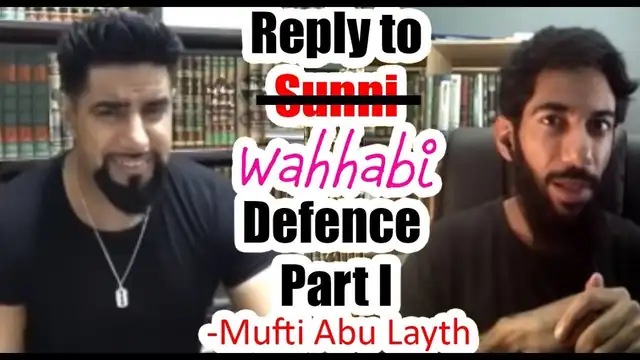 Play from 14:23
The video loads from YouTube only when you press play. Click a time in the transcript to seek.
Watch this part
Open on YouTube at 14:23The player starts at 14:23, the beginning of this part.
This segment14:23 to 17:03 · 2 min 40 sGeneral teaching
What this part covers
machinesummary, machine-writtenAl-Albani himself rejected around a dozen reports in Bukhari, so criticising a Bukhari report does not make someone a deviant. The salaf understood the Quran's miracles in several ways, and miracles had causes within God's natural law.
In more detail
Answering the complaint that he critiqued reports in Sahih al-Bukhari, Mufti Abu Layth says al-Albani criticised close to a dozen hadith in Bukhari, classed them as weak and rejected them, among them the Ibn Abbas report in the two Sahihs that Maymuna married the Prophet while he was in the state of ihram, which al-Albani held unacceptable because false. He says that when al-Albani does this it is fine, but when someone else criticises a report in Bukhari he must be a deviant. He announces that he will go through the critics' points and also wants to address the marriage of Safiyya [?] to the Prophet and how it is misconstrued by non-Muslims and some Muslims. After calls to share the stream, he responds to incoming questions about miracles: the way people understand the miracles in the Quran today is a view standardised over time, and the salaf differed greatly in how they understood them; other views that belong to the salaf exist even if they never reached the questioner. He repeats that miracles, when they happened, had causes and did not go against God's law of nature.
- Some terms in this segment are uncertain
Position stated
Mufti Abu Layth says that criticising reports in Sahih al-Bukhari cannot make a person a deviant when al-Albani rejected around a dozen of them, and that the salaf understood the Quran's miracles in several ways, miracles always having causes within God's law of nature.
“criticized several hadith in Bukhari probably just close to a dozen or so and clasp them as weak and rejected them”
Category: method
Kind: general teachingTranscript
machine14:23 to 17:03 · click a time to seek · dotted terms open the glossary
people can always disagree on it the people that come later can have different opinions on it is not a divine science it is something that men have come up with then I want to add another point and this is important they say oh he critiqued things like Bihari and stuff like this well you see albani criticized Bihari alberni okay criticized several hadith in Bukhari probably just close to a dozen or so and clasp them as weak and rejected them amongst them the hadith of if not a bus which is in sahih hain
where he says may muna his auntie his aunt married the Prophet during a rama state of Ihram is an unacceptable hadith now these kind of things because it's false so these kind of things alberni and other people rejected oh it's okay when they do it along comes another person criticizes a hadith in Bihari all of a sudden that must be wrong he must be a deviant so that's one point I wanted to make clear the other thing is looking at their criticisms I'll go through some of these I'll try to just
address them just by going through them and then we'll move on I do want to address what is important is this marriage of Sofia or the on how to the profit and how that's being miss construed by non-muslims and unfortunately Muslims so people do share this get this out they click like click share those of you just tuning in click like click share third yeah scene is in the house all right click like click share get this out there people they share some of this all right now right
so now I'm trying to focus I know there's some questions coming in about miracles and stuff like this I've mentioned that all the miracles in the Quran first of all first firstly the way you may have understood them may not have been how this all the Salaf understood them so there's actually a huge difference on how the self understood those miracles and what you have had today has been a standardized view over time now if there's many other views that would belong to the selleth of this on mind that just because they
didn't reach you or you don't know about them doesn't mean they don't exist so to start off with okay so that's examples and then there's many things and the other thing is that miracles when they did happen they had as bad they had causes to them and we can call them miracles but they would not go against God's law of nature right now let's stay focused so this refutation people need so they began by saying okay most ebolaids attack on the Sunnah and what did I say in my speech in my kind of lecture I said that the school of Medina in mal
Paragraphs overlapping 14:23 to 17:03. Full text on the recording page.
Cite this segment
Stable id, transcript version and tier are part of the citation. Every change to a transcript is logged.Mufti Abu Layth Archive, segment 2018-02-21-S05, auto-transcribed, may contain errors. https://muftiabulayth.org/r/8u9-aslyrze/s/5/ (accessed 1 November 2026)
- APA 7
Mufti Abu Layth. (2018, February 21). Is it acceptable to criticise a hadith in Sahih al-Bukhari? [Video, segment 2018-02-21-S05, auto-transcribed, may contain errors]. Mufti Abu Layth Archive. Retrieved November 1, 2026, from https://muftiabulayth.org/r/8u9-aslyrze/s/5/
- Chicago author-date
Mufti Abu Layth. 2018. "Is it acceptable to criticise a hadith in Sahih al-Bukhari?" Video, segment 2018-02-21-S05, auto-transcribed, may contain errors. Mufti Abu Layth Archive. Recorded February 21, 2018. Accessed November 1, 2026. https://muftiabulayth.org/r/8u9-aslyrze/s/5/
- BibTeX
@misc{abulayth-2018-02-21-S05,
  author = {Mufti Abu Layth},
  title = {{Is it acceptable to criticise a hadith in Sahih al-Bukhari?}},
  year = {2018},
  month = {2},
  date = {2018-02-21},
  howpublished = {\url{https://muftiabulayth.org/r/8u9-aslyrze/s/5/}},
  url = {https://muftiabulayth.org/r/8u9-aslyrze/s/5/},
  organization = {Mufti Abu Layth Archive},
  urldate = {2026-11-01},
  note = {Segment 2018-02-21-S05, auto-transcribed, may contain errors}
}
Something wrong here?
Tell us what is wrong and it will be checked against the recording. Nothing changes until a person has reviewed it.
Sending a note needs JavaScript, which is off or unavailable in this browser. Nothing has been sent.
No name, email address or account is asked for or stored, and the inbox does not store your IP address. For rate limiting it keeps an unreadable fingerprint of your connection for 48 hours, and our database provider's own logs record connections as every website's do. Only your note, its kind, the page and the moment in the recording are kept, for review.