
Recordings › Age of Aisha (ra)- Mufti Abu Layth · 11 Jan 2017 › Segment 9 of 18
The ramifications: jurists on marrying a minor, and the conclusion
fiqah jurisprudence fikh hadeeth ahadith ahaadeeth hadis hadees ahaadith saheeh sahih hadith saheeh hadith sound hadith authentic malik ibn anas malik bin anas imam maalik imam malik ibn anas imam bukhari sahih bukhari saheeh al-bukhari saheeh bukhari imam al-bukhari imaam imams prayer leader shafi shafei shafiite shafi'i school fatwah fatawa fatwaa fataawa legal opinion muftis hukm ahkam hukum hukam ahkaam haraam forbidden koran quraan al-quran ayah aya ayat ayaat aayah aayat sahabah sahaba sahabi sahabiyyah sahabiyat khalifah khalifa caliph khulafa khilafah khilafat khilafa 'alim aalim ulama ulema ulamaa nikkah nikaah nikah nama nikahnama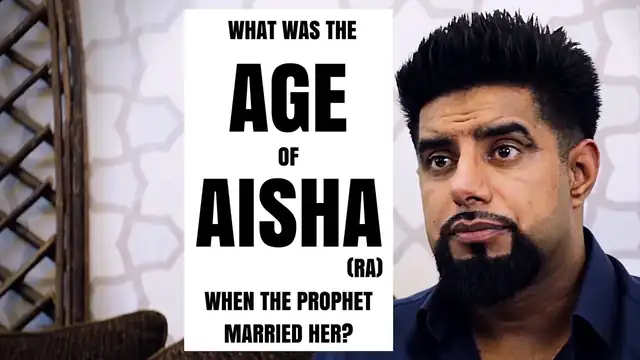 Play from 1:02:49
The video loads from YouTube only when you press play. Click a time in the transcript to seek.
Watch this part
Open on YouTube at 1:02:49The player starts at 1:02:49, the beginning of this part.
This segment1:02:49 to 1:14:38 · 11 min 49 sGeneral teaching
What this part covers
machinesummary, machine-writtenAisha was in her late teens, most likely eighteen or nineteen, Mufti Abu Layth concludes. Jurists from early on held marriage impermissible with a girl incapable of it, and the Ottomans set a minimum age of fifteen.
In more detail
Mufti Abu Layth asks what would follow from the report if it were accepted, namely whether young girls may be married, and says scholars answered this early: jurists of the school of Kufa declared marrying an underage girl haram, and Imam Malik and al-Shafi'i [?] held that a marriage relationship is impermissible with a girl who is not capable of marriage and of a sexual relationship, a condition he says is not the same as the onset of menstruation. He says this continued through the ages to recent scholars, including al-Albani, who refused to say that marrying an underage girl is acceptable, and that the Ottomans legislated a minimum age of fifteen for girls over two centuries ago. He says the matter is serious both because Muslims would not accept such a marriage for their own daughters and because it concerns the Prophet as a role model. He says some scholars, rather than criticising the report, pointed to the Bukhari report that a girl is not married until she is consulted, and to the Quranic rule that an orphan's wealth is handed over only when they reach marriageable age and maturity, which some put at eighteen or older. He attributes the claim that girls then developed faster to al-Dawudi [?] and others, calls it a myth like the fiqh books' four- to five-year pregnancies, and notes that nutrition was scarcer then. He concludes that Aisha was most certainly not six or nine but in her late teens, most likely around eighteen or nineteen, because the report conflicts with other reports in Sahih al-Bukhari and with the reality of the Prophet's circumstances.
- Some terms in this segment are uncertain
Position stated
Mufti Abu Layth concludes that Aisha was not six or nine at her marriage but in her late teens, most likely around eighteen or nineteen.
“Aisha was most certainly not six or nine at the time of her marriage she was in her late teens most likely uh around 18 to 19”
Category: historical claim
Kind: general teachingTranscript
machine1:02:49 to 1:14:38 · click a time to seek · dotted terms open the glossary
metaphor but why is this metaphor like yes there is this this report that has come we're not denying that this report hasn't come but there are several other Hadith as I highlighted in the premise which are in these books which the refuse to accept that are to do with dates or to do with marriages like the marriage of the prophet in sah Muslim the scholars say that's a mistake Abu sufyan did not they refused to accept this Hadith the Hadith of is they refuse to accept that Hadith they they categ
orally say the Hadith is false then we have this whole tradition that if something contradicts or clashes with the greater narrative then that is problematic now with that I want us to move to the final layer which is the ramifications because you might ask well why does this clash with the greater narrative so let's move to the final layer that we can take a look at the ramifications of this the ramifications are well what apart from this being an anecdote that the messenger of Allah married uh AA at this age in bukari
let's say whether it was six or nine what lessons could be taken from this one ramification could be well does that mean you can marry young girls now this also is an answer to how Scholars viewed the this whole Nar this whole event because you see very early on people like from the school of kuf people like clearly declaring it haram for anybody to marry an underage girl people followed byman there were other people from
slightly you know removed Traditions like abak but even within the main Orthodox Islamic movement people like Imam Malik they voice their concern concern in saying it is impermissible to have a relationship to engage in a nikah relationship with any girl that they said that was not newb and that means that is of an appropriate age for marriage and is capable of being in a sexual relationship that's what the term nual means and and that that view was that
voice was also expressed by IM sha and any other people now somebody here might say yeah well uh isn't that uh uh isn't that the same as a girl reaching her menstration and and sometimes a girl could be young and reach not at all does not have to be the scholars did not say that the scholars Imam Malik very clearly said that she was capable he did not say that a girl just if she has her menstruation he said that a girl if she's capable and to that if she's capable of being in a sexual relationship this was their ruling their
fatwa that they gave to to shed light on this and this continues Through the Ages you have people like IAM picking up on this discourse following through right through to our recent times people like um you have UHD arguing you even the likes ofin even the likes of albani all these people when they spoke about under marriages they refuse to say that you can marry that it is acceptable in Islam to marry an underage girl none of them accept that so when you look and when we
look at our historical context let's take a look at the the the ottoman caliphate they had legislated made it part of their actual the actual imposed Islamic law under the guidance of great mutis of the time that it was uh illegitimate and illegal for anybody to marry a girl under the age of 15 they had said and this is going almost two over two centuries back they had legislated that and many great sh
like Muhammad Aladar and others Al and many other people followed suit and and argued uh for that as well to show that look this is impermissible so when we're looking at the Practical ramifications okay and why is this important well this is important because people find this problematic they find to say that first of all from by by two angles one they find it problematic in general people would not accept for their six-year-old or 9-year-old daughter to be married Muslims wouldn't accept these
that's the truth and so let alone non-muslims so the point is that this is highly problematic and the second angle at this is that this is referring to the messenger of Allah who for Muslims is at the height of perfection and a role model for all time and all people so it is incredibly important okay to to understand what what is being said here so so this when we look at the ramifications we see many scholars had spoken out against that so somebody may ask well if they spoke out against that
why didn't they just criticize the Hadith why didn't they just say well I don't accept the Hadith in bukari well some Scholars s they kind of didn't they did not engage in necessarily criticizing that Hadith but what they said was yeah but what about like what about the Hadith in bukari that young girl cannot get married until you consult her what is the purpose of Consulting a an underage girl what is the purpose I mean Consulting a six-year-old is is meaningless on a matter of marriage and
when we look and they said when we look at the verses of the Quran because we can draw a parallel with this to uh what is called in when you hold on to somebody's money if they are underage because they're not capable of spending it the verse in the Quran says that when the that when the sorry when that when the orphans reach uh nikah that they've reached an age suitable of being married at that
if you see see that they are mentally capable that they have developed that maturity then then you can surrender to them their wealth The Scholar said otherwise you cannot give their wealth you must hold on to it till they become mentally mature some said that is at the age of 18 some even went into the 20s so if that's money how do you think the attitude attitude would be towards towards them their whole well-being being married which could jeopardize and compromise their actual safety so it's important to to
recognize this whole greater picture to see it in terms of well H how did the scholars actually treat this issue on the ground now a question once again is well but what about the Hadith in terms of why didn't they critique that well some of them like Dudi and other people said oh that's because we are told that though the the girls of that age developed so much faster than the girls today and this once again was those kind of myths that were circulated and people didn't know any better generally
anthropologically so they most Scholars accepted they were told in the same F books oh pregnancies can last four to 5 years and they said well we were told so and so and so and so witnessed it so they were like well okay that's in most of the books of f they write that oh well pregnancies can last that long because they did not know with certainty to the contrary which we do today and anthropologically we do know that look if anything nutrition and food in the time of the Prophet was actually scarce it was less available than it is today the prophet and many people at many times would they were you know they would tie things to their stomach they
uh many companions at certain times out of dire circumstances would they would boil leaves and eat like that they would eat dates and drink and drink water and their nutrition generally to survive was not this uh something that would if anything it would lead it would you know they would suffer on many an occasion rather than being you know developing twice the speed that that people would so it is important to look at these ramifications once you understand that you look at the reality which I highlighted that what was actually going on what makes
sense does this actually make sense and the scholars later on spoke out against any kind of uh ramif any kind of practicality to this Hadith they didn't just allow you know people to do things like that generally speaking so it is important to understand I'm not denying that whether any person somebody may say well well people did used to get married to gu younger people generally may have I'm not denying that but the discussion here is about the prophet and it's not about uh did anybody ever do something like
this I'm not engaging that discussion I'm engaging the fact about the prophet and when you look at yes there is this Hadith inkari but there's a whole tradition of just because it's in bhari does not make it uh valid okay it may have a connecting chain but it's problematic because it conflicts with several other Hadith in bukari and the greater reality okay so that with that I'd like to summarize um and conclude on this that Aisha was most certainly not six or nine at the time of her marriage she was in her late teens most likely uh
around 18 to 19 and people say at the time of her marriage but she was in her late teens that is clearly demonstrated by these Hadith in bukari and most importantly it's demonstrated by the reality of what the prophet was going through and why that was meaningful for him at the time okay and we've seen the reports although they do exist but they are conflicting and they don't tie into the greater reality so okay so I hope that answers the question Okay so we've covered now this topic we've taken a look at the different arguments the conflicting reports uh the re ity and the
ramifications we've understood how it does not make sense to accept that Hadith which is Inari and the truth being uh very different that was in her late teens okay so now let's look at some follow-up questions uh that's a good question there have been quite a few Works written on this topic and more so uh in recent times because it's become a Hot Topic and I am aware I have actually been through quite a few of the the
Paragraphs overlapping 1:02:49 to 1:14:38. Full text on the recording page.
Cite this segment
Stable id, transcript version and tier are part of the citation. Every change to a transcript is logged.Mufti Abu Layth Archive, segment 2017-01-11-S09, auto-transcribed, may contain errors. https://muftiabulayth.org/r/0ovisexs4ca/s/9/ (accessed 1 November 2026)
- APA 7
Mufti Abu Layth. (2017, January 11). The ramifications: jurists on marrying a minor, and the conclusion [Video, segment 2017-01-11-S09, auto-transcribed, may contain errors]. Mufti Abu Layth Archive. Retrieved November 1, 2026, from https://muftiabulayth.org/r/0ovisexs4ca/s/9/
- Chicago author-date
Mufti Abu Layth. 2017. "The ramifications: jurists on marrying a minor, and the conclusion." Video, segment 2017-01-11-S09, auto-transcribed, may contain errors. Mufti Abu Layth Archive. Recorded January 11, 2017. Accessed November 1, 2026. https://muftiabulayth.org/r/0ovisexs4ca/s/9/
- BibTeX
@misc{abulayth-2017-01-11-S09,
  author = {Mufti Abu Layth},
  title = {{The ramifications: jurists on marrying a minor, and the conclusion}},
  year = {2017},
  month = {1},
  date = {2017-01-11},
  howpublished = {\url{https://muftiabulayth.org/r/0ovisexs4ca/s/9/}},
  url = {https://muftiabulayth.org/r/0ovisexs4ca/s/9/},
  organization = {Mufti Abu Layth Archive},
  urldate = {2026-11-01},
  note = {Segment 2017-01-11-S09, auto-transcribed, may contain errors}
}
Something wrong here?
Tell us what is wrong and it will be checked against the recording. Nothing changes until a person has reviewed it.
Sending a note needs JavaScript, which is off or unavailable in this browser. Nothing has been sent.
No name, email address or account is asked for or stored, and the inbox does not store your IP address. For rate limiting it keeps an unreadable fingerprint of your connection for 48 hours, and our database provider's own logs record connections as every website's do. Only your note, its kind, the page and the moment in the recording are kept, for review.