
Recordings › Innovation in Islam? | Mufti Abu Layth alMaliki · 3 Mar 2015 › Segment 5 of 6
Do Maliki scholars accept good bid'ah?
madhab mazhab school of law madhahib mazahib madhaahib malik ibn anas malik bin anas imam maalik imam malik ibn anas averroes ibn rushd al-hafid imaam imams prayer leader maaliki malikite malikiyyah hanafite hanafiyyah hanafi school shafi shafei shafiite shafi'i school ijma' ijmaa muftis hukm ahkam hukum hukam ahkaam makruh tahrimi makruh tanzihi disliked sunna sunnat sunan prophetic practice bida biddat bidaa innovation hasan hadith hasan li-ghayrihi hasan li-dhatihi hasan sahih tilawah tilawat tilaawah sahabah sahaba sahabi sahabiyyah sahabiyat as-salaf salaf al-salih salaf us-salih al-salaf early generations hijrah hijra hijrat migration madinah madina al-madinah madeenah yathrib andalusia moorish spain sufis sufism soofi ulema ulamaa jihaad mujahid alhamdulillah alhamdulilah al-hamdu lillah alhumdulillah alhamdulillaah niyyah niyah niyat niyya niyyat duaa duas duaas supplication deen al-din ad-deen ad-dinHow good bid'ah entered the Maliki school from the sixth and seventh centuries
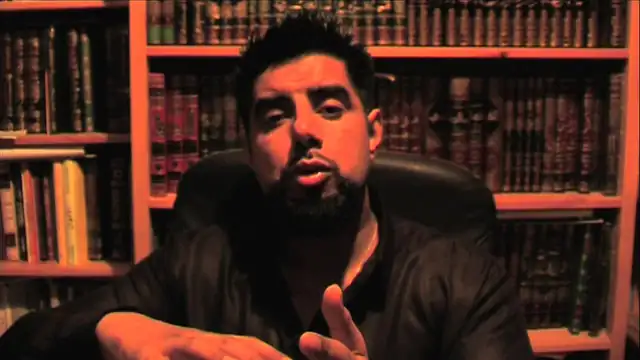 Play from 23:47
The video loads from YouTube only when you press play. Click a time in the transcript to seek.
Watch this part
Open on YouTube at 23:47The player starts at 23:47, the beginning of this part.
This segment23:47 to 30:11 · 6 min 24 sGeneral teaching
What this part covers
machinesummary, machine-writtenBoth views exist: the early Maliki school rejected good bid'ah for centuries, but from around the 600s to 700s Hijri most Malikis accepted such practices while the books still list them as makruh.
In more detail
Mufti Abu Layth acknowledges that the Hanafi and Shafi'i schools are much more accommodating of good bid'ah, and says the Maliki madhhab for several centuries stayed with Imam Malik's understanding, with such practices creeping in around the 500s to 600s Hijri and becoming the majority practice by the 700s. Some link this to the plague, when people turned to religion in the absence of a cure, and others to the fall of the Almoravids and Almohads, whose ribats were taken over as Sufi lodges across North Africa and al-Andalus. Even so, he says, Maliki works such as Mukhtasar Khalil and its commentaries still record practices such as collective recitation and congregational dua as makruh, then add that later scholars such as Ibn Rushd [?] or Ibn Arafa [?] allowed them. He concludes that both opinions exist within the Maliki madhhab: the early school rejected the division for several hundred years and the later school accepted it.
- Some terms in this segment are uncertain
Position stated
Mufti Abu Layth says that good bid'ah practices crept into the Maliki world around the 600s Hijri and, he would even say, became the majority practice by the 700s.
“and then by the 600's it's definitely there definitely by 700s I would even say becomes the majority practice”
Category: historical claim
Kind: general teachingTranscript
machine23:47 to 30:11 · click a time to seek · dotted terms open the glossary
immediately see that as something which should not be done so the intention of a person can render his own action from being a good and rewarding thing to something discouraged and something that should be avoided so you can see the the jump based on the person's intention now I do recognize that from a Maliki perspective and people may say from the Hanafi perspective in the chef a perspective they're a lot more accommodating for Badal husana which is
true they are so I'm not denying that difference of opinion that it doesn't exist it does exist and I'm telling you that furthermore I'll even tell you that several central the Maliki method for several centuries did not accept it remained on that understanding of Imam Malik what you find prob possibly around maybe creeping in around the 500-600 Hijri definitely creeping in by the 700 Hijri it's almost about 600 years after the prophet Elijah
you start to see these practices of what are deemed or what is the subject of debate what they call without husana good actions but innovated as in they weren't actions which exactly were done in that way by the Salaf by the Prophet the Companions or the turbine so the question is that you see this coming in around especially around the 6th century hid jury I mean its second sorry about the 7th century 600-700 is definitely there definitely it then becomes moves
on to become very widespread so first it begins being especially within the Maliki world from non existent just maybe you know it's scarce but I mean it might be it's maybe there are some isolated incidents of it it's not something which is so it's not later on prevalent it's not common it's not a phenomenon which is something that you can generally encounter but it starts to increase and then by the 600's it's
definitely there definitely by 700s I would even say becomes the majority practice ok some people what was the reason for this in places like the Maliki world where they had this understanding that with a Hasan it doesn't actually exist I mean Allahu Alem why that was some people had linked it with things like the the plague that struck the world and struck huge parts of the Muslim world as well and how in the absence of finding a cure people felt it was a spiritual I mean cause if you like for which they
were suffering this is one reason that has been offered by people that an and hence they turned to religion returned to Kensing themselves from sin that's an understanding another understanding is that with the fall of the murabba teen and the more hey Dean what you had a lot of them were key expansionist states and empires so they were very I mean they were what was very central to them was the concept of jihad and so they built everywhere they went they had what were known as these type of barracks that they would set up
which they called originally very but the hence they were called the marathon the almoravid within I mean in English and the Mohan's in English for them why I mean now with the collapse of those dynasties a lot of those robots be they contain empty and you start to see that a lot of them are then subsequently taken over and become what are known as areas with throughout especially North Africa or places like Pottsville Andaluz and stuff like this maybe some people say that what assists in the spread of
these practices etc but coming back to the point the around that time this becomes very common them even the molecule amar of the time the majority of them do start to accept these actions and they start to say that we will accept Modar al-hasan a-- so the molecule man do accept it as well and a much later stage almost six seven hundred years after you know in hickory so almost like we're talking at least five you know five hundred years 600 years after imam malik the ulama from the malcolm have a lot of them
turned to accepting these practices what is interesting however though despite the common practice is accepting it they still in the books continue to generally document the practices as macro so if you see the most a sort of Halil if you see the commentaries on it as well although they will give the later day opinion now saying such-and-such said it's okay but they will still mention whenever these practices are discussed so for example recent recitation in Gemara praying in jamar during the ah sorry all recitation in Jamaa I'm making dua in Jamar these
issues are mentioned in the most assertive hello' in other fit books and they will still document them as makrooh actions within the method however we they expand on them they will say however so-and-so said it was okay so they may mention even a ruched felt that you know it was okay or other olomana later on even Arafah another ala ma felt this was fine to kind of do and and it became like I said the common position at a later stage so at a later stage most of the math has pretty much unite if you I say unite there isn't an absolute consensus because there's
always people who have disagreed but a lot more of the methods seem to be in agreement in accepting these actions so that is the the ruling what money responds to it is as simple as that look Badar the division of it there are two opinions right that no and yes the early school of Imam Malik did not accept it for several hundred years the latest Court did accept so these opinions both opinions exist within the Maliki mother
if if you're asking my personal opinion on the matter my personal opinion is that it is always safer to stick with the Sunnah and that was the understanding in Medina at the time of man Malik that is the understanding that I personally adhere to I don't agree in condemning people outright in the actions if somebody is doing or an action which is seen as a battle husana i mean al hamdulillah they feel it makes them it makes life easy for them if they feel that it is some goodness in it for them it's bringing them closer to allah and that is their belief then I'll have
Paragraphs overlapping 23:47 to 30:11. Full text on the recording page.
Cite this segment
Stable id, transcript version and tier are part of the citation. Every change to a transcript is logged.Mufti Abu Layth Archive, segment 2015-03-03-S05, auto-transcribed, may contain errors. https://muftiabulayth.org/r/wirt3dxsvd8/s/5/ (accessed 1 November 2026)
- APA 7
Mufti Abu Layth. (2015, March 3). Do Maliki scholars accept good bid'ah? [Video, segment 2015-03-03-S05, auto-transcribed, may contain errors]. Mufti Abu Layth Archive. Retrieved November 1, 2026, from https://muftiabulayth.org/r/wirt3dxsvd8/s/5/
- Chicago author-date
Mufti Abu Layth. 2015. "Do Maliki scholars accept good bid'ah?" Video, segment 2015-03-03-S05, auto-transcribed, may contain errors. Mufti Abu Layth Archive. Recorded March 3, 2015. Accessed November 1, 2026. https://muftiabulayth.org/r/wirt3dxsvd8/s/5/
- BibTeX
@misc{abulayth-2015-03-03-S05,
  author = {Mufti Abu Layth},
  title = {{Do Maliki scholars accept good bid'ah?}},
  year = {2015},
  month = {3},
  date = {2015-03-03},
  howpublished = {\url{https://muftiabulayth.org/r/wirt3dxsvd8/s/5/}},
  url = {https://muftiabulayth.org/r/wirt3dxsvd8/s/5/},
  organization = {Mufti Abu Layth Archive},
  urldate = {2026-11-01},
  note = {Segment 2015-03-03-S05, auto-transcribed, may contain errors}
}
Something wrong here?
Tell us what is wrong and it will be checked against the recording. Nothing changes until a person has reviewed it.
Sending a note needs JavaScript, which is off or unavailable in this browser. Nothing has been sent.
No name, email address or account is asked for or stored, and the inbox does not store your IP address. For rate limiting it keeps an unreadable fingerprint of your connection for 48 hours, and our database provider's own logs record connections as every website's do. Only your note, its kind, the page and the moment in the recording are kept, for review.