
Recordings › Monday Nights with Mufti #198 | Q&A Unscripted & Unrestricted! 😉 | Mufti Abu Layth · 19 Jan 2021 › Segment 27 of 41
Who was Ibn Rushd (Averroes)?
fiqah jurisprudence fikh tafsir tafseer exegesis tafasir tafaseer ibn rushd al-hafid maaliki malikite malikiyyah maliki school muftis jahannam jahanam jahannum koran quraan al-quran khalifah khalifa khulafa khilafah khilafat caliphate khilafa al-andalus andalusia moorish spainIbn Rushd (Averroes), part 1: family, works, the Almohad court and exile
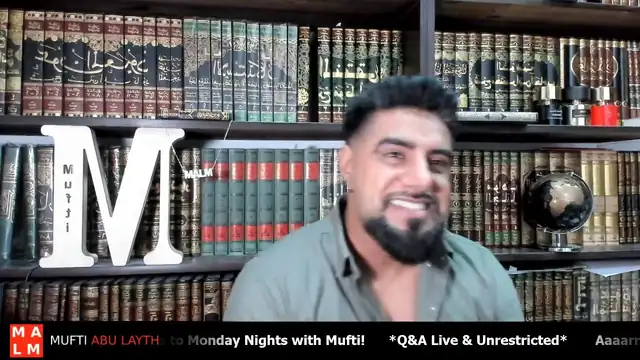 Play from 1:56:13
The video loads from YouTube only when you press play. Click a time in the transcript to seek.
Watch this part
Open on YouTube at 1:56:13The player starts at 1:56:13, the beginning of this part.
This segment1:56:13 to 2:08:59 · 12 min 46 sGeneral teaching
What this part covers
machinesummary, machine-writtenMufti Abu Layth presents Ibn Rushd as a Maliki judge, physician and the great commentator on Aristotle, honoured in Europe but exiled and neglected by Muslims.
In more detail
At viewers' request Mufti Abu Layth introduces Ibn Rushd, known in the West as Averroes, showing his statue in Cordoba: born in 520 AH into a great scholarly family, in the year his grandfather, Ibn Rushd al-Jadd, chief judge of Cordoba and a Maliki authority, died. Mufti notes that in Maliki books 'Ibn Rushd' almost always means the grandfather, and the grandson is seldom cited in fiqh. He describes the grandson as a physician with works on medicine, physics, mathematics and philosophy, the author of a comparative fiqh work [?] he calls one of the best books for teaching the subject, and as 'the Commentator' on Aristotle. He recounts that a fellow philosopher, Ibn Tufayl [?], introduced him to the Almohad caliph, who wanted to be a new al-Ma'mun, so that he became a judge in Seville and Cordoba, until the next caliph, al-Mansur [?], turned against him, exiled him to the largely Jewish town of Lucena, and pardoned him shortly before his death. Mufti says Ibn Rushd contributed significantly to the European Renaissance and influenced Jews such as Maimonides, while Muslims called him a heretic and burnt his books, so that works like his commentary on Plato's Republic survived only in Hebrew.
- Some terms in this segment are uncertain
Position stated
Mufti Abu Layth says it is a shame that Muslims ignored Ibn Rushd, since he was such a legend in philosophy.
“you see it's a shame that Muslims because he was such a legend in philosophy Muslims kind of turned a uh they they kind of ignored him”
Category: historical claim
Kind: general teachingTranscript
machine1:56:13 to 2:08:59 · click a time to seek · dotted terms open the glossary
people Muti will you ever grow your beard I don't know sometimes I do look there's a little there's a a little beard there I haven't shaved today so that's all good there it is right so my boys what is going on my boy Hashim Hashim Khan that's a slick name though huh Hashim Khan you're doing it ashim much love for the super chat but you're doing it as well you're doing it uh so what else have we got
right I said I was going to cover um I was going to cover uh an introduction on the great Legend of Muslim Spain people right so those of you that are familiar with aois I've been asked by a few people about him and I did say look I'll this is a statue of him in modern Spain it's in Cordova uh the city where he was and he's somebody who is is
celebrated today by especially the West known as aois some people say aoiz um however you want to say it his uh Arabic name was Abul Muhammad now tell you a bit about him he was born in almost about 900 years ago in the year it was 520 hij now he is born in Muslim Spain okay he's this great he's born in a great family of
uh of scholarship great family I mean his granddad was uh it's enough for me to say that his his granddad was who had the same name abush and that's who he kind of takes it from he Junior they call him alfid the grandson Junior in other words he his Grand D was the Supreme judge in Al andelo especially of CBA one of the the major entire regions and and he was an absolute Authority this person within the Maliki maab as well he's uh
you know he's he's one of the the Chri of the Maliki maab he's one of the four who KH relies on in his his and he has that commentary on the known as that is uh so here's a little pointer that you may not know you may um if in Malik you hear the name uh so if you're reading a Maliki book and it mentions rush it will almost always be speaking about the grandfather that if they're going to
mention the grandson it will be they will mention Alid next to him and they seldom mention the grandson in the F books um see that's the story that's the kind of tragedy although the malakis didn't from a fi perspective they didn't have an issue with uh iar rush but he is one of the Dons of philosophy this person is born and raised in Spain called TOA CA he's in this family of you know of knowledge it's all around him the year he's born
is the same year his grandfather dies his father was also a judge but not of such a high level but also a judge he studies from a young age he qualifies as a physician a doctor medical doctor of his age in fact he had a book he has books on um you know on on medicine and stuff like that he studies physics he has books on physics he has books on mathem matics philosophy sh Quran he studies with you know the likes of bash major I mean this guy is huge he writes in a book
called this book is an epic I mean it's it's you can't really see it here but um no it's it's up there right you can't really see it but um it's if you want to teach comparative it is one of the best books out there it's so you know wow it's worth its weight in gold so he wrote that in F and that just demonstrates his F ability the man you know he's quoting this m that M you mentioned thisi that this of Malik
that R and he Compares and he contrasts and he argues and sometimes he gives even if he doesn't give his own fatwas but he kind of raises doubt towards you know like he'll give you an inkling that you can understand h i get it so um so for example does a woman require a Wally to get married if you read that you can kind of see him saying H you know well if if you do want to go with it but then he kind of raises you're still kind of stuck um even in making up missed prayers it's interesting now
as he that's in his as he was kind of uh growing up he travels now you have to remember this is the era of the mads the MU and I've got an entire course on the history of lelus so they say at the age of 28 he traveled to marush which was the capital of the MU and the before them now there you have this ruler called Abdul mmin Abdul alii right so Abdul mmin he's this you know great kff whatever he passes away and his son
Yousef is this uh the person in charge now Yousef he likes philosophy now this becomes I Rush's portal into a prestigious career but before we get to that we got to understand IBN Rush had this infatuation with philosophy he loved it Aristotle I mean he didn't just study he analyzed evaluated synthesized he was the representative he rapped
Aristotle any he had the title A when it came to Aristotle that he is the commentator on Aristotle you know you want to understand what Aristo is saying you go to the commentator who's iar people that's that's the level of dness he's a student of who I rush in philosophy he influenced by IBN B IBN is also a very important uh figure somebody who you know he he has a huge
influence on philosophy huge uh influences many people non-muslims uh Jewish people of andalus of Muslim Spain he influences this other philosopher called iil who's a contemporary uh to iush influences him writes books on topics like not only astronomy and philosophy but also on the soul and something the um on the phenomena phenomenological approach to the soul how can we study the soul it's interesting I mean this is uh it's huge
uh I don't know if U but nevertheless this fellow student ofn is the guy who gets I rush into the Royal Court he kind of introduces him and he's kind of heard of him and he tells the kff this guy's like something special and and the kff wants to become a new kind of matmon you know like the mat Moon of Bagdad uh hundreds of years before who kind of brings in these Greek texts and translates them and has all this philosophy and this Legacy this guy
wants to do something like that so iil says to him look why didn't you use I rush and get him to translate and then he's like yeah you know that's uh that's actually a very a very interesting point so uh yeah but right so he gets him um he gets him into that through this he he gets to know the kff he becomes a judge then he kind of Rules from different cities sevil in Spain which is known as ishia Coba Koba he kind of moves between them
he writes and this is his kind of wow his uh you know his is rise to huge success and fame and he becomes very dear to this caleff the caleff kind of really likes him opens up many doors for him but people you know the love of the powerful huh can change like this so the king the kaith al- mansur so this kff dies his son who's known as Y Man or and they
call him Abu yusf he's the guy who built the city uh Rabat uh rabbat in Morocco today that was his Capital so he likes iar rou then you know yeah but then suddenly he changes and he has him blacklisted and he has him kind of punished and um he has him exiled sent into Exile and he sends him kicks him out of CBA and sends him to this city to a town a Jewish that was mainly populated by Jews uh it's called in Arabic they called it alasana uh or um Lucena in Spain it's called
Lucena and it was a I think they also call it uh yena as well but it's Lucena was the name for it and it was almost an entirely Jewish and they send him there as in ha you get to live with the Jews but the Jewish people really loved iar and it's in this town that people like mayones were the you know the famous Jewish uh mayones he and he's a huge fan of iar rush because Aristotle and all the this knowledge is coming to them via iar rush and you know they're just kind of soaking it all up so he suffers there
for uh you know it's it's tragic the kff does pardon him but after the pardon I mean iush doesn't really live much longer he passes away within a year and then he's he's kind of buried he dies I think in Marakesh he goes to the Royal Court and then he's carried back and but this Legend of a man he uh really influenced in a significant way um or contributed significantly to the Renaissance within Europe you see it's a shame that Muslims because he was
such a legend in philosophy Muslims kind of turned a uh they they kind of ignored him and people accused him you know you're a deviant you're a heretic you're a cfir you know that kind of nonsense and like they do you know when you challenge stuff and um and they called him a cfir and stuff like like burn his books they burnt his books and things like that hence most of his books actually apart from the f one the other books they survived because they survived in Hebrew so he wrote a commentary on Plato's Republic and in fact I did take
it out here this this is this is it I mean it's it's called it's a commentary on Plato's Republic and he actually does a commentary the Islamic style you know where you bring a text and do a commentary like sentence for for sentence and um and this only survives because it was in Hebrew and then it was kind of translated back into Arabic but the Muslims kind of ignored it they they just felt that H you know this guy's a deviant and so on and he was a legend and he was accused you see some of the reasonings like they they wonder why did
he um you know how did he kind of Fall From Grace so um you know how did events turn so rapidly against him and some people say they used statements he said against him and one of them was that you know in his time there was this uh IM called I so that's like a contemporary but anyway this one day in CA there's this storm so they find out a storm is coming like you know people say oh my God you know there's a tragic Storm's going to come these huge winds you know Mega kind
Paragraphs overlapping 1:56:13 to 2:08:59. Full text on the recording page.
Cite this segment
Stable id, transcript version and tier are part of the citation. Every change to a transcript is logged.Mufti Abu Layth Archive, segment 2021-01-19-S27, auto-transcribed, may contain errors. https://muftiabulayth.org/r/hv-blbvtr4m/s/27/ (accessed 1 November 2026)
- APA 7
Mufti Abu Layth. (2021, January 19). Who was Ibn Rushd (Averroes)? [Video, segment 2021-01-19-S27, auto-transcribed, may contain errors]. Mufti Abu Layth Archive. Retrieved November 1, 2026, from https://muftiabulayth.org/r/hv-blbvtr4m/s/27/
- Chicago author-date
Mufti Abu Layth. 2021. "Who was Ibn Rushd (Averroes)?" Video, segment 2021-01-19-S27, auto-transcribed, may contain errors. Mufti Abu Layth Archive. Recorded January 19, 2021. Accessed November 1, 2026. https://muftiabulayth.org/r/hv-blbvtr4m/s/27/
- BibTeX
@misc{abulayth-2021-01-19-S27,
  author = {Mufti Abu Layth},
  title = {{Who was Ibn Rushd (Averroes)?}},
  year = {2021},
  month = {1},
  date = {2021-01-19},
  howpublished = {\url{https://muftiabulayth.org/r/hv-blbvtr4m/s/27/}},
  url = {https://muftiabulayth.org/r/hv-blbvtr4m/s/27/},
  organization = {Mufti Abu Layth Archive},
  urldate = {2026-11-01},
  note = {Segment 2021-01-19-S27, auto-transcribed, may contain errors}
}
Something wrong here?
Tell us what is wrong and it will be checked against the recording. Nothing changes until a person has reviewed it.
Sending a note needs JavaScript, which is off or unavailable in this browser. Nothing has been sent.
No name, email address or account is asked for or stored, and the inbox does not store your IP address. For rate limiting it keeps an unreadable fingerprint of your connection for 48 hours, and our database provider's own logs record connections as every website's do. Only your note, its kind, the page and the moment in the recording are kept, for review.