
Recordings › Monday Nights with Mufti #199 | Q&A Unscripted & Unrestricted! 😉 | Mufti Abu Layth · 26 Jan 2021 › Segment 27 of 36
Could the hadith tradition evolve like a living organism?
hadeeth ahadith ahaadeeth hadis hadees ahaadith dalil daleel adillah adilla proof deen al-din ad-deen ad-dinDarwin's Cathedral: is the hadith system an evolving organism?
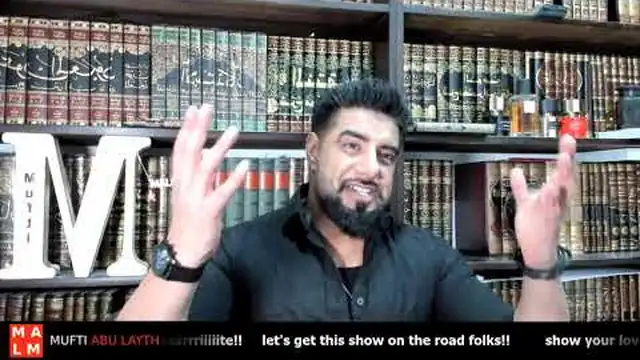 Play from 2:12:03
The video loads from YouTube only when you press play. Click a time in the transcript to seek.
Watch this part
Open on YouTube at 2:12:03The player starts at 2:12:03, the beginning of this part.
This segment2:12:03 to 2:22:31 · 10 min 28 sGeneral teaching
What this part covers
machinesummary, machine-writtenAs food for thought, he suggests that the hadith system, like other belief systems, behaves like an evolving organism that drives people to standardise and preserve it.
In more detail
Closing the ripple-effect explanation, Mufti Abu Layth introduces David Sloan Wilson's Darwin's Cathedral, which argues that belief systems and cultures evolve like living organisms, and Richard Dawkins's idea of memes as information that is copied and takes on a life of its own like a parasite in society. He applies this to hadith, which he describes as a system rather than individual reports, involving memorising, relaying, interpreting and paraphrasing, with authority, power and orthodoxy built on it. He suggests that, just as people once could not imagine germs or a film arriving through the air by Wi-Fi, we have a shallow understanding of consciousness and of ideas, which may reside in the realm of consciousness and be drawn to people as a virus is drawn to its host. Such a system, he suggests, would outlive individuals and, without being conscious, drive its adherents to standardise and correct it for its survival, which would explain the boomerang and ripple effects. He adds a footnote that Plato's forms might exist as concepts in the realm of consciousness, offering it all as food for thought and joking that people will think he has lost the plot.
Position stated
Mufti Abu Layth suggests, as food for thought, that the hadith system behaves like an evolving organism that, without consciousness, drives those engaged with it to standardise and correct it so that it survives.
“as a kind of psychosocial organism this belief system it would be driven to make people do that to kind of ensure its longevity to survive”
Category: method
Kind: general teachingTranscript
machine2:12:03 to 2:22:31 · click a time to seek · dotted terms open the glossary
god it's i swear by he who abu hurairah's life is in his hands that this this this you see so it's a concept and then it's reified it finds a it becomes real it finds a body it's concretized so it's like you send out this idea this thing it's it's here and it comes back so the kind of ripple and boomerang effect that's happening it comes back and it it kind of concretizes this because it matches it and it it creates a kind of equilibrium
harmony so i don't know if that makes uh i hope that makes some sense people but that was to explain why i felt um what i did about these hadith this theory that what about other hadith that are the same but in other books and here i'd just like to say a quick word on right hmm i'd been thinking people i don't know if you've heard of uh darwin's cathedral
okay so professor david sloan wilson so he has this this book and he has lectures on youtube as well so it's evolution religion and the nature of society so what david sloan is arguing in darwin's cathedral is that what he's arguing is that not just biology as darwin had argued evolves and kind of takes on a life in accordance with
survival of the fittest he argues that systems of belief and cultures equally are like living organisms they take on a life of their own and they too evolve but they they're not just to be treated like um you know very superficially as in oh this is just what people do but these are you know memes i know richard dawkins nowadays memes are just funny things but memes richard dawkins what he was speaking
about is mimetics that behavior or information is mirrored and it kind of takes a life like a parasite in society and it has a almost like a mind of its own except we're not saying it's conscious now i was thinking about all of that in light of hadith now i feel that this applies to hadith that it may may well sorry apply to hadith because hadith is a you see it's a hadith system it's not an
individual hadith we're just talking about talking about a system that involves a lot of human agency you know memorizing relaying interpreting giving you paraphrasing um authority power orthodoxy is created on the back of hadith this it's a huge it's a system okay now
systems what if they equally attract us to them what if you see because what if ideas and these these kind of uh it's i suppose small at a low level just ideas but at a greater level systems of ideas
what if they are like how you have viruses how you have i'm not saying that in a negative sense but how you that they have a kind of uh a hyper existence not a you see you need to bear with me because i don't want see people might think what on earth is mufti on about here look in the past people looked at biology they looked at life very simplistically yeah they they didn't understand microbiology they didn't understand germs they didn't understand uh bacteria and viruses
so they understood contagions to be very simple like you touch someone it passes on they couldn't understand how something is airborne because they couldn't understand they didn't have that level of understanding of microbial entities today we do so we view these this world differently technology like we view things like look at today the way we understand things like like wi-fi like let's say i'm downloading a song or a movie now it is just coming in the air
to this device a whole movie is just coming in the air now if you try to explain that to somebody 500 years ago they would find that dumb and they would argue against it with good reason like they would say oh well in that case if if i put my hand in front of it shouldn't i be blocking it now or if there's a wall then how can it go through the wall or how you see like they would from their perspective have good reason to argue against it but today with evidence you know that oh and with a more complex understanding of how technology works you know that well actually
this is the correct depth understanding you know a deeper understanding of technology so you see what i'm trying to say is we have a very superficial understanding of one consciousness and two ideas which in essence is information but ideas like we don't understand like to us like we just we have a very shallow understanding like oh well there's a there's some kind of neural active electrical activity it's just a current taking place but i feel that ideas are
much greater than that that they reside in the realm of consciousness that they are kind of and what if the way a virus is drawn to its host you see what if ideas are drawn to certain people as well and you see and and why what why hadith in this light because hadith is a system a system of ideas it's a belief system in and of itself so when you consider it that you have to understand
that the way a virus would mutate and take on a life of its own to survive the hadith system once put into existence would do the same it doesn't matter it would become it would outlive the individuals it would become a kind of organism that meets the challenges of the day and age and it would obviously manifest that through the minds of people that it that that preoccupied themselves with it but
yeah i don't i mean [Laughter] you're gonna say yeah mufti's gone mad but i'm serious you see this is why complex belief systems they always evolve you see they this is and the reason i'm saying about hadith is because like all these effects like the boomerang effect the the kind of rippling effect standardizing self-correcting along the way i know people are doing it but as a kind of psychosocial organism
this belief system it would be driven to make people do that to kind of ensure its longevity to survive now you may say well you're kind of ascribing uh volition and consciousness to it but am i because look viruses don't have consciousness but that's they have but they're driven and yeah so i don't know look this is food for thought don't shoot me but i i'm intrigued you see i was thinking about this and i was thinking
hmm like you see if belief systems what's to say that i know we are drawn to certain ideas but what if certain ideas are actually drawing us in towards them forget about it people i know you're thinking mufti's lost the plot ah yeah i've lost it i know
but yeah so that's i don't know food for thought food for thought people or or do i need to do i need to go easy on the psychedelics is that what it is but yeah so uh right let's move on people let's move on also that you know the honest earnest just a tiny footnote that would give a different understanding to what plato was saying about the forms because people obviously asked where do these forms exist and what is it but what if they exist existed as concepts in the realm of consciousness food food for thought people food for thought right so anyway anyway mufti's lost the plot
ages ago that i did that i did people let's take a few quick questions uh all right you need to take uh yep akbar who do you recommend to listen to a cha cha cha you're coming on my show and asking people who do you recommend i should listen to you
Paragraphs overlapping 2:12:03 to 2:22:31. Full text on the recording page.
Cite this segment
Stable id, transcript version and tier are part of the citation. Every change to a transcript is logged.Mufti Abu Layth Archive, segment 2021-01-26b-S27, auto-transcribed, may contain errors. https://muftiabulayth.org/r/eokcnwggiba/s/27/ (accessed 1 November 2026)
- APA 7
Mufti Abu Layth. (2021, January 26). Could the hadith tradition evolve like a living organism? [Video, segment 2021-01-26b-S27, auto-transcribed, may contain errors]. Mufti Abu Layth Archive. Retrieved November 1, 2026, from https://muftiabulayth.org/r/eokcnwggiba/s/27/
- Chicago author-date
Mufti Abu Layth. 2021. "Could the hadith tradition evolve like a living organism?" Video, segment 2021-01-26b-S27, auto-transcribed, may contain errors. Mufti Abu Layth Archive. Recorded January 26, 2021. Accessed November 1, 2026. https://muftiabulayth.org/r/eokcnwggiba/s/27/
- BibTeX
@misc{abulayth-2021-01-26b-S27,
  author = {Mufti Abu Layth},
  title = {{Could the hadith tradition evolve like a living organism?}},
  year = {2021},
  month = {1},
  date = {2021-01-26},
  howpublished = {\url{https://muftiabulayth.org/r/eokcnwggiba/s/27/}},
  url = {https://muftiabulayth.org/r/eokcnwggiba/s/27/},
  organization = {Mufti Abu Layth Archive},
  urldate = {2026-11-01},
  note = {Segment 2021-01-26b-S27, auto-transcribed, may contain errors}
}
Something wrong here?
Tell us what is wrong and it will be checked against the recording. Nothing changes until a person has reviewed it.
Sending a note needs JavaScript, which is off or unavailable in this browser. Nothing has been sent.
No name, email address or account is asked for or stored, and the inbox does not store your IP address. For rate limiting it keeps an unreadable fingerprint of your connection for 48 hours, and our database provider's own logs record connections as every website's do. Only your note, its kind, the page and the moment in the recording are kept, for review.