
Recordings › Monday Nights with Mufti #188 | Q&A Unscripted & Unrestricted! 😉 | Mufti Abu Layth · 27 Oct 2020 › Segment 3 of 33
How do I heal my inner child, and how should I raise my children?
imaam imams prayer leader muftis 'alim aalim ulama ulema ulamaaMufti Abu Layth on healing the inner child and raising children
Most recent answer on Trauma and healing2 earlier answers on this topic, oldest 2017 ↓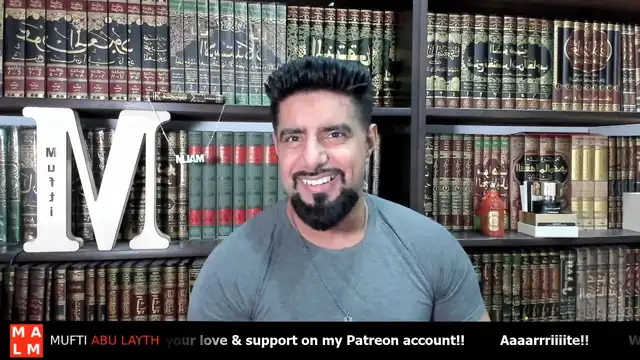 Play from 12:51
The video loads from YouTube only when you press play. Click a time in the transcript to seek.
Watch the answer
Open on YouTube at 12:51The player starts at 12:51, where the answer begins.
This segment12:11 to 26:02 · 13 min 51 sGeneral teaching
The answer in brief
machinesummary, machine-writtenMufti Abu Layth says we are an extension of our inner child and that reconnecting with it can be unnerving but healing; with children, go with your heart and build a qualitative bond.
In more detail
A super chat asks for advice on healing the inner child and on bringing up children. Mufti Abu Layth says he thinks we are ultimately an extension of our inner child, and that children are like glass moulded by their family and environment. He contrasts the loved child, who enters the world with confidence and a sense of ethics but may struggle when the world does not favour them, with the child who suffered, who may spend life escaping childhood but gains survival skills and a drive to prove a point. Mufti recalls his own hard childhood, which he says gave him a thick skin, stoicism and imagination, and describes being hypnotised by a psychologist and taken back to childhood, which shook him for weeks, and how watching the series This Is Us helped him come to terms with his childhood. On raising children, he says we all to some extent wing it, that the bond should be qualitative more than quantitative, and that he does not try to dogmatise his own children but lets them grow up naturally, though he does not know whether that approach is correct.
Question as read aloud · questioner not identifiedWhat is your advice on healing the inner child, and what is your advice on bringing up children?
Position stated
Mufti Abu Layth says he thinks we ultimately are an extension of our inner child.
“I think we ultimately are an extension of our inner child.”
Category: teaching
Kind: general teachingTranscript
machine12:11 to 26:02 · click a time to seek · dotted terms open the glossary
Uh but here they do clearly. I mean there's like a substantial number of the people fighting were people scholar of the scholarly class which usually never happens. Uh so that is deemed by some and and they almost win you know it gets to the point that the Omeaya dynasty dynasts feel that they've lost this this war but then suddenly it the vicissitudes of fate people it swings back and and and then there's the you know the Imam Zade thing is considered you know the the that war zin
is consider so it's not clear which war people like great war this great unrest scholars are sometimes referring to because in their mind they have like one two three but that might refer to different ones so yeah I hope that helps and then obviously as time goes by there's other great calamities as well um right what is your ah right where's that question gone right oh here it is rock black says what is your advice on healing the inner child and also what is your advice on growing
up children as in on take it you know it's a tricky one if we're going to be real I mean first of all let's take the the inner child I think we ultimately are an extension of our inner child.
I think to a great part that is uh unquestionably true that we are really our child with all the I mean not our as in we are ourselves as children but with adage and the problem is that as children you are incredibly vulnerable so you're not this stronger person that you are as an adult so often you know it's like your you're made of glass.
That's what a child fundamentally is, you know, and they and then they are then molded that glasses to fit a certain shape which is their environment. It's first and foremost their immediate surroundings which is family um parents you know firstly for the for the most part and then other environments like the maybe where they live the area the school uh their contact with you know it's so
circumst I mean it's the circumstances determine so much of what goes on with that child And it can and you know it could be a very difficult it's it's it's it's strange because childhood is for some people such a wonderful experience and for some people it's such a tragic horrible experience that you know they and it's it both sides [laughter] they they go on to still remain enigmatic because the wonderful childhood uh sometimes times you find that those
um those kind of pleasures not pleasures ain't the right word but those comforts are not extended in adulthood because you see that person the child who is um you know always let's say loved and taken care of so well and given every not everything but many things they want and but as an adult the world doesn't favor them the way the immediate parents did or the uh the way the immediate environment did as a child sorry parents or family or whoever so that is an
immense struggle because the person then although I think in many ways the the the the loved child has goes into the world steps into the world with much greater confidence [snorts] and a um a greater sense of ethics I feel and also um in a much more humane way as well.
Like I feel that they probably have much more humanism embedded into them. But it doesn't have to stay that way because the world now doesn't treat them with the same love. So maybe the struggle that ensues could flip everything on its head or maybe it retains it. And on the other side, you have people who've suffered a tragic uh childhood, you know, immense suffering, survival.
Um, and in some way they spend the rest of their lives trying to escape, [laughter] their childhood. [laughter] You're bringing back memories now. Yeah. And I think that um that and people block out so much of their childhood like uh subconsciously and and for these people I think this camp of people you see what's interesting is that on the plus side it gives them I feel a much greater sense
of survival in a very in at times a very brutal world that these people are in many ways much more machaveillian [snorts] and they've you know they see they're very skeptical about things they sometimes they you know to they may seek to overcompensate and I don't mean overcompensate in this is as a bad way but sometimes I feel some of these people may go on to you know achieve great success because they have something to prove like they they want
to kind of it's after not having had anything as childhood. So sometimes you see some people who suffered maybe poverty or suffered things they yearn for richness and on many occasion I mean obviously many occasions they don't achieve it but on some occasions they do that's because they have this kind of thirst to to prove a point to the world.
Um, so I I it's weird because would we be today where we are if it wasn't for our childhood, including the terrible parts. [laughter] I think about myself sometimes [laughter] and the immense amount of counseling that I will need.
[laughter] But on the bright side, you know, the thick skin it gives you, the um the kind of stoic nature. I always I feel that my sense of stoicism that you know I [snorts] it comes from um just having faced the kind of things I did in childhood and you kind of just learn because you don't have [laughter] anything to look forward to anymore.
So I think what happens is you just take every day as it comes as a child and I think it also really boosted my imagination because as a child I think you learn to live in an imaginative world and you your imagination kind of it becomes so vast and so you kind of create a world inside you and and I think that that has many you know in adulthood that has any plus points.
[laughter] But I suppose each side has a struggle and I I think it is good to to be able to maybe to be able to bridge that to that inner child definitely and I think sometimes it can be very disturbing you know I I'll share something with you I feel that you know when was it was just in the recent past as in the past couple of years I um I was I was speaking to um psychologist very you know
um incredibly [clears throat] well trained and senior and professor and somebody that uh he has a lot of skills in hypnotism and he's a practitioner and I was very skeptical and I was like ah you know come on does this really [laughter] you know you hypnotize people come on can you really hypnotize people and and he said to me, "I'll hypnotize you if you want." So I said, "Well, go on then." Being myself, I was like, "Yeah, go on then." And but I had to comply.
I had to kind of like I I'm not meant to fight it. Okay. So I was like, "All right, cool. I won't fight it." And I kind of went along with the the whole steps and he went through this thing and you know the meditation aspect and and then he you know we went along and he's taking me you're walking this here and there and you can see this and and and it it it's it was amazing I have to say but at you see at one point he took me back to childhood and it didn't last this long.
I I think it may the whole thing may have lasted about 10 minutes 15 minutes. I don't think it was that long, but at one towards the end of it, he took me to and I didn't know he was going to do this [laughter] and I don't know whether he knew he was going to do it because it was just like off the cuff thing. And he said, well, he took me back to childhood and he said, you know, you're in childhood, you see yourself, you're there and this and I have to say it really shook me like I was uh, you know, I was quite disturbed when I came out like because I just felt
really um it was really kind of moving but in a way that I wasn't because I wasn't expecting any kind of uh you know like a very deep level turbulence. I wasn't expecting I was just thinking oh we're going to be kind of okay hypnotism and yeah yeah yeah and I really I think for a good few weeks after I was kind of a bit I I didn't really um but I don't know it's not like I don't I just didn't know how to react.
Um that's the but it's interesting in the last maybe couple of years I definitely uh came to terms with a lot of things from childhood and revisited them mentally and stuff like this and it is very opening. It's very kind of soothing to be able to do that. And what's interesting is uh sometimes some um you know like sometimes you could watch certain things.
I I tell you I watched I have mentioned this before but I watched that um TV series called This Is Us and I didn't I was not expecting this. And this is when it hits you when you're not expecting things. But for some reason it really shook [laughter] my childhood core. I don't know why.
Like and really did. And for I remember watching binge watching that and for a while after I was just like, [laughter] shell shocked. But in a way it helped me come to terms with a lot of things and it kind of ironed out all these. But it was really good. It was a therapeutic process, I guess. But yeah, and and I think in many ways it's it could be unnerving like you don't know what monsters will leap out at you from if you reconnect.
But yeah, I suppose why not if you can face it. The other part of the question, how do we bring children up? I honestly feel that uh it's something we all to some extent wing it. uh you know we're not really given a kind of uh manual and even if we are we don't know whether that will work for us. So I would say that really just to seriously I think look you just go with your heart that's when it comes to your own kids that in having that kind of bond and the bond is more qualitative.
It doesn't have to be quantitative as much. Uh, and by that I mean it doesn't have to be sometimes however you measure quantitative but it's more qualitative and I I feel that that grounds decent human beings and you know creates ethical people obviously young people but they will become grown-ups in the future. Yeah, definitely.
And I feel that it um it you know, even when it comes to Islamic stuff, you see, to me, I I'm I'm a MUI and I've got children and I don't you see, I'm not about trying to ideologically dogmatize them. To me, let them just grow up naturally.
And age will come when they will learn about you know ideas and ideological stuff and you know whether in this approach of mine is the approach [laughter] whether it's correct I don't know but to me it feels right. So I guess yeah we'll have to see. [laughter] Yeah. So uh I I hope that helps to some extent.
Let's take do a mind trap with Yaser Kadi. Yeah. Uh, absolutely. I'd love to get Yaser Khadi on, but I don't think Yaser Khadi would come on. You see, a lot of people say to me, "My get such and such uh people on um Right. Right. People say, you know, uh Hannah said Randall is the best character." [laughter] Yeah, they're they're all good.
Paragraphs overlapping 12:11 to 26:02. Full text on the recording page.
Cite this segment
Stable id, transcript version and tier are part of the citation. Every change to a transcript is logged.Mufti Abu Layth Archive, segment 2020-10-27-S03, auto-transcribed, may contain errors. https://muftiabulayth.org/r/w6tqwuuumcg/s/3/ (accessed 1 November 2026)
- APA 7
Mufti Abu Layth. (2020, October 27). How do I heal my inner child, and how should I raise my children? [Video, segment 2020-10-27-S03, auto-transcribed, may contain errors]. Mufti Abu Layth Archive. Retrieved November 1, 2026, from https://muftiabulayth.org/r/w6tqwuuumcg/s/3/
- Chicago author-date
Mufti Abu Layth. 2020. "How do I heal my inner child, and how should I raise my children?" Video, segment 2020-10-27-S03, auto-transcribed, may contain errors. Mufti Abu Layth Archive. Recorded October 27, 2020. Accessed November 1, 2026. https://muftiabulayth.org/r/w6tqwuuumcg/s/3/
- BibTeX
@misc{abulayth-2020-10-27-S03,
  author = {Mufti Abu Layth},
  title = {{How do I heal my inner child, and how should I raise my children?}},
  year = {2020},
  month = {10},
  date = {2020-10-27},
  howpublished = {\url{https://muftiabulayth.org/r/w6tqwuuumcg/s/3/}},
  url = {https://muftiabulayth.org/r/w6tqwuuumcg/s/3/},
  organization = {Mufti Abu Layth Archive},
  urldate = {2026-11-01},
  note = {Segment 2020-10-27-S03, auto-transcribed, may contain errors}
}
Something wrong here?
Tell us what is wrong and it will be checked against the recording. Nothing changes until a person has reviewed it.
Sending a note needs JavaScript, which is off or unavailable in this browser. Nothing has been sent.
No name, email address or account is asked for or stored, and the inbox does not store your IP address. For rate limiting it keeps an unreadable fingerprint of your connection for 48 hours, and our database provider's own logs record connections as every website's do. Only your note, its kind, the page and the moment in the recording are kept, for review.