
Recordings › There is NO evil eye in Islam (Detailed Overview) | Mufti Abu Layth · 15 Nov 2020 › Segment 9 of 9
Is Surat al-Falaq about protection from the evil eye?
hadeeth ahadith ahaadeeth hadis hadees ahaadith muftis sunna sunnat sunan prophetic practice 'ayn al-ayn nazar hasd koran quraan al-quran surah sura soorah suwar soora chapter ayah aya ayat ayaat aayah aayatSurat al-Falaq: refuge from what envy and superstition lead to
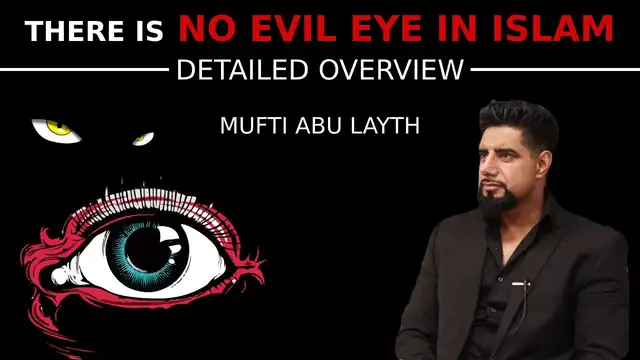 Play from 1:08:18
The video loads from YouTube only when you press play. Click a time in the transcript to seek.
Watch this part
Open on YouTube at 1:08:18The player starts at 1:08:18, the beginning of this part.
This segment1:08:18 to 1:12:11 · 3 min 53 sGeneral teaching
What this part covers
machinesummary, machine-writtenNo: it seeks refuge from the harm envious people act out and from the superstitious culture around magic, not from an evil eye. The Quran's silence on the evil eye is, to him, a sign of its truth.
In more detail
Mufti Abu Layth says it is a testimony to the Quran's truthfulness, which he finds miraculous, that it never mentions the evil eye even though it was the scientific belief of the age, and instead teaches that what is destined comes from Allah, not from hocus pocus. He says the envier in Surat al-Falaq refers to hasad, envy, not the evil eye: one seeks refuge from what envious people act out in malice, such as sabotaging one's property. Likewise, he says, the nightfall is not evil in itself but in what happens under it, and seeking refuge from those who blow on knots is from the whole superstitious culture associated with it, its sacrifices, harm, anxiety and stress, as Ibn Ashur writes.
Position stated
Mufti Abu Layth says that in Surat al-Falaq one seeks refuge from the harm envious people act out, not from an evil eye.
“it's the acting out that you're seeking refuge from”
Category: teaching
Kind: general teachingTranscript
machine1:08:18 to 1:12:11 · click a time to seek · dotted terms open the glossary
know why that that would even be appear because that is not really made oh because it's white skin it's so it's mentioned in some of the narrations his thigh is so white it's so sexually appealing i find this incredibly weird and then the result by the way the the cure is something which nobody practices anyway so if they're going to use this then they ought to be using the cure which nobody practices nobody says that the people with the iron meter they use all these kind of rituals as you heard hassan ali uh going on about spreading this superstition trying to say well this is what we do we
read uh 41 times or we read this number of times this particular thing which he even admits is not in any sunnah or from the quran or hadith but we've made it up and it seems to work it doesn't work it works because it's all in your mind to start off with so you're just playing tricks on yourself there's no reality to this and this is based really on the widespread belief of extra mission from the eyes which is false it's actually intermission and it is a testimony of the truthfulness of the quran wallahi i find these things miraculous
that the quran from that day and age could have so easily expressed that the evil eye existed it could have just said it don't give each other the evil eye or this is a cure from the evil eye because it was the widespread scientific belief of the age yet not once did the quran mention it and it actually contrasts it by trying to show you that actually a lies in control there is no hocus pocus allah says that look what is set for you is set for you it is from fate it is from destiny is not from these hocus pocus silly things
okay and using the verse hasidin it has first of all hasad is to do with jealousy and envy it is not the evil eyes not the in right so it is hasad envy and the hasidin you seek refuge from the hasid either the envious person when he becomes envious why because when envious people become envious what do they do they act out in malice they cause harm they jeopardize your things they sabotage your products or your uh properties or you know possessions that's what they do they it's the acting out that you're seeking refuge from
and hence allah from the darkness of the nightfall as it falls why what's so evil about the nightfall it's not the nightfall it's the things that happen as a consequence of the nightfall it's what happens as a consequence of the envy so okay i hope that makes uh a lot of sense means and those women who blow into not it's not the blowing into the knots that were the problem it was the evil that was associated with this whole phenomenon
the superstition the sacrifices they were making the harm that that was causing this whole ridden superstitious culture in society was what you were seeking refuge from it was not just women going blowing in not that somehow had some superpowers that could now cause you to drop dead that is just dumb that is stupid it was this whole culture that was associated and ibn ashur writes about that in history that it was the things associated with it as allah says
the night fall as it falls the darkness what's so evil about that people say oh but you're seeking is evil because allah said you seek refuge it's what's associated with it the scary stuff that comes with it it's not that it's what's associated with it the consequences the beliefs the superstitions the anxiety the stress all of these things the envy it's what's associated with it all of these things in that verse were to do with associations
okay i hope that makes sense
Paragraphs overlapping 1:08:18 to 1:12:11. Full text on the recording page.
Cite this segment
Stable id, transcript version and tier are part of the citation. Every change to a transcript is logged.Mufti Abu Layth Archive, segment 2020-11-15-S09, auto-transcribed, may contain errors. https://muftiabulayth.org/r/mnpgdvjs2nk/s/9/ (accessed 1 November 2026)
- APA 7
Mufti Abu Layth. (2020, November 15). Is Surat al-Falaq about protection from the evil eye? [Video, segment 2020-11-15-S09, auto-transcribed, may contain errors]. Mufti Abu Layth Archive. Retrieved November 1, 2026, from https://muftiabulayth.org/r/mnpgdvjs2nk/s/9/
- Chicago author-date
Mufti Abu Layth. 2020. "Is Surat al-Falaq about protection from the evil eye?" Video, segment 2020-11-15-S09, auto-transcribed, may contain errors. Mufti Abu Layth Archive. Recorded November 15, 2020. Accessed November 1, 2026. https://muftiabulayth.org/r/mnpgdvjs2nk/s/9/
- BibTeX
@misc{abulayth-2020-11-15-S09,
  author = {Mufti Abu Layth},
  title = {{Is Surat al-Falaq about protection from the evil eye?}},
  year = {2020},
  month = {11},
  date = {2020-11-15},
  howpublished = {\url{https://muftiabulayth.org/r/mnpgdvjs2nk/s/9/}},
  url = {https://muftiabulayth.org/r/mnpgdvjs2nk/s/9/},
  organization = {Mufti Abu Layth Archive},
  urldate = {2026-11-01},
  note = {Segment 2020-11-15-S09, auto-transcribed, may contain errors}
}
Something wrong here?
Tell us what is wrong and it will be checked against the recording. Nothing changes until a person has reviewed it.
Sending a note needs JavaScript, which is off or unavailable in this browser. Nothing has been sent.
No name, email address or account is asked for or stored, and the inbox does not store your IP address. For rate limiting it keeps an unreadable fingerprint of your connection for 48 hours, and our database provider's own logs record connections as every website's do. Only your note, its kind, the page and the moment in the recording are kept, for review.