
Recordings › Monday Nights with Mufti #199 | Q&A Unscripted & Unrestricted! 😉 | Mufti Abu Layth · 26 Jan 2021 › Segment 19 of 36
How did the BukhariGate discussion go on manuscripts and problematic hadith?
hadeeth ahadith ahaadeeth hadis hadees ahaadith tafsir tafseer exegesis tafasir tafaseer malik ibn anas malik bin anas imam maalik imam malik ibn anas imam bukhari sahih al-bukhari sahih bukhari saheeh al-bukhari saheeh bukhari imam al-bukhari imaam imams prayer leader muftis muhaddithun muhadith muhaddithin muhaddithoon hadith scholar koran quraan al-quran madinah madina al-madinah madeenah yathrib salafis salafism wahhabi wahabi wahhabism ulama ulema ulamaa al-din ad-deen ad-din religionHow the discussion went: manuscripts, a vowelling mistake, and the problematic reports
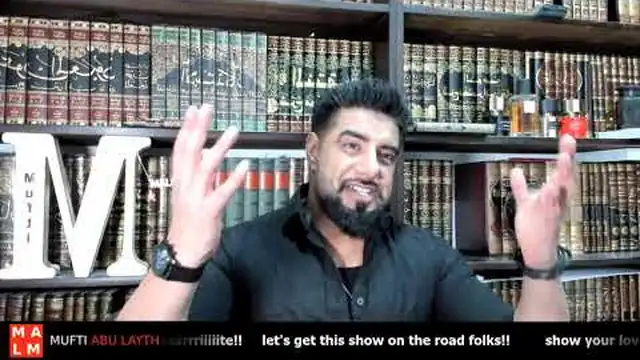 Play from 1:21:59
The video loads from YouTube only when you press play. Click a time in the transcript to seek.
Watch this part
Open on YouTube at 1:21:59The player starts at 1:21:59, the beginning of this part.
This segment1:21:59 to 1:32:28 · 10 min 29 sGeneral teaching
What this part covers
machinesummary, machine-writtenMufti Abu Layth says the guest did not contest the manuscript evidence, and that defending the problematic reports amounts to claiming the Prophet could err but al-Bukhari could not.
In more detail
Mufti Abu Layth says the discussion first covered how Bukhari should be regarded and then its epistemology, where he had expected more resistance from Dr Abdullah Abdul Majid [?] but found that he engaged and seemed to acknowledge the points; he adds that online critics such as Farid [?] do not know the complicated study of manuscripts and transmission. He explains his argument that hadith pass through isolated sources with bursts at a few powerhouse transmitters, that only about a dozen main manuscripts of Bukhari are relied on, and that editors choosing between variants shows someone transmitted erroneously. He recounts an anecdote told by a young Saudi Salafi about two students named Abdullah, one nicknamed after the dorms, and a class reading a Bukhari report about a handkerchief given to the Prophet, where one vowel reverses the meaning between rejecting and not rejecting it, a mistake that Fath al-Bari attributes to Ibn al-Sakan. On the content, he says the guest tried hard to defend reports he calls blasphemous and embarrassing, such as Moses running naked, the Prophet being bewitched and becoming clumsy, and the Prophet forgetting the Quran, and that any defender would struggle. He sums up that the defence amounts to saying the Prophet could forget and err in these ways but al-Bukhari could never have made a mistake, which he says proves his point.
- Some terms in this segment are uncertain
Position stated
Mufti Abu Layth says that defending reports in Bukhari which portray the Prophet as bewitched or forgetting the Quran amounts to claiming the Prophet could err but al-Bukhari could not, when errors in the book's transmission are far more likely.
“the prophet could forget the quran the prophet could be clumsy the prophet could forget surahs and verses the prophet could do all of these things but bukhari could never have made a mistake”
Category: method
Kind: general teachingTranscript
machine1:21:59 to 1:32:28 · click a time to seek · dotted terms open the glossary
in that even if it's five percent doubt but if it's doubtful in it reaching back to the imam then or some doubt in it then you need to be especially careful about those teachings that you find in it that um contradict reason or the quran or the prince or the principles of islam then because this has got some doubt in any way you need to walk away and that's what imam malik taught about the one-on-one narrations the isolated narrations they snatch the deen from you so that's the um that's what bugatti gate is now
our discussion with dr sab i went through a brief overview we initially kind of discussed what how do you treat bukhari what what how sorry how do you consider it is it something which is conclusive and and then from there the discussion followed into um the epistemology i didn't i i did think that before going live that dr saab was going to uh offer more resistance on the epistemology which i was prepared
for of course but there wasn't really any resistance which was quite surprising to me to me not that it's a problem it's i mean it's absolutely fine but i'm just saying i thought that there may be you know some a bit more of a um yeah a bit more of a pushback i guess against some things and i was intrigued how he would or anybody would give that kind of a push back because this thing on manuscripts and the transmissions you see it's very hard for people to learn it as well and even these people who go on like
farid gangutili and these people they they they don't know this stuff they don't know it and because it's very complicated and it's like you have to learn so much and you see and the more you learn i don't think they want to learn it as well but one it's hard anyway but the more you learn it it kind of creates doubt in the thing so but in this discussion dr didn't really um resist that he just kind of went um just kind of engaged it um seemed to acknowledge it which is fine i was trying to prove that look first of all
hadith comes to us through isolated sources they through these sources there is a uh what we can call a punctuated equilibrium that there's certain places where there's a burst okay and this burst happens with these kind of nexus points for these powerhouses they are these people that from them so it's coming along and then there's this burst this person is like this huge powerhouse that boosts out loads of you know loads of people take it from him that person is called a muslim okay somebody who's like a major he's this major person giving
these chains and and these major muslims for buhari who have it's their manuscripts that get relied on they you know there ain't that many there's probably over all this time i don't know like a dozen that's not that many considering you know it's been so long you know we're talking almost a thousand years now my point was demonstrating how there's been so much each they had along the way scholars have like they've they've taken a look at variants and then they've
chosen now if i'm looking at let's say i look at three variants and one of them disagrees and the other two say something one now i have to it's my call i have to make a call and then i say okay i'm going to choose this one over that one you see all three can't be right and that goes to show that one person is already transmitting something erroneous and it could be that sometimes it could be that maybe that person actually got it right you know i'm just saying you don't know i mean there's uh an interesting uh you know i digress but i'll mention it because it's beneficial there's a
story mentioned by a salafi actually contemporary i think he's quite young as well actually um what's his name he is something badget or something i don't know something budget but he's in saudi i i that's what i understood i've seen one two of his things on youtube it's interesting he gives a story and and that's the story is definitely interesting
you're doing it right so the he mentions the story of that in his uh when he used to study in i think medina university or wherever that there used to be these two abdullah that used to and they had similar names so whenever people would speak about them they'd get confused and say which one abdullah which abdullah you know this one or the one that and one of them used to live in the accommodation one of them used to live privately outside of the the kind of premises so what happened is they used to say oh
which abdullah you know oh the one who lives in the dorms oh no the one who lives out so they just shortened it eventually to because they say you know abdullah the uh you know the one who's in the second in the dorms or the one who's outside and then the one abdullah became abdullah ii so they just started calling abdullah dorms this is what they started calling him and then he says you know we start calling abdullah even the second like in arabic you know this son of but it doesn't mean son of but ibn it can mean of as well so they usually even dunya abnormal rocks and so on so even the second
we should call him ibn ii now even the second is also the famous muhaddith who transmits bukhari one of the students of now he gives this example he says once we were in class and we were reading a hadith and the hadith is in bukhari and it mentions that somebody hands the prophet a handkerchief just a casual hadith it says and it says
it says somebody gave him the handkerchief but he didn't want it and he says and our uh you know in the second abdullah in the second he said no don't you think it should be falam because the spelling would look the same yaruda is to return it reject it so the person saying they gave the handkerchief and the prophet didn't reject it you see now the meanings are entirely opposite here yeah now even though the orthograph the orthography is the same
now what's interesting is he says that when i i was reading in fat albari commentary and he says hua bis akun he didn't want it and he says he says that and ibn ii made a mistake when he said it was with the but obviously is talking about that in a second but uh you know this doctor says what a coincidence the guy saying here was also ibn sakhan and so the mistake is the same but i thought i'd just share that little story and
yeah so the the the whole point of why i'm trying to say this is that you see all these people can't be right so there's definitely people choosing and they could get it wrong you have to accept that right so that was the point on epistemology and how it reaches us and then we discussed uh themes the ontology of the of bukhari and here i think really this was an entirely a very slippery slope uh for for dr sabo or anybody who jumps you know on the field on the slope it's very difficult to maintain your balance
and sustain your position because the hadith are very blasphemous and they're ridiculing in nature and they're embarrassing you know the ones like moses running naked or the prophet touching women or the prophet being bewitched and becoming clumsy the prophet forgetting the quran and and these kind of things really denigrate from the honor of the prophets and yes so here dr saab did try to defend it he tried very hard uh was adamant about his positions but
i i think that it was embarrassing but i think it's embarrassing for anyone not because of dr sab himself but i think anybody who tries to defend these topics will struggle to do so immensely and to me i would sum it up by saying you see what it proves simply see it proves my point it really proves my point because what you're saying in essence is that you know the prophet could forget the quran the prophet could be clumsy the prophet could forget surahs
and verses the prophet could do all of these things but bukhari could never have made a mistake and you see there you go and with that i rest my case because in essence that's the argument that one walks away with that you know if the prophet of god you're saying could do these things isn't it more deserving that bukhari and these transcripts along the way in fraberi made these mistakes isn't that more obvious but uh yeah so that's the the summary of that but it was an amazing discussion and i'm very grateful to
Paragraphs overlapping 1:21:59 to 1:32:28. Full text on the recording page.
Cite this segment
Stable id, transcript version and tier are part of the citation. Every change to a transcript is logged.Mufti Abu Layth Archive, segment 2021-01-26b-S19, auto-transcribed, may contain errors. https://muftiabulayth.org/r/eokcnwggiba/s/19/ (accessed 1 November 2026)
- APA 7
Mufti Abu Layth. (2021, January 26). How did the BukhariGate discussion go on manuscripts and problematic hadith? [Video, segment 2021-01-26b-S19, auto-transcribed, may contain errors]. Mufti Abu Layth Archive. Retrieved November 1, 2026, from https://muftiabulayth.org/r/eokcnwggiba/s/19/
- Chicago author-date
Mufti Abu Layth. 2021. "How did the BukhariGate discussion go on manuscripts and problematic hadith?" Video, segment 2021-01-26b-S19, auto-transcribed, may contain errors. Mufti Abu Layth Archive. Recorded January 26, 2021. Accessed November 1, 2026. https://muftiabulayth.org/r/eokcnwggiba/s/19/
- BibTeX
@misc{abulayth-2021-01-26b-S19,
  author = {Mufti Abu Layth},
  title = {{How did the BukhariGate discussion go on manuscripts and problematic hadith?}},
  year = {2021},
  month = {1},
  date = {2021-01-26},
  howpublished = {\url{https://muftiabulayth.org/r/eokcnwggiba/s/19/}},
  url = {https://muftiabulayth.org/r/eokcnwggiba/s/19/},
  organization = {Mufti Abu Layth Archive},
  urldate = {2026-11-01},
  note = {Segment 2021-01-26b-S19, auto-transcribed, may contain errors}
}
Something wrong here?
Tell us what is wrong and it will be checked against the recording. Nothing changes until a person has reviewed it.
Sending a note needs JavaScript, which is off or unavailable in this browser. Nothing has been sent.
No name, email address or account is asked for or stored, and the inbox does not store your IP address. For rate limiting it keeps an unreadable fingerprint of your connection for 48 hours, and our database provider's own logs record connections as every website's do. Only your note, its kind, the page and the moment in the recording are kept, for review.