
Recordings › Monday Nights with Mufti #199 | Q&A Unscripted & Unrestricted! 😉 | Mufti Abu Layth · 26 Jan 2021 › Segment 16 of 36
How should I deal with the misogynistic things some scholars wrote about women?
ibn abi zayd al-qayrawani ibn abi zaid qayrawani al-risalah author al-qayrawani ibn abi zaid al-qayrawani al-bukhari imam bukhari sahih al-bukhari sahih bukhari saheeh al-bukhari saheeh bukhari imam al-bukhari salat al-janazah namaz-e-janaza janaza prayer janazah prayer funeral prayer maaliki malikite malikiyyah maliki school fatwah fatawa fatwaa fataawa legal opinion muftis shaytan shaitan shaytaan iblis iblees shayateen shayatin devil jahannam jahanam jahannum 'alim aalim ulama ulema ulamaa nikah nikkah nikaah nikah nama nikahnamaDisheartened by what scholars wrote about women: two feeds, and al-Qabisi's fatwa
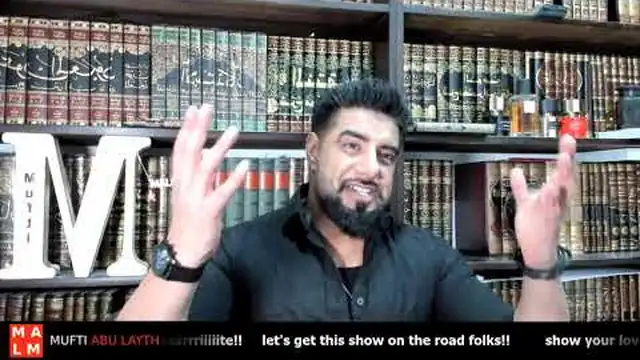 Play from 1:06:10
The video loads from YouTube only when you press play. Click a time in the transcript to seek.
Watch the answer
Open on YouTube at 1:06:10The player starts at 1:06:10, where the answer begins.
This segment1:06:10 to 1:15:25 · 9 min 15 sGeneral teaching
The answer in brief
machinesummary, machine-writtenDo not let contemporary misogynists hijack your Islam, and read past scholars' views on women as reflections of their own age, which do not confine Islam.
In more detail
A questioner says it is very disheartening to read some of the nonsense scholars have written about women. Mufti Abu Layth distinguishes two feeds: contemporary people who say misogynistic things, such as a figure whose clip he played the previous week [?], whom he finds strange for an intelligent, Harvard-educated man, and who should not be allowed to hijack one's Islam; and the traditional writings, which he says should be read more gently. Citing Jordan Peterson's reply to a feminist that men and women in the past were both barely surviving disease, poverty and war rather than men oppressing women, he says past scholars saw things as their world was, so their writings reflect the light of Islam in their age, as a reflection of the sun, without imprisoning Islam within them. As an example he reads a question put to al-Qabisi, the blind Maliki scholar of Qayrawan in modern Tunisia, a companion of Ibn Abi Zayd and a major transmitter of Bukhari manuscripts, about a man who married a woman for a dowry of seventy [?] dinars, paid thirty up front, and whose wife died before the marriage was consummated, where the whole discussion is whether he gets his money back. He jokes about how this reads today, and says that something written about a thousand years ago should not be used to judge one's understanding of Islam today.
Question as read aloud · questioner not identifiedI have read sometimes some of the nonsense scholars have written about women, and it is very disheartening.
- Some terms in this segment are uncertain
Position stated
Mufti Abu Layth says contemporary misogyny should not be allowed to hijack one's Islam, and that past scholars' writings about women reflect their own age and do not confine Islam, which each age reflects in its own way.
“when you read things of the past just know that this is their day and age this is not a reflection it doesn't um you know it doesn't capture or imprison islam within it”
Category: method
Kind: general teachingTranscript
machine1:06:10 to 1:15:25 · click a time to seek · dotted terms open the glossary
and tanasa equals satan and that's isaiah who's super chatting that shukran isaiah you're satan so people what is going on let's take a look at uh let me just do a quick check on what the can you guys just who ban who
um yeah karima says look mufti i've read sometimes some nonsense scholars have written about women it's very disheartening yeah it is and you know my advice to you is you know if people say if you read something or if you hear something so there's two two kind of um feeding um i don't know there's two feeds into this one is contemporary people and they're just you know people who are saying misogynistic things and stuff like that they're just mentally handicapped for some reason like we
played last week a clip of danny boy why and why he was very you know his hatred for women and i don't get why he hates women even though you know he's he's secularly educated and been to harvard and he's obviously you know he's intelligent you wouldn't have got through harvard if he's not intelligent but seems to be so weird as a person just hating and misogynistic and and i don't get that and you get people like that but remember these people are don't let them hijack your islam and then the other feed is traditional feed
now you know traditional you've got to go a bit easy on traditional because you have to remember that people in the past weren't doing this in a sense of hating on women today some people maybe i mean some people may have in the past but generally they weren't that generally it was just the way the world was the world was in that kind of way that they saw things very pragmatic they saw things very and everybody kind of accepted that and they you know the men accepted women except it wasn't this kind of thing like uh you know how uh jordan peterson says in one of these
um he says that to a particular feminist he says you know you you portray as though historically men have always been subjugating women and torturing them and punishing them and he says and that's just such a lie and a horrible thing to say to young women today because the truth is in the past that men and women were just barely surviving disease poverty you know all this kind of just just societal uh torture war pillage and it wasn't that the men in that place were trying to
suppress the women in that place it was just they were just trying to survive and the men were usually trying to provide food and which would have been very difficult as well in the past you know either if you didn't grow crops you had to trade or you had to hunt or you had to it's it's not what you see the point is it's not this thing of they were sitting around as some kind of oligarchs uh looking down on women in the past it's just the way the world was it's just nature like they just societies were that way and they saw it that way and it doesn't so when you read things of the past just
know that this is their day and age this is not a reflection it doesn't um you know it doesn't capture or imprison islam within it it's just the way they reflected the light of islam so islam you know it's like the sun shining and this is their reflection of it and in our day and age we've got a different thing to reflect the light that's coming from the sun and that's how it how it is and you know this
speaking of that i've got an example this is from uh hassan al-khabib you know the great he's he's uh he's a was a great scholar and questionably he was a maliki from north africa in around tunis modern day tunis and he's uh a a sidekick of uh ibn abi said al-qaeda but he's also one of the major people who transmits the uh bukhari who has the main manuscripts and i spoke about that in my book the muslims one of them is kabisi and he was blind uh as well for i think most of his life or or maybe all of his life but
definitely for a huge part but he has this masa this masala let me share this with you and he's asked about a person who marries a woman for uh 70 dinars so he's 17 gold pieces here for the so he paid up front
can mean money but also up front as well means he pays up front 30 dinars gold pieces but then the wife dies before he can consummate the marriage before he can take any uh pleasure in the relationship so so what's going on here so he says
um so the uh so who so he's kind of giving this lengthy response saying look did the father
prevent it um did he not allow him because if not and because the whole thing it's titled it's titled you see halakat zolja tohu that his wife has died before consummation you see the thing is the problem is if like if you read that now the whole discussion is that his wife has died but it's before any intimacy could happen so you're thinking well okay and then the whole discussion
is on does he get his money back [Laughter] so this is the whole that you know you're thinking well hmm she's died that's a problem but the greater problem you know i gave a uh i made a down payment on this one so [Laughter] awkward guys awkward but uh you know i know we're getting ready for the janaza but
hey don't want to sound like a party pooper but like okay we're getting ready for the janazah okay is it is it on your mind as well are you you know is it just me or we all thinking are we on a level here what's gonna happen about the maha that i've paid so now you know if you read that uh if you read that you would think look you know what the hell is this
but you see this was something being written about almost 1100 years ago about you know between a thousand to eleven hundred years ago even if you say a thousand years ago but that's still you see the world was a different place don't judge those peop don't judge today your understanding of islam if you read something like that that's just the day and age you know the guys you know saying yeah she died okay you know ah you know he's saying stuff happens i guess but
uh you know guess who still got the receipt [Laughter] he's like at the gynazah going whoa it's like almost missed out there but yeah so what is going on right some mufti you missed my super chat if from
Paragraphs overlapping 1:06:10 to 1:15:25. Full text on the recording page.
Cite this segment
Stable id, transcript version and tier are part of the citation. Every change to a transcript is logged.Mufti Abu Layth Archive, segment 2021-01-26b-S16, auto-transcribed, may contain errors. https://muftiabulayth.org/r/eokcnwggiba/s/16/ (accessed 1 November 2026)
- APA 7
Mufti Abu Layth. (2021, January 26). How should I deal with the misogynistic things some scholars wrote about women? [Video, segment 2021-01-26b-S16, auto-transcribed, may contain errors]. Mufti Abu Layth Archive. Retrieved November 1, 2026, from https://muftiabulayth.org/r/eokcnwggiba/s/16/
- Chicago author-date
Mufti Abu Layth. 2021. "How should I deal with the misogynistic things some scholars wrote about women?" Video, segment 2021-01-26b-S16, auto-transcribed, may contain errors. Mufti Abu Layth Archive. Recorded January 26, 2021. Accessed November 1, 2026. https://muftiabulayth.org/r/eokcnwggiba/s/16/
- BibTeX
@misc{abulayth-2021-01-26b-S16,
  author = {Mufti Abu Layth},
  title = {{How should I deal with the misogynistic things some scholars wrote about women?}},
  year = {2021},
  month = {1},
  date = {2021-01-26},
  howpublished = {\url{https://muftiabulayth.org/r/eokcnwggiba/s/16/}},
  url = {https://muftiabulayth.org/r/eokcnwggiba/s/16/},
  organization = {Mufti Abu Layth Archive},
  urldate = {2026-11-01},
  note = {Segment 2021-01-26b-S16, auto-transcribed, may contain errors}
}
Something wrong here?
Tell us what is wrong and it will be checked against the recording. Nothing changes until a person has reviewed it.
Sending a note needs JavaScript, which is off or unavailable in this browser. Nothing has been sent.
No name, email address or account is asked for or stored, and the inbox does not store your IP address. For rate limiting it keeps an unreadable fingerprint of your connection for 48 hours, and our database provider's own logs record connections as every website's do. Only your note, its kind, the page and the moment in the recording are kept, for review.