
Recordings › In Depth: Is Music allowed in Islam? | Mufti Abu Layth · 18 Sep 2019 › Segment 8 of 12
If obscene lyrics make music haram, what about the classical Arabic poetry taught in madrasas?
malik ibn anas malik bin anas imam maalik imam malik ibn anas imaam imams prayer leader shari'ah shariat sharee'ah muftis haraam forbidden mubah mubaah dalil daleel adillah adilla proof jinn djinn jinnat jinni shaytan shaitan shaytaan iblis iblees shayateen shayatin satan ayah aya ayat ayaat aayah aayat madinah madina al-madinah madeenah yathrib madrassa madaris madrassah religious school salam as-salamu alaykum assalamu alaikum salaam salaams salam alaykum wa alaykum as-salam peace greeting amanah amana amaanah amanat al-din ad-deen ad-dinObscene lyrics and classical Arabic poetry: Abu Nuwas, the Hamasa, Imru' al-Qais and the madrasa curriculum
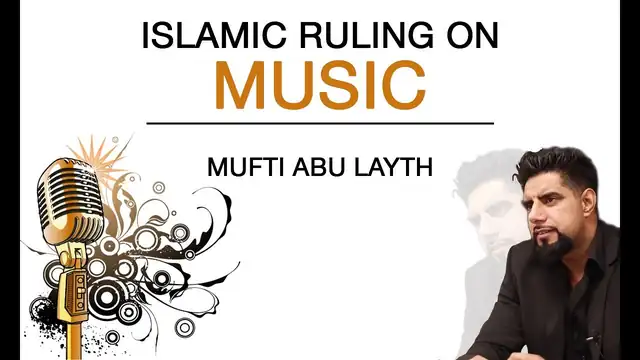 Play from 36:43
The video loads from YouTube only when you press play. Click a time in the transcript to seek.
Watch this part
Open on YouTube at 36:43The player starts at 36:43, the beginning of this part.
This segment36:43 to 48:15 · 11 min 32 sGeneral teaching
What this part covers
machinesummary, machine-writtenClassical Arabic poetry taught in every major madrasa, from Abu Nuwas to the Hamasa and Imru' al-Qais, is as full of violence, alcohol and sex as rap lyrics, so condemning rap on religious grounds is a double standard. Parents may set their own rules for their children without attributing them to God.
In more detail
The segment opens with the close of the certainty principle and Mufti Abu Layth's announcement that he will address lyrics, interrupted briefly by his young child. He says it is true that obscene content was transmitted within Islam: Muslim poetry from the pre-Islamic era through the Umayyad and Abbasid poets is full of violence, alcohol, sex, women, warfare and tribalism, and in essence is not very different from rap lyrics; poems boasting of butchering a tribe and cutting through crowds with swords differ little from boasts of gunning people down. Abu Nuwas, undisputed king of Arabic poetry in his era and rated among the best poets the early Muslims produced, devoted sixty to seventy percent of his verse to alcohol, another twenty-odd percent to homosexuality and the rest largely to women. The Hamasa of Abu Tammam, an anthology from pre-Islamic times onward, includes poems of warfare and killing and a poem praising a man as brave because, in the pre-Islamic belief, he was conceived when his mother was taken by force, and it is taught in most madrasas, including the one in Pakistan where Mufti studied. The Mu'allaqa of Imru' al-Qais, taught in every major institute, recounts his sexual escapades, including a line about visiting pregnant and nursing women at night and distracting them from their children, a line nobody omits. He asks how this is not obscene and calls it a double standard; he understands parents not wanting their children to hear about guns, drugs and sex, but says one need not religionise everything or rubber-stamp house rules with God's name: your children, your rules, without inventing a religious reason. To the comment that the poetry was recited as poetry rather than rapped, he answers that in essence the content is the same; he does not necessarily like it or want it taught to his children, but he does not have to lie or fabricate on behalf of Allah, nor pretend children will never encounter such things in this world.
Position stated
Mufti Abu Layth says classical Arabic poetry, such as that of Abu Nuwas, the Hamasa and the Mu'allaqa of Imru' al-Qais, is full of violence, alcohol and sex much like rap lyrics and is taught in major madrasas, so treating rap differently is a double standard, and parents may set their own rules without attributing them to God.
“so my question is today this it's it's a kind of form of double standards look I get it look I get the fact that you don't like something”
Category: teaching
Kind: general teachingTranscript
machine36:43 to 48:15 · click a time to seek · dotted terms open the glossary
Sharia alia teen liya Sewell in lobelia team when you have certainty it can only be removed by certainty now you'll start to understand why I consider a lot of things permissible because Allah has already made them permissible why don't I say they're Haram because I don't find the evidence to be at a level of certainty to remove that certainty this is my understanding of the Deen this is as transmitted by people like a barrage a lathe II from the great birth daddy Maliki's even a wise man dad and other people who transmit this through Imam Malik and the school of Medina and other methods as well adopt this so look you
can disagree with me but that's my understanding okay so just to clarify that secondly I want her thirdly I want to tackle the issue of this lyrics okay now somebody did say I was just looking if I had one of my texts here got the the devil herself enter she's coming back so right people that's my little one right so the thing is now Jojo look at these people they're not
I got it quickly well assalamualaikum if I didn't do that Coco Loco right now the thing is look so about lyrics so people said is this true
the lyrics the obscene lyrics have also been transmitted within Islam and the truth is sugar and sugar and people about the little one the devil's trust me if I was ever going to be convinced about possession it would be through them and especially the young one I wouldn't just believe it was any Jin I would believe it was the devil himself right so the thing is now coming back to this you see Muslim poetry has been is I
mean it's it is so God I mean what where do I start people it's got great stuff but it yes is full of themes about things like violence about things like alcohol about things like sex about things like women about warfare about tribalism it is full of this beginning from pre-islamic era right through to the Mahathir I mean you know those people who enter India Hylian and attained Islam whether it was after
the Prophet right through to the shore are the poets of the oh no II right and right through to the abbasid sharara right so the point is the show era of Islam they have transmitted so much poetry that is really no different from these kind of rap lyrics I mean it's I mean it's different but it's not it's very similar in essence so in their poems they begin by speaking about you know warfare a we battle this tribe we butchered them they fought us we've killed them ah
they couldn't stand the chance you should have seen our swords chopping them up you should have seen these as I cut through the crowds I mean how different is that to saying hey let we shot the people we gun them down and we shot how different is that it's not very different they speak endlessly about alcohol Muslim poetry is it's so rampant about alcohol people it's like look like from the Abbasid period like I will know us for example who is in his era the undisputed amongst the king of poetry in his time he is like at the top of Arabic
poetry in his era okay so when you're talking about a below us he is undisputed in Arabic poetry what is almost 70 percent of his poem or 60 to 70 percent of his poetry's about what alcohol okay and this is gonna be another shock so brace yourselves people brace brace what is the other like 20 maybe 20 percent twenty three twenty percent maybe twenty three if you depending on 60 to 70 what is another second largest chunk it's all about homosexuality okay and what's he's fighting that is true it's all about
homicide I would know ask his poetry is rampant about homosexuality non-stop and and what's the last bit okay about women so his poetry was non-stop about em is just about mainly about those things and then he's got some maybe some random poems in the his poetry is studied he is rated one of the top and best poets the early Muslims ever produced by the way so I will know us that's how rated years right so just to kind of clarify let's look at other people like you're going to say look at
the one on Hamas er okay the 1 Hamas ah by a boot Imam who kind of you know he once again somebody who compiles poetry from J Hilley tines right up until you know his time he's collecting poems what he thinks are some of the best and they include poems about I mean they they'll have good poems in there but poems about bravery poems about warfare poems about killing poems about rape yes point one of his poems in these very in fact when you see some of the early pre-islamic
Arabs had this concept that that if a woman was kind of taken by like as in if if she conceived through force that the child would be born extremely brave so like if if the if if during conception she was raped in raped it doesn't have to be in it was rape but it doesn't have to be like they'd kidnapped her and taking her away it she could be somebody that that he know so for example it could be her boyfriend her husband whoever it is but if he takes her by
force that if she conceives he that will be a brave kind of ruthless child that's a boy that's what the Arabs believed yeah in a lot of the Arabs pre-islamic this is pre-islamic so he's transmitting that poem about the person look at him is such a dawn he's so brave and he was born when he was you know when he was conceived his mother was taken by force she was raped and decent and he's saying out of pride they you know she was this is how it was done and this point they were no Hamas a is taught in most mattresses I mean we studied in our mother for God's sake in Pakistan so
these poems which I'm telling you or not the every single major Institute that within the Islamic world today teaches these poems the mullah part of umbral case the unlock are taught in most major institutes in rural taste what is he talking about look oh when I went here it is kind of like most of them are just his you know he's his sexy sex cepes sexcapades or whatever he's kind of escapades on sex and he's talking about oh look I went here got away from this tribe and I Nene I got to this woman and I got there and I got this and and he
says in his what's that line is this line where he say so and I got away from people like nobody I made sure nobody could see me and and and he says what miss looky table or miss look II hope Allah cut the rock to a murder him but I'll hate to her anvita my him and he Tamar Willie so I the he says and how many pregnant women like you and nursing mothers have I come to at night and he says how many of them have accompanied like he's I can't even count how many kind of women I've been into that enough had to go to
that were pregnant already not his own women he's talking about other people's women and he says and I distract them from their child because and the thing is this this is transmitted in every sport in every madrasah it's taught in every reliable mantra sir that carries any weight if you want to study the Arabic language and mastery you will study these things so the point is how is this not obscene and people say oh but that's okay because you know here you're just learning it for mastery of the Arabic language well if that's the point why couldn't they omit that line they could omit that line and transmit the rest but
they don't they transmit it as it and they didn't have a problem with this you know so my question is today this it's it's a kind of form of double standards look I get it look I get the fact that you don't like something I get that like so for example a people I've got children they don't want their children to be listening to kind of like all about gun slinging drugs you know sex rock and roll whatever this kind of stuff they don't want to be they true learn to be listening to that and that's good that's fine there's nothing wrong with that but you don't have to
religion eyes everything okay you don't have to like look you can say I don't want my children to be awake after nine o'clock you don't have to now say God said so you could just do it it's look at your kids just do it handle it you know you don't need to turn everything into you don't need to rubber-stamp it signed like gee the big G the thing is you don't need to do that just look your children your rules you know people don't want their children to do certain things that's fine you know like if your
child didn't go to university or didn't go to didn't do something let's say he wasn't working he wasn't doing I don't know like whatever it is you could get upset let's say your child is you don't need to find a religious reason to get upset just just deal with it so that's my my point okay so Islamic the reason I was saying that is that and somebody said that that somebody had made a comment about you see the poetry that was read was kind of read like poetry and it wasn't done in this kind of this
kind of I don't know this kind of like rapping or hip-hop or that kind of mode but the question is what's the difference in essence what is the difference the content is the same okay the content is not very and I'm not saying the content has to be something we like it's not I mean I don't necessarily I'm not saying I like that or I would want you know like to teach that to my children or I would want them to be I wouldn't probably I wouldn't want that as a parent but the point is I don't have to lie to do that I could say look I don't like it I want you to have a certain at least in front of me I would want my children to have a certain
Paragraphs overlapping 36:43 to 48:15. Full text on the recording page.
Cite this segment
Stable id, transcript version and tier are part of the citation. Every change to a transcript is logged.Mufti Abu Layth Archive, segment 2019-09-18-S08, auto-transcribed, may contain errors. https://muftiabulayth.org/r/axxub9lxfoc/s/8/ (accessed 1 November 2026)
- APA 7
Mufti Abu Layth. (2019, September 18). If obscene lyrics make music haram, what about the classical Arabic poetry taught in madrasas? [Video, segment 2019-09-18-S08, auto-transcribed, may contain errors]. Mufti Abu Layth Archive. Retrieved November 1, 2026, from https://muftiabulayth.org/r/axxub9lxfoc/s/8/
- Chicago author-date
Mufti Abu Layth. 2019. "If obscene lyrics make music haram, what about the classical Arabic poetry taught in madrasas?" Video, segment 2019-09-18-S08, auto-transcribed, may contain errors. Mufti Abu Layth Archive. Recorded September 18, 2019. Accessed November 1, 2026. https://muftiabulayth.org/r/axxub9lxfoc/s/8/
- BibTeX
@misc{abulayth-2019-09-18-S08,
  author = {Mufti Abu Layth},
  title = {{If obscene lyrics make music haram, what about the classical Arabic poetry taught in madrasas?}},
  year = {2019},
  month = {9},
  date = {2019-09-18},
  howpublished = {\url{https://muftiabulayth.org/r/axxub9lxfoc/s/8/}},
  url = {https://muftiabulayth.org/r/axxub9lxfoc/s/8/},
  organization = {Mufti Abu Layth Archive},
  urldate = {2026-11-01},
  note = {Segment 2019-09-18-S08, auto-transcribed, may contain errors}
}
Something wrong here?
Tell us what is wrong and it will be checked against the recording. Nothing changes until a person has reviewed it.
Sending a note needs JavaScript, which is off or unavailable in this browser. Nothing has been sent.
No name, email address or account is asked for or stored, and the inbox does not store your IP address. For rate limiting it keeps an unreadable fingerprint of your connection for 48 hours, and our database provider's own logs record connections as every website's do. Only your note, its kind, the page and the moment in the recording are kept, for review.