
Recordings › Are tattoos haram? | Mufti Abu Layth · 1 Oct 2020 › Segment 1 of 1
Are tattoos haram, and can I work as a tattoo artist?
tafsir tafseer exegesis tafasir tafaseer maaliki malikite malikiyyah muftis halaal lawful haraam forbidden mubah mubaah risala ar-risalah risalah of ibn abi zayd ulema ulamaa deen al-din ad-deen ad-dinTattoos in the Maliki school, and whether tattooing is a halal job
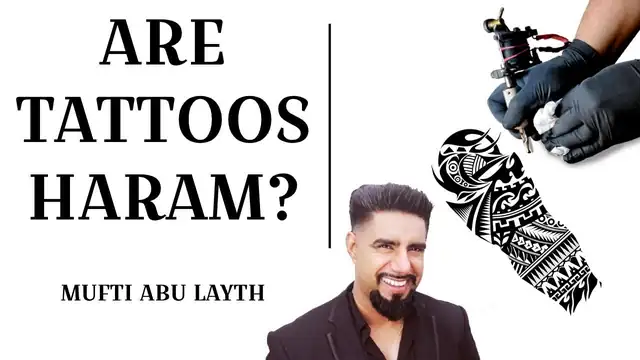 Play from 2:01
The video loads from YouTube only when you press play. Click a time in the transcript to seek.
Watch this part
Open on YouTube at 2:01The player starts at 2:01, the beginning of this part.
This segment0:01 to 8:18 · 8 min 17 sGeneral teaching
What this part covers
machinesummary, machine-writtenSome Maliki scholars held tattoos permissible on the body, forbidding them only on the face because of harm, and being a tattoo artist is not haram by default.
In more detail
Mufti Abu Layth says he will do a full session on tattoos and looks for a commentary on al-Risalah [?] that he had read in a PDF. He says al-Zanati [?] of the Malikis writes that tattoos are not haram except on the face, because of harm, and were simply permissible on the body, and that al-Qarafi [?] argues against calling tattoos a changing of God's creation when done for beauty. He responds to a clip in which some people mocked his view, saying aesthetic tattooing is a modern trend: tattoos were first used to brand slaves, then as tribal marks among peoples such as the Amazigh and the Zanata tribe, whose scholars gave these fatwas. Asked whether being a tattoo artist is halal, he says it is not haram by default and depends on what is done. He ends with a brief comment on a chat remark about another person's view on tattoos.
- Some terms in this segment are uncertain
Position stated
Mufti Abu Layth says being a tattoo artist is not haram by default.
“so is being a tattoo artist a halal occupation yeah i mean it's not haram by default”
Category: ruling
Kind: general teachingTranscript
machine0:01 to 8:18 · click a time to seek · dotted terms open the glossary
but yeah you know tattoos it's interesting because i'm gonna do a whole thing on tattoos right so this uh standard edition of the resale but it's got ibn mansour
his kind of his addition adages to it where he kind of comments and speaks and this is the result of ibn
[Music] hmm you see now [Music] all right so in this hmm they don't seem to have the well i was reading yesterday the uh pdf version and i was hoping it was going to be in my hard copy as well um it doesn't seem to be here actually um let me just check i mean the issue is here but his commentary on it
isn't so in uh so even he mentions but it's known anyway that even uh that zanati from the malikiah uh writes that look that tattoos are not haram that they say them only in the face and that too because of the harm and things like this that it could cause but on the body they felt that it was just just permitted it was just permitted it was just permissible full stop and and this you see it's nothing strange from the maliki's
even karafeen is the hera he argues that look i that how do people uh critique this thing of like how do they say tattoos are changing the creation of god because he says it doesn't because what if it's for beauty how is that changing what if it's for a like he says that they're arguing that this is always a mutation and i'll have to refute this next week properly because i'll bring the clip i did have the clip but i forgot to um bring it up that there was um a discussion somebody sent me by the mad mom looks who were
discussing and they bring me up so somebody had sent me the clip that some they're speaking about tattoos and one of them you know they say one of them says you know abu leith says and they go hahaha and they go oh don't mention rahim you know if we listen to him then we have to believe everything he says which is like the dumbest thing i just heard oh let me get that right we listen to him then we have to believe everything he says and you guys are discussing religion [Laughter] and then on top of that um
so the person asks that yeah but i'm just saying if we just listen to abu leith says here can we respond to it so one of them says you know so he asked the question that were tattoos ever a symbol of beauty because in my clip on tattoos on youtube i highlight that this is not a historic trend people you know this thing of using tattoos for beautification or aesthetic purposes is a very modern trend people did have tattoos it was initially to kind of uh it was for branding slaves that's what it was for so it was initially something to to possess ownership like the way they
owned animals and cattle and they would place these kind of tattoo these marks on them they would do that on slaves so it was seen as something tarnishing one's reputation then tattoos do emerge as tribal practices so women sometimes and some of the like the berber tribes and hence you know the zanates and these people the scholars that gave those fatwas they were from the amaziah you know one of the major tribes of the amazir is the zanata tribe so which breaks off into many other kind of sub tribes so you see how these all am i
accommodated for their own people because they saw that this isn't um and the point is one of these guys in that clip says oh yeah you know the women did in the past they had tattoos on their chin which were the tribal kind of marks and that was the super hot thing of that day and age because that was like so hot [Laughter] a cha-cha-cha
that was the super hot thing was it what these green dots that was the wow that was these tribal things were not um they were done as something kind of it might have been mischievous or it might have been something tribal or but it wasn't maybe doing a kind of beauty spot might have been seen as beauty but doing these kind of like dots on the hands and the dots was not really a sign of beauty it was more a tribal kind of thing and many of the malakia allowed it so you know if you have a problem with that
that's fine nobody's telling you to accept it but to assume that you see it's the ignorance that not knowing that other ulama have given these rulings and well but then it's not majority anymore [Laughter] before your dad came and established a democracy in islam [Laughter] because you see those rulings are pre you know before your dad's arrival who kind of obviously democratized islam
and said from here from here forth all rulings will be uh selected democratically so yeah right what is going let's take some um so is being a tattoo artist a halal occupation yeah i mean it's not haram by default obviously what people do with tattoos and how they do them and where they do them is like anything you know it's it deals with the things it deals with but just by somebody who gives you know who is a tattooist it doesn't make them haram
okay so somebody said that ahmad said okay harmony does say tattoos or okay wow i'm uh that's okay that's you see we're more alike than we than i thought because i would think that he wouldn't say you see i would assume if you were to ask me that i don't think he would believe it's haram but i don't feel he would address it because i feel that it might just rattle the cage unnecessarily and it's not what he's his kind of thing so yeah
Paragraphs overlapping 0:01 to 8:18. Full text on the recording page.
Cite this segment
Stable id, transcript version and tier are part of the citation. Every change to a transcript is logged.Mufti Abu Layth Archive, segment 2020-10-01-S01, auto-transcribed, may contain errors. https://muftiabulayth.org/r/woyx5hifsvg/s/1/ (accessed 1 November 2026)
- APA 7
Mufti Abu Layth. (2020, October 1). Are tattoos haram, and can I work as a tattoo artist? [Video, segment 2020-10-01-S01, auto-transcribed, may contain errors]. Mufti Abu Layth Archive. Retrieved November 1, 2026, from https://muftiabulayth.org/r/woyx5hifsvg/s/1/
- Chicago author-date
Mufti Abu Layth. 2020. "Are tattoos haram, and can I work as a tattoo artist?" Video, segment 2020-10-01-S01, auto-transcribed, may contain errors. Mufti Abu Layth Archive. Recorded October 1, 2020. Accessed November 1, 2026. https://muftiabulayth.org/r/woyx5hifsvg/s/1/
- BibTeX
@misc{abulayth-2020-10-01-S01,
  author = {Mufti Abu Layth},
  title = {{Are tattoos haram, and can I work as a tattoo artist?}},
  year = {2020},
  month = {10},
  date = {2020-10-01},
  howpublished = {\url{https://muftiabulayth.org/r/woyx5hifsvg/s/1/}},
  url = {https://muftiabulayth.org/r/woyx5hifsvg/s/1/},
  organization = {Mufti Abu Layth Archive},
  urldate = {2026-11-01},
  note = {Segment 2020-10-01-S01, auto-transcribed, may contain errors}
}
Something wrong here?
Tell us what is wrong and it will be checked against the recording. Nothing changes until a person has reviewed it.
Sending a note needs JavaScript, which is off or unavailable in this browser. Nothing has been sent.
No name, email address or account is asked for or stored, and the inbox does not store your IP address. For rate limiting it keeps an unreadable fingerprint of your connection for 48 hours, and our database provider's own logs record connections as every website's do. Only your note, its kind, the page and the moment in the recording are kept, for review.