
Recordings › Are Mortgages & Bank Loans Haram? - Mufti Abu Layth · 19 Oct 2017 › Segment 12 of 13
Is an Islamic mortgage any different from a conventional mortgage?
maaliki malikite malikiyyah muftis ribaa sood usury jahannam jahanam jahannum koran quraan al-quranConclusion: not Quranic riba; Islamic mortgages as a play on words; Umar and the jizya called a gift
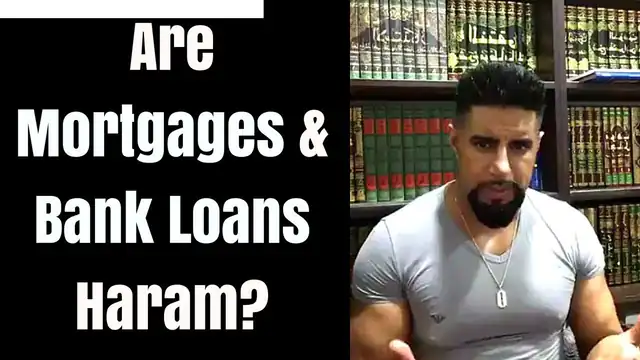 Play from 53:15
The video loads from YouTube only when you press play. Click a time in the transcript to seek.
Watch this part
Open on YouTube at 53:15The player starts at 53:15, the beginning of this part.
This segment51:45 to 56:42 · 4 min 57 sGeneral teaching
What this part covers
machinesummary, machine-writtenMortgages and bank loans today are not the riba the Quran condemns, in Mufti Abu Layth's understanding. Islamic mortgages are the same thing under another name, a loophole the Maliki school has never liked, as Umar said of the jizya renamed a gift.
In more detail
Mufti Abu Layth concludes that, taking all these elements into account, he does not feel that mortgages or loans taken from banks today are what the Quran is speaking about, saying people may disagree but that in his understanding it is categorically a different narrative: the Quran addressed an extremely oppressive loan-shark culture, which exists today only as a rarity. He says that to him a conventional mortgage and an Islamic mortgage are the same thing, that so-called Islamic mortgages are just mortgages dressed up in buying, renting and shares, a play on words he dislikes, and that the Maliki school has never liked the attitude of creating loopholes to trick God. He tells the story of Umar ibn al-Khattab and a non-Muslim provincial ruler who, finding the name jizya denigrating, offered to pay the same amount at the same time under the name hadiyya, a gift; Umar wrote back that it is the jizya, call it what you will, just send it on time, which Mufti admires as swagger. He says likewise that one can call it an Islamic mortgage or do gymnastics, but the whole banking system is new, with its promise of tomorrow and its safety structures, and is not a loan-shark culture.
Position stated
Mufti Abu Layth holds that conventional mortgages and bank loans are not the riba the Quran condemns, and that so-called Islamic mortgages are the same thing under another name, a play on words of the loophole kind the Maliki school has never liked.
“To me, a conventional mortgage and Islamic mortgage or whatever mortgage are all the same in my understanding.”
Category: ruling
Kind: general teachingTranscript
machine51:45 to 56:42 · click a time to seek · dotted terms open the glossary
Two, what they're saying is we wouldn't Look, they need obviously this whole culture, this imaginative reality works on motivation, which works on self-interest. So, coming back to Adam Smith, they need that pursuit of some self-interest to be motivated to generate this greater dream of a more prosperous tomorrow.
So, what I'm trying to say and then on top of that, you are not the person taking. You are not the person of greed saying, "Ha, I want to consume people's money." You are giving. So, when you do all of these things, I mean, sorry, when you take into consideration all of these elements, I do not feel that the mortgages or loans that are taken from banks today are what the Quran is speaking about.
Now, you can disagree with me. By all means. But in my understanding, this is categorically a different narrative. This is an extremely immensely oppressive loan shark kind of culture that it's addressing. And it's addressing where it's not just even I know loan sharks do exist even in this part of the world, but they're an extreme rarity, but with un- like unlimited consequences.
So, that is what the Quran was condemning with so much kind of um with so much passion, if you like, when it declared war on riba. So, I hope that's of some help in explaining why riba, in my understanding, does not does not kind of include these things.
To me, a conventional mortgage and Islamic mortgage or whatever mortgage are all the same in my understanding. Right? I I wouldn't uh I mean, I wouldn't necessarily view Obviously, if people want to go with the uh you know, they want to go with what they call Islamic mortgages. To me, Islamic mortgages are exactly They're just mortgages. Like what It's just a play on words.
And I don't like that. The Maliki method has never liked that kind of attitude of trying to create loopholes and trying to kind of trick God. I I don't like I mean, I've got nothing against them, but I see as just that. Like, oh, they're saying a mortgage, you're doing this. Oh, you know, you're buying it for me, you're renting it to me, I'm buying shares. Look, come on.
Everybody knows. You know, just call a spade a spade. Like, you see, all I'm doing is I'm just saying, "Look, a spade is a spade. This is the banking system. Call it whatever you want. You know, it's like Sayyidna Umar radiyallahu anhu in his time, he had an issue with one of the the kind of neighboring dynasties.
They weren't Muslim. And uh they were Roman. And there was one of the provinces refused to pay his taxes to him. And what happened is Sayyidna Umar said to him that we have this agreement. And by breaking this covenant between us, it's seen as a declaration of war. Would you want to do that? Why why would you want to do And that person said, "Look, I have no harm. I have no issue in paying you." He said that what it is is calling this jizya, calling this an Islamic kind of taxation, I find it denigrating.
My people insult me. So, how about you can take this same money from me. It will come at the same time of the year. It will come in the same quantity. But we will not call it jizya. We will call it hadiya. That this is a hadiya. This is a gift. Okay. So, this is what he said to Sayyidna Umar.
Sayyidna Umar just wrote back to him, "Look." He said to him, "Send it on time." I said, "Done. I said, "Done." He said to him, "Send it on time." He said, "Hiyal jizya." Sammuha ma shi'ta. He said, "It is the jizya. It is the tax. Call it whatever the hell you want.
I don't give a damn." Like he said, "Just make sure it's on time." I like it. That's the a style. That's the style, the swagger in the conduct. Now, you see, look, I'm saying, "Look, let's just be real. The whole system has changed. Now, you can call this Islamic mortgages or you can call it this.
That's one way of trying to bend and do gymnastics. I'm just saying, "Look, the whole day and age has changed. Where we live, the whole banking system has I mean, there there was no such thing as a banking system. The whole thing has been created. That there's a promise of tomorrow, there's this, there's that, there's safety structures. It's not loan shark kind of culture. So, I don't feel it to be the same.
Paragraphs overlapping 51:45 to 56:42. Full text on the recording page.
Cite this segment
Stable id, transcript version and tier are part of the citation. Every change to a transcript is logged.Mufti Abu Layth Archive, segment 2017-10-19-S12, auto-transcribed, may contain errors. https://muftiabulayth.org/r/ucdrblygy70/s/12/ (accessed 1 November 2026)
- APA 7
Mufti Abu Layth. (2017, October 19). Is an Islamic mortgage any different from a conventional mortgage? [Video, segment 2017-10-19-S12, auto-transcribed, may contain errors]. Mufti Abu Layth Archive. Retrieved November 1, 2026, from https://muftiabulayth.org/r/ucdrblygy70/s/12/
- Chicago author-date
Mufti Abu Layth. 2017. "Is an Islamic mortgage any different from a conventional mortgage?" Video, segment 2017-10-19-S12, auto-transcribed, may contain errors. Mufti Abu Layth Archive. Recorded October 19, 2017. Accessed November 1, 2026. https://muftiabulayth.org/r/ucdrblygy70/s/12/
- BibTeX
@misc{abulayth-2017-10-19-S12,
  author = {Mufti Abu Layth},
  title = {{Is an Islamic mortgage any different from a conventional mortgage?}},
  year = {2017},
  month = {10},
  date = {2017-10-19},
  howpublished = {\url{https://muftiabulayth.org/r/ucdrblygy70/s/12/}},
  url = {https://muftiabulayth.org/r/ucdrblygy70/s/12/},
  organization = {Mufti Abu Layth Archive},
  urldate = {2026-11-01},
  note = {Segment 2017-10-19-S12, auto-transcribed, may contain errors}
}
Something wrong here?
Tell us what is wrong and it will be checked against the recording. Nothing changes until a person has reviewed it.
Sending a note needs JavaScript, which is off or unavailable in this browser. Nothing has been sent.
No name, email address or account is asked for or stored, and the inbox does not store your IP address. For rate limiting it keeps an unreadable fingerprint of your connection for 48 hours, and our database provider's own logs record connections as every website's do. Only your note, its kind, the page and the moment in the recording are kept, for review.