
Recordings › Monday Nights with Mufti Abu Layth #176 *Q&A Unscripted & Unrestricted!* 🤣 · 4 Aug 2020 › Segment 23 of 31
Is it haram to show the Prophet in a movie?
muftis haraam koran quraan al-quran ulama ulema ulamaa ibadah ibada ibaadah ibadatShould prophets be depicted in films?
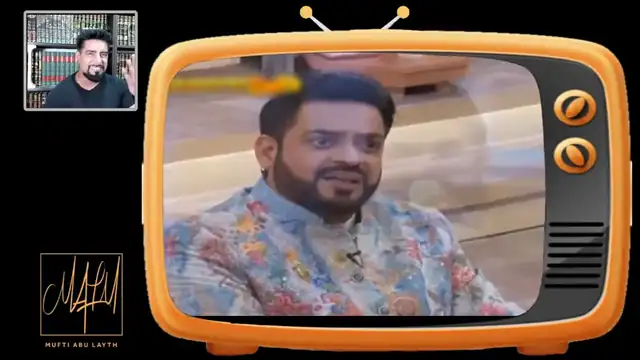 Play from 1:55:38
The video loads from YouTube only when you press play. Click a time in the transcript to seek.
Watch the answer
Open on YouTube at 1:55:38The player starts at 1:55:38, where the answer begins.
This segment1:55:05 to 2:00:05 · 5 minGeneral teaching
The answer in brief
machinesummary, machine-writtenMufti Abu Layth says Muslims should never depict the Prophet in films, mainly from common sense about the reaction; non-Muslim depictions need not upset Muslims.
In more detail
Asked about prophets being depicted in movies, Mufti Abu Layth says nothing in the Quran clearly forbids drawing the Prophet, contrary to what people think; images were not a big part of early Arab culture. Mufti explains that scholars prohibited it because any depiction of someone never seen is a false representation and so ascribes a falsehood to him, not mainly from fear that Muslims would worship him. Mufti says acting him out is likewise not a true representation and, given Muslim sensitivities, would trigger a storm and could even get an actor killed, so from common sense it should never be done; if non-Muslims do it, Muslims need not get worked up, but Muslims should not enact him in a film.
Question as read aloud · questioner not identifiedWhat is your opinion on prophets being depicted in movies?
Position stated
Mufti Abu Layth says that, as Muslims, we definitely should not enact the Prophet in a movie.
“but as Muslims we shouldn't and as Muslims we shouldn't definitely shouldn't um kind of enact him like that in a movie”
Category: ruling
Kind: general teachingTranscript
machine1:55:05 to 2:00:05 · click a time to seek · dotted terms open the glossary
How do you I wouldn't even know where to begin honestly with certain parts of the world. I just hope that their impact is is really you know an absolute minimum to this part of the world and Muslims in the west and even Muslims over there. I hope they can see through this kind of BS. But I felt that was uh so important to really highlight.
But yeah, right. I'm just checking. Was there anything I didn't? Right. So, all right. All right. Right. Let's take a few questions. Amina and Ilas has super chatted Shukran for um your opinion on prophets being depicted in movies. right now. You see,
you see from an Islamic perspective, from a ruling's perspective, drawing the prophet and things like this, there's nothing to actually say that that is actually forbidden. But from a clear perspective in the Quran, contrary to what people think, people think that it's actually so clear it isn't. But it's just that because the initial movement of Islam was against statues and drawings weren't really a big culture amongst Arabs, early Arabs.
It wasn't. They were there. So inside the Kaa they did have paintings and they had a painting most likely of Jesus and Mary but they the paintings weren't a big thing. So the so there wasn't this culture. Now, Muslims generally feel as a belief value that we should not depict the prophet or sorry, we should not describe the prophet in a way that is unbefitting or ascribe or like like so for example if a person just says something rude
about the prophet. So to Muslims to us the prophet sallallahu alaihi wasallam is of a highest m and we don't speak like about him in that way. Now from there comes this understanding that okay if we if people were to draw him how would you draw him because we've never actually seen him. So whatever drawing you have um it would not be a true reflection of him. And the fact that it's not true, it then by default in a binary world is then a falsehood because it's a false depiction of him.
Because it's then false, it is then ascribing a lie onto the prophet. So this is the angle how scholars said this was haram. when they said it was from this angle. It wasn't I mean there was the other thing as well that they didn't want Muslims to start worshiping but to be honest Muslims wouldn't start generally worshiping the prophet that I don't think that would happen generally speaking anyway but more so it was this angle that because if you draw the prophet or make a picture or sorry a statue of him whatever you make will be a false representation of him because you've never seen him.
So in essence you're ascribing falsehood to him even though it's not to his teachings but it's to him and thereby it's prohibited from that angle. So you need to understand where the kind of legal reasoning the Islamic legal reasoning is coming in. It's not coming in from it's often presented that oh if you drew a picture of the prophet everybody will start worshiping him. It makes Muslims sound a bit dumb [laughter] which is not really the reason why the Muslim scholars said don't draw the picture of the pro.
Now similarly about acting you see the problem is um one it's that that because obviously it's not the prophet it's an actor the representation is not a real representation. Um the other thing is due to the sensitivities how sensitive Muslims are towards the the character of the prophet sallallahu alaihi wasallam I would say this definitely should not be done because it will trigger an a tsunami of a storm and it would not be welcomed by any measure and in fact it would cause such an adverse reaction.
I wouldn't be surprised if somebody acted as a prophet and then somebody like this Khaled Khan or whoever we spoke of goes and kills him. So I would definitely definitely say that preemptively these things should never be done. Never ever. But I've given you the the kind of reasoning behind it but I'm now giving you my common sense perspective.
Never should this be done that somebody should depict or should they as Muslims if non-Muslims do it that's like if they drew the prophet there's you know obviously it's not the prophet we don't need to get all about it but as Muslims we shouldn't and as Muslims we shouldn't definitely shouldn't um kind of enact him like that in a movie that is um Mui what are your thoughts on Miy Adam Koseri from Leicester.
Paragraphs overlapping 1:55:05 to 2:00:05. Full text on the recording page.
Cite this segment
Stable id, transcript version and tier are part of the citation. Every change to a transcript is logged.Mufti Abu Layth Archive, segment 2020-08-04-S23, auto-transcribed, may contain errors. https://muftiabulayth.org/r/tr4-gh0qez4/s/23/ (accessed 1 November 2026)
- APA 7
Mufti Abu Layth. (2020, August 4). Is it haram to show the Prophet in a movie? [Video, segment 2020-08-04-S23, auto-transcribed, may contain errors]. Mufti Abu Layth Archive. Retrieved November 1, 2026, from https://muftiabulayth.org/r/tr4-gh0qez4/s/23/
- Chicago author-date
Mufti Abu Layth. 2020. "Is it haram to show the Prophet in a movie?" Video, segment 2020-08-04-S23, auto-transcribed, may contain errors. Mufti Abu Layth Archive. Recorded August 4, 2020. Accessed November 1, 2026. https://muftiabulayth.org/r/tr4-gh0qez4/s/23/
- BibTeX
@misc{abulayth-2020-08-04-S23,
  author = {Mufti Abu Layth},
  title = {{Is it haram to show the Prophet in a movie?}},
  year = {2020},
  month = {8},
  date = {2020-08-04},
  howpublished = {\url{https://muftiabulayth.org/r/tr4-gh0qez4/s/23/}},
  url = {https://muftiabulayth.org/r/tr4-gh0qez4/s/23/},
  organization = {Mufti Abu Layth Archive},
  urldate = {2026-11-01},
  note = {Segment 2020-08-04-S23, auto-transcribed, may contain errors}
}
Something wrong here?
Tell us what is wrong and it will be checked against the recording. Nothing changes until a person has reviewed it.
Sending a note needs JavaScript, which is off or unavailable in this browser. Nothing has been sent.
No name, email address or account is asked for or stored, and the inbox does not store your IP address. For rate limiting it keeps an unreadable fingerprint of your connection for 48 hours, and our database provider's own logs record connections as every website's do. Only your note, its kind, the page and the moment in the recording are kept, for review.