
Recordings › Imam Abu Hanifa and The Young Drunkard | Mufti Abu Layth · 7 Mar 2015 › Segment 1 of 1
How did Abu Hanifa deal with his drunkard neighbour?
imaam imams prayer leader muftis makruh makrooh makruh tahrimi makruh tanzihi jahannam jahanam jahannum ulama ulema ulamaa deen al-din ad-deen ad-dinAbu Hanifa and his drunkard neighbour: good character carries the message
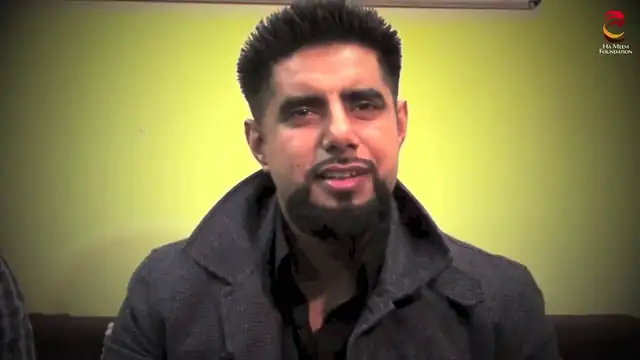 Play from 0:01
The video loads from YouTube only when you press play. Click a time in the transcript to seek.
Watch this part
Open on YouTube at 0:01The player starts at 0:01, the beginning of this part.
This segment0:01 to 4:56 · 4 min 55 sGeneral teaching
What this part covers
machinesummary, machine-writtenAbu Hanifa never rebuked his drinking neighbour but bailed him out of jail and asked whether they had let him go to waste, and the man changed his life. Good character carries a message further than one can imagine.
In more detail
Mufti Abu Layth tells the story of Imam Abu Hanifa's neighbour, a talented young man who drank, sang that the world had wasted him, and disliked men of religion as hypocrites, comparing his attitude to that of a poet whose name is garbled in the transcript, perhaps Ghalib [?]. He points out that Abu Hanifa never pulled the bottle from his hand or invoked the report that whoever sees an evil must change it with his hand, but stayed silent and respectful, though he did not like him. When the young man disappeared for two or three days, Abu Hanifa asked after him, learnt that he had been arrested, and went to the local qadi, the magistrates of the time being scholars, who was astonished that a man who had declined the post of chief judge of the Muslim world had come to ask for a drunkard's release. On his release Abu Hanifa asked him whether they had let him go to waste, and the man was so struck by the gesture that he turned his life around. Mufti concludes that good character takes a message further than one can imagine.
- Some terms in this segment are uncertain
Position stated
Mufti Abu Layth says that good character carries a message further than one can imagine, as Abu Hanifa's gesture towards his drunkard neighbour shows.
“good character people it takes people it takes messages so far that you can't imagine beyond your imagination”
Category: teaching
Kind: general teachingTranscript
machine0:01 to 4:56 · click a time to seek · dotted terms open the glossary
let me tell you an example they say Imam Abu hanif's neighbor used to be a drunk or somebody that would often drink often and he was a young guy talented one of those you know when you know one of those people that just feels they just kind of just gutted with the world ah his world is so everybody you know it's just full of you like a bit of like if since you knowb a bit of gb's mentality the poet you know just all the world is all you know these people so he had a bit of that and this guy used to always there singing himself used to sing and drink and IM Abu hanifa used to go in and obviously they just a a little nod no never used to share any drinks or
anything and he never used to so much he never used to actually like Imam Abu hanifah so much not in the sense of a personal thing but because he saw him as a man of religion and and he kind of felt everybody's just full of bigotry and everybody saw the Hypocrites and this this and he used to sing this thing that they wasted me that they let somebody like me go to waste you know # confidence you know somebody like me go to waste he go they wasted me like they wanted to send me to a battle or
something you know you go fill this Gap and get killed basically like basically they're just trying to use me like me I'm I'm it's me and he's saying they wasted me that's how bad this dud he's like I don't want anything to do just leave me to my drink you know one of those now one day M abif comes home and it's been a day or two and he realizes you know I haven't seen him drinking can't be as they call it dry day so why is he not drinking water where is he it's been about two three days he thinks I haven't seen him he's always sitting out here drinking not drink but look at the wisdom up until
now has Imam Abu hanifah gone up to him pulled the bottle out of his hand whoever saw an evil must change it with his hand all right here comes the hand wait for it did he do any of this no just silent just respectful obviously he didn't like him but fine one IM abuan gets curious where is he he he asks anyway he asks the next day you know I haven't seen this guy around where's that young guy the the could where is he say oh don't you know he got arrested theyve locked him up in a
Cell seriously he says what so IM Abu hanif turns up to bail him out Allah look at look IM Abu hanifah turns up and the person's like you know because at that time the the type of police system that we have was kind of the way you have magistrates today the magistrates the local magistrate would usually be Scholars they were the kadis usually I mean they were always at that time definitely they always were so all theis come on you would know the heavy weights and these are small time CIS they're not like major major you know Imam Abu hanifah has been asked to be the Supreme judge of the entire Muslim
world and he's turned it down so he's on a heavyweight level so all of a sudden there's this low time you know and Imam Abu hanifah turns up to his place he's like what the hell abif yeah it's like it's like uh were mentioning that you get one of these celebrities just turns up just to you you say go call somebody goes calls sh Khan you think what the hell you know it's like can you imagine the shock you would have that the person think IM abif how can I help you he says listen I've I need some of your help says says I need you to let somebody
go says who says that person him the hell thought you going to ask for something significant this guy this drunkard what the hell yeah take him is that it says yeah so the person that person is shocked that Abu hanif has come for me so when he comes out he looks at IM Abu hanifah and IM Abu hanifah says to him he says that did we let you go to waste they say that he was so struck
with this this type of this this this gesture of IM abif that he changed and turned his life [Music] around good character people it takes people it takes messages so far that you can't imagine beyond your imagination so I mean these things
Paragraphs overlapping 0:01 to 4:56. Full text on the recording page.
Cite this segment
Stable id, transcript version and tier are part of the citation. Every change to a transcript is logged.Mufti Abu Layth Archive, segment 2015-03-07-S01, auto-transcribed, may contain errors. https://muftiabulayth.org/r/rnwtawhpx3a/s/1/ (accessed 1 November 2026)
- APA 7
Mufti Abu Layth. (2015, March 7). How did Abu Hanifa deal with his drunkard neighbour? [Video, segment 2015-03-07-S01, auto-transcribed, may contain errors]. Mufti Abu Layth Archive. Retrieved November 1, 2026, from https://muftiabulayth.org/r/rnwtawhpx3a/s/1/
- Chicago author-date
Mufti Abu Layth. 2015. "How did Abu Hanifa deal with his drunkard neighbour?" Video, segment 2015-03-07-S01, auto-transcribed, may contain errors. Mufti Abu Layth Archive. Recorded March 7, 2015. Accessed November 1, 2026. https://muftiabulayth.org/r/rnwtawhpx3a/s/1/
- BibTeX
@misc{abulayth-2015-03-07-S01,
  author = {Mufti Abu Layth},
  title = {{How did Abu Hanifa deal with his drunkard neighbour?}},
  year = {2015},
  month = {3},
  date = {2015-03-07},
  howpublished = {\url{https://muftiabulayth.org/r/rnwtawhpx3a/s/1/}},
  url = {https://muftiabulayth.org/r/rnwtawhpx3a/s/1/},
  organization = {Mufti Abu Layth Archive},
  urldate = {2026-11-01},
  note = {Segment 2015-03-07-S01, auto-transcribed, may contain errors}
}
Something wrong here?
Tell us what is wrong and it will be checked against the recording. Nothing changes until a person has reviewed it.
Sending a note needs JavaScript, which is off or unavailable in this browser. Nothing has been sent.
No name, email address or account is asked for or stored, and the inbox does not store your IP address. For rate limiting it keeps an unreadable fingerprint of your connection for 48 hours, and our database provider's own logs record connections as every website's do. Only your note, its kind, the page and the moment in the recording are kept, for review.