
Recordings › Age of Aisha (ra)- Mufti Abu Layth · 11 Jan 2017 › Segment 2 of 18
Mufti Abu Layth's credentials and course of study
aqidah aqeedah aqida creed aqeeda aqaid fiqah jurisprudence fikh hadeeth ahadith ahaadeeth hadis hadees ahaadith averroes ibn rushd al-hafid faqih faqeeh fuqaha usul al-fiqh usul usool usool al-fiqh usul ul-fiqh usool ul-fiqh maaliki malikite malikiyyah maliki school fatwah fatwaa fataawa legal opinion muftis hukm ahkam hukum hukam ahkaam al-muwatta muwatta malik muwatta imam malik muwata kutub al-sittah kutub as-sittah sihah sittah sihah sitta kalam ilm al-kalam kalaam koran quraan al-quran surah sura soorah surat suwar soora madina al-madinah madeenah yathrib andalusia moorish spain 'alim aalim ulama ulema ulamaa ummah umma ummat aadaab adaab manners etiquette deen al-din ad-deen ad-din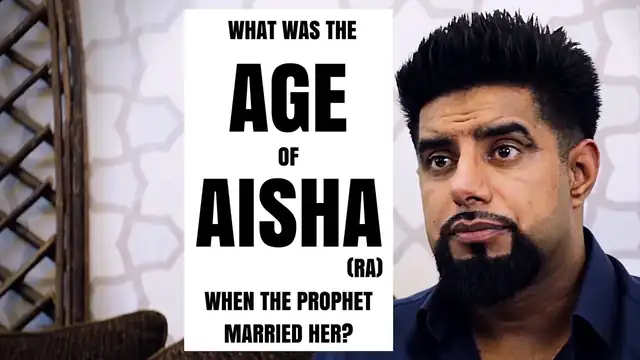 Play from 1:18
The video loads from YouTube only when you press play. Click a time in the transcript to seek.
Watch this part
Open on YouTube at 1:18The player starts at 1:18, the beginning of this part.
This segment1:18 to 7:50 · 6 min 32 s
What this part covers
machinesummary, machine-writtenMufti Abu Layth studied in Damascus and Pakistan, completed the full Islamic sciences course with hadith and ifta authorisations, and holds degrees in psychology and education.
In more detail
Mufti Abu Layth says he was asked to set out his credentials and that there is no harm in doing so, citing the story of Ibn Rushd al-Jadd putting on the robe of the judges of al-Andalus so that people would take his ruling seriously. He describes beginning formal study in 1997 in Damascus, then in Pakistan, where he memorised the Quran and completed a full course in the Islamic sciences covering Quran and its principles, hadith and its criticism, legal theory, the schools of law and their evolution, Arabic grammar and morphology, rhetoric, literature, history and theology, followed by a final year reading the six books and the Muwatta from cover to cover with an authorisation (ijazah) to teach carrying a chain back to the authors. He says he scored in the top three of his class, then completed a two-year course in issuing fatwa, gained an ijazah in Quran, and later received authorisations in the books of fiqh of the school of Madinah. He adds teaching qualifications, a bachelor's degree in psychology, teaching religion and philosophy at college level, and a master's in education.
Position stated
No position summary has been recorded for this segment.
Transcript
machine1:18 to 7:50 · click a time to seek · dotted terms open the glossary
by an individual sarason 786 uh who's asked for any Scholars within the Muslim Community to engage him so I'm taking this opportunity to do that I do uh believe that the questions being asked at the very least are genuine and I also feel that these kind of questions really reflect a greater Echo that's throughout the Muslim communities and also non-muslim communities right so the question is to do with the age of uh and when she married the prophet
sallallahu alaihi wasallam but before we get into that I was asked by sarason 786 uh to to highlight some of my credentials that am I a scholar of Islam and what have I actually studied um just so it can give some weight to this argument and there's no harm in doing that in fact it's transmitted that Rush alud the grandfather known as the heavyweight within the Maliki maab on one of his travels was trying to shed some light on a ruling and people people weren't taking him too seriously so what he did
was he went and wore hisi robe which was a specific robe that the judges within Al andalus war and that all of a sudden just changed the entire tone of this discourse and people took him seriously so although I don't have a robe to wrap around myself but what I will do is share some of what my studies and credentials so I forly began to study Islam in 1997 I studied abroad initially in Damascus the fundamentals of Islam the Arabic language the basic Sciences of Shar Hadith uh tap I continued to
study in Pakistan where I memorized the Quran I completed what is called an course now this involves studying all the major Islamic Sciences so that will be studying the Quran with its with its its principles the theory behind it studying Hadith with the actual content but also how to what are criticisms of Hadith what are the actual books of Hadith what is what is what we have the science the nomenclature of Hadith which is legal Theory um the diverse opinions
of different schools of law how these schools evolved the Arabic language uh whether that's and grammar and morphology studying rhetoric literature which we call adab Islamic history uh theology studying these all to uh from a fundamental to an elementary level to intermediate and an advanced in many of them but an intermediate to all of these through all of these uh subjects which includes covering differences of opinions and and depth to them so that's in terms of the Islamic
Studies uh the Das that is then concluded with what we call in uh that part of the world uh the East uhi a year in which you study the major books of Hadith from cover to cover so you go through each chapter you're learning what the differences of opinions were how people understood the Hadith who accepted them who did not accept them and on what grounds you complete all of those the entire collection uh of Hadith especially the major six books in addition to book books like the m and some others now you are uh then tested as you are in every
year and the tests usually uh take place three times a year and once you do graduate you are given Ana a with you are authorized to teach with a continued uh chain of transmission going right back to the authors themselves and then from them to the messenger of Allah s alaihi wasallam so that's uh the which I did complete also during the test just for in case you think if anybody's asking whether I just floated right through them I did actually score in the top three in my class so just to add that uh there was follow that was
followed by uh to become a Muti what does that involve how it teaches you how to issue rulings within uh within Islam how can you contribute to the jurist Prudence of Islam uh so we were taught that that was a 2-year course uh once again going through the finites the intricate rulings of giving fatwa what's involved how different gave fatwa how you must look at the context of your age um and all of these kind of things and then studying actual fatawa and nail to um to some to some deep degree so studying
that covering those things uh following that you are then authorized as a Muti so I did complete that I also gained an in the Quran uh which after IID memorized it so these were some of the studies I then pursued uh personal study after having graduated and kept my own revision going maintain contact with I've also received authorization uh through through and some of his great teachers ABD katani who has uh amazing authoriz ations to all the major books of f especially within the school of
Medina and also amongst his teachers was so so these are some of the authorizations that I have uh been granted in addition to that I did um when I had completed my religious Islamic Studies I did uh also pursue General academic studies so teaching qualifications followed by a a bachelor's in science and psychology I completed that I did teach religion and philosophy to a uh at a college level and also completed a Masters in Education so that's some of the
background to my credential just to give you an idea if it helps in taking my words a bit more seriously then um I believe it should be highlighted so right moving on to the actual question the discourse what was the age of when the prophet sallallahu alaihi wasallam married her now this is very important because it's led to um a lot of uh attacks if you like uh insults to hold at Islam and the messenger of Allah
Paragraphs overlapping 1:18 to 7:50. Full text on the recording page.
Cite this segment
Stable id, transcript version and tier are part of the citation. Every change to a transcript is logged.Mufti Abu Layth Archive, segment 2017-01-11-S02, auto-transcribed, may contain errors. https://muftiabulayth.org/r/0ovisexs4ca/s/2/ (accessed 1 November 2026)
- APA 7
Mufti Abu Layth. (2017, January 11). Mufti Abu Layth's credentials and course of study [Video, segment 2017-01-11-S02, auto-transcribed, may contain errors]. Mufti Abu Layth Archive. Retrieved November 1, 2026, from https://muftiabulayth.org/r/0ovisexs4ca/s/2/
- Chicago author-date
Mufti Abu Layth. 2017. "Mufti Abu Layth's credentials and course of study." Video, segment 2017-01-11-S02, auto-transcribed, may contain errors. Mufti Abu Layth Archive. Recorded January 11, 2017. Accessed November 1, 2026. https://muftiabulayth.org/r/0ovisexs4ca/s/2/
- BibTeX
@misc{abulayth-2017-01-11-S02,
  author = {Mufti Abu Layth},
  title = {{Mufti Abu Layth's credentials and course of study}},
  year = {2017},
  month = {1},
  date = {2017-01-11},
  howpublished = {\url{https://muftiabulayth.org/r/0ovisexs4ca/s/2/}},
  url = {https://muftiabulayth.org/r/0ovisexs4ca/s/2/},
  organization = {Mufti Abu Layth Archive},
  urldate = {2026-11-01},
  note = {Segment 2017-01-11-S02, auto-transcribed, may contain errors}
}
Something wrong here?
Tell us what is wrong and it will be checked against the recording. Nothing changes until a person has reviewed it.
Sending a note needs JavaScript, which is off or unavailable in this browser. Nothing has been sent.
No name, email address or account is asked for or stored, and the inbox does not store your IP address. For rate limiting it keeps an unreadable fingerprint of your connection for 48 hours, and our database provider's own logs record connections as every website's do. Only your note, its kind, the page and the moment in the recording are kept, for review.