
Pakistan, A New Chapter - A Personal Interview (Host: Dr Mehdi Sajid) | Mufti Abu Layth
salat salaah namaz prayer salaat namaaz as-salah al-salah salawat fiqah jurisprudence fikh hadeeth ahadith ahaadeeth hadis hadees ahaadith seerah sira seera seerat prophetic biography madhab mazhab school of law madhahib mazahib madhaahib malik ibn anas malik bin anas imam maalik imam malik ibn anas al-bukhari imam bukhari sahih al-bukhari sahih bukhari saheeh al-bukhari saheeh bukhari imam al-bukhari imaam imams prayer leader masjid masjed masaajid masajid maaliki malikite malikiyyah maliki school hanafite hanafiyyah hanafi school shafi shafei shafiite shafi'i school mujtahideen mujtahidun mujtahidin muftis asharis ashaira asha'irah ashariyyah ash'arite jahannam jahanam jahannum mahdi al-mahdi imam mahdi koran quraan al-quran surah sura soorah surat suwar soora hafiz hafidh haafiz hifdh huffaz hafiza memorisation sahabah sahabi sahabiyyah sahabiyat companions madina al-madinah madeenah yathrib wahhabi wahabi wahhabism shaykh shaikh sheik shuyukh shaykhs dawa dawat da'ee invitation ummah umma ummat ma sha allah mashallah masha allah mashaa allah baraka barakat barkat baraqah blessing amanah amana amaanah amanatvideo · 15:34 · 4,400 views · 2 Jun 2021 · Open on YouTube
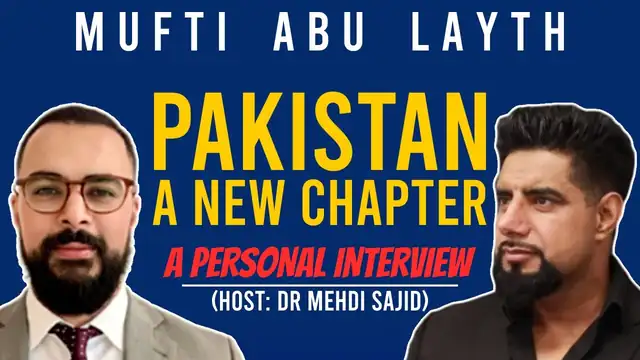 Press play to load from YouTube. Nothing loads until you do.
Transcript
machineauto-transcribed, may contain errors · source: youtube auto · click a time to seek · dotted terms open the glossarydo feel the same about it. So, you go to Pakistan. What happens in Pakistan? Where where do you enroll? And what kind of topics do you study? Yeah, you see what had happened was I became incredibly um I I yeah, I became a quite disheartened in Damascus at the time because I I don't know. I You know, after a while things start getting to you and you're like, "Look, I need something constructive.
I need to be learning like on a conveyor belt that's moving me forward." And um and I just I don't know. And I and I I I I'll be honest as well. I think I was very narrow-minded as well. Um and you know, I I was quite insecure of myself, of things. You know, I was a young, very sheltered kind of kid that had just gone to a different country and thinking he's going to end up somewhere in the time of the Sahaba or something, you know, and and the world This is why when I critique and sometimes, you know, have a little joke and laugh about people like that, it's because I can relate to it, you know, I went through that phase.
I used to You know, I used to just I remember that um I used to always have these hoofs on and this thobe. And some people they used to just, you know, years later they just remembered me like that. They used to think, "Oh, wasn't he that guy that always used to just be walking around?" I used to have these kind of like uh slippers, hoofs, thobe, uh this big hat, shaved head, like proper like I was in it for the whole thing, man.
I was like a So, but I was a bit dis- disheartened and somebody said to me, "Why don't you go to Pakistan?" And I was like, "Are you mad? I don't want to go to Pakistan. What the hell do I go to Pakistan for?" So, he had just come back from Pakistan and stopped off in Damascus. He was an American. I can't recall his name now, but um he met me and and he said to me, "Look, um I said I want to do hifz of the Quran and I want to study Maliki fiqh and I want to And and he said to me, "Look, why don't you go to Pakistan and do hifz?" And I said, "Nah, you know, I want to go to an Arabic-speaking country because I want to keep the Arabic and So, I think he over-exaggerated a bit
and bragged a bit, but you know, in hindsight I'm very grateful that he did because it shaped my journey because he said to me, "What are you talking about, man? The madrasahs, they speak Arabic. They teach in Arab- They do teach in Arabic to be fair, but the Arabic is a bit naff, but he goes, "They teach and he goes, 'Maliki fiqh?'" "Maliki fiqh? They teach all four madhhabs there." So, I was like, "No way." He goes, "Yeah, yeah." And he goes, "I was there.
They teach the Shafi'i, the Maliki, the I was like, "Really?" He goes He goes, "I'm telling you because they're not like these small institutes. They've got thousands They got everything. and they got money behind them and they've got this and you're going to love it and you're not going to be a foreigner and you know, you'll be like this this this." And he sold it to me, man. And I I'll ask you about two things if I may. Yeah.
Why did you uh choose Maliki fiqh? Would be the first question. And the second, when you arrive in Pakistan due to the fact that you grew up in the UK, Mhm. did you feel as a foreigner? Right, that's Okay, good questions. I mean, the Maliki fiqh, I think the initial love for the Maliki fiqh um is down to Sheikh Siddiq Iqbal.
Uh because he was Maliki when I was studying Arabic with him. He would often Your Quran teacher. Yeah, yeah, Arabic teacher. So, he would teach me Arabic, Arabic teacher, sorry. Sorry. Arabic teacher, yes. But what would happen, you see, his majlis, if I can call them the majalis, his kind of gatherings, when I would go to you know, learn, they would be like 20% would be the lesson and then 80% would be like it'd go off into tangential.
He'd start discussing sirah, start discussing hadith, he'd start discussing debates. And he he really loved going into it and he would always speak about the Maliki madhhab, you know, Imam Malik and amalu ahlil Madinah and and I won't lie, I liked it, but I wasn't secure enough to leave the Hanafi madhhab at the time because I felt, you know, this is just too weird. Like, how can I just start doing that? And Uh so, were you aware that you were sorry, were you aware that you were within the the realm of the Hanafi madhhab at all?
Yeah, that I was I was by the by the barakah of our Salafi brethren because you see, as I'd started to pray, I went to the local mosque and I had some Salafis approach me and say to me, "Brother, what you know?" And they obviously would pray like that and uh "Ameen." So, I asked them as a you know, as a genuine young person, "Uh brother, masha'Allah, you know, you uh pray pray a bit differently and you know, They go They go, "Come Come here, brother.
Come here." They go, "Brother, do you know you pray according to Imam Abu Hanifa? And we pray according to the prophet." And I was like, "Who is the Imam Abu Hanifa? I don't pray according to Imam I don't even know who that is." I don't even know who this person is. Why would I be praying according to?" They go, "No." They go, "Go ask your parents. Go ask your teachers. You follow Hanafi fiqh. Abu Hanifa said put your hands down here because he didn't know hadith." But the hadith is in Bukhari.
I like I'd heard of a book like Bukhari. I didn't know too much what it was, but they go, "Have you heard of Bukhari? This is the collection of the prophet's sayings and do you know in here it teaches you this is how you put your hands." And So, I was like in incredible turmoil, honestly. I felt like uh like I didn't know what to do because I thought there's no way I'm going to start praying like that. My parents are going to give me a slap. I thought that it But then I thought, "Am I just wasting my prayers then if I'm not?" So, I I I knew I was a Hanafi I did approach some maulanas who put me at some ease.
And uh later on I saw this video by Sheikh Hamza Yusuf called It was about the four madhhabs, the prerequisites of a mujtahid or something. And and it really put my heart at ease that, "Okay, you know, your basically your salah, you're okay. You're okay." So, I did know about madhhabs, yes. So, coming to your So, when I went to Siddiq Iqbal, I would ask him and he would tell me, "Yeah, yeah, yeah, you know, this this and there's the Maliki." No, I you know, just to tell you what I'm coming from with regard to this question because I grew up I went to school in Morocco.
Okay, wow. And I've never realized that we were Malikis until I left to Germany and met other Muslims. I never It was just for me Islam. Yeah, yeah, yeah. Same thing. Same thing. I never thought about we are Ash'ari. It's It's It's Islam. It's It's whatever. Yeah. You know, in like no one had any But then the the the discussion also started through Salafism in Morocco, I remember.
Like young young younger people who would adopt the Salafi madhhab would come back from uh Saudi Arabia, from the University of Medina or whatever. And you would have these big discussions in the family with the grandparents, why are they praying, you know, in saddl and not qabd and these kind of discussions. So, and now I I wasn't even understanding what was going on at the time. So, that's why I asked you Yeah, I was exactly the same.
I realized what you were. I thought everybody prayed like this and No. Uh uh and you know, I knew maybe some people do something differently, but I didn't know why or and I never really thought much about it because everybody around me prayed in one way and until these Salafis in the late mid-late '90s, they started to really There was like an ex- an explosion and on the da'wah scene for them.
And I I was really impressed by them because you see, as a cultural kind of Muslim, there were a lot of converts to Islam who always dressed in like Arabic gear and they Arab gear and they seemed to know Arabic words and they seemed to carry books with them sometimes and read it and and I I just saw them as people who took Islam so much more seriously than I did or other people. So, I had immense respect for them, but they did confuse the hell out of me.
I'm not going to lie. Uh yeah, so do with a lot of people, but anyway, I wanted to go to my second question. Yeah, yeah, yeah. Did you feel as a foreigner when you arrived in Pakistan? Because the reason why I'm asking you this Yeah. is a lot of uh European Muslims who have this migrant background somewhere. Yeah. When they go to the countries of their parents, where you always think about yourself of being something.
I am Moroccan in Germany. I am Moroccan or Algerian in France etc. But then it hits you when you go on vacation in the country of your parents. You You then realize how German or British or French you are. 100%. hits you there. Did you have such such an experience there? So, right. So, I have to kind of like uh to Yes and no.
So, generally, yes. Like now, 100% or even the years after, 100%. Uh I I stick out like a sore thumb now. Like when I a couple of years back went to Pakistan, like I you could tell straight away this guy ain't from here and I don't feel like uh like I can I like I miss home and I just um and the ways and things. But you know, at that initial stage when I went uh at that stage, I was going through like an odd phase in life where I was this kind of hermit phase.
And so, because of that, I was kind of like, you know, uh you know, I remember I used to have even in Damascus at certain point I used to have this sleeping bag and, you know, couple of us and just roll out the sleeping bag and you just crash out there. And so, at that stage I was like, you know, you could just throw me in a corner and I just kind of just just accommodate. And I wasn't so thinking about I was just thinking, "Look, I'm in you know, doing and I need to, you know, what is this and it was like so, I wasn't really thinking for that So, there was that
phase where it didn't hit me uh because of my expectations were so low. I was just thinking all I want to do is study Islam. Um I didn't really have any other expectations. I wasn't even worried like I wasn't uh you know, trying to do other things. I wasn't trying to chill out. I wasn't trying to uh I know I need to watch movies. I need to do this. I need to go to the I was a pure hermit.
So, yeah, at that stage it didn't really hit me when I first went to Pakistan because of that. Later on, as you kind of get more comfortable in the years that kind of followed on suit and you know, your natural self starts coming back a bit. And when I went to Karachi because I originally went to Islamabad to do of the Quran of the Quran and there it was quite modest.
You know, they they they were still kind of lacking in resources and stuff like that. And it was it was a natural step for me, a progression step. Because I'd come from this kind of understanding of being a bloody hermit. And so, it was good. And and I did my and I was very focused and I just wanted to memorize the Quran. From there, I I did actually go back to Damascus to get an in the Quran and then I went to Karachi.
Came back to Pakistan. And you know, in Karachi things I started to get a bit more comfortable with my myself again. And I had family there as well. And my uncle was kind of, you know, he was a bit of a a local hotshot anyway. You know, he was like an inspector in the police force, ran a crime unit. And and so, it and he kind of made me I remember he took me to the barbers and told them that, "Look, he was like, "Yeah, yeah, don't worry." And he kind of told the barber that fix him up a bit, man.
What the hell is this guy looking like? Looks like he's bloody just walked out of a jungle. So, so they kind of like, you know, I remember the barber kind of saying, "No, you know, like trimming my beard and shaping it up." And and up until then I wasn't doing these things. So, and I was a bit upset actually first at what the hell, you know, like why do they But then later on I kind of and he he kind of told me basically like fix up like not in a in a nice way without telling me he did it for me, you know, like like like basically you need to fix up on your clothing.
So, he kind of just bought me a bit more stylish clothing and a bit more stylish you know, and just and I kind of just upgraded that kind of sense of lifestyle and became a bit more natural. Um What also helped was the institute in Karachi had a lot of international students. So, once again I was mingling with Brits, British guys. And and that really kind of put me took me back to to being a bit more natural, being at home.
And you know, I had Americans there, Canadians, Australians. Um so, it it had an awesome field, but it was great in development in developing me further. And and did you find the Maliki community in Karachi? You see, interestingly enough, and this is where I was saying about that guy who told me to go to Pakistan. You know, that guy had sold me a kind of a bit of a false dream, a bit of a black.
Uh but I went off. He told me, "Look, you're going to find trust me, they teach Maliki you're going to find Maliki where they're going to it's going to be amazing. You're going to find Arabic." And I just took that step. It so happened per chance that the that I was in did happen to have a Tunisian Maliki Mufti Sheikh who taught there.
But this was just a pure sheer chance. It was this was not the norm in classes. He just happened to be there like when I was there and I told them when I went to visit and my uncle kind of took me obviously he was a local kind of inspector and he took me and um and they did this little interview with me. And I told them I was very you know, in those days I was very I'd introduce you know, in my introduction I'd say, "Oh, I'm Maliki." But I was very excited about it.
And uh they were like, "Oh, okay." And they said, "Oh, by the way, we've got a you know, Maliki Sheikh here, Tunisian Sheikh Mufti Sheikh Salim." And I was like, "Oh, okay." So, I was thinking this is normal. Remember that guy told me this happens everywhere. But later on I realized oh, this was just pure luck. It just happened to be that. So, I did used to pick his brains a lot and converse with him in Arabic. And and it was very it worked out.
The point is it did work out. Uh as the guy said, but it was you know, a one in a God knows how much shot at happening. But you know, you know, it
Something wrong here?
Tell us what is wrong and it will be checked against the recording. Nothing changes until a person has reviewed it.
Sending a note needs JavaScript, which is off or unavailable in this browser. Nothing has been sent.
No name, email address or account is asked for or stored, and the inbox does not store your IP address. For rate limiting it keeps an unreadable fingerprint of your connection for 48 hours, and our database provider's own logs record connections as every website's do. Only your note, its kind, the page and the moment in the recording are kept, for review.
Cite this recording
Stable id, transcript version and tier are part of the citation. Every change to a transcript is logged.Mufti Abu Layth Archive, auto-transcribed, may contain errors. https://muftiabulayth.org/r/yly0rqlx4dy/ (accessed 1 November 2026)
- APA 7
Mufti Abu Layth. (2021, June 2). Pakistan, A New Chapter - A Personal Interview (Host: Dr Mehdi Sajid) | Mufti Abu Layth [Video, auto-transcribed, may contain errors]. Mufti Abu Layth Archive. Retrieved November 1, 2026, from https://muftiabulayth.org/r/yly0rqlx4dy/
- Chicago author-date
Mufti Abu Layth. 2021. "Pakistan, A New Chapter - A Personal Interview (Host: Dr Mehdi Sajid) | Mufti Abu Layth." Video, auto-transcribed, may contain errors. Mufti Abu Layth Archive. Recorded June 2, 2021. Accessed November 1, 2026. https://muftiabulayth.org/r/yly0rqlx4dy/
- BibTeX
@misc{abulayth-yLy0rQLX4dY,
  author = {Mufti Abu Layth},
  title = {{Pakistan, A New Chapter - A Personal Interview (Host: Dr Mehdi Sajid) | Mufti Abu Layth}},
  year = {2021},
  month = {6},
  date = {2021-06-02},
  howpublished = {\url{https://muftiabulayth.org/r/yly0rqlx4dy/}},
  url = {https://muftiabulayth.org/r/yly0rqlx4dy/},
  organization = {Mufti Abu Layth Archive},
  urldate = {2026-11-01},
  note = {Auto-transcribed, may contain errors}
}